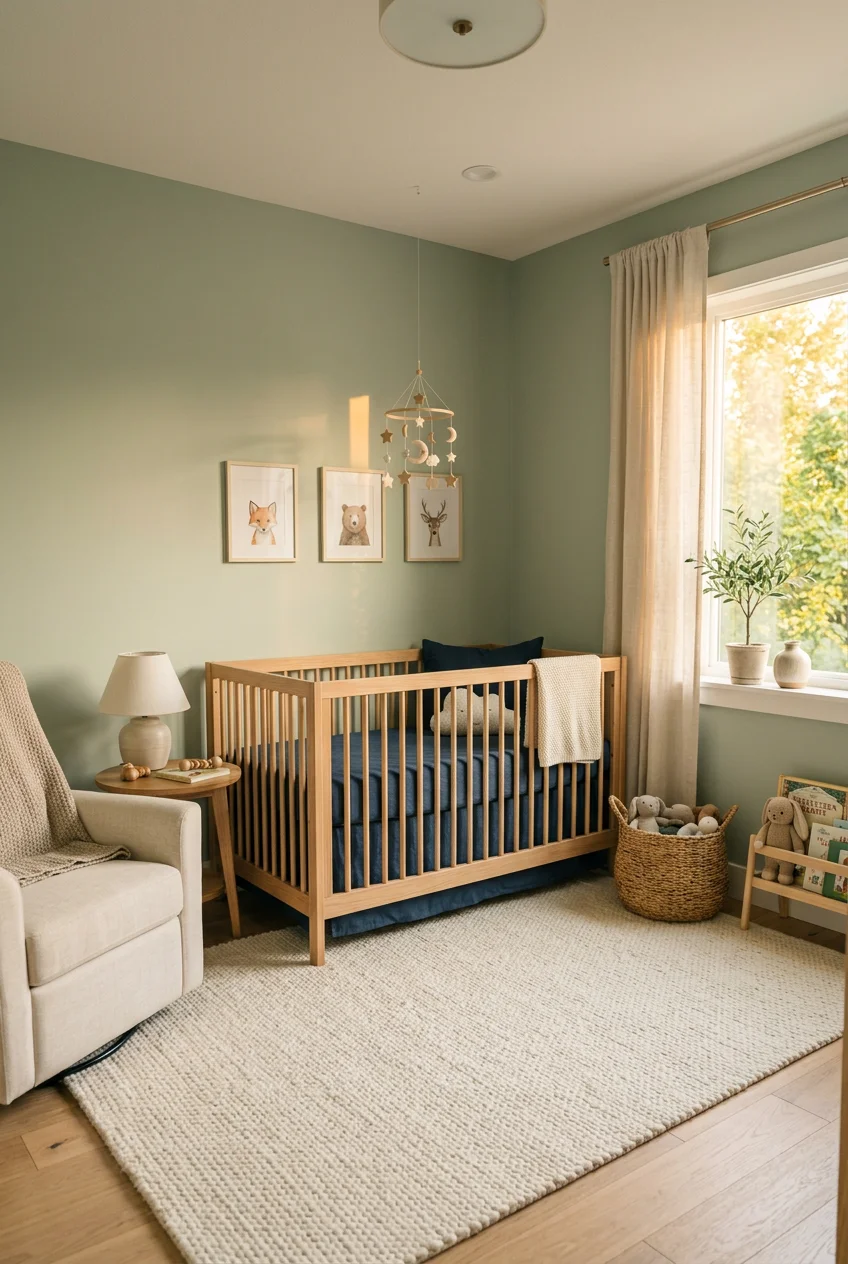
What’s Inside
- Universal Khaki SW 6150 For A Grounded Base
- Benjamin Moore Silhouette AF-655 For Modern Depth
- ECOS Paints Lullaby Range For Zero-VOC Safety
- Benjamin Moore Saybrook Sage HC-114 For Lowering Cortisol
- Sherwin-Williams Sea Salt 6204 For South-Facing Rooms
- Terracotta Accents With Sage Green
- Benjamin Moore Hale Navy HC-154 For A Bold Accent Wall
- Glidden Warm Mahogany For Earthy Grounding
- Sherwin-Williams Creamy SW 7012 For North-Facing Nurseries
- Benjamin Moore Beach Glass 1564 For A Muted Coastal Feel
- The Color Drenching Technique For Smaller Rooms
- Avoiding High-Saturation Reds And Oranges
- Soft Pastel Yellow As A Safe Alternative
- Using The Ceiling As A Canvas For Calm
- Skipping The Outdated Kiddie Palette Stereotypes
- Gracie Oaks Eudell Plaid Curtains For Flexible Color
- DaVinci Charlie Crib For Neutral Wood Tones
- Layering Textures Over Plain Walls For Depth
- Lark Manor Dresser To Anchor Light Baby Boy Nursery Colors
I spent three weeks crying on the floor of my first son’s room because the walls looked like radioactive toothpaste. Picking baby boy nursery colors isn’t just about grabbing a cute blue swatch from Home Depot and hoping for the best. I bought three gallons of a bright turquoise that gave me a headache after ten minutes, forcing me to start over at 32 weeks pregnant. You want a room that actually helps your baby sleep, not one that keeps them wired. Let’s look at 19 specific shades and strategies that actually work in real rooms with real lighting.
1. Universal Khaki SW 6150 For A Grounded Base

Most people default to gray for a neutral base, but cool grays look like concrete in a north-facing room. I painted a client’s room gray last year and it felt like a prison cell. I switched to Sherwin-Williams Universal Khaki SW 6150. It’s the 2026 Color of the Year for a reason. This is a versatile midtone tan with an earthy feel that warms up immediately when the afternoon sun hits it. A gallon costs $74.99, and it covers about 400 square feet. This shade has a Light Reflectance Value (LRV) right in that sweet spot between 60 and 75. Experts suggest choosing paint colors in this LRV range to support melatonin release and longer naps. Pure white reflects too much light and overstimulates, while anything below 50 makes the room feel cave-like. I used this khaki in a nursery last Tuesday, and the way it paired with a $24.99 woven basket from Target made the whole room feel instantly expensive. Trust me.
2. Benjamin Moore Silhouette AF-655 For Modern Depth

If you’re tired of pale walls, Benjamin Moore Silhouette AF-655 provides a rich, modern neutral that doesn’t scream baby room. It’s a deep, warm gray-brown that costs $69.99 per gallon. I tried a similar dark shade from a cheaper brand once, and it took four coats to stop looking streaky. Silhouette covers beautifully in two. You want to use this color strategically. I painted a whole room this color in 2022 and it was a mistake because the room felt tiny. Now, I use it on the lower half of the wall below a chair rail, or as an accent wall. It pairs perfectly with light wood furniture. When I was picking up diapers at Costco last month, I noticed they sell these beautiful light ash floating shelves for $39.99 that look incredible against this specific dark brown. The contrast gives the room a sophisticated edge that grows with your child into their toddler years.
3. ECOS Paints Lullaby Range For Zero-VOC Safety

Paint chemistry matters just as much as the actual color you choose. Standard interior paint off-gasses harmful chemicals for weeks. I learned this the hard way when I painted my own bedroom with standard latex and woke up with a sore throat for five days. For your baby’s health, always choose water-based, zero-VOC paints. ECOS Paints offers their Lullaby range specifically designed for nurseries. It costs $85 a gallon, which is pricey, but the peace of mind is worth the extra $20. The drying time is fast. It takes 30 to 60 minutes to dry to the touch, and you can recoat after 2 to 4 hours. Even with zero-VOC paints, it’s crucial to allow the nursery to air out. Keep the windows open daily and run a box fan for at least two weeks before the baby moves in. I usually grab a cheap $19.99 box fan from Walmart specifically for this purpose and leave it running on high.

Staryou Sensory Lights Baby Sound Machine Night Light
Honestly, Staryou Sensory Lights Baby Sound Machine Night Light Projector Sensor surprised me — sturdier than it looks in the photos, and over 910 buyers gave it 4.5 stars.
4. Benjamin Moore Saybrook Sage HC-114 For Lowering Cortisol

Sage green is a breakout color for 2026 nurseries. Benjamin Moore Saybrook Sage HC-114 is scientifically associated with reduced cortisol and promoting calm. I used this specific shade in an east-facing room in March. At $69.99 a gallon, it goes on like butter. The green has a slight gray undertone, which keeps it from looking like a cartoon frog. I paired it with a simple white crib and a $12.99 faux olive tree I found at Trader Joe’s of all places. The natural vibe was immediate. One mistake I see constantly is pairing sage green with bright white trim. The stark contrast makes the green look muddy. Instead, I use a soft cream on the baseboards. Saybrook Sage is also incredibly forgiving if your walls aren’t perfectly smooth. The flat finish hides drywall imperfections beautifully. I’ve used this color for two years now, and clients consistently tell me it makes the room feel like a quiet forest.
5. Sherwin-Williams Sea Salt 6204 For South-Facing Rooms

The direction of natural light significantly impacts how colors appear. South-facing rooms get intense, warm light all day long. If you put a warm beige in a south-facing room, it turns yellow. I did this in 2021 and the room looked like a mustard bottle. For these sunny spaces, you need cool tones. Sherwin-Williams Sea Salt 6204 is a whisper of green-blue-gray that balances out the intense sunlight perfectly. It costs $74.99 a gallon. When the bright midday sun hits Sea Salt, it reads as a crisp, clean dusty blue. I recommend buying a $5.99 sample pint and painting a large 3-foot by 3-foot square on the wall next to the window. Check it at 10 AM, 2 PM, and 6 PM. The color shifts throughout the day. I buy my painter’s tape at Kroger when I’m doing my weekly grocery run, grab a roll of FrogTape for $8.49, and tape off large sections to test this color properly.
6. Terracotta Accents With Sage Green

The trending sage green and terracotta combination is everywhere for 2026. Terracotta adds warmth and comfort, while sage green evokes serenity. I don’t recommend painting a whole wall terracotta. I tried a rust-colored accent wall last year and it looked like a dried puddle of mud. Instead, bring terracotta in through textiles and small decor items against sage walls. I bought a 50 by 60 inch terracotta muslin throw blanket for $34.99 to drape over the glider. It softens the green walls immediately. You can also incorporate terracotta plant pots. I picked up three 6-inch clay pots at Sprouts for $4.99 each, filled them with fake succulents, and lined them up on the windowsill. Pair these colors with natural materials like light wood, linen, or rattan. The combination feels earthy and grounded. It’s a completely different approach from the standard baby blue, and it won’t look outdated by the time your son turns three. You might also like: 20 Toddler Boys Room You Need to See

ColorsNoise Sound Machine and White Noise Machine with 30
If you want something that just works, ColorsNoise Sound Machine and White Noise Machine with 30 Soothing Sou is a safe bet (31 reviews, 4.5 stars).
7. Benjamin Moore Hale Navy HC-154 For A Bold Accent Wall

If you want dark baby boy nursery colors, an accent wall is the safest route. Benjamin Moore Hale Navy HC-154 is a classic, deep blue that costs $69.99 a gallon. I use it exclusively behind the crib. The crib itself blocks most of the wall from the baby’s direct line of sight when they’re lying down. You don’t want a massive dark wall looming over them while they try to sleep. Hale Navy has enough gray in it that it doesn’t look like a nautical theme park. I made the mistake of using a cheaper, brighter navy once, and the room looked like a locker room. Hale Navy feels sophisticated. I usually pair it with brass hardware. I found a set of 4 brass drawer pulls at Target for $14.99 to swap onto an old dresser, and it tied the whole navy and brass look together perfectly. Just remember to use a high-quality roller to avoid marks on dark paint. You might also like: 15 Cozy Baby Nursery Decor Ideas for Any Style
8. Glidden Warm Mahogany For Earthy Grounding

Sometimes you need a color with visual weight. Glidden Warm Mahogany is a deep, earthy brown that costs around $34.98 a gallon at Home Depot. I bought a can last month to test in a large, echoing room. Dark colors absorb light and make cavernous spaces feel cozy. I painted the lower half of the walls with this mahogany and added a simple white chair rail above it. The room instantly felt grounded. A common mistake is using dark brown on all four walls. I tried that in a small bathroom once and it felt like being buried alive. Use Warm Mahogany sparingly. It looks incredible behind a natural wood crib. I like to add a 5 by 8 foot cream-colored rug that costs around $120 to balance the dark walls. The contrast highlights the richness of the brown without letting it overpower the space. It’s an unexpected choice for a boy’s room, but it feels warm. You might also like: 15 Charming Safari Nursery Lighting Ideas for Every Budget
9. Sherwin-Williams Creamy SW 7012 For North-Facing Nurseries

North-facing rooms are the hardest to paint. They get cool, indirect light that turns standard whites into a gloomy, hospital-gown gray. I painted a north-facing nursery pure white in 2019 and the client called me crying because it looked so cold. You need warm creams to counteract the blue light. Sherwin-Williams Creamy SW 7012 is my reliable fix. At $74.99 a gallon, it has just enough yellow undertone to warm up the shadows without looking like butter. I used this color last week. To keep it from looking flat, I layered different shades of cream and beige in the room’s textiles. I grabbed two packs of 100 percent cotton beige crib sheets from Whole Foods for $18.99 each. The slight texture of the sheets against the smooth Creamy walls created a subtle, calming depth. It’s a very quiet color palette, but it makes a dark, chilly room feel like a comfortable little nest.

Criusia Drawer Organizer Clothes
If you want something that just works, Criusia Drawer Organizer Clothes is a safe bet (11 reviews, 4.5 stars).
10. Benjamin Moore Beach Glass 1564 For A Muted Coastal Feel

If you live in a warm climate or have a room that gets baked by the afternoon sun, Benjamin Moore Beach Glass 1564 is a lifesaver. It’s a dusty blue-green that costs $69.99 a gallon. I used this in a client’s south-facing nursery in Florida. The cool tones physically make the room feel a few degrees colder. It’s not a bright baby blue. Bright baby blue can look extremely harsh under LED lights. Beach Glass has enough gray to soften it. I made the error of using a glossy finish with this color once, and the glare was awful. Always use an eggshell or flat finish in a nursery. Eggshell is easier to wipe down when sticky fingers eventually touch the walls. I paired this paint with a simple $45 white blackout shade. The soft blue-green against the crisp white shade created a very relaxed, coastal atmosphere without needing a single seashell or anchor decoration.
11. The Color Drenching Technique For Smaller Rooms

Color drenching means painting the walls, trim, baseboards, and interior doors the exact same color. It’s a modern approach that removes visual interruptions. I used this technique in an 8 by 10 foot nursery that felt like a closet. I drenched it in a soft, saturated dusty blue. By removing the harsh white lines of the baseboards and door frames, the room actually felt larger. Your eye doesn’t stop at the edges. You have to use a durable paint finish for the trim, though. I used a satin finish on the trim and an eggshell finish on the walls (both tinted to the exact same color). A gallon of high-quality satin trim paint runs about $80. It takes more time to tape and prep, but the immersive effect is soothing. I wouldn’t do this with a dark color in a small room, but with a mid-tone blue or soft sage, it creates a seamless, calming environment.
12. Avoiding High-Saturation Reds And Oranges

Psychologists advise against high-saturation reds in bedrooms. Red increases heart rate and can actually promote aggression and restlessness. I had a client who insisted on a fire-engine red accent wall for a firefighter theme. Her son didn’t sleep through the night for eight months. We repainted it a soft gray, and his sleep improved in a week. Bright yellows and oranges also overstimulate and cause anxiety in infants. If you want a warm, energetic room, you have to tone it down. Skip the primary colors entirely. They belong in a playroom, not a space designed for rest. When I want warm accents, I buy small items. I found a beautifully muted rust-orange canvas storage bin at Target for $12.99. It holds toys and adds a tiny punch of color without turning the walls into a stop sign. Keep the large surface areas muted and calm.

JolyWell Night Light for Kids
If you want something that just works, JolyWell Night Light for Kids is a safe bet (51 reviews, 4.5 stars).
13. Soft Pastel Yellow As A Safe Alternative

If you absolutely must have yellow, you have to be extremely careful. Most yellows look twice as bright on the wall as they do on the paint chip. I bought a soft lemon paint in 2018, and once it was on four walls, it looked like a highlighter pen. It was blinding. The trick is to choose a yellow that looks almost beige on the swatch. Opt for a soft pastel yellow paired with bright white furniture. Benjamin Moore’s Windham Cream HC-170 is a good example. It’s $69.99 a gallon and reads as a very gentle, warm glow. I break up the yellow by using it only on the top half of the wall, with white wainscoting on the bottom half. This cuts the amount of yellow in the room by 50 percent. I also add heavy beige curtains to absorb some of the light. It keeps the room sunny but prevents it from becoming an overwhelming neon box.
14. Using The Ceiling As A Canvas For Calm

Don’t forget the ceiling. Most people leave it flat white, which is a missed opportunity. A surprising tip is to use the ceiling as a canvas. When a baby is lying in their crib, they stare straight up. A stark white ceiling under an overhead light is harsh. I started painting nursery ceilings a very pale, flat blue. Sherwin-Williams Atmospheric SW 6505 diluted by 50 percent is perfect. It costs about $74.99 for the gallon. I also hired a local artist to paint a subtle mural of a cloudy sky in one nursery. It cost $350, but it added a unique, calming element without overstimulating the baby. If you don’t want a mural, just painting the ceiling a soft color draws the eye up and makes the room feel taller. Just make sure you use a dead-flat ceiling paint. Any sheen on the ceiling will highlight every single drywall seam and nail pop.
15. Skipping The Outdated Kiddie Palette Stereotypes

While it’s tempting to use overtly childish themes, 2026 trends lean toward more sophisticated designs. The days of painting giant cartoon characters on the walls are over. I spent three days painting a jungle mural for a friend in 2015, and her son was terrified of the giant monkey by the time he was two. We had to paint over it. Opt for muted tones and incorporate playful elements through decor that can be easily changed. Instead of a permanent mural, I use framed art. I bought a set of three 11 by 14 inch vintage airplane prints from an Etsy seller for $45, and popped them into $15 black frames from Walmart. They look incredibly sharp against a khaki wall. When he outgrows airplanes, you just swap the prints. You don’t have to sand, prime, and repaint a 12-foot wall. Keep the paint sophisticated and let the accessories do the heavy lifting for the kiddie vibe.
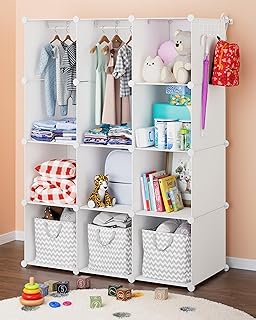
CUBEDIY Baby Closet Organizer for Nursery: Durable Baby
CUBEDIY Baby Closet Organizer for Nursery: Durable Baby Wardrobe for C has been one of the most consistently praised picks in this category. 316 reviewers averaged 4.5/5.
16. Gracie Oaks Eudell Plaid Curtains For Flexible Color

Instead of painting all the walls in a bold color, introduce vibrant hues through easily swappable textiles. I rely heavily on window treatments for this. The Gracie Oaks Eudell Plaid Single Curtain Panel is around $30 from Wayfair, and it’s fantastic for adding a structured pattern to a neutral room. I bought four panels in a soft blue and cream plaid last month. The fabric is thick enough to block a decent amount of light, but the pattern adds visual interest that plain walls lack. I made the mistake of buying cheap, unlined curtains for my own nursery, and the streetlights kept my son awake every single night. Always check if the curtains have a liner. If they don’t, you’ll need to buy separate blackout liners. I usually get a 2-pack of basic blackout liners from Target for $25. Hanging patterned curtains gives you the freedom to keep the walls a safe neutral while still injecting personality into the space.
17. DaVinci Charlie Crib For Neutral Wood Tones

Your furniture choices directly impact how your paint colors look. A bright cherry wood crib will completely alter the undertones of a gray wall, usually making it look sickly and green. I always advise investing in grow-with-me furniture in neutral finishes. The DaVinci Charlie 4-in-1 Convertible Crib costs around $219 from Wayfair. I’ve assembled three of these myself. The washed natural wood finish is gorgeous. It doesn’t fight with the wall color. It pairs beautifully with both the warm Universal Khaki and the cool Beach Glass we talked about earlier. One warning: the included toddler rail conversion kit is sometimes sold separately, so check the box before you buy. I assumed it was included once and had to scramble to order it a year later. A neutral wood crib acts as a visual anchor. It brings a natural, organic texture into the room that painted white furniture simply can’t provide.
18. Layering Textures Over Plain Walls For Depth

Even with the perfect neutral walls, a room can feel flat if you don’t layer textures. A flat painted wall needs contrasting materials to bring it to life. Layering textures with items like a bouclé glider, woven baskets, and organic cotton textiles adds warmth and depth. I bought a chunky knit wool blanket for $65 and draped it over the back of a smooth leather nursing chair. The contrast makes both items look better. I also use natural fiber rugs. A 5 by 8 foot jute rug under the crib adds a rough, earthy texture that grounds the room. I tried a cheap synthetic shag rug once, and it shed plastic fibers all over the floor for six months. I threw it in the trash. Stick to natural materials. I found a set of three water hyacinth storage baskets at Costco for $29.99. They smell slightly like dried grass and bring a tactile, sensory element to the room that prevents it from feeling bland. Learned that the hard way.
19. Lark Manor Dresser To Anchor Light Baby Boy Nursery Colors

When you use very light baby boy nursery colors on the walls, you need a heavy piece of furniture to keep the room from floating away visually. The Lark Manor 7-Drawer Baby Changing Table Dresser runs around $340 from Wayfair. It’s a substantial piece. I bought one in a dark espresso finish for a client whose walls were a very pale dusty blue. The dark dresser anchored the entire room. It has a removable changing topper, which ensures the piece remains relevant as the nursery evolves into a big boy room. Assembly takes about two hours, and the drawers are slightly shallow, which is a small negative. However, the visual weight it provides is necessary. If you have pale walls, a pale crib, and a pale dresser, the room looks like a marshmallow. You need contrast. This dresser provides that necessary dark focal point, making the lighter wall colors look crisp and intentional.
I’ve painted enough nurseries to know that the right color completely changes how a room feels at 3 AM when you’re exhausted. Skip the neon brights, invest in zero-VOC paint, and test your swatches in the actual room’s lighting. I highly recommend starting with Sherwin-Williams Universal Khaki if you’re paralyzed by choice. It’s safe, warm, and works with almost everything. Pin this list for your next trip to the paint store, and save yourself the headache of a radioactive turquoise mistake. No exaggeration.
Frequently Asked Questions
What is the best LRV for baby boy nursery colors?
Expert opinion suggests choosing paint colors with a Light Reflectance Value (LRV) between 60 and 75. This range supports melatonin release and longer naps, avoiding the overstimulation of pure white (LRV 90+) or the cave-like feel of colors below LRV 50.
Are zero-VOC paints necessary for a nursery?
Yes. Standard interior paints off-gas harmful chemicals for weeks. For your baby’s health, always choose water-based, zero-VOC paints like ECOS Paints or Benjamin Moore Eco Spec. Even with zero-VOC options, air the room out with a fan for at least two weeks before the baby moves in.
What colors should I avoid in a baby boy’s nursery?
Psychologists advise against high-saturation reds, bright yellows, and intense oranges. Red can increase heart rate and promote restlessness, while bright yellow can overstimulate and cause anxiety in infants. Stick to muted tones, soft sages, or warm khakis instead.
How does natural light affect nursery paint colors?
Natural light direction completely changes how a color looks. North-facing rooms get cool, indirect light and need warm creams to avoid looking gloomy. South-facing rooms get intense, warm sunlight and benefit from cool tones like dusty blue or sea salt to balance the heat.
