What’s Inside
- Embrace the Floor Bed for Independence
- Implement a Thoughtful Toy Rotation System
- Opt for Child-Sized, Accessible Furniture
- Integrate a Movement Area with a Mirror and Pull-Up Bar
- Prioritize Natural Materials and Calming Aesthetics
- Curate a Child-Accessible Wardrobe
- Display Artwork at Your Child’s Eye Level
- Introduce Montessori Mobiles for Visual Development
- Avoid Over-Scheduling and Practice Observation
- Incorporate Practical Life Skills Tools
- Say “No Forced Sharing” (Surprising Tip)
- Create a “Yes” Space, Not Just a “No” Space
- Limit Electronic Gadgets and Fantasy-Themed Items
- Consider a Topponcino for Newborns
- Prioritize Open Space and Clear Pathways
- Low-Level Book Displays for a Montessori Toddler Room
When I tried designing my first Montessori toddler room three years ago, I failed. Hard. I crammed a 10×10 space with so many beige wooden toys it looked like a lumber yard exploded. I spent four hours arranging a low shelf only to watch my daughter dismantle it in three minutes and throw the pieces across the carpet. Creating a functional space isn’t about buying every wooden toy on the internet. It’s about building a prepared environment that actually works for a tiny human who’s constantly spilling things. I’ve learned the hard way what holds up to daily toddler chaos and what ends up in the donation bin. I’m going to walk you through exactly how I set up these rooms now, down to the exact measurements and shelf heights. Let’s look at sixteen specific ways to make this work without losing your mind. No exaggeration.
1. Embrace the Floor Bed for Independence

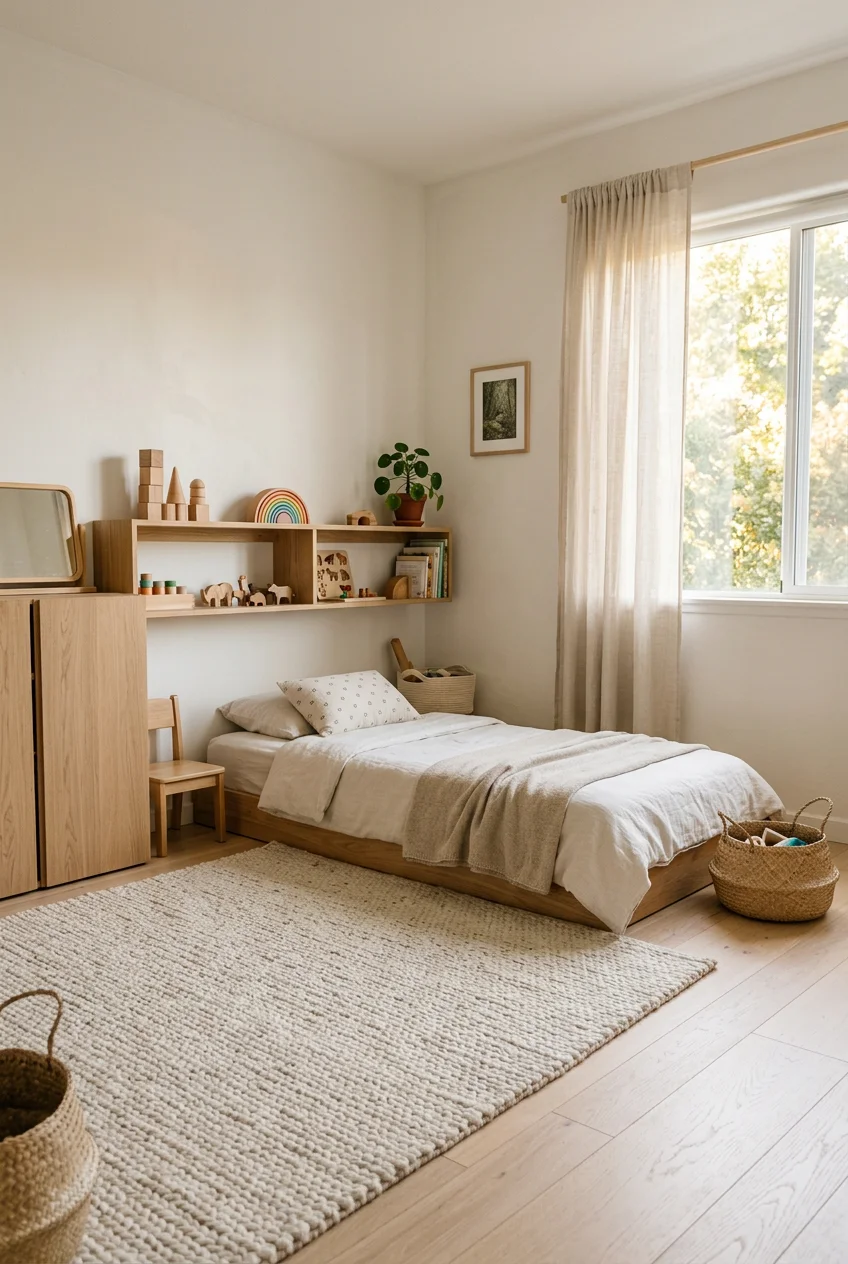
Transitioning to a floor bed sounds terrifying. I moved my daughter at 14 months. The first three nights, she rolled off the 6-inch mattress onto the rug and slept there. It’s normal. A floor bed lets your toddler get in and out on their own, which builds autonomy around sleep. You aren’t trapping them. I use the Sprout Kids floor bed frame, which costs $295, because it sits low enough for a 12-month-old to crawl in. If you’re on a tighter budget, a firm crib mattress on the floor works perfectly. Just baby-proof the room. Cover every outlet with $3.99 clear plastic covers from Target. Anchor the dressers to the wall studs using heavy-duty metal brackets. Your child will have access to this space at 3 AM. If there’s a rogue bottle of lotion on a low shelf, they’ll paint the walls with it. I spent a Tuesday morning scrubbing Aquaphor off the baseboards because I forgot to secure a drawer. Learned that the hard way. Keep the sleeping zone free of choking hazards.
2. Implement a Thoughtful Toy Rotation System

Having fifty toys out guarantees your child won’t play with any of them. They just dump the baskets and walk away. I see this constantly. You need to restrict the visible options. Keep 8 to 16 toys available in total for the whole room. Display only 2 to 4 items on a low, open shelf. I use the 11-inch Brightroom coiled rope bins from Target, which cost $12 each, to store the extras in the closet. Rotate the shelf items every two weeks, or the moment you notice your child throwing a wooden block instead of stacking it. When I did this last October, the noise level in my house dropped by half. My kid actually focused on a single ring stacker for twenty minutes. Store the unused toys out of sight. If they can see the bins, they’ll scream for them. It’s a simple trick that forces concentration. Less clutter equals deeper focus.
3. Opt for Child-Sized, Accessible Furniture

Adult furniture is useless to a two-year-old. Everything needs to be scaled down to their height. If a shelf is higher than their shoulder, they can’t see the top. I always specify a weaning table and chair set. Sprout Kids makes an adjustable weaning table for $249 that’s sturdy. The chair heights adjust from 5 inches for a 6-month-old up to 10 inches for a 4-year-old. The table legs extend from 12 to 18 inches. If you want a natural rubber wood option, the Woodtoe set runs about $129 on Amazon. I bought a cheap plastic table from Walmart once for $25. It tipped when my toddler leaned on it, spilling a 4 oz cup of milk all over a wool rug. Stick to heavy, solid wood. The weight prevents it from sliding on hardwood floors. A dedicated, heavy table means they can sit down with a snack.

Beautiful Wooden Baby Closet Dividers Set of 7
Beautiful Wooden Baby Closet Dividers Set of 7 – Double-Sided Organize punches above its price — 11 buyers rated it 4.5 stars. I would buy it again.
4. Integrate a Movement Area with a Mirror and Pull-Up Bar

A movement space is critical. You need a clear 4×4 foot section of floor. Mount a shatterproof acrylic mirror securely to the wall, right at the baseboard. I use a 24×36 inch acrylic sheet from Home Depot that costs $45. Don’t use glass. I screw it into the drywall with flathead screws so it won’t budge. For infants, position a portable mirror 8 to 12 inches from their face during tummy time. As they start pulling up, install a wooden pull-up bar over the mirror. Mount the bar exactly 17.5 inches from the floor. This gives them a grip to practice cruising. I tried using a suction-cup bar once. It detached while my kid was holding it, resulting in a bruised knee and tears. Always mount hardware into the studs. They’ll stare at themselves in the mirror while doing squats. It’s entertaining and builds core strength.
5. Prioritize Natural Materials and Calming Aesthetics

Skip the neon plastic. It overstimulates brains and breaks within a month. A Montessori space relies on natural materials like solid wood, cotton, and wool. These provide rich sensory feedback. A wooden block feels different in a small hand than a hollow plastic one. I stick to soft, neutral tones for the walls. Think sage greens, warm browns, and soft whites. I painted my last nursery in Sherwin Williams Sea Salt, which costs about $65 a gallon. It creates a calming environment. I pair this with a 100% wool rug from West Elm that ran $399. The wool is stain-resistant, which matters when your toddler grinds a Trader Joe’s strawberry cereal bar into the fibers. The natural oils keep the stain from setting. I learned this after ruining a cheap synthetic rug from Wayfair that held onto a blueberry juice stain. Invest in textiles that can survive a toddler.
6. Curate a Child-Accessible Wardrobe

Dressing themselves is a major milestone. You can’t foster this if their clothes are shoved in a drawer they can’t reach. Set up a low, open wardrobe. I built a DIY version using two Ikea TROFAST frames, which are $46 each, and screwed a wooden dowel between them. If you prefer a pre-built option, BusyWood sells Montessori wardrobes starting at $564.00. The trick is limitation. Only put three weather-appropriate outfits on the rack. I hang one complete outfit on a single wooden hanger. This includes the shirt, pants, and socks draped over the bottom. If you give them ten choices, they’ll pull everything onto the floor. I tried giving my daughter access to her shirts last winter. She came out wearing three tank tops over a sweater. Now, I put out two options. She picks one. It takes two minutes, and we avoid the morning meltdown. You might also like: 20 Charming Small Nursery Ideas to Transform Your Space

Modanais Baby Diaper Caddy Organizer Cart
A dependable everyday pick — Modanais Baby Diaper Caddy Organizer Cart – 3 Tier Rolling Cart with D pulls in 635 ratings at 4.5 stars. Not flashy, just solid.
7. Display Artwork at Your Child’s Eye Level

Hanging art at adult eye level makes zero sense. They can’t see it. I mount all artwork exactly 24 to 30 inches off the floor. This respects their perspective. Choose realistic images. Montessori prefers photos of real animals, nature scenes, or people rather than cartoons. I buy digital prints of farm animals from Etsy for $6.50 each. I print them at Walgreens and put them in the $9.98 Mainstays wooden frames from Walmart. Remove the glass and replace it with a thin sheet of clear acrylic, or leave it open. Toddlers will touch the pictures. They’ll smack the frame. Glass will shatter. Last Tuesday, I watched a two-year-old throw a metal car at a framed horse. Because we used acrylic, it just bounced off. Secure the frames using heavy-duty 3M Command Strips on all four corners. You might also like: 15 Baby And Toddler Shared Room That Actually Work
8. Introduce Montessori Mobiles for Visual Development

If you’re setting this up for a newborn, the mobile progression is specific. Don’t use a plastic mobile that plays tinny music. You want the traditional visual series. Start with the Munari Mobile at 2 to 3 weeks. It’s black and white. Around 2 months, switch to the Octahedron Mobile, which introduces primary colors. At 3 to 4 months, hang the Gobbi Mobile. This features five spheres in shades of a single color to teach depth. Finally, at 5 to 6 months, use the Dancers Mobile to help them track movement. You can buy the set of four on Etsy for about $45. Always hang these over the movement area, never over the floor bed. The bed is for sleeping. The movement area is for focus. I hung a Gobbi mobile over my daughter’s bed once, and she stayed awake for two hours staring at it. You might also like: 16 Baby Nursery Themes That Actually Work
9. Avoid Over-Scheduling and Practice Observation

A major trap is confusing a daily routine with a rigid schedule. You don’t need to schedule sensory play from 9:00 to 9:15 AM. Build a predictable flow and observe what your child gravitates toward. If they’re sitting quietly opening and closing a $4 wooden box, don’t interrupt them to do a flashcard activity. Sustained concentration is fragile. I used to hover and correct my daughter when she stacked blocks wrong. I realized I was ruining her focus. Now, I sit in the corner with coffee and watch. If she wants to line up her shoes instead of putting them on the shelf, I let her. Observation tells you what materials to rotate in next. If they’re throwing things, they need gross motor activities. If they’re picking at crumbs on the rug, they need fine motor work. Just watch them.

Babelio Breathable Crib Mattress, Dual-Sided, Memory Foam
Babelio Breathable Crib Mattress punches above its price — 17 buyers rated it 4.5 stars. I would buy it again.
10. Incorporate Practical Life Skills Tools

Toddlers want to do exactly what you’re doing. If you’re sweeping, they want the broom. Integrate practical life tools into their room. I keep a small, child-sized dustpan and brush set from Montessori Services, costing $18.50, on a low hook. When they spill dry oats, show them how to sweep it up. For the kitchen, a learning tower is non-negotiable. I use the Little Partners tower, which runs $199. It’s heavy, solid wood, and won’t tip over when a thirty-pound toddler leans over the side. Sprout Kids makes a great foldable version if you’re tight on space. Having them safely at counter height means they can wash strawberries or peel bananas. I bought a cheap plastic step stool from Kroger once for $12. My kid stepped on the edge, it flipped, and she hit her chin. Spend the money on a heavy, wide-base tower. It prevents emergency room visits.
11. Say “No Forced Sharing” (Surprising Tip)

This shocks parents, but in a Montessori environment, children aren’t forced to share their work. If your toddler is using a wooden puzzle, a friend can’t just walk up and take a piece. The rule is that the other child must wait their turn until the first child returns the item to the shelf. This teaches respect for concentration. It also stops the constant refereeing. I hosted a playdate last month where a friend’s son tried to grab a wooden train. I gently blocked his hand and said she’s working with that, and he can use it when she’s done. He cried for thirty seconds, then found something else. It stopped the tug-of-war. It teaches patience rather than creating anxiety. Your child won’t feel the need to hoard toys if they know nobody is going to snatch them away.
12. Create a “Yes” Space, Not Just a “No” Space

A toddler room must be a completely safe “yes” space. This means you can close the door and know they can’t hurt themselves or ruin anything. You shouldn’t have to say no in their own bedroom. Remove all floor lamps with cords. Remove any toxic houseplants. I use the heavy-duty metal safety gates from Costco, which cost $49.99, at the doorway so I can leave the door open while keeping them contained. Every piece of furniture must be bolted to the wall. I use heavy nylon furniture straps that drill into the studs. I once left a lightweight laundry hamper in the room. My daughter climbed inside, tipped it over, and got trapped. I replaced it with a soft cotton rope basket. Audit the room by crawling on your hands and knees. If you can pull it down, swallow it, or get tangled in it, remove it.

Rattan Divided Scalloped Basket
Rattan Divided Scalloped Basket has been one of the most consistently praised picks in this category. 15 reviewers averaged 4.5/5.
13. Limit Electronic Gadgets and Fantasy-Themed Items

Keep the flashing, singing, plastic toys out. A Montessori environment for children under six focuses on the real world. They’re trying to understand how physics and nature work. A plastic dog that lights up blue and sings the alphabet is confusing and overstimulating. Provide realistic representations of the world. I buy Schleich animal figures. They cost about $6.99 each at stores like Sprouts, and they’re anatomically correct. Skip fantasy themes like dragons until they’re older. I made the mistake of buying a loud, motorized train set for my nephew. It drove him into a sensory overload meltdown within ten minutes, and he threw the engine at the wall. Passive toys make the child the observer. You want open-ended materials that require the child to do the work. A plain wooden block does nothing until the child builds with it. That’s the goal.
14. Consider a Topponcino for Newborns

If you’re designing this before the baby arrives, get a topponcino. It’s a small, oval-shaped, soft mattress pad for handling newborns. The Bellaluna topponcino costs about $79 and is made of organic cotton. You hold the baby while they rest on this pad. When you need to transfer a sleeping infant to their floor bed, you move the entire pad. It maintains their body heat and smells like them, preventing the startle reflex. I didn’t use one with my first child, and I spent months trying to master the ninja roll away from her mattress, usually failing. With a topponcino, the transition is simple. The baby doesn’t feel the cold surface of the bed because they’re still on their warm pad. It’s a simple tool that reduces crying during hand-offs. Just ensure it’s used safely and always supervised according to sleep guidelines.
15. Prioritize Open Space and Clear Pathways

Do not cram the room full of furniture. A toddler needs wide pathways to practice walking, carrying trays, and rolling around. The center of the room should be empty. I usually recommend pushing all shelves and the bed against the walls. If you have a 10×12 room, at least a 6×6 area in the middle should be bare floor or a low-pile rug. I use the 8×10 washable rugs from Ruggable, which cost around $199. They have a low profile, so a toddler won’t trip. I previously used a thick shag rug. It looked great, but my daughter couldn’t build block towers on it because the surface was too uneven. She also tripped on the thick edges constantly. A flat, clear surface allows for gross motor development. If you find yourself having to step over baskets to get to the closet, you have too much furniture.
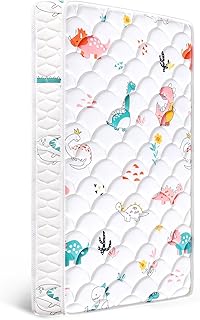
Letmxiu Premium 5" Crib Mattress and Toddler Mattress
A dependable everyday pick — Letmxiu Premium 5″ Crib Mattress and Toddler Mattress pulls in 15 ratings at 4.5 stars. Not flashy, just solid.
16. Low-Level Book Displays for a Montessori Toddler Room

A massive bookshelf with spines facing out doesn’t work for a toddler. They can’t read the titles. You need a forward-facing book display so they can see the covers. The Ikea FLISAT wall storage display solves this by mounting to the wall. It costs $24.99. I install them exactly 12 inches off the baseboard. This allows a sitting toddler to grab a book without standing up. Limit the display to 4 or 6 books. If you pack twenty books into a basket, they’ll just dump the basket to find the one at the bottom. I rotate the books weekly, usually timing it with a library trip. Keep the heavy board books on the bottom shelf and the paper pages higher up if they’re still in the tearing phase. I lost three library books to ripped pages before I learned to keep paperbacks out of reach. A curated, visible selection encourages independent reading.
Setting up a functional space doesn’t require a massive budget, just intentional choices. Start with the floor bed and the toy rotation, and you’ll see a difference in how your child plays. I’ve watched my own home go from a chaotic mess to a calm environment just by removing the clutter and lowering the artwork. Pin this guide for later when you’re ready to start building your shelves, and don’t be afraid to adjust things as your toddler grows.
Frequently Asked Questions
What is the best age to start a montessori toddler room?
You can start transitioning to a montessori toddler room around 12 to 18 months, particularly when moving from a crib to a floor bed. Ensure the entire space is thoroughly baby-proofed first.
How many toys should be in a montessori toddler room?
Keep only 2 to 4 toys visible on a low shelf at any given time. Store the remaining 8 to 12 toys out of sight and rotate them every few weeks to maintain focus.
Do I need expensive wooden furniture for a montessori toddler room?
No. While solid wood is durable, you can use affordable options like Ikea TROFAST frames or basic firm mattresses on the floor. The goal is child-scale accessibility, not a specific price tag.
How do I baby-proof a montessori toddler room safely?
Anchor all heavy furniture to the wall studs, cover every electrical outlet, remove long cords, and ensure no small choking hazards are accessible. The room itself acts as a safe crib.
