What’s Inside
- Choose the Perfect Sage Base Color
- Invest in Versatile, Convertible Furniture
- Implement Thoughtful Layered Lighting
- Embrace Natural Textures for Warmth
- Optimize with Smart Storage Solutions
- Curate Gender-Neutral Wall Art
- Incorporate Safe, Air-Purifying Greenery
- Prioritize Comfort with a Quality Glider
- Embrace the Minimalist Approach
- Personalize with Simple DIY Touches
- Implement Essential Safety Measures
- Encourage Sensory Engagement
- Future-Proof Your Nursery Design
- Don’t Forget the “Fifth Wall”
- Prioritize Natural Air Quality Management
- Layering Rugs for Sound Absorption
- Selecting the Right Mattress
- Organizing the Closet Space
- Creating a Functional Nursing Station
Last October, I spent three days painting a client’s nursery what I thought was a soft, calming green, only to realize at 4 PM it looked like radioactive split pea soup. Nailing a sage nursery gender neutral design isn’t just about grabbing the first green paint chip you see. You’re trying to build a space that works for a boy, a girl, or a surprise, without it feeling like a sterile hospital waiting room. I’ve designed dozens of these rooms over the last four years, and I’ve made every expensive mistake so you don’t have to. Let’s walk through exactly how to build a sage nursery gender neutral space that actually feels warm, functional, and intentional.
1. Choose the Perfect Sage Base Color

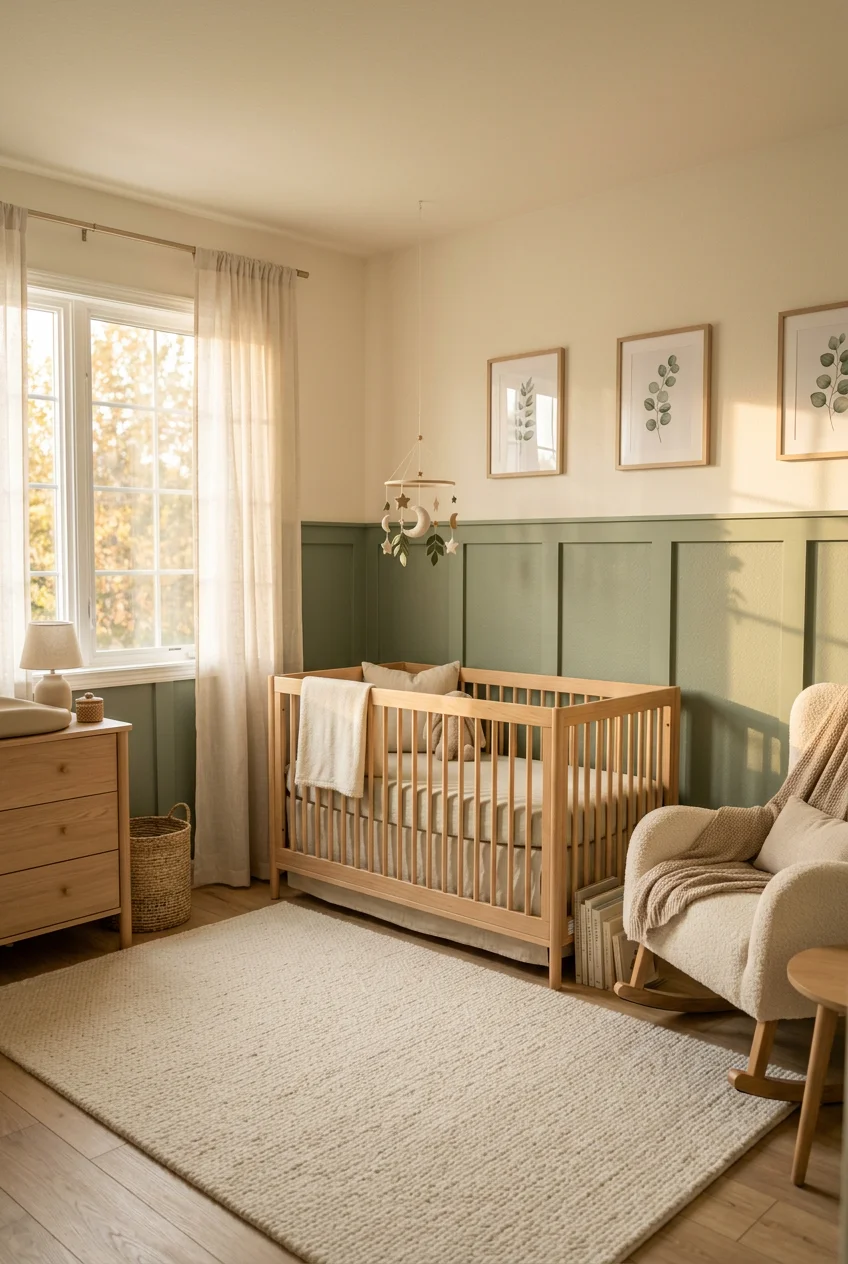
Paint is tricky. I painted my own son’s room three times because I didn’t test the swatches in the afternoon light. For a true sage nursery gender neutral foundation, you need a color with gray undertones, not yellow. Benjamin Moore’s “Sage Wisdom” at $69.99 a gallon is my standard go-to. If you want something slightly darker, Sherwin Williams’ “Evergreen Fog” ($72.49 per gallon) grounds a room beautifully. Here is the rule: you must paint a 12×12 inch square on at least two different walls. Look at it at 8 AM, noon, and 8 PM with the overhead light on. The $5.99 sample jar will save you a $200 repainting disaster. I skipped this step last Tuesday when rushing a consult, and we ended up with a mint green disaster that looked terrible next to natural wood furniture. Gray undertones keep the green from pulling neon when the sun hits it. No exaggeration.
2. Invest in Versatile, Convertible Furniture

A nursery needs to function for years, not just months. I’ve seen parents drop $800 on a gorgeous bassinet that the baby outgrows in twelve weeks. Skip that. Buy a GREENGUARD Gold certified 3-in-1 convertible crib instead. The Babyletto Hudson 3-in-1 Convertible Crib runs exactly $399.00 at Target, and it actually transitions into a toddler bed without looking like a repurposed cage. It has solid pine spindles and sits low to the ground, which saves your back when you’re lifting a 20-pound sleeping baby at 3 AM. Pair it with a wide, 6-drawer dresser instead of a dedicated changing table. I bought a cheap changing table for my first nursery, and it became a useless laundry catcher by month eight. A standard 48-inch wide dresser holds a 32-inch changing pad perfectly, leaving 16 inches for wipes and creams. Plus, you won’t have to buy new furniture when they hit preschool age.
3. Implement Thoughtful Layered Lighting

Overhead lighting is the enemy of a sleepy infant. If you flip on a standard 60-watt bulb during a 2 AM diaper change, you’re waking that baby up for the next two hours. I learned that the hard way. You need layered lighting. First, install a $24.99 Lutron dimmer switch for the main ceiling fixture. Use warm white LED bulbs, exactly 2700K temperature, to keep the room feeling soft. Then, add a smart night light. The Hatch Rest+ costs $89.99 and is worth every penny because you can control the dimness and the sound from your phone in the hallway. Set it to a very dim red light. Red light doesn’t interfere with melatonin production, meaning they’ll go back to sleep faster after eating. Put it on a shelf at least 4 feet away from the crib so the white noise fills the room evenly rather than blasting directly into their ear.

Criusia Drawer Organizer Clothes
Honestly, Criusia Drawer Organizer Clothes surprised me — sturdier than it looks in the photos, and over 1 buyers gave it 4.5 stars.
4. Embrace Natural Textures for Warmth

A room full of painted walls and hard wood furniture feels cold. You have to add heavy textures to soften the acoustics and make it comfortable. I usually start with a thick, 6×9 foot wool rug. Wool naturally repels stains, which matters when milk inevitably spills. Over the windows, you need serious blackout curtains. I use the Nicetown 100% Blackout Linen Curtains, which cost $34.50 per panel on Amazon. They have a thick black liner on the back. I bought cheap single-layer curtains from Walmart once, and the streetlights shined right through them. For the crib, keep exactly three sets of GOTS-certified organic cotton crib sheets. Burt’s Bees Baby sheets are $19.99 each. Three is the magic number: one on the mattress, one in the wash, and one in the closet for the inevitable 3 AM blowout. If you only have two, you’ll inevitably find yourself doing laundry at dawn.
5. Optimize with Smart Storage Solutions

Babies come with an absurd amount of plastic clutter. If you don’t plan the storage, the room will look like a daycare exploded within a week. The IKEA KALLAX 8-cube unit is $79.99 and remains the most functional piece of furniture you can buy. Turn it horizontally so it’s low to the ground. Fill the bottom four cubes with 13×13 inch woven seagrass baskets. I found great ones at Target for $16.00 each. Use these for bulky items like swaddles, extra wipes, and stuffed animals. A common mistake I see is buying tiny decorative bins that hold exactly three items. You need volume. I also keep a large cotton rope basket next to the changing dresser specifically for dirty laundry. Make sure it has handles. You’ll be carrying it to the washing machine every other day, so a rigid plastic hamper is just going to bang against your legs in the hallway.
6. Curate Gender-Neutral Wall Art

You don’t need cartoon animals plastered everywhere to make a room feel like a nursery. Subtle, nature-inspired art fits the sage theme much better and grows with the child. I source digital downloads from Etsy for about $6.00 each. I usually look for abstract mountain landscapes or simple botanical line drawings. I print them at Walgreens on 11×14 matte photo paper for $12.99. Frame them in light oak frames. Target’s Threshold wood frames are $18.00 and look professional. Never hang glass-framed art directly over the crib. I live in California where earthquakes happen, but even a slammed door can knock a frame off the wall. Hang art over the dresser or the glider instead. If you want something over the crib, use a lightweight canvas or a fabric pennant that weighs less than four ounces. Even if a lightweight canvas falls, it won’t hurt anyone.

Criusia Over the Door Organizer
Criusia Over the Door Organizer punches above its price — 218 buyers rated it 4.5 stars. I would buy it again.
7. Incorporate Safe, Air-Purifying Greenery

Plants bring life into a green room, but you have to be incredibly careful about toxicity. I bought a beautiful Pothos plant for a client’s nursery before realizing it’s toxic if chewed. I immediately swapped it out. Stick to a Spider Plant or a Parlor Palm. I picked up a healthy 6-inch Spider Plant at Sprouts last week for $14.99. Put it in a heavy terracotta pot ($8.99 at Home Depot) so it’s difficult to tip over. Place it on a high shelf, completely out of reach. Even non-toxic plants will cause a stomach ache if a toddler eats a handful of dirt and leaves. Plants also help naturally filter the air, which is a nice bonus in a room where a tiny human sleeps 14 hours a day. Water it in the sink, let it drain, and then put it back. You don’t want a leaking pot ruining an expensive wood dresser. You might also like: 20 Inspiring Yellow Nursery Lighting Ideas for Every Budget
8. Prioritize Comfort with a Quality Glider

You will spend hundreds of hours in this chair. Do not buy a glider based on how it looks on a Pinterest board. I bought a trendy, stiff mid-century rocker for my first baby, and my lower back hurt for six months. You need high armrests to support your elbows while holding the baby, and a high back to rest your head. The Babyletto Kiwi Electronic Recliner costs $799.00. It’s expensive, but the electronic recline is silent, and it has a built-in USB port. When you’re trapped under a sleeping infant for two hours, you’ll want your phone charged. If you’re buying a manual glider, make sure the mechanism is completely enclosed so crawling fingers can’t get pinched in the springs. Test it in a store if possible. Your feet need to touch the ground flat when sitting all the way back. If you have to push off your tiptoes to rock, your calves will cramp up. You might also like: 20 Charming Gender Neutral Crib Bedding Ideas for Every Budget
9. Embrace the Minimalist Approach

More stuff equals more stress. A minimalist nursery isn’t just an aesthetic choice; it’s a survival tactic. You don’t need a wipe warmer. They dry out the wipes and harbor bacteria. I threw mine away after two weeks. Buy the massive 900-count box of Kirkland baby wipes at Costco for $21.99 and keep them in their standard plastic dispenser. Keep the dresser top completely clear except for the changing pad, a small basket for diapers, and a tube of $7.49 Aquaphor. When you’re changing a screaming baby at 4 AM, you don’t want to be knocking over decorative picture frames or ceramic figurines. A clean, uncluttered room naturally feels more serene, allowing the sage walls and natural wood tones to stand out without visual competition. Less visual noise helps the baby wind down for sleep. It also means you spend ten minutes cleaning the room instead of an hour. You might also like: 15 Baby Girl Nursery Room Ideas for Every Budget

Delta Children Nursery Storage 48 Piece Set
If you want something that just works, Delta Children Nursery Storage 48 Piece Set – Easy Storage/Organizatio is a safe bet (17 reviews, 4.5 stars).
10. Personalize with Simple DIY Touches

Custom nursery decor can drain your budget fast. A handmade mobile adds character without costing $150. I made one last month using a 10-inch wooden embroidery hoop ($2.99 at Michaels) and a bag of natural wood beads ($4.99). I strung the beads on heavy-duty fishing line and tied them to the hoop. It took 45 minutes and looks incredibly high-end against a sage wall. Newborns can only see high-contrast shapes anyway, so the dark wood against a light ceiling gives them exactly what they need to focus on. Make sure every knot is triple-tied and glued. Hang it from a ceiling hook that is screwed directly into a stud, keeping the longest piece at least 16 inches out of the baby’s reach when they pull up to stand. The last thing you want is a heavy mobile crashing down because you used standard sticky tape.
11. Implement Essential Safety Measures

Nursery safety goes way beyond outlet covers. I see parents meticulously cover every plug but leave heavy furniture unanchored. You have to anchor the dresser and the bookshelf to the wall studs. I use the Safety 1st Furniture Wall Straps, which are $12.99 for a pack of two at Walmart. It takes ten minutes with a drill. Another major hazard is window blind cords. I once walked into a nursery where the monitor cord was dangling three inches from the crib mattress. Keep all cords, including monitor cables and curtain tie-backs, at least three feet away from any part of the crib. For outlets, skip the little plastic push-in plugs. Toddlers can pry those out with their fingernails and choke on them. Install the sliding outlet covers that replace the entire faceplate ($15.99 for a 6-pack at Home Depot). They automatically snap shut the second you pull a plug out, giving you total peace of mind.
12. Encourage Sensory Engagement

A nursery shouldn’t just be for sleeping; it’s where your baby starts exploring the world. While the sage walls provide a calm backdrop, you need small pops of sensory items. I keep a small basket of tactile toys on the bottom shelf of the KALLAX unit. Last Tuesday, I picked up two organic cotton rattles from Whole Foods for $18.00 each. They have a subtle crinkle sound inside that isn’t obnoxious. Avoid toys that require batteries and flash bright lights. They overstimulate the baby before naps. Instead, offer a chunky wooden grasping toy or a textured fabric book. The contrast of soft fabric, smooth wood, and slightly rough woven baskets in the room gives crawling babies different surfaces to touch. Just make sure nothing has glued-on parts that could snap off in their mouth. Babies explore with their mouths, so everything must be completely secure and washable.

Beautiful Wooden Baby Closet Dividers Set of 7
A dependable everyday pick — Beautiful Wooden Baby Closet Dividers Set of 7 – Double-Sided Organize pulls in 11 ratings at 4.5 stars. Not flashy, just solid.
13. Future-Proof Your Nursery Design

If you buy everything from the “baby” section, you’ll be redecorating in three years. Buy pieces that belong in a regular house. Instead of a rug with cartoon roads on it, I bought a gorgeous 5×8 faded Persian-style rug at Kroger’s Fred Meyer home section for $129.00. It hides stains brilliantly and will eventually move to our guest room. Choose a dresser with adult-sized drawers and heavy-duty metal glides. The cheap baby dressers often have flimsy plastic drawer tracks that break when your toddler decides to use the bottom drawer as a step stool. By investing in a solid wood dresser and a classic patterned rug, the only things you’ll need to change when they turn four are the crib and the wall art. The sage green walls will transition perfectly into a “big kid” room. You are saving yourself thousands of dollars by planning for a five-year timeline instead of a one-year timeline.
14. Don’t Forget the “Fifth Wall”

The ceiling is a massive blank canvas that babies stare at constantly. Most people leave it stark white, which can feel jarring against soft green walls. I like to paint the ceiling a 50% lighter version of the wall color. If you’re using Benjamin Moore’s Sage Wisdom, ask the paint counter to mix a can at half-strength. It costs the same $69.99 but creates a subtle, cohesive cocoon effect. I also stick subtle glow-in-the-dark star decals on the ceiling. I found a pack of 200 tiny dots on Amazon for $11.99. During the day, they are invisible. At night, they provide a very faint, comforting glow that doesn’t emit enough light to disrupt sleep. It’s a tiny detail, but it makes the room feel magical when you’re rocking them in the dark. Plus, it gives you something calming to look at while you wait for a burp.
15. Prioritize Natural Air Quality Management

Paint, new furniture, and synthetic rugs all off-gas VOCs for months. You need to manage the air quality actively. I run a Levoit Core 300 HEPA Air Purifier ($99.99 at Target) in every nursery I design. It sits in the corner, pulls dust out of the air, and doubles as a fantastic white noise machine on the medium setting. I change the $29.99 filter every six months. You also need to physically open the windows. I make it a habit to open the nursery window for exactly ten minutes every morning while I’m getting the baby dressed, even in winter. It flushes out the stale air. Just make sure your window screens are securely locked and you never place the crib directly under the window where drafts can hit the baby. Fresh air naturally diffuses the lingering smell of dirty diapers better than any artificial spray ever will.

Vailando 6-Shelf Hanging Closet Organizer with 3 Drawers
Vailando 6-Shelf Hanging Closet Organizer with 3 Drawers punches above its price — 35 buyers rated it 4.5 stars. I would buy it again.
16. Layering Rugs for Sound Absorption

Nurseries echo. Hardwood floors bounce every squeaky floorboard sound right back into the crib. I solve this by layering rugs. I start with a thick, 1/2-inch felt rug pad. I bought a 6×9 foot pad at Trader Joe’s home pop-up last year for $45, but you can find them anywhere. Put the heavy wool rug over that. If you have a tight budget, buy a cheap, large jute rug ($80 at IKEA) as the base, and layer a smaller, softer 4×6 washable rug ($119 from Ruggable) right next to the crib where you stand the most. The double layer absorbs footfalls. I learned this after waking my daughter up five days in a row just by tiptoeing out of the room. The felt pad underneath stops the floorboards from shifting and squeaking under your weight. It creates a massive sound barrier between the floor and the rest of the house. Trust me on this.
17. Selecting the Right Mattress

The crib mattress is more important than the crib itself. Do not cheap out here. You need a dual-sided mattress: extra firm for infants, and slightly softer for toddlers. I strongly prefer the Newton Baby Crib Mattress. It costs $299.00, which hurts to pay, but the entire core is made of a food-grade polymer that is completely breathable. I shoved my own face into it to test it, and you can literally breathe right through it. If your baby rolls onto their stomach in the middle of the night, you won’t panic. The cover zips off and can be washed in the machine, and you can literally wash the core in the shower. I’ve ruined traditional foam mattresses because a diaper leaked and seeped into the foam. You can’t clean foam. Once a foam mattress smells sour, you just have to throw it in the trash.
18. Organizing the Closet Space

Baby clothes are tiny, which means a standard closet hanging rod is a massive waste of vertical space. You need to install a second rod 36 inches below the top one. I bought a simple tension rod at Target for $14.99 to double the hanging space without drilling holes. Then, I use the Container Store’s clear plastic sweater bins ($11.99 each) on the top shelf to store clothes in the next size up. Label them clearly with a piece of masking tape: “6-9 Months.” I used to just shove clothes in a drawer and missed out on half my baby’s wardrobe because I forgot it was there. Use velvet baby hangers ($16.99 for 50 at Amazon). Plastic hangers are too thick and take up too much room, and the clothes slide right off them anyway. Velvet hangers grip the tiny cotton onesies so they actually stay put when you brush past them.
19. Creating a Functional Nursing Station

You need a dedicated drop zone next to your glider. When you are holding a sleeping baby, you can’t reach across the room for a burp cloth. I use a 3-tier metal rolling cart from Target ($35.00) painted a soft cream to match the sage nursery gender neutral aesthetic. On the top tier, I keep a 32 oz Yeti water bottle ($45), a box of breast pads, and three muslin burp cloths. The middle tier holds a spare pacifier in a clean container, a phone charger, and a tube of lip balm. The bottom tier holds a rolled-up blanket for me. The wheels are crucial. I can pull the cart right up to the armrest of the glider, and push it back against the wall when I’m done. It keeps the room looking tidy. Having everything within arm’s reach means you never have to disrupt a sleeping baby just to grab a drink. Took me years to figure out.
Designing a nursery doesn’t have to be a stressful exercise in buying matching sets. By focusing on a calming sage green base, natural textures, and furniture that actually serves a purpose, you’ll create a room that feels peaceful for both you and the baby. I’ve learned that functionality always beats aesthetics at 3 AM, but with these choices, you don’t have to sacrifice either. Pin this guide so you can reference the exact paint colors and dimensions when you’re standing in the hardware store, and take your time building a space you actually want to sit in.
Frequently Asked Questions
What is the best sage green paint color for a nursery?
Benjamin Moore’s Sage Wisdom and Sherwin Williams’ Evergreen Fog are excellent choices. They have gray undertones that prevent the green from looking neon in bright afternoon sunlight.
How do you make a sage nursery gender neutral?
Pair sage green walls with natural wood furniture, cream-colored wool rugs, and abstract or nature-inspired art. Avoid overtly gendered themes and stick to organic textures for a balanced look.
What furniture do I actually need in a nursery?
You need a convertible crib, a comfortable glider with high armrests, and a wide 6-drawer dresser. You can skip the dedicated changing table and just put a changing pad on top of the dresser.
Are plants safe for a baby’s nursery?
Yes, if you choose non-toxic varieties like Spider Plants or Parlor Palms. Always place them in heavy pots on high shelves completely out of reach, as even non-toxic leaves can cause stomach upset if eaten.
