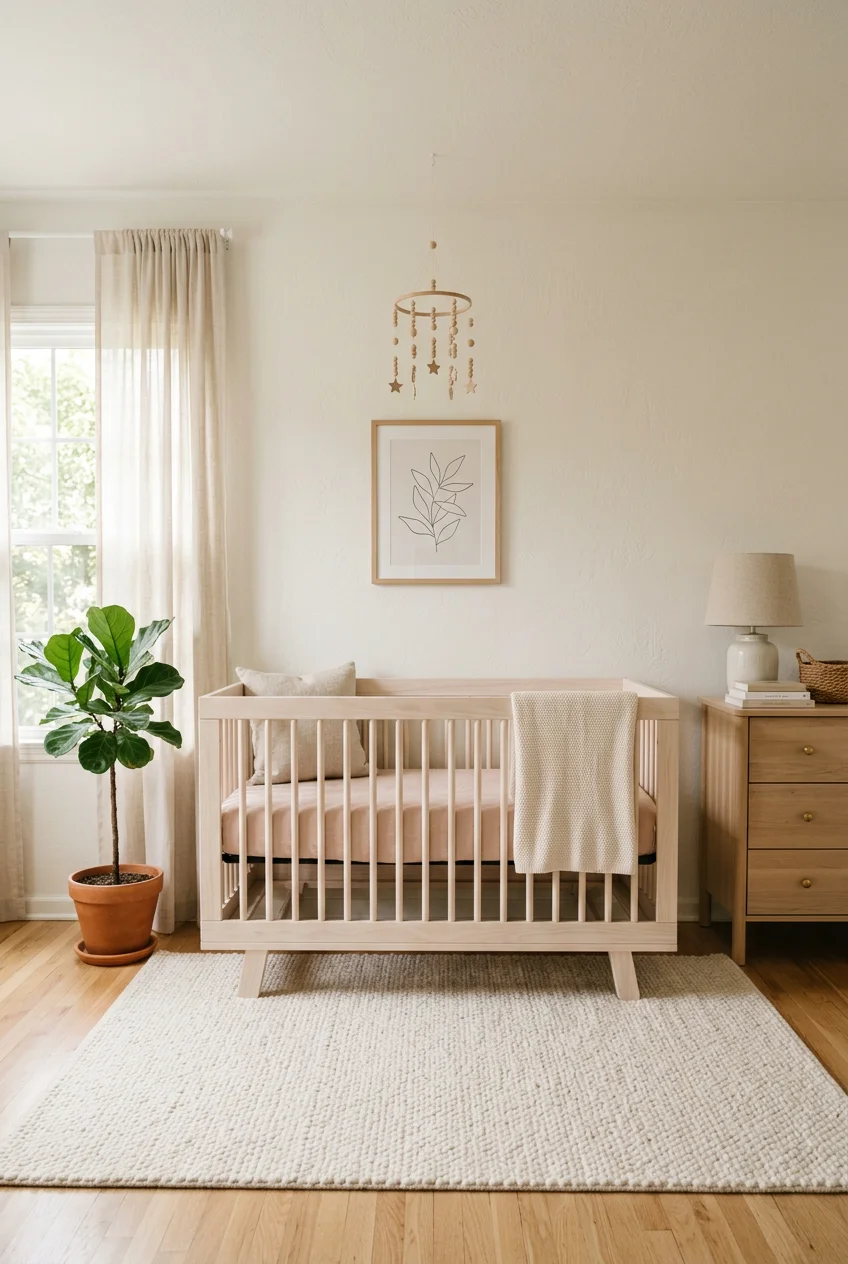
What’s Inside
- Embrace Earthy & Muted Color Palettes for 2026
- Prioritize Non-Toxic, Zero-VOC Paint in Your Baby Girl Nursery
- Invest in a GREENGUARD Gold Certified Convertible Crib
- Select the Right Nursery Rug Size for Comfort and Play
- Install 100% Blackout Curtains for Optimal Sleep
- Implement Layered, Warm Lighting with Dimmers
- Maximize Storage with Dual-Purpose Furniture
- Choose a Comfortable and Functional Glider
- Avoid Over-Theming for a Timeless Baby Girl Nursery
- Prioritize Safety from Day One
- Incorporate Natural Materials and Textures
- Add Personalized and Heirloom Elements Thoughtfully
- Stimulate Newborn Vision with High Contrast
- Common Mistake: Buying Furniture Before Planning the Layout
- Explore Alternative Wall Treatments Like Limewash
Three years ago, I stood in my daughter’s freshly painted room. I was choking on paint fumes and realized I’d completely ruined my first attempt at a baby girl nursery. I wanted soft and sophisticated. Instead, the walls looked like a melted bottle of Pepto Bismol. The smell was so strong I had to keep the door shut for a week. I spent $150 on premium pink paint that gave me a headache every time I walked past the room. It was a disaster. I ended up repainting the entire thing at 34 weeks pregnant, crying on a step stool while my husband tried to scrape dried pink drips off the baseboards. Learned that the hard way.
If you’re staring at an empty room and feeling that same panic, I get it. Designing a nursery is stressful because the internet feeds you impossible standards. You don’t need a professional decorator. You just need a practical plan that prioritizes sleep, safety, and a few smart aesthetic choices. I’m going to walk you through exactly what works and what fails miserably, based on my own expensive mistakes. Let’s skip the fluffy advice. Here are 15 concrete, tested ways to build a functional and beautiful space for your baby.
1. Embrace Earthy & Muted Color Palettes for 2026

Instead of that awful bubblegum pink I tried first, I switched to Sherwin-Williams Creamy SW 7012. It costs $74.99 a gallon, but the coverage is excellent. Muted palettes are heavily trending for 2026 because they actually calm the nervous system. You want colors like sage green, muted terracotta, and warm blush. I painted three walls in the Creamy white and did one accent wall in a soft terracotta. The room instantly felt warmer. Bright pink reflects light in a harsh way, making the room feel energized. You want the opposite of energized when you’re trying to put a screaming infant to sleep at 2 PM. A soft sage green absorbs the light beautifully. I bought a small 8 oz sample jar for $5.99 first to test it on the wall because the light changes drastically from morning to afternoon. Paint a 2×2 foot square and watch it for 24 hours. The terracotta looked muddy at noon but perfect at dusk. I used an eggshell finish because flat paint absorbs finger oils and looks dirty within months. The creamy eggshell reflects just enough natural light from the window without causing a glare.
2. Prioritize Non-Toxic, Zero-VOC Paint in Your Baby Girl Nursery

The fumes from my first paint job lingered for weeks. I learned the hard way that standard paints off-gas volatile organic compounds for months. You’re putting a baby with brand new lungs in that room. I switched to ECOS Paints, specifically their Lullaby range. It runs about $85.99 per gallon. It has zero odor. I literally stuck my nose in the can and smelled nothing but a faint chalky scent. Standard paints contain chemicals like benzene and formaldehyde. You don’t want those trapped in a 10×12 room with the door shut. Benjamin Moore Eco Spec is another great option you can find locally. If you use a true zero-VOC paint, the room’s safe to use within 24 to 48 hours as long as you keep the ceiling fan running. I also wipe down the freshly painted baseboards with a mixture of 1/4 cup white vinegar and 16 oz of water just to clear any residual dust. You won’t regret spending the extra $30 on safe paint. It saves you weeks of airing out the house.
3. Invest in a GREENGUARD Gold Certified Convertible Crib

I initially bought a cheap $150 crib from Walmart. The wood felt flimsy, and the slats rattled every time I leaned against it. I sold it on Facebook Marketplace and bought the Babyletto Hudson 3-in-1 Convertible Crib for $399.00. The difference in quality is obvious the second you assemble it. The Hudson is GREENGUARD Gold certified, meaning it passed tests for over 10,000 chemical emissions. The slats are exactly 2 inches apart, well under the 2 3/8 inches maximum safety standard. The solid New Zealand pine doesn’t creak when you slowly back away from a sleeping baby. Convertible cribs are worth the upfront cost because they transition into toddler beds. I’ve used my Hudson for three years now. The white finish has a few teeth marks on the top rail (a common casualty), but the frame is completely structurally sound. Buy the conversion kit ($89.00) at the same time you buy the crib. They frequently discontinue colors, and you don’t want to be stuck with a mismatched toddler rail two years from now. The mattress height is adjustable to four different levels, which saves your lower back during the newborn phase.

Beautiful Wooden Baby Closet Dividers Set of 7
A dependable everyday pick — Beautiful Wooden Baby Closet Dividers Set of 7 – Double-Sided Organize pulls in 11 ratings at 4.5 stars. Not flashy, just solid.
4. Select the Right Nursery Rug Size for Comfort and Play

Most people buy a rug that is way too small. I bought a cute 3×5 foot fluffy rug from Target for $49.99. It looked like a tiny bath mat floating in the middle of a 120-square-foot room. You need a rug that anchors the furniture. For a standard 10×12 foot nursery, an 8×10 foot rug is ideal. At a minimum, you want a 6×9 foot size. The rug needs to extend at least 18 to 24 inches beyond the front of the crib and completely under the front legs of your rocking chair. I ended up buying a 6×9 foot washable rug from Ruggable for $219.00. Look for a pile height between 0.75 and 1.25 inches. Anything thicker is a tripping hazard when you’re carrying a baby in the dark. Anything thinner won’t cushion their inevitable falls when they learn to stand. Vacuuming a cheap, lightweight rug is infuriating because the edges constantly get sucked into the beater bar. The Ruggable pad provides just enough grip on my slick hardwood floors, and I can stuff the top layer into my washing machine when milk spills happen. You might also like: 15 Lovely Baby Boy Crib Bedding Ideas That Are Totally Worth It
5. Install 100% Blackout Curtains for Optimal Sleep

If there’s one thing you take away from this list, it’s this. Buy real blackout curtains. I tried using cheap unlined curtains and my daughter woke up at 5:15 AM every single day between May and August. I bought a pair of NICETOWN 100% blackout curtains with the black liner for $34.99 on Amazon. The room goes pitch black at noon. Do not buy curtains with grommets. The metal rings create gaps at the top where sunlight shoots through like a laser beam right into your baby’s eyes. You want rod pockets or back tabs. I mounted my curtain rod 4 inches above the window frame and let the fabric pool slightly on the floor to block light from the bottom. Sleepout Curtains are another solid option if you travel; they cost around $99.00 and stick directly to the glass with suction cups. Total darkness regulates their melatonin production. It fixes short naps better than any sleep training method I’ve tried. Period. The thick, double-lined polyester feels heavy in your hands and drapes straight down without flaring out at the bottom. You might also like: 20 Creative Small Spaces Baby Room Organization Ideas You Haven’t Thought Of
6. Implement Layered, Warm Lighting with Dimmers

Overhead lighting is aggressive. Flipping the main switch at 2 AM is a guaranteed way to fully wake a baby who just needed a quick diaper change. I use a layered lighting approach. I swapped the main ceiling bulbs for 2700K warm white LEDs. You can get a 4-pack at Costco for $12.99. They cast a soft, yellow glow instead of that harsh, blue-toned hospital light. I also installed a dimmer switch ($24.99 at Home Depot) which took me about twenty minutes after watching a tutorial. For the changing table, Education Design Expert Karen Aronian suggests a flexible clip-on light. I bought a small amber-light reading clip for $14.99. I attach it to the edge of the dresser and point it directly at the diaper area. The baby stays in the shadows, and I can see exactly what I’m cleaning. I also keep a Himalayan salt lamp ($19.99) plugged into the corner. It gives off just enough light to navigate the room without stubbing my toe on the crib legs. I completely avoid lamps with glass shades. If a glass lamp gets knocked over, you’re picking invisible shards out of the carpet for months. No exaggeration. You might also like: 18 Nursery Ideas Colorful You Need to See

JolyWell Night Light for Kids
JolyWell Night Light for Kids punches above its price — 45 buyers rated it 4.5 stars. I would buy it again.
7. Maximize Storage with Dual-Purpose Furniture

Babies require an absurd amount of plastic gear, tiny socks, and bulky blankets. Do not buy a standalone changing table. They’re a massive waste of money and space. Once your kid is potty trained, you’re stuck with a weird, shallow shelving unit. Instead, I bought an IKEA Hemnes 8-drawer dresser for $249.99. It’s the exact right height (37.7 inches) for changing diapers without destroying your lower back. I put a Keekaroo Peanut changing pad ($149.95) right on top. The top drawers hold diapers, a 3-pack of water wipes ($11.99), and diaper cream. The Hemnes dresser drawers glide silently. That sounds minor, but a squeaky drawer track will ruin your life when you’re trying to put away laundry while the baby sleeps. To maximize vertical space, I installed two floating wooden shelves above the glider to hold board books. I also use an Elfa over-the-door organizer ($89.00) on the closet door. It holds small items like hair bows, thermometer, and lotion bottles. Keeping the clutter off the floor makes the room feel twice as large and significantly less stressful to walk into.
8. Choose a Comfortable and Functional Glider

You’ll spend hundreds of hours in the nursery chair. Nursing, bottle feeding, rocking through illnesses, and just staring at the wall at 4 AM. I originally borrowed an antique wooden rocking chair from my mother-in-law. My tailbone was bruised within a week. I gave it back and bought the Babyletto Kiwi Swivel Glider Recliner. It costs $799.00, which hurt my budget, but it was worth every penny. Interior designer Rachel Blindauer frequently recommends this chair for a reason. It has a hidden control panel that electronically reclines the seat, and a built-in USB charging port. My phone always dies during marathon cluster-feeding sessions, so plugging it directly into the chair is incredibly helpful. Look for chairs with fully skirted bases. Exposed metal gliding mechanisms pinch fingers and look cheap. I also keep a small basket next to the chair stocked with burp cloths, a 32 oz water tumbler, and a bag of Trader Joe’s peanut butter pretzels ($3.49). You need calories when you’re trapped under a sleeping infant. The fabric is a performance boucle that repels spit-up. I spilled an entire 4 oz bottle of formula on the armrest last Tuesday, and it wiped clean with just a damp rag.
9. Avoid Over-Theming for a Timeless Baby Girl Nursery

The biggest trap parents fall into is the rigid theme. I see nurseries covered in floor-to-ceiling cartoon elephants or intense princess castles. Avoid over-theming your baby girl nursery. Trends for 2026 lean heavily toward subtle, sophisticated spaces that don’t need a complete overhaul when the kid turns three. Instead of buying a matching 10-piece bedding set with printed flamingos, focus on a mood. I used a soft vintage floral wallpaper from Chasing Paper ($120.00 per panel) on one wall. The rest of the room relies on textures. I bought a solid blush pink linen crib skirt ($45.00) and simple white cotton sheets. Standard baby themes aren’t usually my style. I want the room to flow with the rest of my house. I hung a $25.00 woven macrame wall hanging I found on Etsy instead of a plastic mobile. It adds visual interest through the knotted cotton rope rather than loud colors. If you want a specific animal or character, bring it in through temporary items like framed art prints. A $15.00 framed print of a watercolor bunny is much easier to replace than $300 worth of custom bunny curtains.

Criusia Over the Door Organizer
Criusia Over the Door Organizer punches above its price — 218 buyers rated it 4.5 stars. I would buy it again.
10. Prioritize Safety from Day One

Safety isn’t glamorous, but it dictates where everything goes. I made a huge mistake early on by hanging a heavy, framed glass mirror directly above the changing table. I thought it looked beautiful until my six-month-old kicked the wall and the mirror rattled. I took it down immediately. Do not hang anything heavy or easily dislodged over the crib or the changing area. If you want art there, use lightweight canvas or a woven tapestry. You also must anchor every piece of furniture. Dressers become climbing walls for toddlers. I use $12.99 nylon furniture straps from Amazon. They screw directly into the wall studs. Keep the crib at least three feet away from windows, blinds, and heater vents. Cord strangulation is a very real risk. I bought a pack of plastic cord cleats for $4.99 and wrapped the blind cords tightly out of reach. Even the baby monitor cord needs to be stapled to the wall or enclosed in a plastic conduit ($15.99 at Lowe’s) so tiny hands can’t pull the camera into the crib. I’d rather spend money on safety hardware than custom curtains.
11. Incorporate Natural Materials and Textures

Nurseries can easily start looking like plastic storage bins if you aren’t careful. Incorporating natural materials breaks up the synthetic baby gear. Light wood, linen, rattan, jute, and cotton gauze are huge for 2026. They add warmth and a calming, tactile element to the room. I bought a rattan-front storage cabinet from Target for $180.00 to hold extra blankets. The woven texture immediately softened the room. I also swapped out standard polyester curtains for 100% linen panels ($59.99 each). They drape beautifully and have a slightly wrinkled, relaxed look. Instead of plastic laundry hampers, I use a large woven seagrass basket ($35.00). The seagrass basket has a distinct, earthy smell when you first unpack it, but it fades after a few days. I even started cleaning the room with natural products to match the vibe. I buy a 16 oz bottle of branch basics concentrate and mix my own all-purpose spray. I also grab a $9.99 organic cotton swaddle from Sprouts to drape over the back of the glider. The mix of wood, linen, and cotton prevents the room from feeling sterile.
12. Add Personalized and Heirloom Elements Thoughtfully

You don’t need to buy everything brand new. Curated, vintage pieces give a room character that a big-box store catalog photo lacks. I try to blend modern safety with older, personalized decor. I found an incredible solid brass table lamp at a local antique mall for $25.00. I rewired it myself using a $10.00 kit from Home Depot, and it sits on the dresser. It adds weight and history to the space. I also framed a handwritten recipe card from my grandmother in a $14.99 floating glass frame. Instead of buying generic wall letters, I commissioned a local woodworker to carve my daughter’s first initial out of walnut for $45.00. I also keep a few lavender sachets from Whole Foods ($4.99) tucked into the dresser drawers. The scent lightly permeates her clothes, making the heirloom dresser smell fresh instead of musty. I also have a small, $12.00 ceramic dish on the dresser that belonged to my aunt. I use it to hold pacifiers and nail clippers. Pick two or three meaningful items to display. If you clutter every surface with knick-knacks, you’ll just end up dusting them constantly.

Modanais Baby Diaper Caddy Organizer Cart
Modanais Baby Diaper Caddy Organizer Cart – 3 Tier Rolling Cart with D punches above its price — 635 buyers rated it 4.5 stars. I would buy it again.
13. Stimulate Newborn Vision with High Contrast

Pastel pinks and soft greens are great for your mental state, but newborns literally can’t see them. For the first few months, their vision is blurry and they only register high contrast. Education Design Expert Karen Aronian suggests starting with black and white contrasts to stimulate optic nerve development. I completely ignored this with my first kid and bought all pastel toys. She ignored them. With my second, I bought a set of black and white high-contrast art cards from Wee Gallery for $24.00. I propped them up along the baseboard during tummy time. She stared at them for twenty minutes straight. You don’t have to paint the walls black and white. Just incorporate temporary elements. I bought a $35.00 black and white geometric mobile and hung it over the changing table. It gave her something to focus on, which stopped her from thrashing around during diaper changes. I also bought a $14.99 black and white striped muslin swaddle blanket. The sharp lines give their developing eyes an edge to track. Once she hit four months old, I stored the art cards in a drawer and swapped the mobile for a softer, colored one.
14. Common Mistake: Buying Furniture Before Planning the Layout

Here’s a painful truth. I bought a massive, oversized armchair from Costco for $399.00 before I ever measured the nursery. I dragged the 80-pound box upstairs, unpacked it, and realized it completely blocked the closet door. I couldn’t open the door more than a few inches. I had to rent a truck just to return the chair. Do not buy furniture before mapping out the layout. Get a roll of blue painter’s tape ($5.99 at hardware stores) and tape the exact dimensions of the crib, dresser, and chair onto the floor. Leave at least 36 inches of walking space between major pieces. You need room to pace back and forth with a crying baby at 3 AM without tripping over a footstool. Put the crib on the quietest wall, away from the hallway door and the window. Put the changing table near the door so you can toss dirty diapers into the hall trash can quickly. When mapping the layout, consider the door swing. Planning the layout first saves you hours of heavy lifting and endless frustration. Took me years to figure out.
15. Explore Alternative Wall Treatments Like Limewash

Paint isn’t your only option anymore. Standard flat paint shows every single scuff mark. If you want something more durable and visually interesting, look into limewash. I used a gallon of Portola Paints limewash ($85.00) in a client’s nursery last year. You brush it on in overlapping X-patterns. It dries to a soft, chalky, matte finish that actually absorbs CO2 and regulates moisture in the room. The physical act of painting those X-strokes is exhausting on your shoulders. But worth it. The cloudy, mottled texture is incredible. If painting sounds terrible, try peel-and-stick wallpaper. CostaCover makes gorgeous vintage rose prints for about $45.00 a roll. It’s basically a giant sticker. I installed it on a Saturday afternoon with just a plastic smoothing tool and a utility knife. Here’s a fun trick: put the wallpaper on the ceiling. Babies spend 80% of their time staring straight up. A subtle floral pattern on the ceiling gives them something beautiful to look at while leaving the walls clean and simple. I picked up a $5.99 eucalyptus bundle from Kroger to hang from the curtain rod, and the room feels like a tiny, breathable sanctuary.
Building a nursery is a lot of work, but focusing on function over rigid themes makes the process so much easier. Start with your layout, prioritize safe materials, and layer in those cozy textures. I hope these tips save you from a few of the headaches I dealt with. Save this article or pin it to your nursery planning board so you have all the measurements and brand names handy when you’re ready to start shopping!

Criusia Drawer Organizer Clothes
Criusia Drawer Organizer Clothes punches above its price — 1 buyers rated it 4.5 stars. I would buy it again.
Frequently Asked Questions
What is the best color for a baby girl nursery?
Muted, earthy tones like sage green, warm blush, and creamy whites are ideal. They absorb light beautifully and create a calming environment, unlike harsh bright pinks.
How long should you wait to put a baby in a freshly painted room?
If you use a high-quality zero-VOC paint like ECOS Lullaby, the room is typically safe within 24 to 48 hours, provided you keep a ceiling fan running for ventilation.
What size rug do I need for a standard nursery?
For a typical 10×12 foot room, a 6×9 or 8×10 foot rug is best. It should extend at least 18 to 24 inches beyond the crib and under the front legs of your glider.
Are convertible cribs worth the extra money?
Yes. A GREENGUARD Gold certified convertible crib transitions into a toddler bed, saving you from buying a new bed frame two years later. Just remember to buy the conversion kit upfront.
