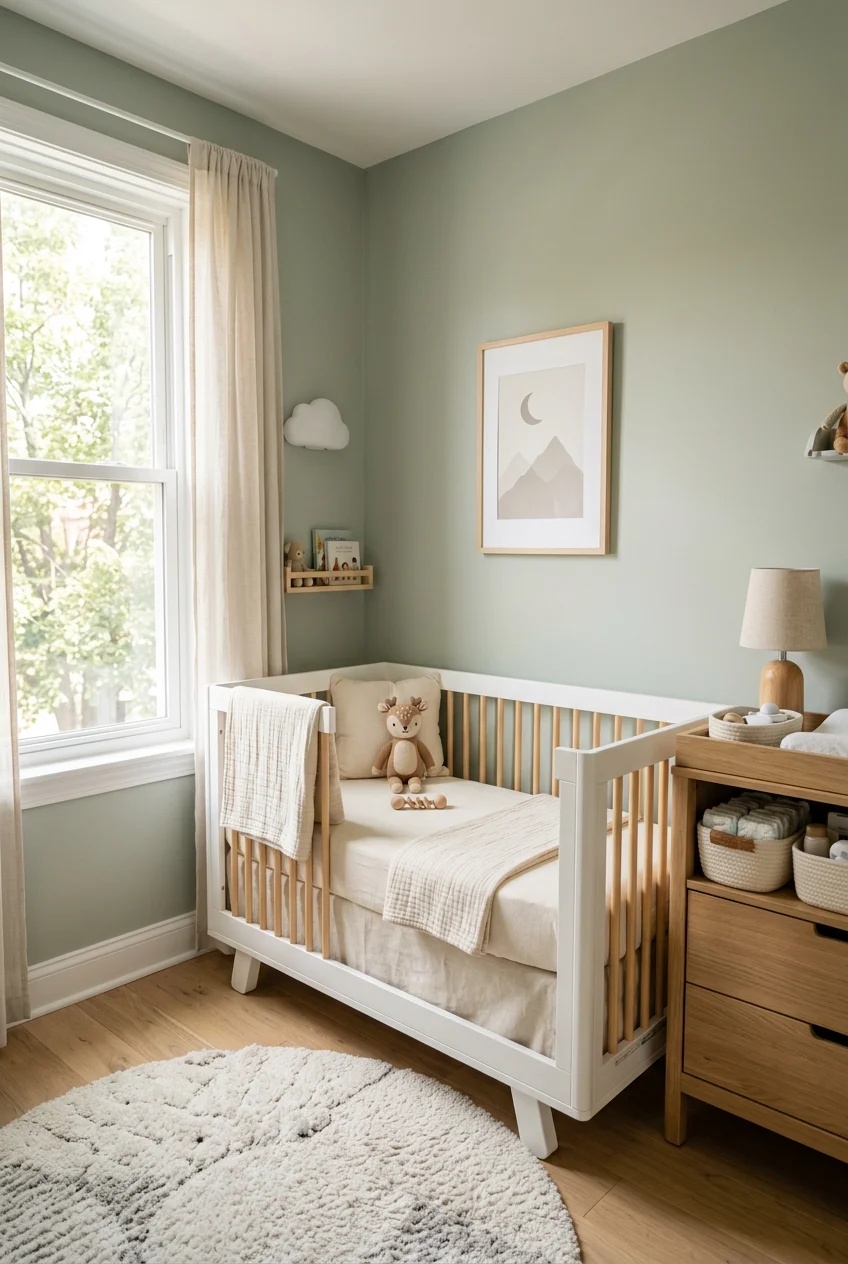
What’s Inside
- Opt for a Mini Crib: The Best of Small Nursery Ideas Space Saving
- Embrace Vertical Storage with Wall-Mounted Shelving
- Utilize Over-the-Door Organizers for Essentials
- Invest in a Multi-Functional Dresser as a Changing Station
- Implement a Minimalist Baby Capsule Wardrobe
- Maximize Closet Space with Double Rods and Organizers
- Choose a Compact Glider with a Storage Ottoman
- Utilize Under-Crib Storage Bins for Bulk Items
- Brighten and Expand with Light Colors and Mirrors
- Incorporate a Rolling Utility Cart for a Mobile Station
- Mount Lighting Fixtures to Walls or Ceilings
- Declutter with Smart Canvas Toy Storage Solutions
- Common Mistake: Overbuying and Ignoring Layout
- Expert Opinion: Prioritize Safety Above All
- Surprising Tip: Utilize a Pegboard for Customizable Storage
- Wall-Mounted Shelves: Essential Small Nursery Ideas Space Saving
I sat on the floor of my 8×10 spare bedroom last Tuesday, crying over a massive, half-assembled wooden crib that blocked the closet door completely. That rough moment forced me to look for small nursery ideas and layouts that work in real life. I tried cramming a standard crib, a bulky recliner, and a six-drawer dresser into a room the size of a walk-in closet. It smelled like fresh paint and pure frustration. I spent hours trying to force heavy furniture to fit before realizing I had to rethink my approach. If you’re staring at a tiny room and panicking about where the baby’s gear will go, I get it. I’m Lauren, and as a nursery design consultant, I’ve seen every cramped layout possible. I’m sharing the exact measurements, specific products, and layout strategies I use to make tiny rooms work. Let’s fix your floor plan.
1. Opt for a Mini Crib: The Best of Small Nursery Ideas Space Saving

Let’s start with the biggest space hog in the room. A standard crib eats up precious floor real estate. I learned that the hard way when I bought a massive sleigh crib that left exactly 12 inches of walking space. It was a disaster. Instead, open up your floor plan by choosing a mini crib. The Delta Children Classic Mini Crib measures exactly 39 by 25 by 37 inches and costs $129.99 at Target. It fits perfectly into tight corners. Even better, select a convertible mini crib that grows with your child. The Babyletto Gelato 4-in-1 Convertible Mini Crib runs around $269.00 and transitions easily to a toddler bed. For more storage, you need models with built-in drawers. The Carter’s by daVinci Colby 4-in-1 Convertible Mini Crib features a trundle with two large drawers. I store 4-ounce muslin swaddles and extra crib sheets down there. The tradeoff is that these drawers aren’t incredibly deep, but they hold enough nighttime essentials to keep your dresser clear.
2. Embrace Vertical Storage with Wall-Mounted Shelving

When you’re out of floor space, look up. Vertical storage is the only way to survive a tiny room. I spent months tripping over stacks of heavy board books before I finally installed floating shelves. I bought three IKEA LACK Wall Shelves for $14.99 each and mounted them above the dresser. They hold a stack of wooden blocks and a row of books without bowing. The MOSSLANDA picture ledges, starting at $9.99, are another great option for displaying books face-out. They have a small lip that prevents things from sliding off. I installed two of these last October, and they instantly cleared off the dresser surface. You have to be careful with placement. Never install shelves directly over the crib. A heavy book falling on a sleeping baby is a nightmare. Always use heavy-duty drywall anchors. I skipped the anchors on my first try and ripped a chunk of drywall out when I overloaded the shelf with a heavy ceramic piggy bank. It’s an extra step, but it’s not optional for safety.
3. Utilize Over-the-Door Organizers for Essentials

The back of the nursery door is a storage goldmine that most people ignore. I bought the Ofiray-Home 5-Tier Over The Door Organizer for $24.99 on Amazon after realizing my dresser drawers were overflowing. It has clear pockets, which means I don’t have to dig around blindly during a 3 AM diaper change. I keep a 3-pack of water wipes, two tubes of 4-ounce Desitin diaper cream, and a dozen burp cloths in the middle tiers. The top pockets hold items I want out of reach, like infant Tylenol and nail clippers. The bottom pockets are perfect for rolled socks. The plastic pockets do smell strongly of chemical vinyl when you first open the package. I had to let mine air out on the patio for three days before bringing it inside. No exaggeration. Once the smell faded, it became the most useful piece in the room. It holds an incredible amount of stuff without taking up a single inch of floor space.

SNSLXH 5 Pack Stackable Closet Storage Basket
If you want something that just works, SNSLXH 5 Pack Stackable Closet Storage Basket is a safe bet (4 reviews, 4.5 stars).
4. Invest in a Multi-Functional Dresser as a Changing Station

Skip the dedicated changing table. It’s a single-use piece of furniture you won’t need after two years. I bought a flimsy standalone changing table for my first nursery, and the thin shelves started sagging under the weight of baby wipes within six months. Instead, use a sturdy dresser with a large surface area and secure a portable changing pad on top. The IKEA Hemnes 8-drawer dresser costs $299.00 and is exactly 63 inches wide. That gives you enough room for a standard 32-inch changing pad, a wipes dispenser, and a small basket for diapers. The deep drawers hold an impressive volume of clothing and bedding. I use the top four small drawers for immediate needs. One holds diapers, one holds creams and a nasal aspirator, and the other two hold onesies. The solid pine construction means it’s heavy, so you absolutely must anchor it to the wall. The anti-tip kit is included. It takes about three hours to assemble, which is tedious, but the storage payoff is worth the headache.
5. Implement a Minimalist Baby Capsule Wardrobe

Babies don’t need a massive wardrobe. A trending approach for 2026 is the minimalist baby capsule wardrobe. I used to buy every cute outfit I saw at Target, ending up with dozens of pieces my baby wore exactly once before outgrowing them. The drawers were jammed shut, and I couldn’t find anything. Now, I stick to a strict capsule system. Instead of forty outfits, aim for 15 to 20 versatile pieces per size. If you do laundry weekly, you only need about 7 outfits. For a newborn in the 0-3 months stage, focus on 6 to 8 neutral onesies, 3 to 5 zip-up sleepers, and 2 to 3 soft rompers. I buy the 3-packs of Burt’s Bees Baby sleepers for $24.95. They wash well and hold their shape. Keeping the color palette cohesive means everything matches. You’ll spend less time digging through overstuffed drawers and more time enjoying the clean, organized space. It significantly reduces visual clutter inside the closet. You might also like: 20 Lovely Space Saving Small Nursery Ideas for Every Budget
6. Maximize Closet Space with Double Rods and Organizers

Nursery closets usually come with a single high rod designed for adult clothing. Baby clothes only hang down about 12 to 18 inches, leaving a massive void of wasted space underneath. You can double your hanging capacity instantly by installing a second tension rod at a lower height. I bought a heavy-duty adjustable closet rod for $16.99 at Walmart and placed it 36 inches below the top rod. Now I hang tiny jackets and sweaters on top, and pants and rompers on the bottom. Inside the dresser drawers, use dividers to keep tiny items from turning into a chaotic jumble. I use IKEA SKUBB boxes, which come in a set of six for $6.99. The stiff fabric sides hold their shape perfectly. I use the small square boxes for tiny newborn socks and mittens, and the larger rectangular ones for rolled onesies. Rolling the clothes instead of folding them allows you to see every single item at a glance. It’s a small adjustment that keeps the drawers looking pristine. You might also like: 20 Clever Daycare Nursery Room Ideas You Can Try Today

Beautiful Wooden Baby Closet Dividers Set of 7
A dependable everyday pick — Beautiful Wooden Baby Closet Dividers Set of 7 – Double-Sided Organize pulls in 11 ratings at 4.5 stars. Not flashy, just solid.
7. Choose a Compact Glider with a Storage Ottoman

A comfortable seating area is critical for 2 AM feedings, but standard recliners are massive. I initially bought a plush, oversized rocker that took up a third of the room. I bruised my shins on it daily. I sold it and bought a slim-profile glider designed specifically for smaller spaces. The Babyletto Tuba Swivel Glider runs about $799.00. It has a sleek, rounded back and a footprint of just 35 by 35 inches. The firm cushioning provides excellent lumbar support when you’re trapped under a sleeping baby for an hour. Instead of a matching footrest, pair it with a storage ottoman. I picked up a simple faux-leather square ottoman from Target for $40.00. The top lifts off, revealing a deep storage cavity. I keep two heavy knit blankets, a stack of six burp cloths, and my breast pump accessories hidden inside. The faux leather wipes clean easily when milk inevitably spills on it. It serves as a footrest, extra seating, and stealth storage all at once. You might also like: 15 Inspiring Rustic Nursery Room Ideas to Inspire Your Next Project
8. Utilize Under-Crib Storage Bins for Bulk Items

The 6 to 8 inches of clearance under a standard crib is prime storage real estate. Don’t let it sit empty collecting dust bunnies. I use shallow, rolling storage bins to stash items I don’t need every day. If you don’t want to deal with hard plastic, fabric boxes work beautifully. I use four IKEA DRÖNA boxes, which cost $4.99 each. They measure exactly 13 by 15 by 13 inches and slide perfectly under most standard cribs. I use them to store bulk boxes of diapers I buy at Costco, out-of-season clothing, and spare crib mattress sheets. The soft felt material won’t scratch hardwood floors when you pull them out. One minor negative is that they don’t have lids, so items can get dusty if you leave them under there for months. I solve this by placing out-of-season clothes inside a $3.00 plastic vacuum-seal bag before putting them in the DRÖNA box. Ensure these bins are pushed far enough back that a curious toddler won’t pull them out.
9. Brighten and Expand with Light Colors and Mirrors

Dark colors absorb light and make a small room feel like a cave. I painted a tiny nursery navy blue once, thinking it would look cozy. It felt like a closet. I had to prime and repaint the entire room three days later. Light colors create the illusion of space. Paint walls in soft, neutral tones like pale grey, ivory, or a muted sage. A gallon of Behr Premium Plus in ‘Swiss Coffee’ costs about $29.98 at Home Depot and covers a small room perfectly with two coats. To visually double the space, strategically place a large mirror on a wall opposite a window. This reflects natural light and makes the room appear significantly brighter. I found a 30-inch round brass mirror at Target for $60.00 and hung it directly across from the single window. The room immediately felt larger. Avoid overly bold colors or busy wallpaper patterns on every wall. If you want a pattern, keep it to one small accent wall behind the crib.

Criusia Over the Door Organizer
Criusia Over the Door Organizer punches above its price — 218 buyers rated it 4.5 stars. I would buy it again.
10. Incorporate a Rolling Utility Cart for a Mobile Station

A rolling utility cart is the most versatile piece of furniture you can put in a nursery. I bought the IKEA RÅSKOG cart for $39.99 in matte white. It measures 13.75 by 17.75 by 30.75 inches and tucks perfectly into the narrow gap between the dresser and the wall. I use it as a portable changing and feeding station. The top tier holds a plastic wipes dispenser, a 3-ounce jar of Aquaphor, and a stack of newborn diapers. The middle tier holds my nursing pads, a 32-ounce Yeti water bottle, and a box of granola bars I grab from Trader Joe’s for late-night snacking. The bottom tier holds extra swaddle blankets. The heavy-duty steel construction means it won’t tip over easily, and the caster wheels glide smoothly over both carpet and hardwood. When I’m nursing in the glider, I pull the cart right next to me. When I’m done, I roll it back into the corner. It frees up surface space on the dresser.
11. Mount Lighting Fixtures to Walls or Ceilings

Bulky floor lamps and table lamps consume precious floor and surface space that you desperately need for other things. I used to have a heavy brass floor lamp near the glider. The base was 14 inches wide, and I constantly tripped over the cord in the dark. I finally removed it and opted for wall-mounted sconces. I bought a set of two plug-in brass sconces with fabric shades from Amazon for $45.99. Because they plug in, I didn’t have to hire an electrician to hardwire them. I mounted one right above the changing dresser and one near the glider. Dimmable LED lights are a major trend for 2026. I installed Philips Hue White Ambiance LED smart bulbs ($24.99 each) in the sconces. I can adjust the brightness from my phone to a warm, dim glow for 3 AM feedings without harsh glares waking the baby fully. It keeps the dresser top completely clear for diapering supplies and eliminates the tripping hazard.
12. Declutter with Smart Canvas Toy Storage Solutions

Toys can quickly overwhelm a small space if you don’t have a rigid system. I made the mistake of using a massive wooden toy chest. It took up a huge corner, and my toddler just dumped everything out to find the one toy at the bottom. Now, I use soft, collapsible storage baskets. The Pehr Pom Pom Storage Bins start around $32.00 for the pint size. They are made of thick, sturdy canvas that stands up on its own, but you can fold them flat when not in use. I keep one next to the glider for soft plush toys. For smaller items like building blocks and wooden puzzles, I use the IKEA TROFAST storage system. The plastic bins come in various sizes, starting around $3.00 each. You can slide them into a narrow wall-mounted frame. The plastic bins are easy to pull out, wash in the sink, and slide back in. Keeping toys sorted into smaller, specific bins prevents the entire room from looking chaotic.

Delta Children Nursery Storage 48 Piece Set
Delta Children Nursery Storage 48 Piece Set – Easy Storage/Organizatio has been one of the most consistently praised picks in this category. 17 reviewers averaged 4.5/5.
13. Common Mistake: Overbuying and Ignoring Layout

A frequent mistake parents make is buying furniture too early without a clear layout plan. I did this with my first baby. I bought a beautiful, oversized vintage armoire at a flea market for $150.00 because I loved the look. I didn’t measure it. When we hauled it into the nursery, it blocked the window and made the room feel incredibly cramped. We had to sell it a month later. Prioritize what actually goes in the nursery. Grab a $5.00 tape measure from the hardware store and measure your space meticulously before purchasing any large items. Use blue painter’s tape on the floor to map out the exact dimensions of the crib, dresser, and glider. This visual trick shows you exactly how much walking clearance you’ll have. Focus on essential, multi-functional pieces first. You don’t need a standalone bookshelf, a changing table, and a toy chest. Combine those functions. A dresser with floating shelves above it handles all three needs while using a fraction of the square footage.
14. Expert Opinion: Prioritize Safety Above All

When you’re packing a lot of functionality into a small room, safety becomes even more critical. Interior designers and safety experts consistently emphasize anchoring everything. I learned this when my toddler tried to climb the front of a three-drawer dresser to reach a toy. The dresser tipped forward an inch before I caught it. It was terrifying. Now, I ensure all furniture is securely anchored to the wall studs using heavy-duty nylon anti-tip kits. A pack of four costs about $12.99 at Walmart. Check that your crib slats are no more than 6 centimeters apart. The mattress must fit snugly against the inside of the crib. If you can fit more than two fingers between the mattress and the crib side, it’s unsafe. I bought a Newton Baby Crib Mattress for $299.99 because it fits perfectly tight in standard cribs and is fully breathable. Never place heavy objects, glass frames, or floating shelves directly above the crib. If a poorly installed anchor fails, you don’t want anything falling.
15. Surprising Tip: Utilize a Pegboard for Customizable Storage

A pegboard system is a surprisingly brilliant storage solution for small nurseries. I bought the IKEA SKÅDIS pegboard in white for $14.99. It measures 22 by 22 inches. I mounted it on the narrow strip of wall right next to the changing dresser. The beauty of a pegboard is its flexibility. I bought a pack of the SKÅDIS white hooks for $3.00 and the small storage containers for $4.00 each. I hang clean bibs, pacifier clips, and small 2-ounce tubes of diaper cream right where I need them. As your child grows, the pegboard evolves. By age two, I swapped the diaper creams for small buckets of crayons and safety scissors. It keeps tiny, easily lost items completely off your flat surfaces. The only negative is that the tiny metal hooks can sometimes pop out if you pull an item off too quickly. I solved this by adding a tiny dab of hot glue to the back of the hooks to lock them into the board. Trust me on this.

Criusia Drawer Organizer Clothes
Criusia Drawer Organizer Clothes has been one of the most consistently praised picks in this category. 1 reviewers averaged 4.5/5.
19. Wall-Mounted Shelves: Essential Small Nursery Ideas Space Saving

Traditional bookcases are heavy, deep, and take up way too much floor space. I bought a standard three-shelf wooden bookcase for $50.00 from Target, and it jutted out 12 inches from the wall, making the walkway dangerously narrow. I replaced it with clear acrylic wall shelves. I bought a 4-pack of NIUBEE 24-inch clear acrylic shelves on Amazon for $36.99. They are only 2 inches deep. I mounted them in a vertical column behind the bedroom door. Because they are transparent, they have almost zero visual weight. The books look like they are floating on the wall. The narrow depth means they hold books face-out, which is actually better for toddlers who choose books by the cover art anyway. The acrylic scratches easily if you wipe it with a rough paper towel, so I only clean them with a microfiber cloth and a gentle glass cleaner. It’s the perfect hack to display a large library without sacrificing a single inch of floor space.
Putting together a tiny nursery doesn’t mean you have to sacrifice style or function. I’ve designed dozens of tight spaces, and the secret always comes down to choosing multi-purpose furniture and ruthlessly utilizing vertical space. If you implement even a few of these strategies, you’ll feel the room open up immediately. Don’t rush out and buy everything at once. Start with the crib and dresser, map out your floor plan with painter’s tape, and see what you actually have room for. If you found these tips helpful, definitely save this post or pin it to your nursery mood board on Pinterest. You’ll want to reference these exact measurements and product names when you’re standing in the middle of IKEA trying to make decisions. It took me years to figure out these tricks.
Frequently Asked Questions
What size crib is best for a tiny nursery?
A mini crib is the best choice for minimal square footage. They typically measure 39 by 25 inches, saving massive floor space compared to standard cribs. I highly recommend convertible models with trundle drawers underneath to maximize your storage capacity.
How can I store baby clothes without a dresser?
If you can’t fit a dresser, utilize vertical closet space. Hang two tension rods to double your hanging capacity. Use an over-the-door organizer for socks and rolled onesies. You can also slide shallow fabric bins under the crib for out-of-season items.
Are changing tables necessary for small rooms?
No, dedicated changing tables are a waste of space. It’s much smarter to secure a portable changing pad to the top of a sturdy dresser. This gives you a changing station now and a piece of furniture you’ll use for years.
Where should I store bulky baby toys?
Avoid massive wooden toy chests that consume floor space. Instead, use soft, collapsible canvas bins that you can tuck into corners or fold flat when empty. Wall-mounted acrylic shelves are also perfect for displaying books without taking up floor space.
