What’s Inside
- Invest in a High-Quality, Non-Toxic Play Mat
- Define the Toddler Play Area In Living Room with a Stylish Playpen
- Implement Montessori-Inspired Low, Open Shelving
- Master the Art of Toy Rotation for Engagement
- Prioritize Open-Ended Play Materials
- Utilize the IKEA Flisat Table for Sensory Exploration
- Integrate Smart, Multi-Functional Storage Solutions
- Incorporate Vertical Play Elements to Maximize Space
- Create a Dedicated Sensory Exploration Zone
- Opt for Child-Safe, Low-Profile Furniture
- Common Mistake: Avoid Over-Stimulation with Too Many Toys
- Embrace Nature-Inspired Elements for a Calm Aesthetic
- Consider Developmentally Appropriate Play Kits
- Don’t Forget Comprehensive Childproofing
- Surprising Tip: Embrace “Undone” Toys in Your Toddler Play Area In Living Room
Two years ago, I tripped over a hard plastic singing farm animal at 6 AM and spilled a full 12 oz mug of hot black coffee across my favorite white wool rug. That sticky, burning disaster was the exact moment I realized my toddler play area in living room setup was a complete failure. I was drowning in loud primary colors. You know the feeling. The squawking plastic toys going off in the middle of the night. The visual clutter that makes your chest tight. I’m here to tell you that you don’t have to live in a preschool explosion. You can build a beautiful toddler play area in living room that looks like adults live there too. Let’s fix this messy situation together. Skip the ugly foam tiles. They look awful. I’ve learned the hard way what actually works for toddlers and what just looks good on social media. I’m going to walk you through exactly how I design spaces for my clients.
1. Invest in a High-Quality, Non-Toxic Play Mat

Start with the floor. You absolutely need a soft surface, but please skip the cheap alphabet foam tiles. I learned this lesson last Tuesday at Target. I bought a cheap $19.99 pack of 24-inch foam puzzle pieces out of pure desperation. I brought them home, opened the plastic wrap, and the smell of harsh chemical off-gassing gave me an instant headache. Plus, crumbs and dog hair get permanently wedged in those interlocking teeth. It’s disgusting. I’d never go back to foam tiles. Learned that the hard way.
Instead, you need a solid, wipeable surface. I personally swear by the Totter and Tumble play mat. It costs exactly $215.00 for the large 72×55 inch size. Yes, it’s an investment, but it’s 1/2 inch thick memory foam that feels like a soft cloud under your knees. The squishy texture is perfect for wobbly walkers. If you want something thinner, Gathre makes a beautiful vegan leather Maxi mat for $120.00. It measures 52×52 inches. Another incredible option is the Piccalio Play Mat for $189.00, which uses a GOTS-certified organic cotton cover. You want materials that feel soft against bare skin and wipe clean with a damp rag. No more scrubbing 4 oz of dried, sour milk out of carpet fibers.
2. Define the Toddler Play Area In Living Room with a Stylish Playpen

Sometimes you just need to contain the chaos. If you have a busy household or large pets, a physical boundary is a total lifesaver. I used to think playpens were just baby jails. I was completely wrong. A defined space gives your child a safe zone where the dog won’t steal their blocks and chew them to sharp splinters.
You need to carve out at least 15 to 20 square feet of floor space for this. The Toddleroo by North States Superyard is a solid choice. It costs $79.99 for a 6-panel set. But honestly, I prefer the clear acrylic panel playpens hitting the market now. They don’t block your sightlines. You can see your baby’s sticky little hands pressing against the cool, smooth clear plastic. It keeps the room feeling open and bright. I set one of these up for a client last month, and we used exactly 4 feet of wall space to anchor it. If you’re building a toddler play area in living room, you don’t want a massive plastic cage ruining your decor. Stick to natural wood tones or clear panels. It makes a massive difference in how the room feels.
3. Implement Montessori-Inspired Low, Open Shelving

Throw away the giant toy box. Right now. Toy boxes are deep black holes where toys go to die, getting crushed at the very bottom. The sharp plastic corners scrape your knuckles when you dig through them. Instead, you need low, open shelving. This encourages true independence and visual calm.
The absolute standard for this is the IKEA KALLAX shelving unit. You want the 2×2 cube size, which costs exactly $39.99. It measures 30×30 inches. The smell of the particle board when assembling it with exactly 8 metal screws always takes me back to my college dorm days. It’s the perfect height for a two-year-old to reach the top shelf. You should only display 8 to 10 toys on this shelf at any given time. I like to use 2 woven cotton baskets on the bottom row for loose parts. I bought a great 12-inch diameter cotton basket at Whole Foods last week for $14.99. It smells like natural rope and has a great scratchy texture. Put a wooden puzzle on the top left, and a stack of 4 board books on the top right. When your child can actually see their toys displayed beautifully, they’ll play with them longer.

SNSLXH 5 Pack Stackable Closet Storage Basket
SNSLXH 5 Pack Stackable Closet Storage Basket has been one of the most consistently praised picks in this category. 4 reviewers averaged 4.5/5.
4. Master the Art of Toy Rotation for Engagement

If you put every single toy your kid owns on display, they won’t play with any of them. I made this horrible mistake last month at Costco. I bought a massive 50-pack of die-cast metal cars for $34.99. I dumped all 50 cars onto the living room rug. My son looked at the giant, shiny metal pile, got completely overwhelmed, started crying, and walked away. It was a total backfire.
You must rotate toys. Keep 8 to 16 toys accessible on the shelf. Take everything else and hide it away. I use the Sterilite 66-quart plastic storage bins. They cost $12.98 each at Walmart. I keep 3 of these heavy plastic bins in my hall closet. The loud snap of the plastic latches is so satisfying. The closet always smells faintly of dusty winter coats, but it’s my secret weapon. Every 2 weeks, I swap out the toys. When I bring out a toy that’s been hidden for a month, my toddler acts like it’s brand new. The excitement is real. You’ll hear the happy squeals immediately. This keeps your living room from looking like a messy, chaotic hoarder’s garage.
5. Prioritize Open-Ended Play Materials

Stop buying toys that only do one specific thing. If a toy requires 3 AA batteries and just flashes bright red lights when you push a plastic button, throw it out. It’s doing the playing for your child. You want open-ended materials that require actual imagination. You might also like: 20 Charming Gender Neutral Crib Bedding Ideas for Every Budget
My absolute favorite investment is the Magna-Tiles Clear Colors set. You need the 100-piece box, which costs exactly $119.99. The sensory experience of these is incredible. The sharp, satisfying metallic clack sound the magnets make when they snap together is highly addictive. The smooth plastic feels cool and heavy to the touch. Your kid can build a tall tower, a flat mosaic, or a garage for their cars. I also highly recommend a basic set of 50 wooden blocks. I found a great solid maple set for $29.99. When you stock your play area with these items, your child builds intense problem-solving skills. They stay engaged for 45 minutes instead of 4 minutes. Open-ended toys are usually aesthetically pleasing, too. The translucent colored plastic of the Magna-Tiles looks beautiful when the warm afternoon sun hits them on the rug. You might also like: 20 Charming Small Nursery Ideas to Transform Your Space
6. Utilize the IKEA Flisat Table for Sensory Exploration

Sensory play is incredibly messy. I won’t lie to you. But it’s absolutely essential for brain development. You need a dedicated spot for it so the mess doesn’t ruin your expensive sofa. The IKEA Flisat children’s table is the greatest piece of furniture you can buy. It costs $89.00 and measures 32×22 inches. The smooth pine wood feels sturdy. The top has two removable white lids. Underneath, you slide in the plastic Trofast bins. You need two of the medium-sized bins, which cost $4.00 each. You might also like: 20 Cozy Gender Neutral Baby Nursery Decor Ideas for Any Style
Last Friday in my kitchen, I tried to dye 2 cups of white dry rice for this exact table. I aggressively shook a plastic zip bag with the rice and 1 tablespoon of blue food coloring. The bag ripped open. I spilled sticky blue dye all over my favorite white t-shirt. It’s permanently stained. Lesson learned: double bag your rice. Once it’s dry, dump that blue rice into the Trofast bin. Add 4 small plastic measuring cups. The sound of the dry rice pouring into the plastic bins sounds exactly like falling rain. It keeps kids busy for hours.

Dream On Me Baby Fairy Dust 5” Full-Size Crib & Toddler
Dream On Me Baby Fairy Dust 5” Full-Size Crib & Toddler Mattress – GRE punches above its price — 35 buyers rated it 4.5 stars. I would buy it again.
7. Integrate Smart, Multi-Functional Storage Solutions

Your living room still needs to function as a space for adults to drink red wine and watch Netflix in peace. You can’t have plastic toy bins stacked all the way to the ceiling. You need smart storage that hides in plain sight. Multi-functional furniture is the only way to survive.
I highly recommend the Songmics Folding Storage Ottoman Bench. It costs $59.99 and is exactly 43 inches long. It looks like a normal, stylish gray fabric bench. The textured linen fabric feels slightly rough against your hands but looks incredibly high-end. You can prop your tired feet on it. But inside, it holds a massive amount of stuffed animals and bulky toys. I bought one during a random Tuesday run to Sprouts. I was just there to buy 1 pound of organic strawberries for $4.99, but I was scrolling on my phone in the checkout line and ordered the ottoman on Amazon. It changed my living room completely. When the kids go to bed, you literally just toss the 6 loose stuffed animals inside, slam the heavy padded lid shut with a satisfying thud, and the room is yours again.
8. Incorporate Vertical Play Elements to Maximize Space

If you live in a smaller house or apartment, you might not have 20 square feet to dedicate to a playpen. You have to think vertically. Kids need to climb. If you don’t give them something safe to climb, they’ll climb your expensive bookshelves and rip down your decor.
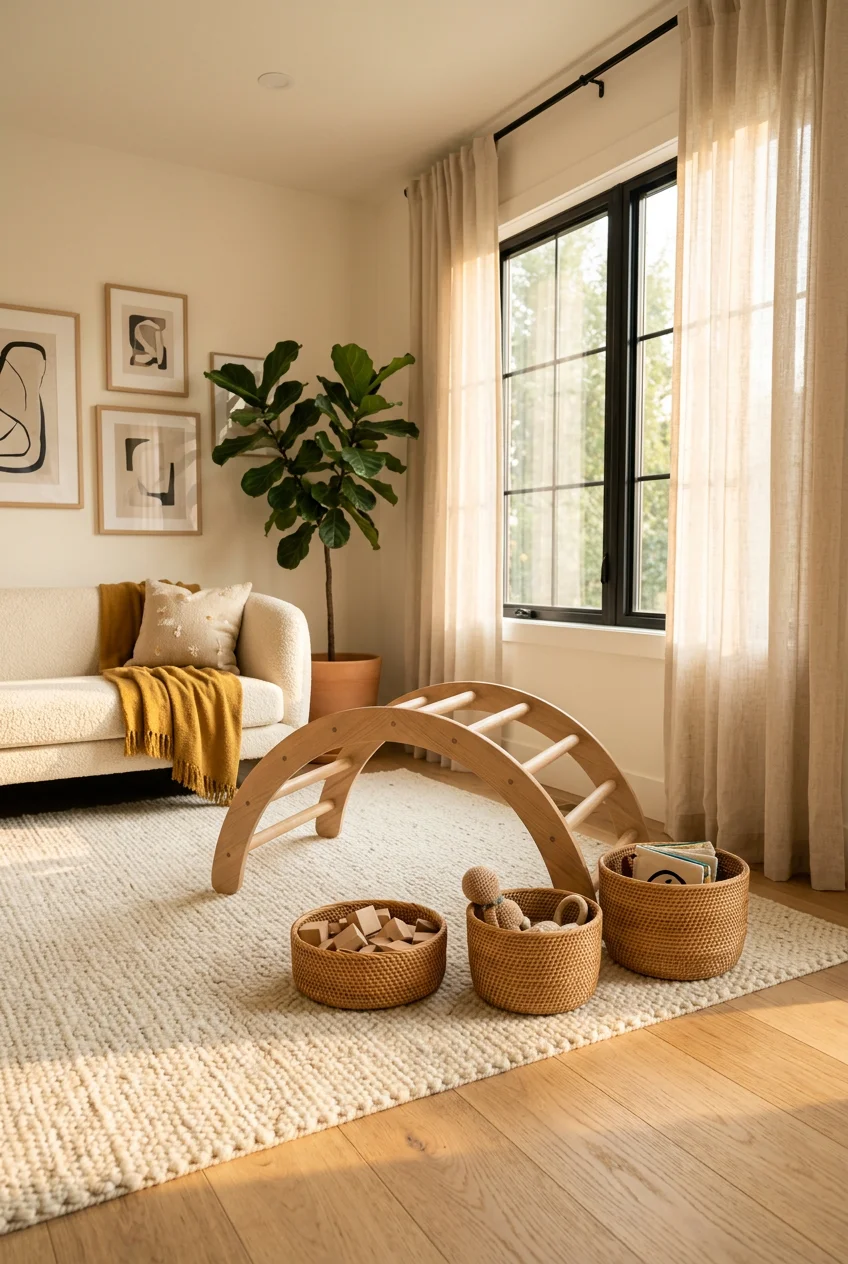
Enter the Pikler triangle. This is a brilliant wooden climbing frame that folds up flat. The Lily & River Little Climber is stunning. It costs $199.00 for 1 unit. It’s made of smooth, sanded birch wood that smells faintly of natural sawdust. It measures 30 inches tall. The locking mechanism has a loud metallic click when the safety pin engages. When your toddler grips the 1-inch thick wooden rungs, they build incredible grip strength and gross motor skills. I also love wall-mounted activity boards. You can screw a 24-inch wooden gear board directly into the drywall. It takes up exactly zero floor space. The heavy wooden clunk of the gears spinning is a great auditory sensory detail. Vertical play forces your toddler to reach, stretch, and balance, all while keeping your floor clear of bulky plastic junk.
9. Create a Dedicated Sensory Exploration Zone

You need a specific corner just for tactile feedback. This is a huge trend right now, and for very good reason. Toddlers explore the world with their hands and mouths. You can make a brilliant DIY sensory bin for almost nothing.
Yesterday at Kroger, I bought a 16 oz bag of dried black beans for exactly $1.49. I was rushing through the parking lot, dropped the bag, and it split open. Tiny, hard black beans scattered everywhere across the hot asphalt. It sounded like a giant rainstick breaking. I had to go back inside and buy another bag. When you put those 16 oz of beans into a 9×13 inch aluminum baking pan, the dusty, earthy smell is surprisingly calming. Provide a 2 oz metal scoop. The metal scraping against the hard dried beans offers intense sensory feedback. Keep this zone on a washable rug. If you use water beads, measure out exactly 1/4 cup of dry beads and soak them. They become cold, slippery, and incredibly squishy. Just ensure you supervise heavily, as water beads are a known choking hazard.

Rattan Divided Scalloped Basket
Honestly, Rattan Divided Scalloped Basket surprised me — sturdier than it looks in the photos, and over 15 buyers gave it 4.5 stars.
10. Opt for Child-Safe, Low-Profile Furniture

When you build a play area in a shared space, your regular furniture becomes part of the playground. You can’t have a glass coffee table with razor-sharp corners sitting in the middle of the room. You’ll spend your entire day hovering and shouting warnings.
You need low-profile, soft furniture. The ultimate piece is The Nugget play couch. It costs $249.00 and consists of 4 heavy foam pieces covered in soft microsuede. The fabric feels exactly like velvet and shows every single handprint. The heavy metal zippers are safely hidden under fabric flaps. I bought one last year. I left the house to grab a $5.00 iced coffee, and when I came back, my kids had dragged the Nugget cushions across the room and were launching themselves off the sofa directly onto the foam pads. Because it’s just foam, nobody got hurt. It serves as a comfortable seat for adults, and a crash pad for toddlers. Swap your hard wooden coffee table for a 36-inch round upholstered ottoman. It softens the entire room and removes the daily anxiety of a split lip.
11. Common Mistake: Avoid Over-Stimulation with Too Many Toys

I see this mistake in almost every client’s home. They think more toys equals a happier child. It’s the opposite. When a toddler is surrounded by 40 different brightly colored objects, their brain short-circuits. They flit from one thing to another, never focusing for more than 10 seconds.
I made this mistake with my first child. I had a massive 24-inch deep plastic bin overflowing with random plastic junk. I watched him dig through it, throw 3 things over his shoulder, and then whine that he was bored. It was awful. You must ruthlessly edit your space. Keep a strict limit. Use a beautiful woven basket, like a 10-inch seagrass basket from Target that costs $12.00. The thick braided handles feel sturdy. Put exactly 3 wooden cars in it. That’s it. The rough, scratchy texture of the seagrass contrasting with the smooth painted wood of the cars is inviting. When there are only 3 cars, your child will actually sit down and examine the wheels. They’ll push them slowly across the floor. Less stuff equals deeper, more meaningful play.
12. Embrace Nature-Inspired Elements for a Calm Aesthetic

Primary colors are visually aggressive. Bright red, neon yellow, and harsh blue actually raise your heart rate. If you want your living room to feel relaxing at 7 PM, you need to bring nature indoors. Stick to natural wood, unbleached cotton, warm wool, and living plants.
Sunday morning at Trader Joe’s, I bought a beautiful Boston Fern in a 6-inch plastic pot for $5.99. The damp potting soil smelled exactly like a wet spring morning. I brought it home and placed it on a low side table next to the play shelf. That’s a mistake I won’t repeat. Within 10 minutes, my toddler ripped a 4-inch green frond off and tried to eat it. Keep plants up high! But the visual impact of the green leaves cascading down a high shelf completely softens the room. Buy a 5×7 foot natural jute rug for $99.00. The coarse, slightly scratchy fibers under your bare feet ground the space, even if it sheds slightly at first. When you use neutral tones and natural textures, the colorful toys pop visually, but the room itself feels like a calm sanctuary.

Criusia Over the Door Organizer
Honestly, Criusia Over the Door Organizer surprised me — sturdier than it looks in the photos, and over 218 buyers gave it 4.5 stars.
13. Consider Developmentally Appropriate Play Kits

Figuring out exactly what toy an 18-month-old needs versus a 24-month-old is completely exhausting. You don’t have time to research brain development milestones while making dinner. This is where subscription play kits save your sanity.
I absolutely love the Lovevery Play Kits. They cost exactly $80.00 per kit, delivered every two months. The sensory experience of unboxing these is fantastic. The heavy cardboard box arrives on your porch. You slice the thick paper tape, and inside, the toys are wrapped in crisp tissue paper. It smells like fresh cut wood and clean cotton. The included play guide booklet is printed on thick glossy paper. You might get a wooden coin drop box or a set of 4 organic cotton sensory pads. The toys are specifically engineered for exact developmental windows. You aren’t guessing anymore. The quality is unmatched. The smooth, heavy wood feels expensive in your hands. Plus, they look gorgeous sitting on your open shelving. It’s the easiest way to ensure your toddler play area in living room is actually helping their brain grow, not just keeping them distracted.
14. Don’t Forget Comprehensive Childproofing

A play area isn’t functional if it isn’t completely safe. You can’t relax on the sofa if you’re terrified a heavy bookshelf is going to crush your child. Childproofing is non-negotiable.
You must anchor every single piece of heavy furniture to the wall. I use the Safety 1st Furniture Wall Straps. You can buy a 2-pack at Target for $9.99. They are heavy-duty woven nylon straps. Two years ago, I thought a heavy solid oak dresser was too heavy to tip. I was wrong. My toddler pulled out the bottom 2 drawers and stood on them. The dresser tilted forward. I caught it with my shoulder, bruising my collarbone badly. It was terrifying. Buy the $9.99 straps. Drill them directly into the wall studs using a 1/4 inch drill bit. The smell of drywall dust is worth the peace of mind. Cover all your electrical outlets with clear plastic plug protectors ($3.49 for a 36-pack). Put magnetic locks on your TV console doors. When you create a perfectly safe space, you can actually sit down and drink your coffee while it’s still hot.
15. Surprising Tip: Embrace “Undone” Toys in Your Toddler Play Area In Living Room

This is my absolute favorite secret trick. Most parents clean up by putting puzzles together perfectly and stacking rings in order on the peg. When a toddler sees a finished puzzle, they think the work is done. They walk right past it. Took me years to figure out.
Instead, leave the toys “undone” in your toddler play area in living room. I tested this with the Melissa & Doug Wooden Farm Animal Puzzle. It costs $12.99 and has 8 thick wooden pieces with tiny red plastic pegs. Instead of putting the cow and the pig into their slots, I left the wooden base completely empty. I placed the 8 chunky wooden pieces in a small wooden bowl next to the board. The clinking sound of the wooden pieces shifting in the bowl caught my son’s attention immediately. He walked over, picked up the rough wooden pig, and started working. By presenting the activity as an invitation rather than a finished product, you spark their natural curiosity. Try this with a set of 6 plastic stacking rings. Leave them scattered intentionally on a tray. Watch what happens.
Designing a space for your kids doesn’t mean sacrificing your entire home’s aesthetic. I’ve spent years tweaking these setups, and these 15 steps are exactly how I create spaces that work for both chaotic toddlers and exhausted parents. Don’t try to buy everything at once. Start with a good mat and some open shelving. Honestly, just getting the toys out of the giant plastic bin will change your life immediately. If you loved these ideas, please save this post and pin it to your nursery or playroom Pinterest board. You’ll definitely want to reference these specific measurements and brands when you hit the store!

Criusia Drawer Organizer Clothes
If you want something that just works, Criusia Drawer Organizer Clothes is a safe bet (1 reviews, 4.5 stars).
Frequently Asked Questions
How do I hide a toddler play area in living room?
Use multi-functional furniture like storage ottomans and woven baskets to conceal toys. Stick to a strict toy rotation schedule to minimize visual clutter, and choose open-ended wooden toys that blend beautifully with your existing home decor.
What is the best flooring for a toddler play zone?
A thick, non-toxic memory foam play mat is ideal. Look for wipeable, one-piece mats made of vegan leather or organic cotton rather than cheap foam puzzle tiles, which easily trap dirt, crumbs, and pet hair in their interlocking joints.
How many toys should be out in a toddler play area?
Follow the Montessori method and display only 8 to 16 toys at a time on low, open shelving. Store the rest in opaque bins in a closet, rotating them every one to two weeks to keep your child fully engaged.
Are playpens a good idea in the living room?
Yes, a playpen creates a safe, defined boundary, especially if you have pets or a busy household. Choose modern clear acrylic panels or natural wood enclosures to maintain an open, airy aesthetic without ruining your living room’s design.
