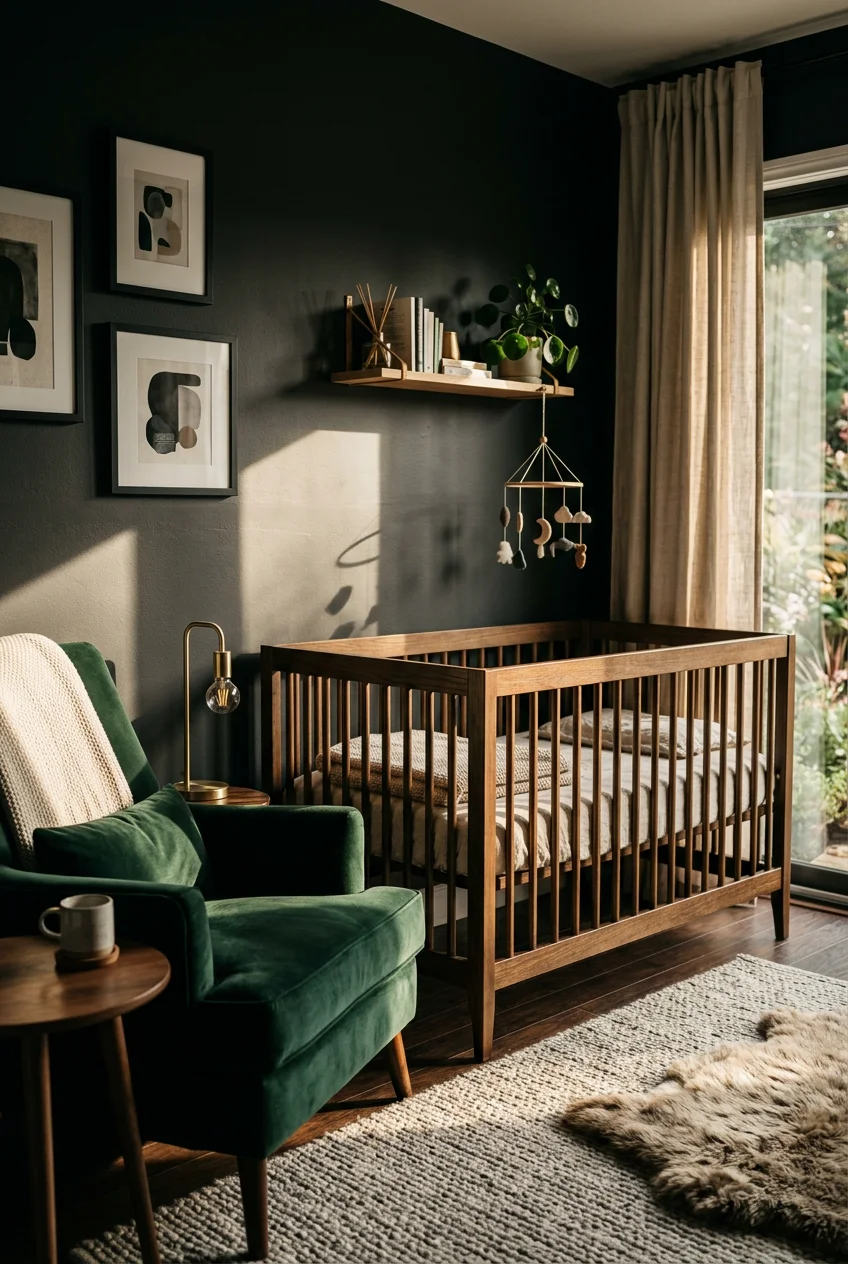
What’s Inside
- Embrace Deep, Saturated Wall Colors for a Cocoon Effect
- Opt for Low-VOC or Zero-VOC Paints
- Layer Lighting with Dimmable Smart Solutions
- Install 100% Blackout Window Treatments
- Incorporate Sculptural, Curved Furniture
- Choose Dark Furniture for Longevity and Practicality
- Add Rich Texture Through Textiles
- Utilize Removable Dark Floral or Botanical Wallpaper
- Prioritize Safety with Anchored Furniture and Cord Management
- Avoid Over-Themed or Overstimulating Decor
- Incorporate Warm Metals for a Touch of Elegance
- Choose a Comfortable, Ergonomic Glider or Rocker
- Utilize Multi-Functional Storage Solutions
- Add Unexpected Pops of Color with Accessories
- Select Non-Toxic, Stylish Pacifier Clips
I’m sitting on the cold hardwood floor of my first son’s nursery at 3 AM. The overhead light is burning my retinas. He’s screaming his head off. I’m crying right along with him. The room smells like sour milk and that weird, sterile scent of fresh paint. It feels like a hospital cafeteria. That was my absolute rock bottom with traditional, bright white baby decor. I did it all wrong for months before finally figuring it out. I thought an all-white room would look clean. Instead, it was blindingly bright, impossible to keep clean, and totally cold. If you want a space that actually helps your baby sleep, you need moody nursery ideas. Darker rooms mimic the womb. They feel safe. They hide the inevitable smudges of diaper cream and the dust bunnies you’re too exhausted to vacuum. Let’s fix your space before you end up crying on a cold floor like I did. I’ve spent years perfecting the art of the dark, cozy baby cave for my design clients. These aren’t just pretty pictures from the internet. These are practical, tested strategies that actually work when you’re functioning on two hours of sleep. Here are 15 exact tips to copy right now.
1. Embrace Deep, Saturated Wall Colors for a Cocoon Effect

I’ve heard the warning a million times. People say dark paint makes a small room feel like a closet. They’re wrong. Dark colors actually blur the physical boundaries of a room. When you paint the walls and the trim the exact same dark shade, the corners visually disappear. This creates an enveloping atmosphere instead of a cramped box. When you’re looking for moody nursery ideas, your paint choice is the foundation. For a sophisticated deep green, I highly recommend Benjamin Moore’s Backwoods. It has a rich undertone that grounds the space. If you want something even richer, Farrow & Ball’s Studio Green (No. 93) pairs beautifully with raw wood. If you prefer blue, Benjamin Moore’s Hale Navy (HC-154) adds instant depth. I’d personally go with Farrow & Ball’s Railings (No. 31) for a dark blue that looks almost black in the evening shadows. For a muddy brown, Farrow & Ball’s Tanner’s Brown (No. 255) is incredible. Expect to pay $50 to $80 per gallon for these premium brands. One standard gallon covers about 400 square feet. I tried painting just one accent wall dark at first. It looked choppy and unfinished. Don’t make that mistake. Wrap the whole space in color.
2. Opt for Low-VOC or Zero-VOC Paints

When you’re rolling that dark color onto the walls, you can’t ignore what’s in the can. I’ve walked into freshly painted nurseries that smelled so strongly of chemicals, my eyes watered. That sharp, acrid smell is from Volatile Organic Compounds (VOCs) off-gassing into the air. You don’t want your newborn breathing that in while they sleep. Prioritize your baby’s developing lungs. Choose paints with low-VOC or zero-VOC formulas to minimize off-gassing, which can cause respiratory issues. Brands like Benjamin Moore and Sherwin-Williams offer excellent zero-VOC options in their darkest bases. I personally swear by Benjamin Moore’s Eco Spec line, which runs about $54.99 per gallon. It goes on smooth and has almost zero odor. I once bought a cheap, generic brand of dark green paint to save a few bucks. It was a massive mistake. The room smelled like a chemical factory for three weeks. I had to go buy a 16 oz bottle of organic cold-pressed green juice from Whole Foods just to feel like I was detoxing my own body after breathing it in. Learned that the hard way. Skip the cheap stuff. Spend the extra twenty bucks on a safe formula.
3. Layer Lighting with Dimmable Smart Solutions

A moody room needs moody lighting. If you flip on a harsh overhead fluorescent light in a dark room, it looks terrifying. Expert designers emphasize layered lighting for coziness, and I completely agree. You need multiple light sources at different heights. Install dimmable LED ceiling lights for adjustable brightness. They’re energy-efficient and stay cool to the touch. But the real secret is smart lighting. I’ve outfitted every lamp in my house with smart home systems. Philips Hue A19 smart bulbs are my favorite. They range from $15 to $50 per bulb. You can control the exact brightness and color temperature straight from your phone. I set mine to create a soft, amber-toned glow at 15% brightness for late-night feeds. It mimics candlelight perfectly. I vividly remember sitting in that dim amber glow at 4 AM, exhausted, eating a 6 oz blueberry muffin from Costco while my baby finally took a bottle. The soft light kept us both sleepy. If you use a regular bright white bulb, you’re going to wake the baby up completely. Layer a floor lamp, a table lamp, and overheads, all on dimmers.

Criusia Drawer Organizer Clothes
If you want something that just works, Criusia Drawer Organizer Clothes is a safe bet (1 reviews, 4.5 stars).
4. Install 100% Blackout Window Treatments

If there’s one thing you can’t compromise on, it’s blackout curtains. To promote better sleep for your baby, you must ensure the room can achieve complete, pitch-black darkness even at high noon. I’ve tried those cheap, flimsy curtains that claim to be room-darkening. They aren’t. They just turn the room a weird, glowing gray. Sleepout Curtains are a fantastic option. They’re UL Certified and OEKO-TEX STANDARD 100 certified non-toxic, blocking 100% of light. They come in gorgeous colors like Charcoal Gray and cost around $99 per panel. For ultimate light control, OtterSpace Blackout Curtains are incredible. They use magnetic technology to seal the blackout panel directly to the window frame. This means zero light bleeding around the edges. You can then layer your own decorative velvet curtains over them. Expect to invest $50 to $200 per window for high-quality solutions. I learned that the hard way after a frantic, sleep-deprived run to Walmart at 9 PM. I bought a cheap $4.88 tension rod and some thin blue curtains. The rod fell on my head while I was hanging it, and the curtains let in so much street light I could read a book in the dark. Buy the good hardware.
5. Incorporate Sculptural, Curved Furniture

The 2026 trend for nurseries leans heavily into soft curves and rounded silhouettes, and I’m here for it. When you have dark walls, you need the furniture to feel soft and inviting, not rigid and blocky. Look for rounded cribs, curved gliders, and soft-edge dressers made from warm, honey-toned woods. You can also look for pieces featuring thick, textured boucle upholstery. This sculptural furniture adds instant sophistication to a moody space. I highly recommend brands like Babyletto for modern, curved crib designs. Their Yuzu 8-in-1 Convertible Crib is stunning. It measures 53.8 inches long and costs about $599. The rounded spindles look incredible against a dark green or navy wall. Honestly, this took me years to figure out. Sharp, square furniture looks aggressive in a dark room. Plus, it’s a hazard for toddlers. I have a permanent, ugly purple bruise on my left thigh from constantly bumping into the sharp corner of a cheap square dresser I bought years ago. Save your thighs and your aesthetic. Go for the curves. It makes the whole room feel like a gentle, padded sanctuary. You might also like: 15 Charming Safari Nursery Lighting Ideas for Every Budget
6. Choose Dark Furniture for Longevity and Practicality

While light oak and white cribs are popular, dark furniture isn’t only on-trend but also infinitely more practical. A moody nursery thrives on depth. Dark furniture hides scuffs, smudges, and fingerprints way better than lighter pieces. This makes it so much easier to maintain when you’re too tired to constantly wipe things down. A solid dark wood dresser or a matte black crib can easily be reused in other parts of the house as your child grows. This ensures longevity for your investment. I love the Delta Children Sloane 4-in-1 Acrylic Convertible Crib in matte black. It’s about $249.99 and measures 54 inches wide. The black finish looks incredibly chic against a moody floral wallpaper. Most people get this wrong by buying a bright white crib for a dark room. It creates a harsh, jarring contrast that hurts the eyes. I made that mistake with a cheap white side table. Within a week, my toddler had smashed a 2 lb wooden toy truck into it, leaving a massive dent and chipped paint. With dark furniture, a quick touch-up with a standard brown or black wood marker completely hides the damage. You might also like: 20 Creative Crib Bedding Ideas to Transform Your Space

Beautiful Wooden Baby Closet Dividers Set of 7
If you want something that just works, Beautiful Wooden Baby Closet Dividers Set of 7 – Double-Sided Organize is a safe bet (11 reviews, 4.5 stars).
7. Add Rich Texture Through Textiles

To prevent a dark room from feeling stark, you must layer in various heavy textures. Think plush, washable rugs, thick velvet curtains, chunky knitted throw blankets, and buttery soft linen crib sheets. These tactile elements create a luxurious feel that balances the heavy wall color. For the floor, I can’t recommend washable rugs enough. A dark-toned Ruggable rug is a lifesaver. Their Kamran Hazel design features gorgeous rusty reds and deep blues. A 5×7 foot size typically ranges from $159 to $199. Because it’s machine washable, you don’t have to panic when accidents happen. Last Tuesday, my youngest managed to project 2 tablespoons of bright orange sweet potato puree onto our nursery rug. If it had been a traditional wool rug, I’d have been scrubbing it for hours. Instead, I just peeled off the top layer and threw it in the washing machine. When you’re sourcing textiles, skip the cheap, scratchy polyester blends. They feel terrible against your baby’s delicate skin. Invest in 100% cotton, linen, or high-quality velvet. The sensory experience of a room is just as important as how it looks. You might also like: 15 Lovely Nursery Lighting Ideas to Transform Your Space
8. Utilize Removable Dark Floral or Botanical Wallpaper

For an impactful accent wall that can easily evolve with your child, consider removable peel-and-stick wallpaper. Dark floral or moody botanical patterns are trending for 2026. They offer a sophisticated, timeless feel without being overly juvenile. You want a room that feels like a quiet forest, not a theme park. Brands like TheColorFlow on Etsy offer incredible dark floral peel-and-stick options. Their standard roll width is 18.9 inches (48 cm). Prices range from a highly affordable $8.19 for a small test sample to over $1,000 if you’re covering a massive room. Always ensure the wallpaper you choose is explicitly labeled non-toxic and VOC-free. I’ve worked with cheap, generic contact paper before, and it’s a nightmare. I once spent four hours trying to align a cheap geometric pattern. The paper was so thin it stretched and tore, leaving sticky residue all over my hands and the drywall. High-quality vinyl or woven peel-and-stick wallpaper is thick, forgiving, and won’t destroy your walls when you decide to change it in five years.
9. Prioritize Safety with Anchored Furniture and Cord Management

A critical mistake I see constantly in nursery photos on Instagram is a complete lack of safety measures. It doesn’t matter how moody the room is if it isn’t safe. You must anchor all dressers, bookshelves, and changing tables to the wall to prevent tip-overs. This becomes crucial the second your baby starts to climb. I use the Safety 1st Furniture Wall Straps. You can get an 8-pack for about $14.99. They’re heavy-duty woven straps, not cheap plastic. You also need to use outlet covers and strictly conceal all electrical cords from lamps, baby monitors, and white noise machines to eliminate strangulation hazards. I once made a lazy decision during a quick Kroger grocery run. I bought a pack of cheap, thin plastic zip ties for $2.99 to bundle the monitor cords together. Within a month, the plastic became brittle and snapped, leaving a 3-foot cord dangling right over the crib. I felt sick to my stomach when I saw it. Don’t cut corners on safety. Buy proper, rigid cord concealers that mount flat to the wall. Keep the room safe.

Criusia Over the Door Organizer
Honestly, Criusia Over the Door Organizer surprised me — sturdier than it looks in the photos, and over 218 buyers gave it 4.5 stars.
10. Avoid Over-Themed or Overstimulating Decor

While it’s tempting to go all-in on a specific woodland or outer space theme, resist the urge. Too many bold colors, wild cartoon patterns, or giant wall decals can overstimulate a baby. It makes it incredibly difficult for them to wind down. A moody nursery is supposed to be a calming retreat. Instead of a loud theme, opt for subtle, meaningful personalization. A custom name plaque carved from natural raw wood is perfect. You can find gorgeous 12-inch wide wooden name signs on Etsy for about $35. Or, frame some small, hand-painted vintage botanical prints. This makes the space feel personal without adding visual chaos. I’ve walked into nurseries that looked like a chaotic toy store exploded. There were bright red fire trucks on the curtains, primary blue rugs, and yellow walls. The poor baby wouldn’t sleep for more than twenty minutes at a time. Your baby doesn’t need a theme park. They need a quiet sanctuary. Stick to your deep, moody color palette. Let the textures and the dark paint do the heavy lifting.
11. Incorporate Warm Metals for a Touch of Elegance

If you have dark green, navy, or charcoal walls, you need something to catch the light and add a bit of sparkle. Warm metals like unlacquered brass, antique gold, or rubbed bronze are a massive 2026 trend. They add a heritage-inspired touch to a moody nursery. The contrast between a deep, matte wall color and a shiny brass accent is stunning. Use warm metals in intentional ways. Swap out the boring standard drawer pulls on your dresser for heavy brass knobs. I love the Threshold classic brass cabinet knobs from Target. They’re 1.5 inches wide and cost just $4.99 each. It’s a cheap upgrade that makes a $200 dresser look like a $2,000 heirloom piece. You can also bring in warm metals through the base of a heavy floor lamp or a decorative antique mirror frame hanging above the changing station. I used to buy cheap, shiny silver plastic hardware thinking it looked modern. It didn’t. It looked cheap and cold. Warm metals bring a sense of history and grounding warmth to the room. They reflect the soft amber glow of your smart bulbs perfectly.
12. Choose a Comfortable, Ergonomic Glider or Rocker

A common mistake is prioritizing aesthetics over physical comfort when picking a nursing chair. I’ve seen parents buy stunning, rigid, mid-century modern wooden rockers that look amazing on Pinterest but feel like torture devices after twenty minutes. You’re going to spend hundreds of hours in this chair. Invest in a glider or rocking chair that’s genuinely comfortable, heavily padded, and ergonomic. Look for models with a high back for neck support and easy-to-clean fabrics, like performance velvet or stain-resistant linen blends. Brands like Monte Design offer stylish yet ergonomic options. Their Como Glider is a dream. It measures 31 inches wide and typically ranges from $1,195 to $1,495 depending on the fabric. Yes, it’s an investment, but your spine will thank you. I spent the first four months of my son’s life nursing in a cheap, stiff armchair I bought at a discount store. I ended up at the chiropractor twice a week with back pain. I couldn’t even stand up straight. I finally broke down and bought a proper glider. It was worth every single penny. Don’t skimp on the chair.

Delta Children Nursery Storage 48 Piece Set
A dependable everyday pick — Delta Children Nursery Storage 48 Piece Set – Easy Storage/Organizatio pulls in 17 ratings at 4.5 stars. Not flashy, just solid.
13. Utilize Multi-Functional Storage Solutions

Babies are tiny, but they require a massive amount of gear. Insufficient storage is a rookie mistake that will ruin the moody, minimalist vibe of your nursery in two days. You need closed storage to hide the clutter. Opt for a wide, sturdy dresser with deep drawers that can double as a changing station. Keeping the changing pad low and accessible is key. The IKEA Hemnes 8-drawer dresser is a classic for a reason. It’s 63 inches wide, costs about $199, and holds everything. I painted mine a dark, moody navy to match the walls. Install floating wood shelves with rounded edges for displaying a few curated books and wooden toys. Use heavy woven baskets on the floor for quick access to extra blankets. I used to just leave bottles of lotion and diaper cream sitting out on top of the dresser. It looked messy. Now, I use small, labeled canvas bins inside the top drawer. I can grab my 12 oz bottle of Sprouts organic lavender baby lotion with one hand while keeping the other hand safely on the baby.
14. Add Unexpected Pops of Color with Accessories

While the base palette of your room is dark and moody, you should strategically introduce a few vibrant, unexpected colors through small accessories. A surprising design tip is that a dark, saturated wall color actually allows brighter elements to pop and command attention. If everything is dark, the room feels like a cave. You need a little bit of tension. Think about adding a chunky mustard yellow throw blanket draped over the back of the glider. You can find a 50×60 inch cotton throw for about $39.99. Or, toss a rust-colored velvet lumbar pillow onto the chair. A small collection of brightly painted wooden toys on a shelf also works wonders. I was wandering through the floral section at Whole Foods last week and saw a bouquet of vibrant orange tulips for $9.99. I bought them and placed them in a small brass vase on the nursery dresser. The contrast of the bright orange against the dark green walls was breathtaking. It brought the room to life. Don’t be afraid of color in a moody room. Just use it sparingly.
15. Select Non-Toxic, Stylish Pacifier Clips

It’s the tiny, everyday details that truly finish a space. Even the baby gear you carry around should complement the room’s aesthetic. For a small but impactful detail, choose pacifier clips in vintage-inspired, muted tones that match your moody nursery vibe. I love Mushie Pacifier Clips. They’re handmade with 100% food-grade silicone and natural wooden beads. They’re CPSC tested and approved, which gives me peace of mind. They measure 8.2 inches (20 cm) long and cost around $12 to $15 per clip. They come in moody colors like Halo Black, Roman Green, and Cambridge Blue. I used to buy those obnoxious, bright neon plastic clips from the drugstore. They clashed with everything and looked terrible in photos. Plus, the plastic felt cheap. I actually had a complete meltdown in the Trader Joe’s checkout line once when my cheap plastic clip snapped, dropping the only clean pacifier onto the dirty tile floor while my baby screamed. I’ve strictly used the durable, beautiful Mushie clips ever since. They look like a tiny piece of jewelry, tying the whole moody aesthetic together.
Creating a moody nursery isn’t just about following a trend. It’s about crafting a calming, functional sanctuary for both you and your baby. When you’re running on empty, a dark, cozy room feels like a warm hug. I’ve poured all my mistakes and wins into these tips so you don’t have to struggle. I highly recommend starting with your paint color and building the textures from there. Don’t be afraid of the dark! If you loved these ideas, please save this post and pin your favorite tips to your nursery mood board. You’re going to want to reference these exact brands and measurements when it’s time to start decorating. You’ve got this.

SNSLXH 5 Pack Stackable Closet Storage Basket
Honestly, SNSLXH 5 Pack Stackable Closet Storage Basket surprised me — sturdier than it looks in the photos, and over 4 buyers gave it 4.5 stars.
Frequently Asked Questions
Are dark colors bad for a nursery?
Not at all. Dark colors actually blur the physical boundaries of a room, making it feel like a cozy, enveloping cocoon. This promotes better sleep and creates a calming atmosphere for your baby.
What are the best moody paint colors for a baby room?
Farrow & Ball’s Studio Green and Benjamin Moore’s Hale Navy are incredible choices. They provide rich, saturated depth without feeling stark. Always ensure you choose a zero-VOC formula for safety.
How do I keep a moody nursery from feeling too dark?
Layer in warm lighting with dimmable smart bulbs, add rich textures like washable rugs and velvet curtains, and incorporate warm metals like brass hardware to reflect light and add elegance.
What furniture looks best in a dark nursery?
Curved, sculptural furniture in warm woods or matte black finishes works beautifully. The rounded edges soften the room’s aesthetic, while dark finishes hide scuffs and offer excellent longevity as your child grows.
