What’s Inside
- Start with a Non-Toxic, Calming Color Palette
- Invest in Organic Wildflower Crib Bedding
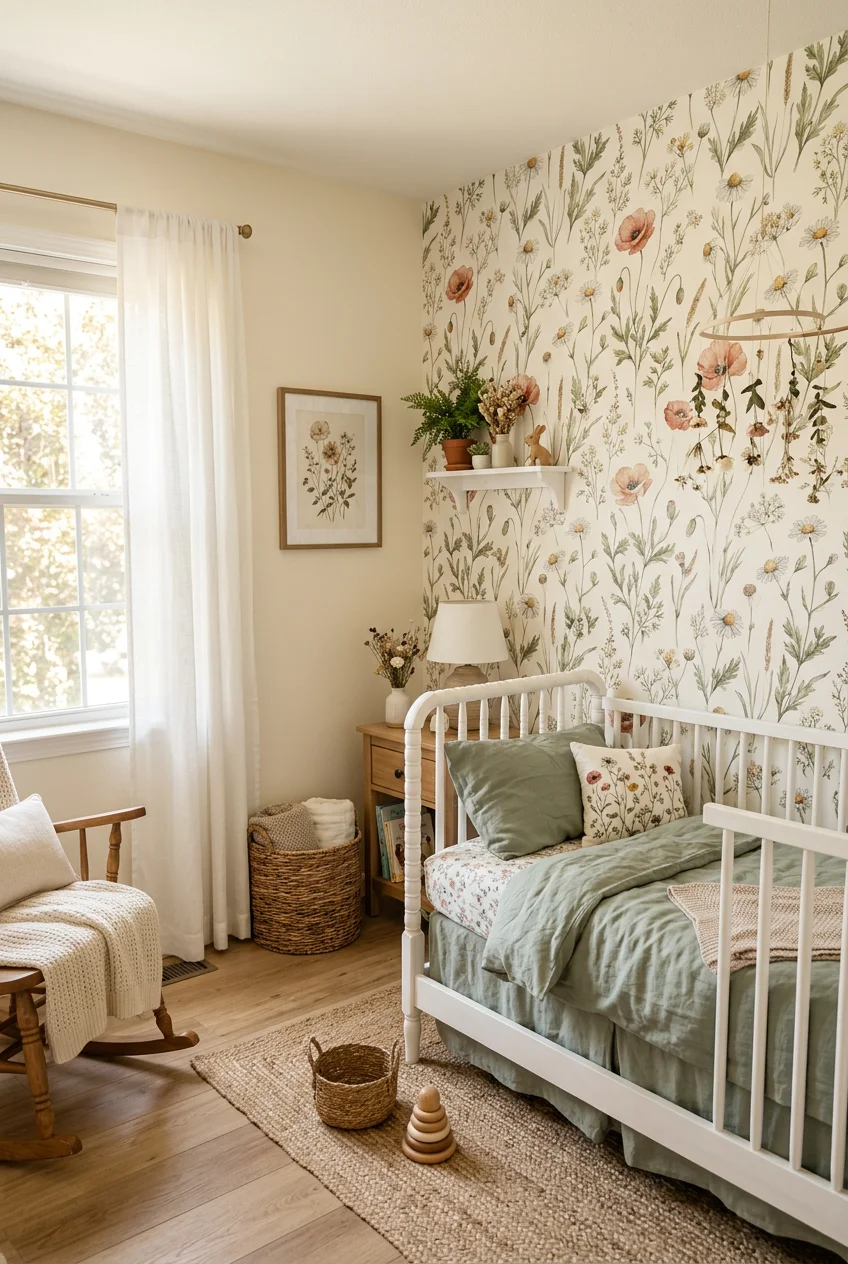
- Create a Feature Wall with Removable Wildflower Baby Nursery Decor Decals
- Incorporate Personalized Wildflower Art Prints
- Choose a Washable, Non-Toxic Wildflower Rug
- Select a Delicate Wildflower Mobile
- Prioritize Practical Woven Storage Solutions
- Anchor All Heavy Furniture to the Wall
- Install Cordless Blackout Window Treatments
- Opt for Soft, Dimmable Wall Lighting
- Embrace Sustainable and Eco-Friendly Furniture
- Avoid Over-Theming the Space
- Create a Sensory Corner with Varied Textures
- Frame Pressed Wildflowers for Authentic Art
- Maximize Vertical Space with Wall-Mounted Shelves
- Incorporate Natural Wood Accents
- Layer with Breathable Organic Cotton Curtains for Wildflower Baby Nursery Decor
Most folks start planning their wildflower baby nursery by panic-buying pastel floral crib sheets at 2 AM. It’s a common mistake. It leads to a room looking like a messy garden center rather than a calming space. Designing a nursery isn’t just about picking a theme. It’s about creating a highly functional, sensory environment where a baby can sleep safely and you can comfortably survive night feedings. A true wildflower aesthetic relies on muted tones, organic textures, and strategic blank space. Don’t just plaster flowers on every surface. Trust me on this. If you only try one idea from this list, make it #3. Here’s why: oversized removable wall decals give you the massive visual impact of custom wallpaper without the permanent commitment or the chemical off-gassing.
Skip this list if: you’re looking for high-contrast, primary-color stimulation or a strictly modern, minimalist aesthetic. Wildflower themes rely heavily on muted, muddy tones, layered natural textures, and vintage-inspired details. If you prefer sleek acrylic furniture, bright geometric patterns, or stark white clinical spaces, these soft botanical elements won’t fit your vision.
1. Start with a Non-Toxic, Calming Color Palette

The foundation of any room starts with the walls. The sharp, chemical smell of conventional paint is the last thing you want trapped in a small space. Opt for soft, muted tones like sage green, pale peach, dove grey, or oatmeal. These colors create a quiet, grounding environment that won’t overstimulate a newborn and will age gracefully as they turn into a toddler. ECOS Paints (specifically their “Lullaby” range) and Benjamin Moore Eco Spec are excellent zero-VOC options. They usually run $50 to $80 per gallon. A common mistake is painting the walls the week before your due date. Even with zero-VOC formulas, newly painted walls need at least 40 days to fully outgas before you apply any decals or move the baby in. The texture of a flat or matte finish looks best here. It absorbs light rather than reflecting it. When testing swatches, paint a large 2×2 foot square. Look at it during the afternoon and at night. Sage green can quickly look like dark moss under warm artificial light.
The catch: zero-VOC paints lack the heavy chemical binders of standard cheap paint. You’re often painting three coats instead of two to get solid coverage over dark walls.
2. Invest in Organic Wildflower Crib Bedding

Your baby’s skin is always touching their crib sheets. This is the one place you shouldn’t cut corners. Choose crib bedding made from 100% organic cotton. It’s free from heavy metal dyes and harsh chemical finishing sprays. The Peanutshell Organic Cotton Crib Bedding Set (measuring 52″ L x 28″ W) offers a subtle, muted floral print that anchors the room. Alternatively, Nestig’s Wildflower Organic Crib Sheet Set uses OEKO-TEX certified, non-toxic dyes. They’re usually $40 to $60 for a set of two. The visual of tiny, delicate wildflower patterns against a raw wood crib provides just enough pattern without overwhelming the eye. A common mistake is buying massive, plush bumper pads and thick matching quilts. A tight, fitted sheet is the only thing that belongs in a safe sleep space.
Best for: Eco-conscious parents who prioritize natural textiles.
The catch: 100% organic cotton without synthetic wrinkle-resistant fibers wrinkles aggressively in the dryer. The sheets won’t look perfectly crisp unless you take the time to iron them.
3. Create a Feature Wall with Removable Wildflower Baby Nursery Decor Decals

Wallpaper is a massive commitment of both time and money. Taking it down later is a nightmare. I learned that the hard way. Instead, oversized removable wall decals provide the same dramatic visual impact with a fraction of the effort. Brands like Little Rae Prints offer hand-painted watercolor wall decals. Their “Half Wall” option at 150cm in height grounds a crib beautifully. Wallmur and My Walls My Way also produce matte vinyl peel-and-stick wildflower decals that blend seamlessly with flat paint. Prices range from $40 to $150 depending on the scale. The texture of a high-quality matte decal mimics real paint. It avoids that cheap, shiny sticker look. Always allow freshly painted walls to cure for at least 40 days before applying these. Otherwise, trapped moisture will cause the adhesive to bubble and peel.
The catch: vinyl peel-and-stick decals won’t adhere to heavily textured walls like knockdown or orange peel drywall. They require a completely smooth surface to lay flat and stay put.

YACHANCE Kids Sound Machine with Night Light Projector
A dependable everyday pick — YACHANCE Kids Sound Machine with Night Light Projector pulls in 71 ratings at 4.5 stars. Not flashy, just solid.
4. Incorporate Personalized Wildflower Art Prints

Custom art doesn’t have to mean commissioning an expensive original painting. Digital downloads are the most efficient way to get high-quality, personalized art on the walls without spending hundreds. Etsy shops like Silverwood Friends and DiviArts Studio sell custom wildflower prints featuring a baby’s name or initial as high-resolution 300-dpi JPG files. They’re usually $15 to $30. Take the file, print it on heavy matte cardstock at a local print shop, and frame it yourself. Joyful Bird Store offers similar personalized initial prints starting around $12. Hanging a large 16″ x 20″ print over a changing table gives the eye a focal point that isn’t just a stack of diapers. The visual of crisp, modern typography mixed with soft watercolor florals bridges the gap between traditional and contemporary design.
The catch: digital downloads require you to source, measure, and purchase your own frames and matting. That cheap $15 file quickly turns into a $60 weekend project.
5. Choose a Washable, Non-Toxic Wildflower Rug

A soft rug adds necessary warmth and sound dampening. But nurseries are messy. A rug that you can’t throw in a washing machine is a liability. Lorena Canals makes a Play Rug in a Wildflowers pattern that’s fully machine washable and certified safe by European standards. Sage & Wild offers heavy-duty GOTS-certified organic washable wool rugs starting around $549. Brands like Bella Rugs provide more budget-friendly botanical options ranging from $50 to $200. The feeling of soft, clean fibers under bare feet during a 3 AM feeding is crucial. A common mistake is buying a thick, un-washable synthetic shag rug that permanently holds onto spit-up and odors. You might also like: 15 Toddler Girl Room Decorating Ideas You Need to See
Best for: Homes with pets or older toddlers who track dirt into the baby’s room.
The catch: machine-washable rugs are inherently thin so they can fit into a washing drum. They require a separate, thick non-slip rug pad underneath to provide any actual cushioning on hard floors.
6. Select a Delicate Wildflower Mobile

A mobile serves as a charming, slow-moving focal point. It provides gentle visual stimulation for a newborn lying on their back. The Felt Nursery creates handcrafted floral mobiles from eco-friendly materials. They typically measure 20 cm in diameter and 52 cm in height. You’ll find hundreds of handmade options featuring felt flowers, muted leaves, and delicate butterflies priced between $60 and $150. The soft texture of wool felt absorbs sound and looks significantly higher-end than shiny plastic alternatives. A common mistake is hanging heavy, hard-edged objects directly over a baby’s face. Keep the materials soft and lightweight. You might also like: 19 IKEA Toddler Room You Need to See
The catch: this is strictly temporary decor. A mobile must be completely removed from the crib area the exact moment your baby can push up on their hands and knees or reach the strings. Its lifespan in the room is relatively short.

Beautiful Wooden Baby Closet Dividers Set of 7
Beautiful Wooden Baby Closet Dividers Set of 7 – Double-Sided Organize punches above its price — 11 buyers rated it 4.5 stars. The kind of pick people reorder.
7. Prioritize Practical Woven Storage Solutions

Babies require a staggering amount of inventory. Leaving it all out on open shelves makes a room look chaotic and cluttered. Smart storage is what keeps a nursery functional during a 3 AM diaper blowout. Target’s woven seagrass or heavy cotton rope bins are excellent for hiding bulky items on lower shelves. Sundayflat makes adjustable wooden drawer organizers that fit inside standard dressers to keep tiny socks, wipes, and diaper creams perfectly separated. Use large floor baskets to store bulk diaper boxes from Costco. Keep your daily organic baby wash from Sprouts tucked neatly in a divided caddy right on the changing table. The smell of natural seagrass baskets adds a subtle, earthy element to the room’s aesthetic. You might also like: 16 Nursery Drawer Organization for Every Budget
The catch: unlined wicker or rattan baskets have sharp, rigid interior edges. They’ll instantly snag delicate knit baby sweaters or muslin swaddles if you aren’t careful.
8. Anchor All Heavy Furniture to the Wall

This is the least glamorous part of nursery design, but it’s the absolute most critical. As soon as a baby becomes mobile, they will use open dresser drawers as a ladder. Heavy furniture tipping over is a severe, preventable hazard that happens far too often. Use heavy-duty nylon anti-tip kits or metal furniture straps to anchor dressers, bookshelves, and changing tables directly into the wall studs. A common mistake is assuming a low, wide dresser is too heavy for a toddler to tip. Once all the drawers are pulled out, the center of gravity shifts forward entirely. It becomes highly unstable. Don’t skip this step just because the furniture feels heavy to you.
Best for: Renters (who must prioritize safety over keeping the drywall pristine).
The catch: proper anchoring requires finding a wall stud and drilling heavy-duty screws into your drywall. You’re committing to patching and painting holes whenever you move the furniture.
9. Install Cordless Blackout Window Treatments

Standard window blinds with dangling pull cords are a known strangulation risk. Replacing them is mandatory before the baby arrives. Install cordless cellular shades or heavy blackout rollers. The visual of a pitch-black room at noon is exactly what you need to establish healthy daytime nap habits. A common mistake is relying on thin, unlined cotton curtains to block light. You’ll end up with a baby who wakes up at 5 AM with the sunrise. Cordless shades push up and pull down with a gentle tug on the bottom rail. They keep the window frame clean, minimal, and completely safe for curious hands.
The catch: true cordless blackout shades are heavy. If you don’t pull them down precisely from the center of the rail, the internal spring mechanism skews, jams, and ruins the shade.

Modanais Baby Diaper Caddy Organizer Cart
Modanais Baby Diaper Caddy Organizer Cart – 3 Tier Rolling Cart with D has been one of the most consistently praised picks in this category. 688 reviewers averaged 4.5/5.
10. Opt for Soft, Dimmable Wall Lighting

Harsh overhead lighting is jarring for a baby waking up in the middle of the night. You need layered lighting to keep the mood calm. Install brass or matte black wall sconces with 2700K warm LED bulbs to cast a soft, ambient glow across the room. A common mistake is placing a tall, wobbly floor lamp right next to the changing table or glider. Floor lamps take up valuable square footage and immediately become a climbing hazard for toddlers. Wall sconces keep the floor clear and the light exactly where you need it. Make sure every single light in the room is connected to a dimmer switch so you can control the brightness.
The catch: hardwiring wall sconces requires cutting into the drywall and hiring a licensed electrician. It eats up a significant chunk of your overall room budget.
11. Embrace Sustainable and Eco-Friendly Furniture

The materials you bring into a nursery dictate the air quality. Look for cribs and dressers that carry GREENGUARD Gold certification. They’ve been strictly tested for over 10,000 chemicals and VOC emissions. The smell of raw, solid wood finished with natural linseed oil is vastly different from the sharp, chemical odor of cheap particleboard glued together with formaldehyde. Solid pine or birch furniture ages better, holds screws tighter, and withstands the inevitable chewing that happens when babies start teething on the crib rail. No exaggeration, investing in clean air is just as important as picking the right paint color.
The catch: certified non-toxic, solid wood furniture generally costs 30 to 50% more upfront than standard MDF or particleboard alternatives found at big-box discount stores.
12. Avoid Over-Theming the Space

A wildflower theme is beautiful, but a common mistake is matching the wallpaper to the rug, to the sheets, to the curtains, and to the wall art. The room ends up looking like a chaotic catalog explosion rather than a peaceful retreat. Use tasteful, gender-neutral elements to ground the space. If you have a bold floral decal on the wall, keep the bedding solid sage or cream. If the rug is heavily patterned, leave the walls completely bare. Giving the eye a place to rest makes the floral elements stand out more. It keeps the room from feeling dated in two years.
The catch: editing down a theme requires strict restraint. It means walking away from cute but unnecessary floral accessories at the store to preserve the room’s calm atmosphere.

Parker Baby Diaper Caddy
If you want something that just works, Parker Baby Diaper Caddy – Nursery Storage Bin and Car Organizer for D is a safe bet (172 reviews, 4.5 stars).
13. Create a Sensory Corner with Varied Textures

Nurseries shouldn’t just look good. They need to feel interesting to developing hands. Designate a small, quiet corner away from the crib for tactile play. Toss down a washable faux sheepskin rug (IKEA sells great basic options for $15 to $30) and add a few linen or chunky knit cotton pillows. Keep a low, soft basket nearby filled with natural toys like smooth wooden rattles, crinkly fabric books, and silicone teethers. This provides gentle sensory stimulation without cluttering the entire floor plan.
Best for: Large rooms with empty floor space that feels too bare.
The catch: faux fur mats trap dust, dog hair, and crumbs instantly. You’ll have to take them outside for a vigorous shaking at least once a week.
14. Frame Pressed Wildflowers for Authentic Art

For a truly unique and budget-friendly decor element, bring real nature indoors. Collect flat, non-toxic wildflowers and press them inside heavy books for a few weeks. Once dried, mount them on acid-free paper and frame them in simple, lightweight 8″x10″ frames from Target or Walmart. They’re usually $5 to $15 each. The visual of delicate, papery dried stems pressed between glass adds an authentic, vintage-inspired texture that mass-produced prints can’t replicate. Arrange them in a tight gallery wall above a dresser, completely out of reach of the crib.
Best for: Tight budgets where you want custom art without the high price tag.
The catch: real pressed flowers are fragile. They’ll eventually fade to a dull, papery brown if they’re hung on a wall that receives direct, harsh sunlight.
15. Maximize Vertical Space with Wall-Mounted Shelves

In smaller nurseries, floor space is premium real estate. Utilizing vertical space is the only way to gain storage without crowding the room. Install two or three sturdy, wall-mounted floating shelves (Target’s Threshold brand offers various wood finishes for $20 to $40 each) at varying heights. Use these shelves to display lightweight decor, small framed prints, or a natural beeswax candle from Whole Foods (unlit, obviously) for a subtle honey scent. Keep heavy items completely off these shelves. Never install them directly over the crib or changing pad where items could fall.
The catch: standard floating shelves have strict weight limits (usually 10 to 15 lbs max). They can’t safely hold heavy stacks of hardback books or large wooden toys.

Night Lights, White Noise Machine
Night Lights is sturdier in person than the photos suggest — over 255 buyers gave it 4.5 stars.
16. Incorporate Natural Wood Accents

A room full of painted furniture feels cold, flat, and clinical. Adding natural wood tones brings instant warmth to a cool sage green or pale blue room. Look for unfinished birch, natural ash, or warm oak accents. You can introduce wood through a solid crib, a rocking chair frame, floating shelves, or simple wooden picture frames. The texture of natural wood grain breaks up the monotony of solid pastel colors. It grounds the wildflower aesthetic in actual nature. It adds a subtle rustic element that keeps the room from looking too precious or overly staged.
The catch: mixing more than three different wood finishes in one small room makes the space look chaotic and mismatched rather than intentionally curated. Pick one dominant wood tone and stick to it.
17. Layer with Breathable Organic Cotton Curtains for Wildflower Baby Nursery Decor

Curtains add softness and height to a room. Hang the curtain rod close to the ceiling, well above the window frame, to make the room feel taller. West Elm and Pottery Barn Kids offer excellent organic cotton panels that drape beautifully. The texture of slub cotton filtering afternoon light creates a soft, hazy atmosphere perfect for winding down before bed. Stick to solid, muted colors like oatmeal or soft blush to let your wall decals or rugs be the focal point.
Best for: Small dark rooms that need light filtering during the day.
The catch: unlined cotton curtains offer zero light-blocking properties. They absolutely require a separate, heavy-duty blackout roller shade installed behind them if you want your baby to nap during the day.
How we chose these ideas: Selecting nursery decor requires balancing aesthetics with strict safety standards. These concepts were evaluated based on renter-friendliness, overall cost, ease of installation, and long-term visual impact. Priority was given to non-toxic materials, secure mounting methods, and items that transition easily from a newborn space to a toddler room without requiring a complete redesign.
Designing a nursery is exhausting, but sticking to natural textures, muted colors, and safe materials makes the process much easier to manage. Focus on the big impact items first, like the walls and the rug. Fill in the rest slowly. Pin this list to your nursery mood board so you have a realistic guide to reference when you’re standing in the store trying to decide between four different shades of green.
Frequently Asked Questions
What colors work best for a wildflower nursery theme?
Stick to soft, muted, earth-toned colors like sage green, pale peach, dove grey, or oatmeal. These shades create a calming, non-stimulating environment that allows floral accents to stand out without making the room feel chaotic or cluttered.
Are wall decals safe for a baby nursery?
Yes, high-quality vinyl or fabric wall decals are safe, provided they are applied to clean, fully cured walls. Ensure any fresh paint has outgassed for at least 40 days before application to prevent bubbling and peeling.
How do I incorporate a wildflower theme without it looking tacky?
Avoid matching every single item in the room. Use a bold floral element in just one area, like a feature wall decal or a patterned rug, and keep the rest of the room grounded with solid, neutral colors and natural wood textures.
What kind of rug is best for a nursery?
A machine-washable rug is essential for a nursery to handle inevitable spills and accidents. Look for non-toxic materials, and always pair thin washable rugs with a thick, non-slip rug pad underneath for cushioning on hard floors.
