What’s Inside
- Declutter Ruthlessly Before Buying Bins
- Implement Size-Specific Closet Dividers
- Maximize Vertical Space with Double Rods
- Utilize Clear, Labeled Bins for Bulk Items
- Conquer Tiny Items with Drawer Dividers
- Leverage Over-the-Door Organizers
- Invest in a Modular Closet System
- Prioritize Sustainable Storage Solutions
- Avoid Excessive Open Shelving
- Maintain a “Too-Small” Drop Zone
- Opt for Slim Velvet Hangers
- Create a Mobile Diapering Station
- Repurpose a Vintage Card Catalog
- Integrate Multi-Functional Furniture
- Store Daily Essentials at Eye Level
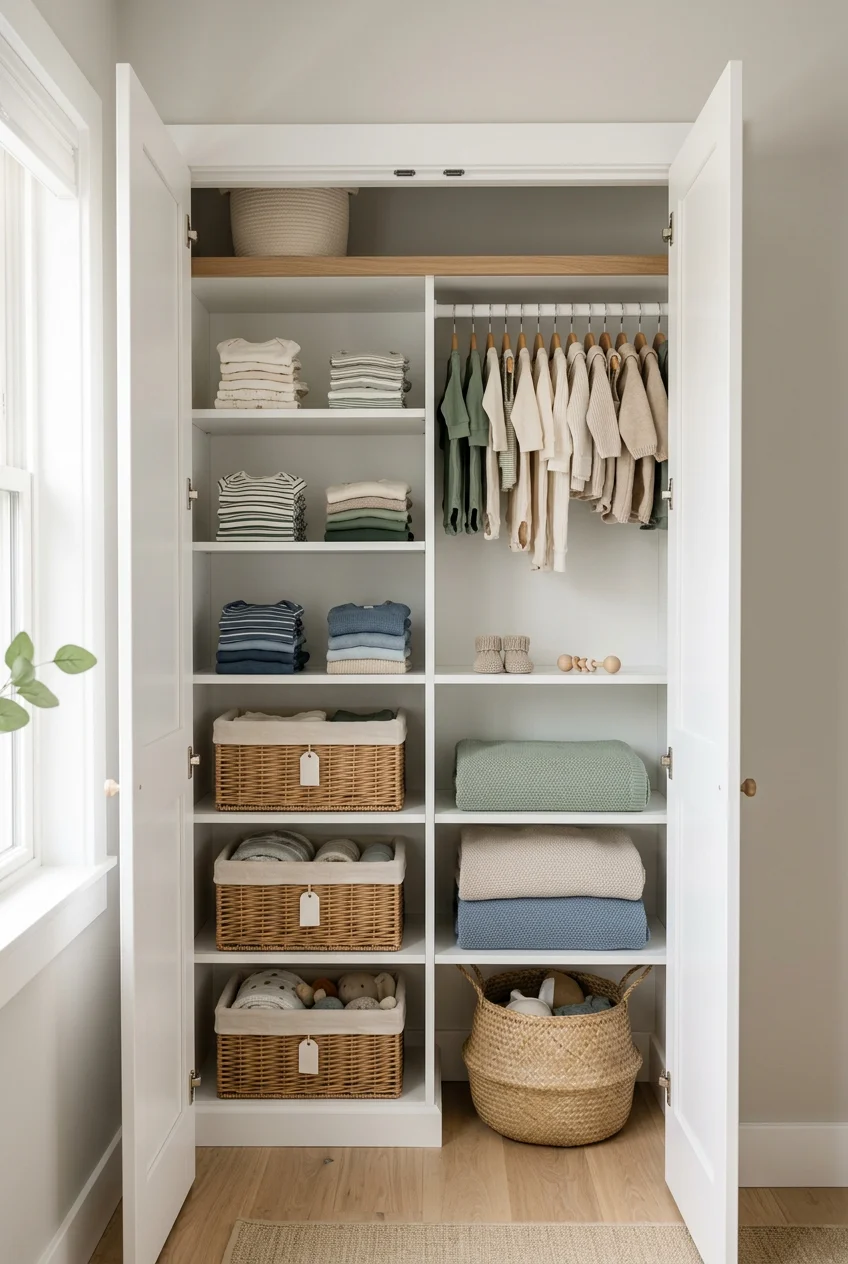
Most people open a nursery door at 3 AM and trip over a pile of mismatched plastic hangers and laundry. It happens all the time. Get your closet organization right from day one to avoid that late-night chaos. Tiny socks and microscopic onesies need a different storage approach than your own clothes. You’re dealing with items that change sizes every three months, so your storage needs to pivot just as fast. A well-planned nursery closet smells like fresh cedar and baby powder, looks calm, and lets you grab a clean swaddle with one hand in the dark. If you only try one idea here, make it #3. Doubling your hanging space solves the biggest real estate problem in any standard closet, giving you room to breathe without spending a fortune. Trust me on this.
Skip this list if you’re hiring a custom company for a $5,000 built-in renovation, or if you have a massive walk-in closet with endless space. These strategies work for standard reach-in closets where every single inch of vertical and horizontal room matters.
1. Declutter Ruthlessly Before Buying Bins

Before buying a single acrylic bin, empty the whole space. Expert organizers at The Container Store suggest sorting all baby items by size and type, then donating anything you won’t use to create a clean slate. People skip this because it’s tedious. You end up organizing stuff your baby will never wear. Don’t keep those stiff, scratchy formal outfits that look cute on a hanger but feel terrible on a newborn. Pitch them or donate them.
Create three piles on the floor: keep, donate, and trash. Seeing exactly how many 4 oz bottles or newborn hats you actually own forces you to be realistic. You don’t need twenty receiving blankets. Keep the softest ones and let the rest go. This initial purge prevents wasted effort and ensures you only organize what you’ll actually need for the next six months.
Best for: Overwhelmed parents drowning in baby shower gifts.
The catch: It takes serious energy to part with items gifted by relatives, and the room will look like a disaster zone for a few hours before it gets better.
2. Implement Size-Specific Closet Dividers

Babies grow fast. Size organization isn’t just nice, it’s mandatory. Durable plastic closet dividers let you quickly locate the right size without rummaging through hangers. Brands like Baby Nest Designs offer sets (usually $8 to $15 on Amazon) that cover sizes from newborn up to 24 months. Just snap them onto the rod between the sizes.
When you’re sleep-deprived, reading the tiny faded tags on the back of a onesie is frustrating. These dividers act like a filing system. You want the labels to face outward so you can read them from the doorway. Space them out with about 12 inches of garments between each to keep things balanced.
Best for: Fast-growing infants and parents who buy clothes a year in advance.
The catch: The hard plastic rings often snap if you force them over a custom wooden rod thicker than 1.5 inches.
3. Maximize Vertical Space with Double Rods

Standard closets are designed for adult clothes, leaving four feet of unused space below baby garments. You need to fix this dead zone. Install a second, temporary hanging rod about 24 to 30 inches below the existing one. Target sells basic Room Essentials adjustable tension rods (usually under $20) that work perfectly.
This doubles your hanging capacity for tiny outfits, sleepers, and dresses. Hang the current sizes on the lower rod where they’re easy to reach, and future sizes on the top. The symmetry of two packed rows looks great and keeps the tiny clothes from looking swallowed by a giant empty wall.
Best for: Standard reach-in closets with 8-foot ceilings.
The catch: Adding a lower rod prevents you from storing tall laundry hampers or large diaper boxes on the floor directly underneath.

Criusia Drawer Organizer Clothes
A dependable everyday pick — Criusia Drawer Organizer Clothes pulls in 12 ratings at 4.5 stars. Not flashy, just solid.
4. Utilize Clear, Labeled Bins for Bulk Items

Store clothes for future sizes or bulky out-of-season items in clear, stackable bins on high shelves. Brands like Sorbus or Vtopmart offer stackable drawers (budget to mid-range at Walmart or Amazon) that let you see the contents at a glance. You need containers around 11×11 inches to fit neatly on standard 12-inch shelves.
Label each bin clearly with the size and season to avoid frantic searching. Use a bold black marker on white tape. When the weather suddenly turns cold, you don’t want to open four boxes looking for a fleece jacket. Clear bins keep the visual weight light while hiding the chaos of folded clothes.
The catch: Clear bins look messy if you just shove unfolded clothes inside; they require strict folding discipline to maintain an elegant look.
5. Conquer Tiny Items with Drawer Dividers

Socks, bibs, hats, and pacifier clips turn into a tangled mess within three days. Use fabric drawer dividers or small, clear bins inside your built-in drawers to create compartments. IKEA SKUBB Box sets (usually under $10) or Linus Shallow Drawer Organizers from The Container Store keep everything separated. You might also like: 19 Butterfly Nursery Baby Girl You Need to See
Stop folding tiny socks. It’s a waste of time. Just toss them loose into a designated 5×5 inch square compartment. Do the same for bibs and hats. The rigid structure of the dividers stops items from migrating to the back of the drawer. This method keeps essentials visible and accessible. You might also like: 18 Vintage Baby Boy Nursery You Need to See
Best for: Dressers that have been moved inside the closet to save floor space. You might also like: 16 Winnie The Pooh Nursery Ideas You Need to See
The catch: Fabric drawer boxes attract lint and dust, requiring you to vacuum them out every few months.
6. Leverage Over-the-Door Organizers

The back of the closet door is often ignored. An over-the-door organizer with clear pockets is a great way to store lightweight items. The Elfa Utility Door & Wall Rack from The Container Store (systems start in the mid-$200 range) is perfect for holding tubes of diaper cream, lotion, burp cloths, and tiny shoes.
You want pockets at least 6 inches deep so items don’t fall out when you swing the door. Storing these small, odd items on the door frees up shelf and drawer space for bulkier clothing. It puts the most frequent items right at your fingertips the second you open the closet.
The catch: If your nursery has hollow-core doors, the heavy metal hooks can dent the top of the doorframe and scratch the paint.

Criusia Over the Door Organizer
If you want something that just works, Criusia Over the Door Organizer is a safe bet (336 reviews, 4.5 stars).
7. Invest in a Modular Closet System

A big trend in nursery design is flexible storage that grows with the child. A modular system like the Elfa Classic Closet System (kits range from mid-tier to premium) provides long-term value. These hang from a horizontal steel track, allowing you to move shelves and rods in 1-inch increments.
When your baby is an infant, you need multiple short hanging sections. As they grow into a toddler, you’ll want deeper shelves for toys and more space for winter coats. A modular system adapts without requiring you to buy a new setup every three years. The steel parts feel sturdy and look intentional.
Best for: Homeowners who plan to stay in the house for five or more years.
The catch: Installation requires finding wall studs and drilling holes, meaning you’ll need to patch and paint if you remove the system.
8. Prioritize Sustainable Storage Solutions

With a focus on air quality, opting for sustainable materials is a smart move. Look for bins and shelves that are GREENGUARD Gold certified, ensuring they are free from harmful off-gassing. Retailers like Modern Nursery offer eco-conscious options made from natural cotton rope or bamboo.
You can also use glass jars from places like Sprouts to hold cotton swabs or pacifiers on the shelves. Natural materials add a soft texture that plastic can’t replicate. The subtle smell of seagrass beats the chemical scent of fresh plastic any day.
The catch: Sustainable, non-toxic storage bins often cost double or triple the price of standard plastic ones.
9. Avoid Excessive Open Shelving

Open shelves look stunning in photos, but they are a nightmare for maintenance. A common mistake is using open shelves for clutter-prone items like loose diapers, wipes, and half-empty lotion bottles. These become dust collectors and make the closet look chaotic.
Use closed storage instead. Target’s Brightroom woven baskets with lids (usually $15 to $30) hide the unappealing packaging of baby supplies while adding texture. Keep open shelving for neatly folded blankets or a few keepsakes. The visual calm of closed baskets makes the closet feel much more elegant.
The catch: Finding a specific item takes an extra step because you have to pull the basket out and remove the lid, which is annoying when holding a squirming baby.

Beautiful Wooden Baby Closet Dividers Set of 7
Beautiful Wooden Baby Closet Dividers Set of 7 – Double-Sided Organize is sturdier in person than the photos suggest — over 11 buyers gave it 4.5 stars.
10. Maintain a “Too-Small” Drop Zone

Babies outgrow clothes at lightning speed. You need a designated, easy-to-reach basket on the floor for outgrown items. A simple canvas laundry tote from Kroger (usually under $15) works perfectly. As soon as you try to snap a onesie and realize it’s too tight, toss it straight into this basket.
This prevents outgrown clothes from getting mixed back into the clean laundry. Once the basket is full, zip it up, label it, and move it to long-term storage or donation. It eliminates the frustration of dressing your baby in pants that are suddenly two inches too short.
Best for: Parents who want to save clothes for future siblings without mixing up sizes.
The catch: It takes up valuable floor space that could be used for a diaper pail or humidifier.
11. Opt for Slim Velvet Hangers

Tiny cotton baby clothes constantly slip off thick plastic hangers, ending up in a pile on the floor. Slim velvet hangers, like the Amazon Basics Kids Velvet Non-Slip hangers (under $20 for a large pack), keep garments securely in place. The flocked texture grips the fabric.
More importantly, the ultra-slim 0.2-inch profile maximizes your hanging space. You can fit thirty velvet hangers in the same space that holds fifteen chunky plastic ones. They also eliminate that irritating plastic clacking sound when you slide clothes across the rod. Matching all your hangers to one color makes the closet look custom and expensive.
The catch: Putting damp clothes on velvet hangers will ruin the flocking and potentially transfer dye onto the baby’s clothing.
12. Create a Mobile Diapering Station

Instead of permanently storing all diaper supplies deep inside the closet, use a rolling utility cart that parks in the closet when not in use. The IKEA RÅSKOG cart (around $40) is a classic choice. Stock the top tier with a few days’ worth of diapers and wipes, the middle with burp cloths, and the bottom with extra swaddles.
This setup lets you easily roll the essentials into the living room or bathroom. It keeps the closet from becoming a bottleneck during messy blowouts. When the baby outgrows diapers, this cart can be repurposed for art supplies or toys, making it a versatile piece of furniture.
Best for: Single-story homes where you frequently change the baby in different rooms.
The catch: The small wheels get stuck if you try to roll the cart over a thick, plush nursery rug.

SNSLXH 5 Pack Stackable Closet Storage Basket
SNSLXH 5 Pack Stackable Closet Storage Basket is sturdier in person than the photos suggest — over 43 buyers gave it 4.5 stars.
13. Repurpose a Vintage Card Catalog

For a unique storage solution for microscopic items, hunt down an antique library card catalog or an apothecary cabinet. You can find authentic ones at antique stores or modern replicas at places like Costco. The small, 4-inch deep drawers are the perfect size for sorting tiny socks, hair bows, and pacifiers.
Label each drawer with a brass tag for easy identification. This adds vintage charm and warmth, breaking up the sterile look of modern plastic. It turns an organizational necessity into a striking piece of decor that anchors the room.
The catch: Solid wood vintage furniture is heavy and must be anchored to the wall studs to prevent a tipping hazard.
14. Integrate Multi-Functional Furniture

If your closet is tiny, push some storage out into the main room. Multi-functional furniture is the smartest way to do this. Look for cribs from brands like Babyletto that feature built-in trundle drawers underneath. Line the drawers with organic lavender liners from Whole Foods to keep things smelling fresh.
These hidden drawers provide discreet storage for extra bedding or out-of-season clothes without taking up extra floor space. Excellent closet organization often means knowing what shouldn’t go in the closet at all. Moving bulky bedding under the crib frees up shelf space inside for daily clothing. I learned that the hard way.
The catch: The low clearance of under-crib drawers makes them a magnet for dust bunnies, requiring you to vacuum under the crib weekly.
15. Store Daily Essentials at Eye Level

Professional organizers always emphasize the “Everyday Zone.” Place the most frequently used items right at eye level. You shouldn’t have to use a step stool or bend down to grab a fresh onesie. Use sturdy Command hooks from Target (usually under $10) on the empty side walls to hang tomorrow’s outfit or a sleep sack.
Less frequent items, like holiday outfits or memory boxes, belong on the highest shelves or in the lowest bins. This strategy ensures efficiency during stressful moments. When you’re holding a crying baby, you need the clean clothes right in front of you.
Best for: Petite parents who struggle to reach the standard top shelf.
The catch: Your “eye level” changes completely once the baby turns into a toddler who can reach up and pull everything off those hooks.
How we chose these ideas: The strategies above were selected based on strict criteria prioritizing renter-friendliness, cost, effort, and visual impact. We focused on solutions that maximize vertical space and eliminate clutter, favoring methods that require minimal permanent changes to standard closet structures.
Getting your nursery closet in order before the baby arrives saves you from countless headaches later. Don’t try to implement all fifteen ideas at once. Pick two or three that solve your biggest pain points right now, like swapping those plastic hangers or adding a second rod. Pin this article to your nursery board so you can reference these measurements when you hit the store this weekend. It took me years to figure out these tricks. No exaggeration.

Night Light for Kids, Baby Night Light with Sound Machine
Night Light for Kids has been one of the most consistently praised picks in this category. 57 reviewers averaged 4.5/5.
Frequently Asked Questions
How do you organize a baby closet with lots of clothes?
Sort everything by size and use plastic closet dividers to separate the months. Install a second hanging rod to double your vertical space, and store out-of-season or future sizes in clear, labeled bins on the highest shelves.
What is the best way to store tiny baby socks?
Stop folding them. Use rigid fabric drawer dividers or small acrylic bins inside your dresser drawers. Toss the loose socks into a designated 5×5 inch compartment so they stay contained and visible without wasting time.
Are velvet hangers worth it for baby clothes?
Yes. Slim velvet hangers prevent slippery cotton onesies from falling onto the floor. Their ultra-thin profile also allows you to fit up to twice as many garments on a single rod compared to chunky plastic hangers.
Where should I put clothes my baby has outgrown?
Keep a dedicated canvas bin or basket on the floor of the closet. Toss outgrown items into it immediately to prevent them from mixing with clean laundry. Once full, move it to long-term storage or donate.
