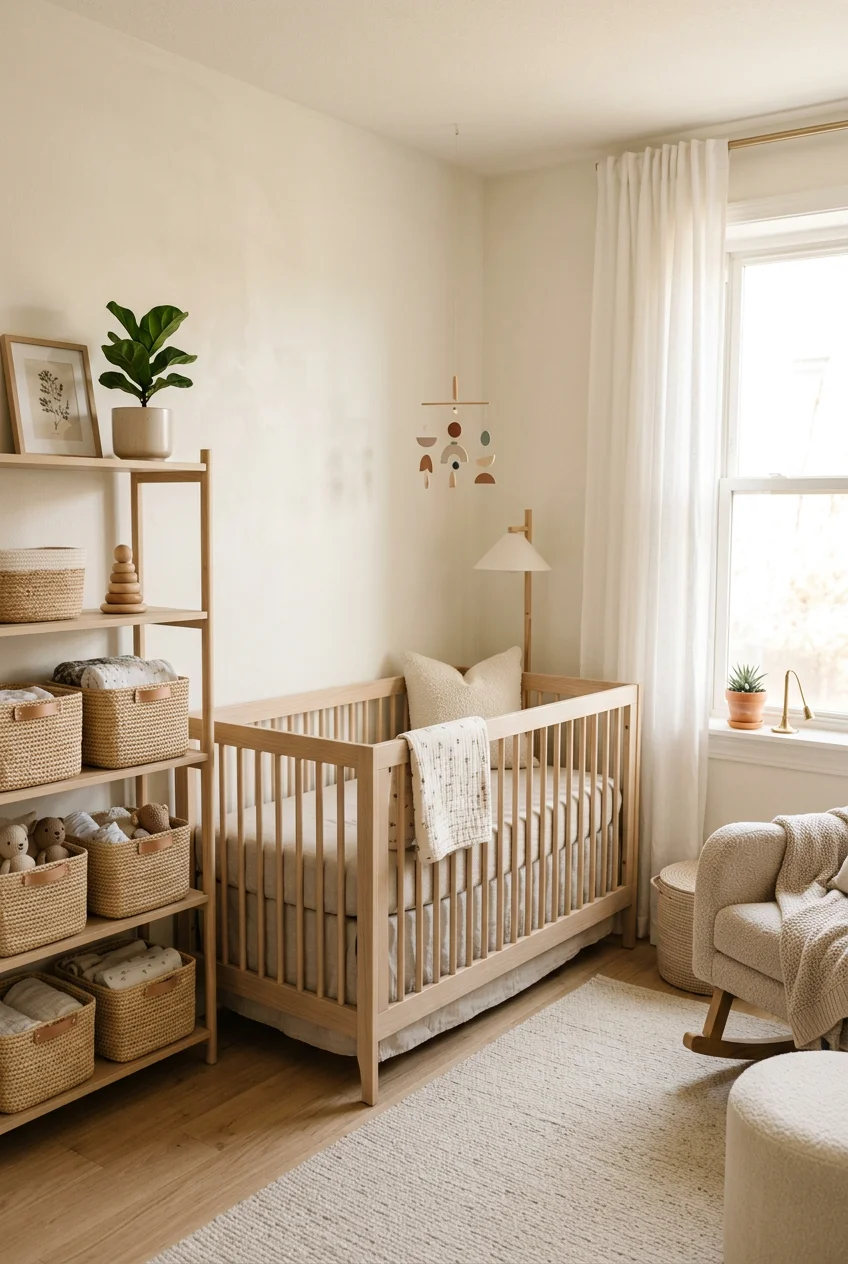
What’s Inside
- Implement Zoning For Efficient Baby Room Organization
- Master The Changing Station With Clear Acrylic
- Invest In An Odor-Locking Diaper Pail
- Conquer The Closet With A Modular System
- Sort And Purge Clothes By Exact Size
- Utilize Drawer Dividers For Small Items
- Embrace Vertical Wall Storage Solutions
- Opt For Multi-Purpose Nursery Furniture
- Deploy A Rolling Utility Cart Station
- Implement A Designated Too Small Bin
- Choose Closed Storage Over Open Shelving
- Adopt Montessori-Inspired Low Shelving
- Strictly Limit Your Newborn Clothes
- Apply A Clear Labeling System
- Master Baby Room Organization With Over-The-Door Pockets
- Anchor Heavy Furniture Properly
- Layer Blackout Curtains For Sleep
- Utilize Under-Crib Rolling Bins
- Build A Dedicated Nursing Side Table
- Create A Daily Restock Basket
Most parents cram 40 newborn onesies into a single dresser drawer and wonder why the nursery turns into a laundry disaster. Good organization isn’t about buying expensive matching baskets. It’s about building systems that work at 3 AM when you’re wiped out. I’ve seen plenty of gorgeous nurseries that fail the practical test because parents chose looks over utility. You need a room that works with your sleep-deprived brain, not against it. Don’t prioritize a symmetrical layout over usability when you’re dealing with diaper changes all night. If you only try one idea from this list, make it #1. Why? Because creating distinct zones for specific tasks saves you from pacing in the dark. Trust me.
Skip this list if you’re hiring a pro with a massive budget. These strategies are built for standard apartments, rentals, and parents doing the work themselves. If you aren’t willing to build a flat-pack shelf or sort tiny socks into plastic bins, this guide won’t help you.
1. Implement Zoning For Efficient Baby Room Organization

Create dedicated spots for sleeping, changing, and feeding to keep your routine moving. A common mistake is spreading diaper supplies across the room from the changing pad, forcing you to walk back and forth. Position a sturdy changing table near the door for easy access during night feeds, and place a comfortable chair with a side table nearby for nursing. Grouping items by task means you aren’t walking across a dark room with a dirty diaper in one hand and a squirming baby in the other. A thick wool rug underfoot helps during 3 AM pacing. The fresh smell of diapers belongs in one corner, not scattered everywhere. The catch: this often requires moving heavy furniture to find the right flow, which isn’t great if you’re heavily pregnant or recovering.
2. Master The Changing Station With Clear Acrylic

Keep diapering gear within reach but out of your baby’s grasp. Use a clear acrylic organizer like the Pip + Phee Acrylic Organizer, which usually runs between $25 and $40. It measures roughly 16.28 inches by 10.25 inches by 6.39 inches and features six compartments. Two large sections hold diapers and wipes, while four smaller ones fit zinc oxide creams, pacifiers, and burp cloths. Clear acrylic lets you see when you’re running low, preventing panic during a messy blowout. Skip the cheap fabric bins that absorb spilled oil and permanently smell like artificial lavender. Best for: tight budgets. The catch: acrylic shows every speck of dust and fingerprint, so you’ll need to wipe it down often with a microfiber cloth.
3. Invest In An Odor-Locking Diaper Pail

A quality odor-locking diaper pail is a requirement, not a luxury. The Ubbi Stainless Steel Diaper Pail, typically priced between $66 and $80, is a standard choice because it uses any 13-gallon kitchen trash bag. This saves you money on proprietary refills over the first two years. It features thick rubber seals and a sliding lid to keep the smell of dirty diapers trapped inside. Most people buy cheap plastic pails and wonder why the room smells like a public restroom after six months, as plastic absorbs odors permanently. Stainless steel doesn’t. The catch: the metal gets ice cold in winter, and the lid can be loud if it snaps shut while the baby is sleeping.

Modanais Baby Diaper Caddy Organizer Cart
Modanais Baby Diaper Caddy Organizer Cart – 3 Tier Rolling Cart with D has been one of the most consistently praised picks in this category. 654 reviewers averaged 4.5/5.
4. Conquer The Closet With A Modular System

Baby clothes are tiny, leaving tons of wasted vertical space in a standard closet. Modular systems that grow with your child are the smartest approach. Consider systems like the IKEA PAX Wardrobe System or the Elfa Closet System from The Container Store. Prices vary widely, typically running from $300 to over $1000. These systems allow for adjustable shelves, multiple rods, and sliding mesh drawers. This maximizes space for everything from newborn onesies to bulky toddler coats. Most people just leave the builder-grade wire shelf and stack bins, which looks terrible and works worse. The catch: installing these requires finding wall studs and usually takes a frustrating weekend of labor. I learned that the hard way.
5. Sort And Purge Clothes By Exact Size

A crucial step is sorting all baby clothes first by size, then by type. Organizers recommend using clear, labeled bins for categories like 0-3 month sleepers or 3-6 month pants. You must purge clothes every three months. Babies outgrow items fast, sometimes making 15 to 20 pieces obsolete in the first month. Hanging onto clothes that don’t fit just clogs up your routine. When you’re sleep-deprived, you don’t want to accidentally grab a newborn sleeper for a three-month-old. Keep only what fits in the active drawers and box up the rest immediately. The catch: this purging schedule is emotionally draining for sentimental parents who want to keep every tiny sweater.
6. Utilize Drawer Dividers For Small Items

Tiny items like socks, scratch mittens, and bibs quickly become a mess inside large drawers. Use rigid drawer dividers to keep them separated. Brands like mDesign offer plastic bins with handles that are perfect for this. These typically cost $10 to $20 per bin. Measure your drawer depth before buying. A common mistake is buying generic bins that are a half-inch too tall, meaning the drawer won’t close. Put the pacifier clips in one 4-inch bin and the socks in another. The visual clarity reduces daily friction when you’re rushing to dress a crying infant. Best for: renters who can’t alter walls. The catch: lightweight plastic bins slide around unless you secure them with double-sided tape. You might also like: 20 Brilliant Baby Nursery Themes Ideas You Can Try Today

Modanais Baby Diaper Caddy Organizer Cart
If you want something that just works, Modanais Baby Diaper Caddy Organizer Cart – 3 Tier Rolling Storage Car is a safe bet (325 reviews, 4.5 stars).
7. Embrace Vertical Wall Storage Solutions

Don’t overlook blank wall space. Floating shelves, wall bins, and wooden book ledges turn unused areas into functional storage. The IKEA TROFAST storage combination is an adaptable solution that holds wooden toys and diapers now, and transitions to storing heavy books later. Use the wall space above the changing table for items you need quickly, like lotion or a clean swaddle. Most people leave the walls bare or just hang art, wasting prime real estate. Secure heavy bins directly to the studs so they don’t rip out of the drywall. The catch: heavy wall storage requires power tools and leaves anchor holes, which isn’t ideal if your landlord is strict about damage. You might also like: 15 Toddler Girl Room Decorating Ideas You Need to See
8. Opt For Multi-Purpose Nursery Furniture

To avoid overcrowding, choose furniture that serves multiple functions. A wide, solid wood dresser with a removable changing pad on top is more versatile than a standalone changing table. You’ll use a dresser for a decade; a changing table is obsolete in two years. Some modern cribs even have built-in drawers underneath for heavy blankets and sheets. When you’re working with 100 square feet, every piece of furniture needs to earn its keep. Look for dressers with smooth metal glides so you can open them one-handed while holding the baby. Best for: tight budgets. The catch: standard dressers are often 30 to 32 inches high, which can cause back pain for taller parents who have to hunch over. You might also like: 18 Nursery Ideas Colorful You Need to See
9. Deploy A Rolling Utility Cart Station

A rolling utility cart is a portable command center that moves with you, rather than a stationary shelf. The IKEA RÅSKOG utility cart, usually priced around $30 to $50, is a durable metal option. Fill the top tier with bottles and formula, the middle with burp cloths, and the bottom with bath essentials. It prevents you from making five trips down the hall for forgotten items when your hands are full. The metal mesh bottom prevents dust from pooling, unlike solid plastic bins. Keep it parked next to the nursing chair during the day and roll it into the bathroom for baths. The catch: the small wheels don’t roll smoothly on thick, plush carpeting.

Night Light for Kids, Baby Night Light with Sound Machine
Night Light for Kids punches above its price — 50 buyers rated it 4.5 stars. The kind of pick people reorder.
10. Implement A Designated Too Small Bin

Keep a bin for outgrown clothes right in the nursery. The moment an item becomes too snug, toss it in. This prevents the nightmare of constant re-sorting and saves time during growth spurts. Once the bin is full, decide whether to store it, donate it, or hand it down. Most parents just shove the tight onesie back in the drawer, ensuring they’ll grab it again by mistake. A simple cardboard box in the corner works, or a canvas basket from Target. The catch: this requires dedicating floor space or a shelf specifically to clothes your baby can’t wear anymore.
11. Choose Closed Storage Over Open Shelving

While pretty on Pinterest, open shelves become clutter magnets and dust collectors. Filling every surface with items makes a room feel chaotic. Opt for closed storage like solid drawers, cabinets, or canvas baskets. This keeps the space tidy and calm, especially for colorful plastic toys or half-empty bottles you don’t want on display. The visual noise of 50 baby products on a shelf is overwhelming. Put the ugly, practical items behind a door. Best for: homes with kids or pets who like to pull things off low shelves. The catch: you have to open the doors to find things, which requires a good memory or a strict labeling system.
12. Adopt Montessori-Inspired Low Shelving

Consider Montessori principles for toy storage. Use long, low shelving where toys and books are accessible once your child starts crawling. The IKEA KALLAX unit with fabric bins, typically costing $35 to $100, is a standard choice. This encourages independent play and reduces clutter by displaying only a few toys at a time. Rotate the toys in the bins every two weeks to keep them interesting. Avoid deep toy boxes where things get crushed at the bottom. Keep items at the baby’s eye level. The catch: because everything is within reach, a mobile baby will gleefully pull every single item onto the floor within five minutes.

Mom’s Choice Awards丨Bunny White Noise Sound Machine Baby
Mom’s Choice Awards丨Bunny White Noise Sound Machine Baby for Sleep- AI has been one of the most consistently praised picks in this category. 318 reviewers averaged 4.5/5.
13. Strictly Limit Your Newborn Clothes

Babies grow fast, often outgrowing newborn sizes in three weeks. A common mistake is buying too many newborn-specific outfits. A solid baseline is 7 to 10 onesies, 5 to 7 footed sleepers, a few pairs of soft pants, and plenty of socks. Focus on practicality to avoid overflowing drawers and wasted money. You’ll likely receive dozens of outfits as gifts, most of which will be worn exactly once. Stick to basic cotton layers that wash easily. Don’t waste space on stiff denim jeans for a one-month-old. Keep the wardrobe lean. The catch: a minimalist wardrobe means you’re doing a load of laundry every day to keep up with spit-up and blowouts.
14. Apply A Clear Labeling System

Labeling bins, drawers, and hangers with clear, simple text is crucial for your sanity. This is especially true when grandparents are helping out. Use a basic label maker to indicate sizes or contents like overnight diapers and swaddles. This ensures everyone can find what they need without tearing apart three different drawers. Label the inside lip of the drawers so they aren’t visible when closed. It takes 10 minutes but saves hours of frustration. Don’t rely on your memory when you’re running on two hours of sleep. The catch: adhesive labels tend to peel off fabric bins over time, so you might need clip-on metal label holders.
15. Master Baby Room Organization With Over-The-Door Pockets

Utilize the back of the nursery door with a clear pocket organizer. These are sold as shoe organizers at Walmart or Target for $15 to $25, and they are perfect for nursery gear. Fill the pockets with diaper cream, infant Tylenol, nail clippers, and extra wipes. This keeps items out of reach while remaining visible. You can see exactly what you have without digging through a bathroom vanity. It uses zero floor space. Best for: renters who can’t drill permanent shelving. The catch: the metal hooks that go over the door are often thick, which can prevent the door from closing properly.

TeckyGem Baby Sound Machine & Night Light for Nursery |
TeckyGem Baby Sound Machine & Night Light for Nursery | 3-In-1 White N is sturdier in person than the photos suggest — over 58 buyers gave it 4.5 stars.
16. Anchor Heavy Furniture Properly

Prioritize safety over aesthetics by anchoring every heavy piece of furniture. A common mistake is choosing a look over safety. Ensure dressers, bookshelves, and changing tables are bolted to the wall studs to prevent tipping. This is critical as babies become mobile and start pulling themselves up on handles. Hardware stores sell nylon strap kits for under $15. Don’t skip this just because the dresser feels heavy. A 30-pound toddler can tip a 100-pound dresser if the drawers are open. The catch: anchoring furniture requires finding studs and drilling permanent holes, which means patching and painting when you eventually move.
17. Layer Blackout Curtains For Sleep

Control the light by layering your window treatments. Install a dual-rod system with sheer curtains for daytime and heavy blackout panels for naptime. Target sells thermal blackout panels for $30 to $50 a pair. Good sleep hygiene requires a dark room. Keeping the curtain ties organized on hooks prevents the fabric from dragging on the floor and collecting dust. Don’t rely on cheap paper blinds that let light bleed through the edges. Proper window treatments also help regulate the room temperature. The catch: blackout curtains make the room pitch black, which can disrupt your baby’s natural daytime wake windows if you leave them drawn all day.
18. Utilize Under-Crib Rolling Bins

The space beneath the crib is an ignored storage opportunity. Buy long, flat rolling plastic bins from Costco or Walmart, usually priced between $20 and $40. These are perfect for storing bulky items you don’t need daily, like the next size up in diapers or seasonal coats. Measure the clearance under your crib before buying, as some sit very low to the ground. This keeps the closet floor clear for everyday items. Best for: small rooms with limited square footage. The catch: the area under the crib is a magnet for dust bunnies, so you’ll have to pull the bins out weekly to vacuum.
19. Build A Dedicated Nursing Side Table

Set up a specific side table next to your nursery glider. You can find small metal or wood tables at Kroger or Whole Foods home sections for $30 to $60. Stock this table with an insulated water bottle, lip balm, burp cloths, and a touch lamp. When you’re trapped under a sleeping baby for 45 minutes, you can’t get up for a drink. Having an organized surface prevents you from balancing items on the armrest of the chair. Keep the tabletop clutter-free so you have room to set down a bottle in the dark. The catch: a side table takes up extra floor space in an already tight corner.
20. Create A Daily Restock Basket

Create a small, portable daily restock basket. Grab a woven basket from a local craft store for $20 to $40. Every evening, walk through the house and toss stray pacifiers, rogue socks, and empty bottles into this basket. Bring it to the nursery to put the items back where they belong. This prevents the migration of gear into the living room. It acts as a daily reset button for your systems. Don’t let the clutter build up for a week. A five-minute sweep keeps the nursery functional for the night. The catch: this requires 10 minutes of discipline every single day, which is hard when you’re exhausted at 9 PM.
How we chose these ideas: These strategies were selected based on renter-friendliness, cost, effort, and long-term impact. Priority was given to adaptable systems that transition from the newborn phase into the toddler years without requiring a complete room overhaul.
Building a functional nursery takes a weekend of work, but the daily time savings are worth it. Pin this list for your next free Saturday, and start by tackling the changing station first.
Frequently Asked Questions
When should I start baby room organization?
Start organizing the nursery around the beginning of your third trimester. This gives you plenty of time to assemble furniture, wash clothes, and arrange items before your energy levels drop significantly in the final weeks.
How do you organize baby clothes without a closet?
Utilize a large dresser with deep drawers and strict drawer dividers. You can also install floating wall shelves with decorative canvas baskets, or use an over-the-door organizer for smaller items like socks and bibs.
What is the best way to store outgrown baby clothes?
Wash and thoroughly dry the clothes, then pack them in vacuum-sealed bags or clear plastic bins with tight-fitting lids. Label the outside clearly with the size range and season to make future retrieval simple.
How many newborn clothes do I actually need?
Keep it minimal. You only need 7 to 10 basic onesies, 5 to 7 footed sleepers, and a few pairs of pants. Babies outgrow this size in weeks, so excess clothing just creates unnecessary clutter in your drawers.
