What’s Inside
- Paint Walls Muted Earth Tones Instead of Camo
- Invest in Heritage-Inspired Organic Crib Bedding
- Hang Vintage Duck Decoy Art Prints
- Apply Removable Flying Mallard Wall Decals
- Place Actual Vintage Decoys on High Shelves
- Choose a Stain-Resistant Power Glider
- Lay Down a Washable Low-Pile Nursery Rug
- Install Beadboard Wainscoting for Marshland Texture
- Use Woven Cattail and Rattan Storage Baskets
- Hang Blackout Curtains in a Dusty Olive Linen
- Display a Collection of Duck Calls in a Shadow Box
- Add a Faux Leather Ottoman for Warmth
- Swap Standard Knobs for Brass Shotgun Shell Hardware
- Frame a Vintage Duck Stamp Collection
- Create a Feature Wall with Reclaimed Wood Planks
- Refine the Look with Classic Plaid Throw Blankets
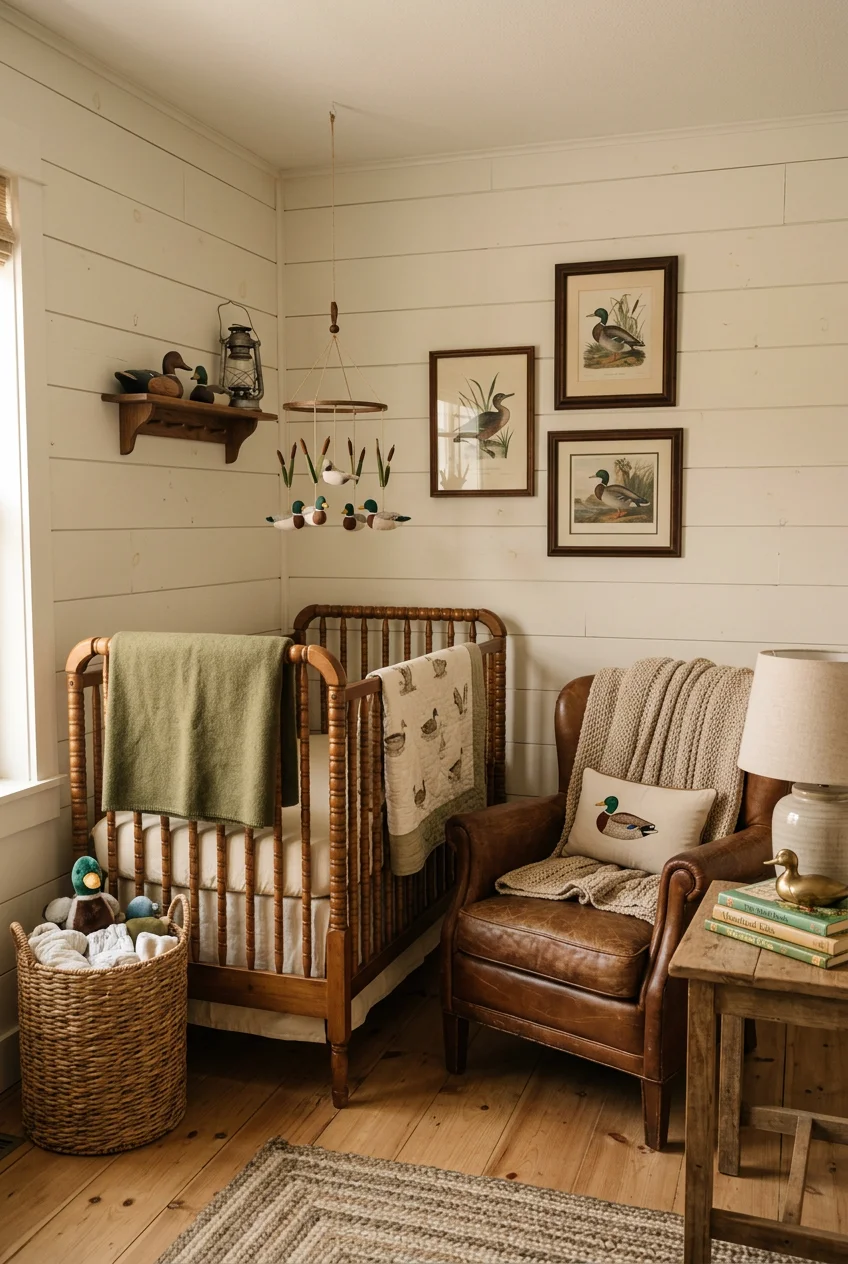
Most parents default to bright, cartoonish camouflage the second they decide on a hunting theme, and the room ends up looking like a discount sporting goods aisle. When you’re planning a baby boy’s duck hunting nursery, the goal isn’t to build a literal duck blind. It’s about grabbing the textures of dry marshgrass, the muted tones of a cold dawn sky, and heritage pieces that actually age well. You want a space that feels like a classic, quiet lodge, not a messy swamp. Think about the sharp, piney scent of old wood, the soft touch of brushed cotton, and the visual calm of muted greens. If you only try one idea from this list, make it #2. Skipping the standard primary-color bedding for heritage organic sateen completely shifts the room from a cliché to a thoughtful, tailored space. Took me years to figure out that less is more.
Skip this aesthetic entirely if you prefer ultra-modern, high-gloss, or minimalist spaces. The duck hunting motif relies heavily on rough rustic textures, layered matte wood tones, and faded vintage art. These elements clash terribly with sleek acrylic cribs, shiny chrome hardware, or stark white gallery walls. Trust me on this.
1. Paint Walls Muted Earth Tones Instead of Camo

People often slap up a dark green camouflage accent wall and wonder why the nursery feels like a dark, heavy cave. Instead, stick to a muted, earthy color palette for longevity. Warm neutrals, sage, olive green, and soft browns act as a calming backdrop that won’t overstimulate a newborn who’s trying to sleep. You’re better off painting three walls in a soft neutral like Sherwin-Williams Accessible Beige or Benjamin Moore Pale Oak. You need about 2 gallons for a standard 10×12 foot room, typically costing around $50 to $70 per gallon depending on the finish. Then, use an accent wall with a dusty blue, like Benjamin Moore Palladian Blue, to subtly evoke a morning sky over the marshlands. This approach gives a nod to the outdoors without being aggressively thematic. The flat or eggshell finishes absorb light beautifully, making the room feel soft and enveloping.
Best for: small dark rooms that need light-reflecting neutrals.
The catch: Palladian Blue is notorious for shifting green in north-facing rooms. Always paint a 2×2 foot swatch on the wall and check it at different times of day before committing to the whole gallon.
2. Invest in Heritage-Inspired Organic Crib Bedding

Don’t buy the stiff, mass-produced camo sets from big box stores. They feel like scratchy sandpaper and the colors fade into a muddy mess after three washes. Select heritage-inspired, organic crib bedding that integrates the theme subtly. Look for specific collections like the DBC Baby Bedding Co. Ducks & Switchgrass Camo Woodland Boy Crib Bedding. It features a muted switchgrass pattern that looks intentional, tailored, and far more expensive than it is. Another solid option is Giggle Six Baby, which offers a personalized mallard duck set with watercolor ducks and a soft sage green plaid. Always opt for organic cotton sateen on the patterned side and a hypoallergenic minky fabric for the blanket backing so it feels soft against a baby’s cheek. A standard 3-piece set (which includes a crib skirt, a fitted sheet for a standard 28×52 inch mattress, and a blanket) typically ranges from $150 to $250.
The catch: Custom or personalized bedding from independent makers often requires a 6 to 8 week lead time, so you can’t order this at the last minute if your due date is approaching quickly.
3. Hang Vintage Duck Decoy Art Prints

Modern, vector-style duck illustrations look too generic for a heritage room. They lack the depth and character needed for a lodge aesthetic. Instead, source vintage-style duck decoy art prints that look like they were pulled from an old field guide. You can find incredible digital downloads on Etsy for around $5 to $15 per print. Download the files and have them printed on heavy, archival matte paper (at least 100 lb weight) at a local print shop. Pop them into standard 8×10 inch or 11×14 inch frames with wide, 2-inch white mats to make them look like expensive gallery pieces. The thick white mats add breathing room and make cheap frames look substantial and heavy. You can usually grab basic wooden frames at Target or HomeGoods for under $20 each. Grouping three or four prints together above the changing table anchors the room nicely.
Best for: tight budgets.
The catch: Printing these yourself on standard 20 lb printer paper makes the ink bleed and the colors look muddy, completely ruining the vintage aesthetic. You’ve got to pay a few extra dollars for professional-grade matte paper.

Criusia Drawer Organizer Clothes
Criusia Drawer Organizer Clothes is sturdier in person than the photos suggest — over 11 buyers gave it 4.5 stars.
4. Apply Removable Flying Mallard Wall Decals

Wallpapering an entire nursery in an elaborate duck print is a massive visual commitment that you’ll likely regret when the kid turns three and suddenly only cares about construction vehicles. To introduce thematic elements without permanence, use high-quality, removable wall decals. Brands like StickerBrand offer sets like the Flying Geese Ducks Birds Vinyl Wall Decal Sticker, typically priced between $15 and $40 per set. Etsy also features mallard duck fabric wall decals that are reusable and have a matte, woven texture rather than a cheap, shiny plastic finish. You can scatter 10 to 15 flying ducks across the upper third of your painted accent wall to draw the eye upward and make the ceiling feel higher. The matte fabric blends right into the paint, making it look like a custom mural.
Best for: renters who can’t paint or alter the drywall.
The catch: Vinyl decals will peel at the edges within a month if applied to heavily textured surfaces like knockdown or popcorn walls. They only adhere properly to smooth or very lightly textured drywall. You might also like: 16 Nursery Drawer Organization for Every Budget
5. Place Actual Vintage Decoys on High Shelves

One of the best baby boy duck hunting nursery room ideas involves skipping the cheap plastic decor and using the real thing. Adding a few actual vintage wooden duck decoys brings an authentic, rustic charm that flat art simply can’t match. The chipped paint and worn wood grain provide incredible visual texture. Look for makers like the Mason Duck Company, which produced commercial decoys in the early 20th century. You can often find authentic, worn decoys at antique stores or flea markets for anywhere from $40 to mid-range collector prices. Display two or three of these on a solid oak floating shelf (at least 6 inches deep to accommodate the width of the decoy). The smell of old wood adds a subtle sensory layer to the room. You might also like: 16 Toddler Corner In Living Room That Actually Work
The catch: Authentic wooden decoys are incredibly heavy, often weighing 2 to 4 pounds each. They must be placed on high shelves that are securely anchored into wall studs with heavy-duty brackets, ensuring they remain completely out of reach of a growing toddler. You might also like: 15 Cozy Baby Nursery Decor Ideas for Any Style
6. Choose a Stain-Resistant Power Glider

A glider is where parents spend thousands of hours feeding, rocking, and staring blankly at the wall at 3 AM. Comfort isn’t optional, and a stiff wooden rocking chair will ruin your back. The Nurture& The Glider Plus is a solid choice for a nursery, featuring power recline, adjustable lumbar support, and a built-in USB port. It usually runs between $700 and $1000. If you need a smaller footprint, the Babyletto Kiwi is another popular option with similar features, typically priced around $400 to $600. Regardless of the brand, getting a stain-resistant fabric is mandatory. Babies spit up, bottles leak, and coffee spills happen. The fabric needs to wipe clean with just a damp cloth, leaving no water rings behind.
The catch: Because these are power gliders, they require an electrical outlet directly behind or very close to the chair. This heavily dictates your room layout and means you can’t just float the chair in the middle of the room without an ugly extension cord acting as a tripping hazard.

Modanais Baby Diaper Caddy Organizer Cart
Modanais Baby Diaper Caddy Organizer Cart – 3 Tier Rolling Storage Car punches above its price — 325 buyers rated it 4.5 stars. The kind of pick people reorder.
7. Lay Down a Washable Low-Pile Nursery Rug

Babies spend a massive amount of time doing tummy time, learning to roll, and crawling on the floor. You need a rug made from non-toxic, eco-friendly materials like cotton or wool, ideally certified by OEKO-TEX or GOTS. Brands like Tumble offer machine-washable rugs in muted, traditional patterns that fit the hunting lodge aesthetic perfectly. A standard 5×7 foot washable rug usually costs around $150 to $250. The low pile means toy trucks and blocks won’t get stuck in the fibers, and you can easily vacuum up the inevitable cracker crumbs later on. The smooth surface is also much easier for a baby learning to push up on their hands.
Best for: homes with kids or pets prone to making messes.
The catch: Washable rugs are notoriously thin so they can fit inside a washing machine drum. You absolutely must buy a separate, 1/2-inch thick cushioned rug pad to go underneath it, or the floor will be far too hard for a baby learning to sit up.
8. Install Beadboard Wainscoting for Marshland Texture

Flat drywall is boring and does nothing to build a lodge atmosphere. Adding beadboard wainscoting to the lower third of the room introduces vertical lines that mimic the look of tall marsh grass or a classic hunting cabin. You can buy 4×8 foot sheets of primed beadboard paneling at Lowe’s or Home Depot for about $30 to $40 a sheet. Cut them down to 36 inches high, attach them to the wall with construction adhesive, and cap them with a simple 2-inch wood chair rail. Paint the beadboard a deep, muddy green and leave the upper walls a soft cream. It completely grounds the room and adds architectural interest that makes the space look custom and expensive.
The catch: Installing beadboard correctly requires basic carpentry skills, a brad nailer, and the ability to cut precise angles for the corners and baseboards. It isn’t a quick weekend project for a total DIY beginner.
9. Use Woven Cattail and Rattan Storage Baskets

Plastic storage bins ruin the rustic illusion of a hunting-themed nursery instantly. Instead, use natural materials that tie into the marshland environment. Woven cattail, seagrass, or rattan baskets are perfect for holding rolled-up swaddles, burp cloths, and toys. You can find sturdy, 12×12 inch cube baskets at Target or Walmart for under $20 each. They slide perfectly into standard cube organizers or look great sitting directly on the floor. The natural variation in the woven fibers brings warmth and texture to the room, contrasting nicely with smooth painted furniture. The faint, earthy smell of dried seagrass also adds to the outdoorsy vibe.
The catch: Raw rattan and seagrass have rough, unfinished edges on the inside that will instantly snag delicate baby knits and muslin swaddles. You’ve got to buy baskets that come with a canvas fabric liner, or sew your own liners, to protect the clothing inside.

Night Light for Kids, Baby Night Light with Sound Machine
Night Light for Kids is sturdier in person than the photos suggest — over 50 buyers gave it 4.5 stars.
10. Hang Blackout Curtains in a Dusty Olive Linen

Flimsy, unlined curtains are a rookie mistake in any nursery. Babies need dark environments for daytime naps, and sheer panels just let the sun bake the room. Choose heavy blackout curtains in a dusty olive green or a textured oatmeal color. Faux linen is a great material choice here because it provides that rustic, woven look typical of a hunting lodge without the high maintenance of real linen. Hang the curtain rod high (about 4 to 6 inches below the ceiling line) and let the panels drop all the way to the floor. Most people hang these way too low, right above the window frame, and wonder why the room feels squat and cramped. Learned that the hard way.
The catch: Blackout lining makes curtains heavy and stiff. If you buy cheap panels, the lining will peek out at the edges and the curtains won’t drape naturally, so you have to spend time training the pleats with binder clips for the first week.
11. Display a Collection of Duck Calls in a Shadow Box

If you want a truly unique focal point, skip the generic wooden wall signs and frame a collection of real wooden duck calls. You can pick up an 11×14 inch shadow box frame from a craft store for under $30. Arrange three or four wooden duck calls inside, securing them to the linen backing with heavy-duty mounting wire. The mix of cherry, walnut, and maple woods adds beautiful, warm tones to the wall. It’s a subtle nod to the hunting theme that feels personal and curated, rather than store-bought and mass-produced. Hanging this near the crib gives you something visually interesting to look at during late-night rocking sessions.
The catch: Shadow boxes are notorious dust magnets. If the back panel doesn’t seal tightly against the frame, dust will eventually coat the inside of the glass and the wooden calls, requiring you to take the whole thing apart to clean it every few months.
12. Add a Faux Leather Ottoman for Warmth

Every glider needs an ottoman, but buying the matching fabric one is a missed design opportunity. Swap it out for a warm, saddle-brown faux leather pouf or ottoman. The leather texture is a staple in hunting and lodge decor, and the rich brown tones break up the monotony of an all-fabric seating area. A standard 20-inch round faux leather pouf usually costs between $50 and $100 online. It’s lightweight enough to kick out of the way when you’re standing up with a sleeping baby, and it wipes clean instantly if you spill a bottle on it. The smooth, cool texture of the faux leather also contrasts nicely with fuzzy blankets.
The catch: Cheap faux leather (polyurethane) tends to crack and peel after a couple of years of heavy use, especially if it sits in direct sunlight. You get what you pay for, so don’t expect a $40 version to last until the kid is in preschool.

Criusia Over the Door Organizer
Criusia Over the Door Organizer punches above its price — 247 buyers rated it 4.5 stars. The kind of pick people reorder.
13. Swap Standard Knobs for Brass Shotgun Shell Hardware

Replacing the factory hardware on a standard dresser is the easiest way to make a cheap piece of furniture look custom. For a duck hunting nursery, swap out boring wooden knobs for solid brass hardware. You can find specialty knobs shaped like the brass end of a shotgun shell on Etsy for about $6 to $10 per knob. It’s a tiny, unexpected detail that fits the theme perfectly without overwhelming the room. Brass also adds a touch of metallic warmth that contrasts beautifully against a dark green or navy blue painted dresser. It takes a screwdriver and ten minutes to completely change the look of a basic changing table.
Best for: beginners looking for a zero-skill DIY project that makes a big impact.
The catch: Novelty metal knobs often have slightly sharp or rigid edges compared to smooth, round wooden ones. Keep these specialized knobs on the upper drawers only, out of reach of a toddler who might bump their head against them.
14. Frame a Vintage Duck Stamp Collection

Federal Duck Stamps have been issued since the 1930s and feature incredible, highly detailed artwork of waterfowl. Purchasing a few vintage, canceled stamps is surprisingly affordable. You can often find them for under $10 each at stamp collector shops or online. Mount a series of three or four stamps in a single, long horizontal frame with a custom-cut mat. Each stamp is only about 1.5 by 2 inches, so the wide matting is essential to make the piece feel substantial on the wall. It’s a sophisticated, historical take on the duck hunting theme that doubles as a legitimate collector’s item. The intricate engraving on the stamps looks amazing up close.
The catch: Authentic vintage stamps will fade rapidly and lose their value if exposed to direct sunlight. You’ve got to spend extra money on UV-filtering museum glass for the frame to protect the ink from degrading over time.
15. Create a Feature Wall with Reclaimed Wood Planks

A wood plank wall instantly turns a basic drywall room into a rustic hunting cabin. Instead of wrestling with heavy, dirty pallet wood, buy ultra-thin peel-and-stick reclaimed wood planks. Companies like Stikwood offer real wood planks sliced to a 3/16-inch thickness with heavy-duty adhesive on the back. You’ll need about 100 square feet to cover a standard accent wall, which typically costs mid-range depending on the wood species. The varied brown and gray tones of the wood provide a stunning backdrop for a simple, wrought-iron or matte black crib. The rough visual texture makes the room feel cozy and lived-in.
The catch: Real reclaimed wood, even the thin veneer kind, can harbor splinters and rough patches. You’ve got to carefully inspect every plank and lightly sand any jagged edges before installation so little hands don’t get hurt touching the wall later.

Modanais Baby Diaper Caddy Organizer Cart
Modanais Baby Diaper Caddy Organizer Cart – 3 Tier Rolling Cart with D punches above its price — 654 buyers rated it 4.5 stars. The kind of pick people reorder.
16. Refine the Look with Classic Plaid Throw Blankets

No hunting lodge aesthetic is complete without a touch of plaid. Drape a classic tartan or windowpane plaid throw blanket over the back of the glider or the edge of the crib (when the baby isn’t in it, of course). It adds immediate visual warmth and layers another pattern into the room. You can often find great oversized plaid throws at Costco or Target during the fall and winter months for under $30. Stick to colors that pull from your room’s palette, like a muted sage and cream plaid, or a deep navy and brown check. The visual weight of a folded blanket makes the seating area look inviting and finished.
The catch: Traditional wool plaid blankets are incredibly itchy and shed fibers everywhere. Since this is a baby’s room, you’ve got to bypass the authentic wool and source a brushed cotton or fleece blend that won’t irritate a newborn’s sensitive skin.
How we chose these ideas: Selections were based on a mix of renter-friendliness, overall cost, required DIY effort, and long-term visual impact. Priority was given to materials that transition easily as a child grows rather than permanent, age-specific fixtures.
If you tackle just the paint and the bedding, you’re already halfway to a beautiful room. Pin this list to your nursery planning board so you don’t lose track of the specific paint shades and brand names when it’s time to shop.
Frequently Asked Questions
What paint colors work best for a duck hunting nursery?
Stick to muted, earthy tones rather than bright primary colors. Warm neutrals like beige or pale oak work well for the main walls. Use dusty blues or muddy sage greens for accent walls to mimic marshlands and morning skies.
How can I add a hunting theme without it looking cheap?
Focus on high-quality textures and vintage elements. Swap plastic decor for real wooden duck decoys, use brass hardware on dressers, and frame vintage duck stamps or decoy art prints with wide white mats for a curated, gallery look.
Is camo bedding a bad idea for a baby’s room?
Standard mass-produced camo is often stiff and overly bright. Instead, opt for heritage-inspired, organic cotton sateen bedding featuring subtle switchgrass or watercolor mallard patterns. It feels softer and ages much better as the child grows.
How do I make a lodge-themed nursery renter-friendly?
Use removable elements like high-quality fabric wall decals of flying mallards instead of permanent wallpaper. You can also add texture through faux leather ottomans, woven cattail baskets, and peel-and-stick reclaimed wood planks that won’t damage the drywall.
