What’s Inside
- Prioritize Safety with GREENGUARD Gold Certified Furniture
- Anchor All Heavy Furniture to the Wall
- Optimize Room Temperature and Humidity Levels
- Invest in an Ozone-Free Air Purifier
- Install True Blackout Curtains with Wrap-Around Rods
- Layer Your Lighting and Install Dimmers
- Choose a Low-Pile, Machine-Washable Rug
- Use Spring-Loaded Drawer Dividers for Tiny Clothes
- Select a Glider with a High Back and Stain-Resistant Fabric
- Ditch the Cloth Changing Pad Covers for a Wipeable Surface
- Use a Continuous Mechanical Sound Machine
- Mount Clear Acrylic Bookshelves for Forward-Facing Books
- Opt for a Fully Washable, Breathable Crib Mattress
- Paint with Zero-VOC, Scrubbable Finishes
- Keep Oversized Coiled Rope Baskets for Quick Cleanups
- Use Peel-and-Stick Wallpaper or Minimalist Decals
- Build a Mobile Diaper Caddy for the Early Months
- Plan Smart Camera Placement Early
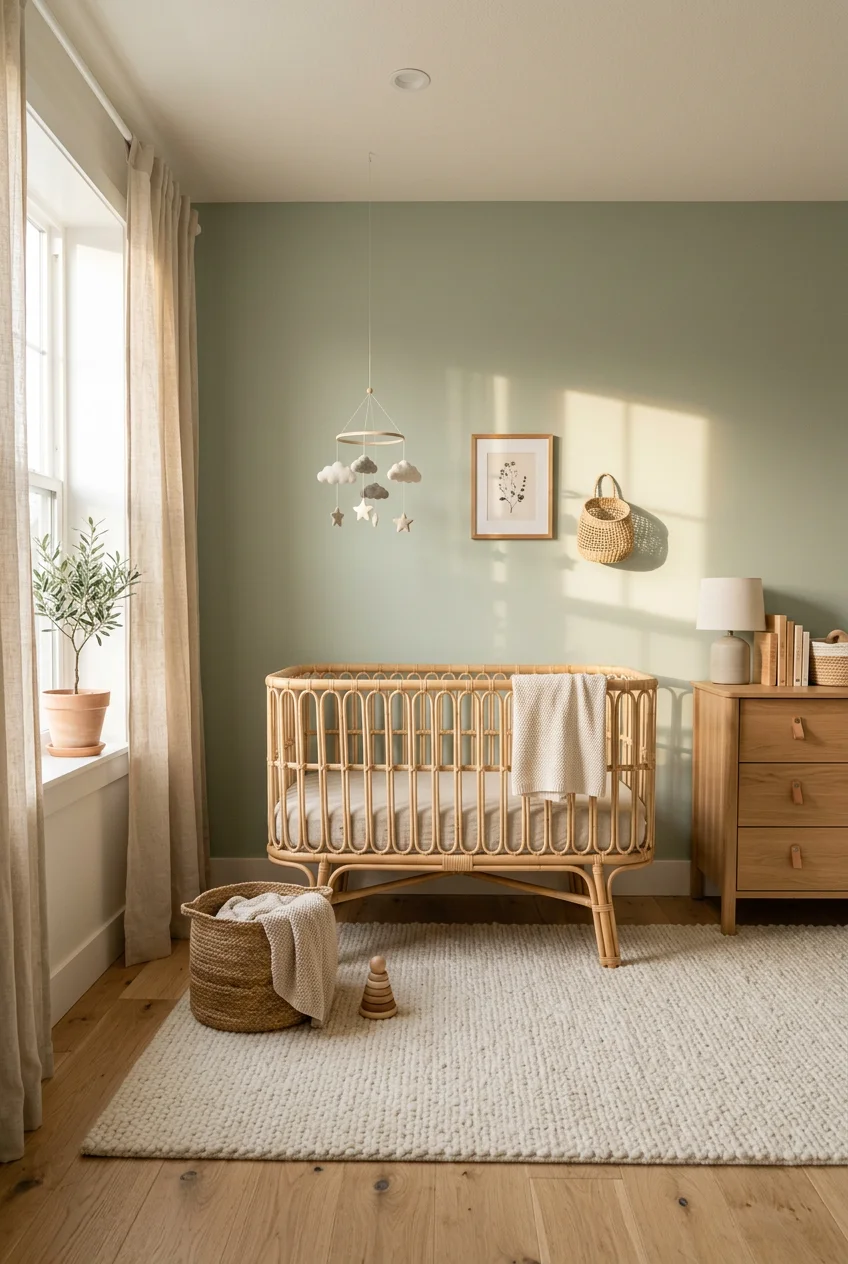
Most people start designing a room by picking out a cute wallpaper pattern, which is exactly backward. When mapping out baby nursery ideas, function has to dictate the form. A visually stunning room that wakes your baby up at 5 a.m. because the curtains leak sunlight is a failed room. We need to talk about baby nursery ideas that actually work at 3 a.m. when you’re exhausted, the baby is screaming, and you can’t find a clean burp cloth. You want specific sensory details dialed in: the soft hum of a mechanical fan, the heavy weight of a true blackout drape, and the complete absence of sharp chemical paint smells. If you only try one idea from this list, make it #5 (Install True Blackout Curtains with Wrap-Around Rods). Here’s why: sleep is the single most valuable currency in a new parent’s life, and controlling the light is the fastest, most reliable way to get more of it.
Skip this list if you’re hiring a high-end interior designer with a limitless budget who handles all the practical logistics for you. This guide won’t work for people looking for purely ornamental, magazine-cover spaces that ignore daily functionality. This is strictly for parents assembling their own furniture, managing realistic budgets, and dealing with the messy reality of spit-up on rugs.
1. Prioritize Safety with GREENGUARD Gold Certified Furniture

Always choose cribs and dressers that meet modern safety standards, specifically those certified by the Juvenile Products Manufacturers Association (JPMA) and GREENGUARD Gold certified. This certification ensures low chemical emissions (VOCs), contributing to much healthier indoor air quality. You don’t want your newborn inhaling the sharp, toxic off-gassing smell of cheap particleboard. For instance, the Babyletto Hudson 3-in-1 Convertible Crib (typically around $500 to $600) and the DaVinci Jenny Lind Crib are popular GREENGUARD Gold certified options available at places like Target and Crate & Kids. A common mistake is using vintage cribs passed down from family members. People love the sentimental value, but vintage cribs often have slat spacing over 6cm, which poses a severe entrapment risk for infants. Stick to modern, certified frames.
Best for: eco-conscious parents and homes with poor natural ventilation.
The catch: Certified, low-emission furniture usually costs a premium compared to standard, mass-produced particleboard options.
2. Anchor All Heavy Furniture to the Wall

To prevent serious injury, you absolutely must secure dressers, bookshelves, and any tall furniture to the wall using anti-tip kits. This is crucial as your child grows and begins to explore or climb. A toddler pulling out dresser drawers creates a makeshift ladder, and the weight shift can pull a heavy dresser down in seconds. Most new furniture comes with anchoring hardware in the box, but universal anti-tip kits are readily available at Home Depot or Lowe’s for under $20 if you need them. Don’t rely on drywall anchors alone for heavy pieces; use a stud finder and drill directly into the wood framing for a secure hold. I’ve seen too many people skip this step because they think their dresser is too heavy to tip. They’re wrong.
The catch: You have to drill permanent holes into your walls, which means you’ll eventually have to patch and paint them when you rearrange the room.
3. Optimize Room Temperature and Humidity Levels

Pediatricians recommend maintaining the nursery temperature between 68°F and 72°F to prevent overheating, which is a known risk factor for Sudden Infant Death Syndrome (SIDS). Additionally, you need to keep humidity levels between 40% and 50%. Dry winter air causes nasal irritation, dry skin, and makes it harder for babies to clear congestion. Consider using a smart thermostat with remote room sensors to maintain these optimal conditions, rather than relying on the thermostat in your hallway. A standalone humidifier is also essential. A common mistake is placing the temperature sensor directly in the path of an air vent or right next to a drafty window, giving you completely inaccurate readings of what the baby is actually feeling in the crib.
The catch: Maintaining exact humidity levels requires constantly refilling a humidifier tank with distilled water during dry winter months, which is a tedious daily chore.

Criusia Drawer Organizer Clothes
Criusia Drawer Organizer Clothes punches above its price — 11 buyers rated it 4.5 stars. I would buy it again.
4. Invest in an Ozone-Free Air Purifier

Given that babies breathe significantly faster than adults, indoor air quality is incredibly important. Select an air purifier with an H13 HEPA filter that is strictly ozone-free to effectively capture 99.9% of airborne particles, dust allergens, and volatile organic compounds (VOCs). The Levoit Core 300S (an affordable option with smart features) or the Coway Airmega 100/150 (known for its small footprint and quiet operation) are highly-rated choices, typically ranging from $100 to $300 at Walmart or Amazon. Keep the unit at least three feet away from the crib to prevent a cold draft from blowing directly onto your baby. Don’t just buy the cheapest unit you find; many budget purifiers emit trace amounts of ozone, which irritates tiny lungs.
The catch: You have to factor in the recurring maintenance cost of replacing the expensive HEPA filters every six to eight months.
5. Install True Blackout Curtains with Wrap-Around Rods

If you want your baby to sleep past sunrise, you need true blackout curtains. Don’t settle for “room darkening” panels; you want thick, heavy fabric with a dedicated blackout liner. Pottery Barn Kids sells excellent options, typically in the mid-range price tier. To make them actually work, you must pair them with a French return rod (a rod that curves back to touch the wall). Standard rods leave a one-inch gap on the sides where sunlight blares through like a laser beam. Hang the rod close to the ceiling and extend it a few inches past the window frame on either side. Most people hang these way too low and narrow, and wonder why the room still feels bright at noon. You might also like: 16 Twin Nursery Ideas Worth Trying
Best for: light sleepers and nurseries facing busy, brightly lit streets.
The catch: True blackout fabrics are incredibly heavy and require sturdy drywall anchors, making installation much harder than hanging flimsy sheer panels.
6. Layer Your Lighting and Install Dimmers

Overhead lighting is harsh and startling to a baby waking up in the middle of the night. You need layered lighting: an overhead fixture for playtime, a floor lamp for reading, and a small task light near the changing table. More importantly, install dimmer switches on your main lights. You can pick up a basic dimmer switch at Lowe’s for budget-friendly prices. Being able to turn the lights on to just 10% brightness during a 3 a.m. diaper change keeps both you and the baby in a sleepy state. A harsh, 60-watt blast of overhead light tells the baby’s brain that it’s time to wake up and play. Swap out cool white bulbs for warm, amber-toned bulbs (around 2700K) to create a softer, cozier environment. You might also like: 15 Charming Safari Nursery Lighting Ideas for Every Budget
The catch: Older homes might require an electrician to update the wiring in the wall box before you can safely install modern dimmer switches.
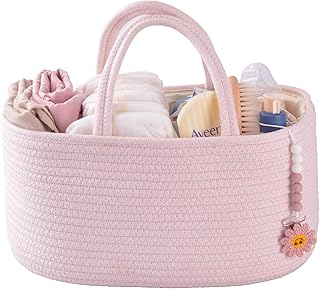
Baby Diaper Caddy Organizer for Girl Boy Rope Nursery
If you want something that just works, Baby Diaper Caddy Organizer for Girl Boy Rope Nursery Storage Bin Bask is a safe bet (21 reviews, 4.5 stars).
7. Choose a Low-Pile, Machine-Washable Rug

Nurseries are messy. Between diaper blowouts, spilled milk, and muddy toddler shoes later on, a pristine wool rug is a terrible idea. Choose a low-pile, machine-washable rug from brands like Ruggable or Boutique Rugs. You want something with a maximum 1/2-inch pile so it fits easily into a standard washing machine. An 8×10 size usually anchors the room perfectly, fitting under the front legs of the crib and the glider. A common mistake is buying a fluffy shag rug. They look great on Pinterest, but they trap dust mites, hide dropped pacifiers, and are impossible to spot-clean when an inevitable mess happens. You might also like: 15 Lovely Nursery Lighting Ideas to Transform Your Space
Best for: homes with pets or kids prone to severe allergies.
The catch: Washable rugs are notoriously thin and require you to purchase a thick, separate rug pad so they don’t feel like hard concrete underfoot.
8. Use Spring-Loaded Drawer Dividers for Tiny Clothes

Baby clothes are incredibly small and impossible to keep organized in standard, wide dresser drawers. Without dividers, a drawer full of onesies turns into a tangled, wrinkled mess in three days. Use spring-loaded bamboo drawer dividers or fabric boxes like the IKEA SKUBB sets. Set the dividers about four inches apart to create narrow columns. This allows you to file-fold onesies and pants vertically, so you can see every single item at a glance instead of digging through stacks. It’s a small detail that saves you ten minutes of frustration every morning when you’re trying to dress a squirming infant.
The catch: Spring-loaded dividers can actually warp or pop out the thin bottoms of cheap dresser drawers if the tension mechanism is set too tightly.
9. Select a Glider with a High Back and Stain-Resistant Fabric

You’ll spend hundreds of hours in the nursery chair feeding, rocking, and soothing your baby. Don’t buy a chair just because it looks stylish. You need a glider with a high back (at least 38 inches) so you can rest your head when you’re exhausted. Brands like West Elm and Babyletto offer excellent options in performance fabrics. Skip the raw linen or standard cotton; you want Crypton, performance velvet, or a tightly woven microfiber that repels liquid. If milk spills on standard cotton, it leaves a sour-smelling water mark forever. Performance fabrics let you wipe the spill away with a damp cloth before it sets.
The catch: High-quality gliders built with heavy-duty mechanisms and performance fabrics are incredibly bulky and often difficult to maneuver through standard narrow doorways.

Mr. Pen- Baby Diaper Caddy Organizer, Gray, Medium
A dependable everyday pick — Mr. Pen- Baby Diaper Caddy Organizer pulls in 4 ratings at 4.5 stars. Not flashy, just solid.
10. Ditch the Cloth Changing Pad Covers for a Wipeable Surface

Traditional foam changing pads require fabric covers. When a baby has a messy diaper blowout, that fabric cover gets ruined, meaning you have to strip the pad, wash the cover, and put a new one on while holding a dirty baby. It’s wildly impractical. Instead, get a solid, wipeable changing pad like the Keekaroo Peanut or the Skip Hop Wipe Clean pad (typically ranging from $70 to $150). These are made of a dense, impermeable polyurethane foam. When a mess happens, you just wipe it down with a standard baby wipe or a damp cloth and you’re done. No extra laundry, no lingering stains.
Best for: parents who want to drastically minimize their daily laundry loads.
The catch: The solid polyurethane material feels quite cold to the touch in the middle of winter, which can startle a sleepy baby during night changes.
11. Use a Continuous Mechanical Sound Machine

White noise is non-negotiable for a nursery, but not all sound machines are equal. Digital sound machines that play looped tracks of rain or ocean waves often have a subtle click or gap when the track restarts, which can wake a sleeping baby. You want a continuous mechanical sound machine, like the Yogasleep Dohm (usually around $40 to $50). It contains an actual physical fan inside an acoustic housing, creating a rich, deep, natural rushing sound that masks household noise perfectly. Place it near the door or the window—wherever the loudest outside noise originates—rather than right next to the crib.
The catch: Mechanical sound machines offer zero variety; you get one fan sound, and you can’t control it from an app on your phone.
12. Mount Clear Acrylic Bookshelves for Forward-Facing Books

Traditional bookshelves only show the spines of books, which means nothing to a pre-literate toddler. To encourage reading early on, mount clear acrylic ledges on the wall to display books forward-facing. You can find 24-inch or 36-inch clear ledges easily at Target or on Amazon for budget-friendly prices. The colorful covers act as dynamic wall art that you can swap out seasonally. Mount them low to the ground so your child can independently reach for a book when they start crawling and walking. Most people mount them at adult eye level, completely defeating the purpose of making them accessible to the child.
The catch: Clear acrylic scratches incredibly easily if you wipe it down with rough paper towels or abrasive chemical cleaners.

Modanais Baby Diaper Caddy Organizer Cart
Modanais Baby Diaper Caddy Organizer Cart – 3 Tier Rolling Storage Car punches above its price — 325 buyers rated it 4.5 stars. I would buy it again.
13. Opt for a Fully Washable, Breathable Crib Mattress

Standard crib mattresses are wrapped in crinkly vinyl to make them waterproof, which makes babies sweat heavily during the night. A breathable mattress, like the Newton Baby or the Halo (mid-to-high price range), uses a woven polymer core that allows air to flow freely right through the mattress. If the baby rolls onto their stomach, they can still breathe through the material. Furthermore, the entire core can be washed in the shower if there’s a massive accident. You don’t need to layer three different waterproof protectors and sheets; just use the breathable cover it comes with.
The catch: Hauling a bulky polymer mattress core into your shower to wash it is a cumbersome chore, and it requires several hours of air-drying time before you can use it again.
14. Paint with Zero-VOC, Scrubbable Finishes

If you’re painting the nursery, you can’t use standard interior paint. The chemical fumes can linger for weeks. Choose a zero-VOC paint like Sherwin-Williams Harmony or Benjamin Moore Natura. Just as importantly, pick the right finish. Flat or matte paint looks sophisticated, but it absorbs stains and scuffs easily. You want an eggshell or satin finish for a nursery. When your toddler eventually decides to draw on the wall with a crayon or splashes milk against the baseboards, an eggshell finish allows you to scrub the wall with a damp sponge without taking the paint off.
Best for: DIYers who are painting the room themselves while pregnant and need to avoid harsh fumes.
The catch: Zero-VOC paints tend to be slightly thinner than traditional chemical-heavy paints, often requiring you to roll on an extra coat for full, opaque coverage.
15. Keep Oversized Coiled Rope Baskets for Quick Cleanups

You need a way to clean up the room in under sixty seconds when company comes over or when you’re just too tired to organize. Oversized, coiled rope baskets (around 18 inches in diameter) are perfect for this. You can find great, sturdy options at Target or World Market. Use them to quickly stash away stuffed animals, extra swaddles, or bulky wooden toys. Unlike heavy wooden toy chests, soft rope baskets don’t have heavy lids that can slam down on tiny fingers. They add great texture to the room and can easily be repurposed as laundry hampers later on.
The catch: Soft-sided rope baskets lose their rigid shape over time and will start to slouch or collapse if they aren’t kept mostly full.

Night Light for Kids, Baby Night Light with Sound Machine
A dependable everyday pick — Night Light for Kids pulls in 50 ratings at 4.5 stars. Not flashy, just solid.
16. Use Peel-and-Stick Wallpaper or Minimalist Decals

Wallpaper makes a massive visual impact, but traditional pasted wallpaper is a nightmare to install and even worse to remove. Peel-and-stick wallpaper or minimalist vinyl wall decals are much smarter choices. You can source beautiful, custom-looking decals from Etsy or Project Nursery. Space them out about two inches apart to create a faux-wallpaper pattern. If you mess up the alignment, you just peel it off and stick it back on. It’s a weekend project that completely transforms a blank wall without the commitment or expense of professional wallpaper installation.
Best for: renters who are restricted by lease agreements and can’t paint or drill major holes in the walls.
The catch: Peel-and-stick products will aggressively peel the paint right off your drywall if you apply them to a freshly painted room that hasn’t cured for at least 30 days.
17. Build a Mobile Diaper Caddy for the Early Months

For the first few months, you won’t always want to walk all the way to the nursery for every single diaper change. A mobile diaper caddy is incredibly practical. Get a three-tier metal rolling cart from Target or Pottery Barn Kids. Stock the top tier with diapers, wipes, and a 4 oz tube of diaper cream. Put burp cloths and swaddles on the middle tier, and extra onesies on the bottom. You can roll it into the living room during the day and park it next to your bed at night. It keeps your essential supplies organized and within arm’s reach wherever you are.
The catch: Open rolling carts collect household dust very quickly and require frequent wiping down to keep the baby supplies sanitary.
18. Plan Smart Camera Placement Early

Don’t wait until the room is fully furnished to figure out where the baby monitor goes. Smart cameras like the Nanit or CuboAi require specific placement to get a clear, unobstructed view of the crib. Wall mounts provide the best overhead bird’s-eye view, but you have to plan for cord management. Dangling cords are a massive strangulation hazard. You must use hard plastic cord covers and secure them tightly to the wall, running them straight down to the outlet. Test the camera angle by holding it against the wall before you drill any holes to ensure you don’t have a blind spot.
The catch: Wall-mounted cameras with rigid cord covers are a massive pain to uninstall and pack up if you travel frequently and want to take the monitor with you.
How we chose these ideas: We prioritized practical, daily-use functionality over pure aesthetics. The selection criteria focused strictly on renter-friendliness, realistic budget ranges, the actual effort required to install or maintain the items, and long-term safety for a growing family.
Designing a nursery shouldn’t feel like a stressful geometry test. Focus on safety, light control, and making your own life easier during those late-night wakeups. The cute decor will naturally fall into place once the functional foundation is set. I highly recommend pinning this list to your nursery planning board so you have these specific measurements and safety tips handy when you’re standing in the store aisle trying to make a decision.
Frequently Asked Questions
What is the most important thing to focus on in a nursery?
Safety and sleep environment are the top priorities. Ensure all heavy furniture is anchored to the wall, use GREENGUARD Gold certified cribs, and install true blackout curtains to help your baby sleep better.
How dark should a nursery be for naps?
The room should be pitch black. You shouldn’t be able to read a book in the room during the middle of the day. True blackout curtains with wrap-around rods are essential for achieving this.
Do I really need a wipeable changing pad?
Yes, it saves you from endless laundry. Solid polyurethane changing pads can be wiped clean with a damp cloth immediately after a mess, eliminating the need to wash and replace fabric covers constantly.
When should I start setting up the nursery?
It’s best to start planning and ordering furniture in the early second trimester. Furniture often has long shipping delays, and you want any fresh paint or new materials to off-gas for several weeks before the baby arrives.
