What’s Inside
- Embrace Earthy, Muted Color Palettes for Walls
- Prioritize Zero-VOC Paint for Health
- Invest in a True HEPA Air Purifier
- Japandi Minimalism in Gender Nursery Neutral Baby Rooms
- Layer Textures for Depth and Warmth
- Opt for Multifunctional Grow-With-Me Furniture
- Prioritize Crib Mattress Safety and Fit
- Adjust Crib Mattress Height Proactively
- Implement Layered, Dimmable Lighting
- Incorporate Nature-Inspired Themes
- Choose Organic and Sustainable Textiles
- Common Mistake: Over-Theming
- Surprising Tip: Don’t Shy Away from Black and White
- Trending Approach: Wallpaper Drenching in Gender Nursery Neutral Baby Rooms
- Leverage Smart Features for Convenience and Monitoring
- Keep Storage Accessible and Realistic
I painted my first daughter’s room a blinding shade of bubblegum pink in 2018. Within three months, the color gave me a headache every time I rocked her at 3 AM. It felt like sleeping inside a Pepto-Bismol bottle. That mistake changed how I approach design. Now, I stick to gender-neutral baby rooms because they let you breathe. Creating these spaces isn’t about stripping away personality. It’s about building a calm, adaptable foundation that doesn’t scream a gender stereotype the second you open the door. I’ve spent years figuring out which paints don’t off-gas and which cribs hold up to daily abuse. Let’s look at what actually works.
1. Embrace Earthy, Muted Color Palettes for Walls

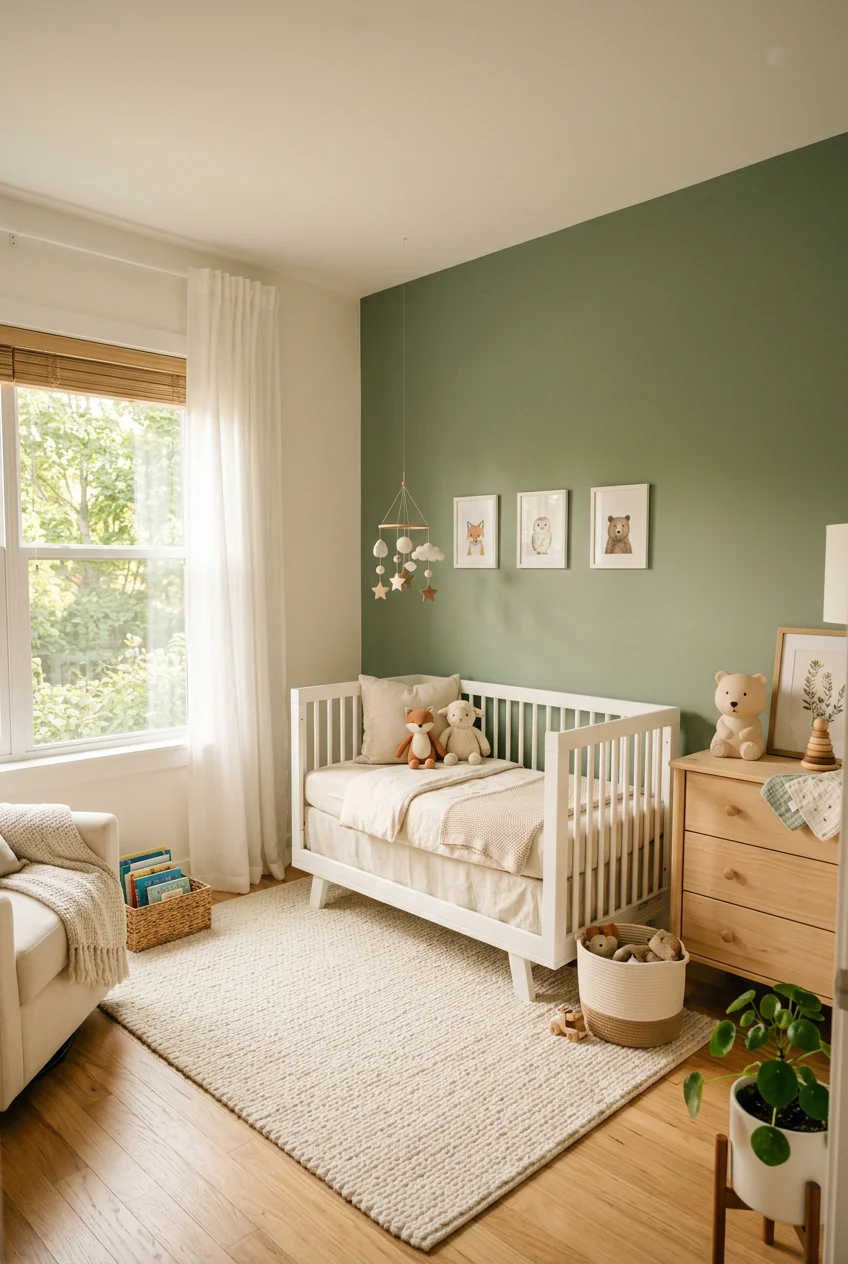
Most people default to bright whites when they’re stuck. I tried a basic builder-grade white from Home Depot last Tuesday in a client’s space, and the room instantly felt like a sterile dental clinic. Move beyond cold grays and harsh whites. Go for warm, inviting hues. The trending colors for 2026 include soft sage greens and warm taupes. I recommend Benjamin Moore Saybrook Sage HC-114, which runs about $75 per gallon. It has an earthy depth that shifts with the afternoon light. If you prefer neutrals, Sherwin-Williams Creamy SW 7012 or Benjamin Moore Indian River 985 offer a mushroom taupe finish that feels grounded. A dusty blue like Benjamin Moore Beach Glass 1564 also works beautifully without leaning too boyish. I also use Sherwin-Williams Malted Milk SW 6057 for a blush taupe that warms up north-facing rooms. These palettes create a soothing backdrop. You won’t regret choosing a color with a bit of mud in the undertone. Trust me.
2. Prioritize Zero-VOC Paint for Health

Indoor air can contain two to five times more volatile organic compounds than outdoor air. I learned this the hard way when I painted a closet with standard latex paint, and the chemical smell lingered for three weeks. You can’t put a newborn in a room that smells like a factory. Minimizing chemicals means choosing certified zero-VOC paints. I use Benjamin Moore Eco Spec because it handles scrubbings well and uses their Gennex zero-VOC colorants. It costs around $65 a gallon. If you’re on a tighter budget, Behr Pro i300 is a great option you can pick up at Home Depot for just $22.98 a gallon. ECOS Paints is another choice if you want plant-based ingredients that are Red List Free. AFM Safecoat also makes highly rated non-toxic sealers. The finish on these is just as durable as traditional paint, but you won’t get that dizzying headache when you open the windows. It’s a non-negotiable step for infant health.
3. Invest in a True HEPA Air Purifier

You need clean air in a nursery, especially in older homes. I bought a cheap air filter from Amazon two years ago, and it did nothing but rattle. You need a purifier with a True HEPA filter, which traps particles as small as 0.3 microns. I recommend the Levoit Core 300. It costs $149.99 and is ideal for rooms up to 219 square feet. The best part is the quiet operation. On its lowest setting, it runs at 24 decibels, which sounds like faint white noise. If you have a larger space, the Honeywell HPA300 handles rooms up to 465 square feet, though it takes up more floor space. The Coway Airmega 160 is another solid option for around $149.99, and it cleans the air in a 214 square foot room 4.8 times an hour. Always look for models with activated carbon filters. They pull out the lingering odors from diaper pails and fresh paint.

JolyWell Night Light for Kids
A dependable everyday pick — JolyWell Night Light for Kids pulls in 51 ratings at 4.5 stars. Not flashy, just solid.
4. Japandi Minimalism in Gender Nursery Neutral Baby Rooms

A massive trend for 2026 is the Japandi style, which blends Japanese minimalism with Scandinavian functionality. I used to stuff nurseries with heavy, ornate wooden cribs that weighed 150 pounds. It was a mistake. Japandi focuses on clean lines, natural wood, and uncluttered spaces. This is practical when you’re managing endless baby supplies. For a perfect Japandi look, I use the IKEA Sniglar crib in solid beechwood. It costs $119.00 and has a pale, unfinished wood tone that anchors the room without overwhelming it. Pair that light beechwood with simple, low-profile storage. I grab the 13-inch coiled rope baskets from Target for $16 each to slide under the crib for hidden storage. The goal is visual quiet. When you limit furniture to functional pieces, the room feels twice as large. Designing gender-neutral rooms with a Japandi influence means you aren’t fighting with clashing patterns. You might also like: 15 Baby And Toddler Shared Room That Actually Work
5. Layer Textures for Depth and Warmth

Since your palette is muted, you have to introduce visual interest through texture. Otherwise, the room looks flat. I once designed a cream-colored nursery with flat cotton sheets, flat painted walls, and a flat synthetic rug. It looked like a cheap hotel room. You need varied textures to make the space cozy. I always incorporate rattan storage baskets, linen crib skirts, and thick wool rugs. I recently placed an 8×10 wool pebble rug from West Elm ($799) in a client’s nursery, and the thick, looped texture warmed up the cold hardwood floors. Add a bouclé nursing chair. The Babyletto Kiwi Glider in cream bouclé runs about $799 and provides tactile stimulation. Toss a chunky knit throw over the back. A 50×60 inch cotton knit blanket from Pottery Barn Kids costs $69 and gives you something soft to grab during late-night feedings. Layering these materials prevents the room from feeling bland.
6. Opt for Multifunctional Grow-With-Me Furniture

Please skip the dedicated changing table. I bought a flimsy $150 changing table for my first baby, and it became a useless dumping ground for laundry by the time she was ten months old. Instead, choose furniture that adapts. You want a large, sturdy dresser with a removable changing pad frame on top. The Pottery Barn Kids Kendall Extra-Wide Dresser costs $899, and it transitions perfectly from a diaper station to a regular bedroom dresser for a teenager. You just unscrew the $99 topper when you’re done with diapers. West Elm also makes fantastic mid-century dressers that serve the same purpose. This approach is more sustainable and cost-effective over a ten-year period. You’re spending more upfront, but you aren’t dragging a piece of useless furniture to the curb after a year. Make sure the dresser is at least 32 inches high so you aren’t destroying your lower back during the 4,000 diaper changes you’re about to do. You might also like: 17 Nursery Ideas Boy for Every Budget

Beautiful Wooden Baby Closet Dividers Set of 7
If you want something that just works, Beautiful Wooden Baby Closet Dividers Set of 7 – Double-Sided Organize is a safe bet (11 reviews, 4.5 stars).
7. Prioritize Crib Mattress Safety and Fit

A firm, flat crib mattress is non-negotiable. I see parents buy expensive cribs and stuff them with cheap, squishy mattresses that don’t fit the frame properly. You must ensure the mattress fits snugly. The rule is simple: no more than two fingers should fit between the mattress and the crib frame. Standard full-size crib mattresses must be at least 27 1/4 inches wide and 51 5/8 inches long, with a maximum thickness of 6 inches. I recommend the Newton Baby mattress for $299.99. It’s fully breathable and washable right in the shower. I’ve washed mine with the showerhead after a blowout, and it dried perfectly. Always look for GREENGUARD Gold or CertiPUR-US certifications. These labels guarantee you aren’t bringing toxic foams or off-gassing chemicals into the baby’s sleep space. The Naturepedic Organic Breathable Crib Mattress is another excellent option at $349, featuring 252 coils for extra firm support. Don’t compromise on the dimensions.
8. Adjust Crib Mattress Height Proactively

Most parents wait too long to lower the crib mattress. I did this with my son. I walked in one morning when he was eight months old, and he was standing up, peering over the top rail. It terrified me. You have to adjust the height proactively. Begin with the mattress at its highest setting for newborns. This makes lifting a 7-pound baby in and out much easier on your core. You need to lower it to the middle position the second your baby shows signs of rolling over, sitting independently, or pushing up. This typically happens around 5 to 8 months. Crucially, lower the mattress to the lowest setting when your baby can pull themselves to stand, or when they reach 35 inches in height. I use the Babyletto Hudson 3-in-1 Convertible Crib ($499), which requires an Allen wrench to adjust the metal support. It takes ten minutes to unscrew the four bolts and drop the frame. Do it early. You might also like: 18 Nursery Themes Boy Worth Trying
9. Implement Layered, Dimmable Lighting

Overhead lighting in most homes is harsh. I blinded my newborn with a cheap, bright ceiling fixture every time I flipped the switch at 2 AM. You need a lighting scheme with multiple sources and dimming. Use dimmable LED bulbs with a warm white color temperature between 2700K and 3000K for your overhead fixtures. I buy the Philips Hue White A19 dimmable bulbs for $15.99 each because I can control them from my phone. Aim for ambient lighting levels between 100 and 300 lux for general nursery activities like folding clothes. For task lighting, like a floor lamp next to your glider, you want it to reach up to 500 lux. The most important rule is to avoid direct downward spotlights over the crib. Babies spend a lot of time lying on their backs looking straight up. A harsh spotlight will agitate them instantly. Use a paper pendant shade or a frosted glass fixture to diffuse the light evenly.

Criusia Drawer Organizer Clothes
If you want something that just works, Criusia Drawer Organizer Clothes is a safe bet (11 reviews, 4.5 stars).
10. Incorporate Nature-Inspired Themes

Timeless themes like woodland creatures, safari animals, botanical prints, or celestial motifs are popular for a reason. They don’t feel forced. I used to buy plastic, battery-operated mobiles with cartoon characters, and they looked tacky against a nicely painted wall. Now, I introduce nature themes through high-quality wall art or handmade mobiles. A safari-themed felt mobile from Pehr costs $85 and features hand-stitched wool animals that rotate with the air currents. You can also use subtle wallpaper patterns rather than overt, gender-specific characters. I bought a set of three 11×14 inch unframed botanical prints from Etsy for $45 and hung them in simple oak frames from Target. The oak frames cost $15 each. It brings the outside indoors without turning the room into a literal jungle. Stars and clouds are also fantastic. A simple wooden star garland draped over a bookshelf adds whimsy without committing to a heavy theme.
11. Choose Organic and Sustainable Textiles

Babies have sensitive skin, and standard cotton is often treated with pesticides and harsh dyes. I bought a cheap polyester blanket once, and it gave my daughter a terrible rash. Now, I opt for bedding, blankets, and clothing made from 100% organic cotton or wool. Brands like Loulou Lollipop offer muslin quilts made from a blend of bamboo and cotton muslin. Their standard quilt costs $65 and softens with every wash. The 4-layer fabric is breathable but has enough weight to feel comforting. For clothing, I buy from Primary and Little Nature Lover. Primary’s organic cotton zip-footies cost $24 and come in solid earth tones that fit into a neutral aesthetic. These materials are free from harsh chemicals, creating a healthier environment. You’ll notice a difference in how the fabric feels against your own hands, too.
12. Common Mistake: Over-Theming

A massive pitfall in nursery design is choosing overly specific or gender-led themes. In 2021, I helped a client paint a giant, detailed mural of a bright red fire truck across an entire wall. By 2023, they hated it, and their toddler was terrified of the sirens he saw on TV. Highly specific themes like princess castles or race cars quickly feel dated and limit your future adaptability. Instead of locking yourself into a rigid concept, focus on broader, nature-inspired concepts or abstract patterns. A simple geometric rug or a soft watercolor mountain mural has a ten-year lifespan. You can update the room with small accessories as the child’s interests develop. Swap out a $20 throw pillow or a $15 framed poster instead of repainting an entire room. If you keep the foundation neutral and broad, the room grows with the kid. Don’t trap yourself in a hyper-specific design corner that requires a total renovation in three years.
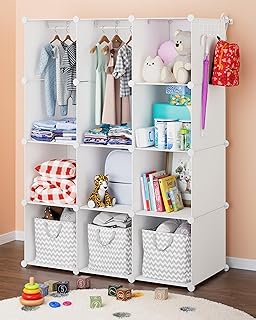
CUBEDIY Baby Closet Organizer for Nursery: Durable Baby
CUBEDIY Baby Closet Organizer for Nursery: Durable Baby Wardrobe for C punches above its price — 316 buyers rated it 4.5 stars. I would buy it again.
13. Surprising Tip: Don’t Shy Away from Black and White

While muted, earthy colors are trending, you shouldn’t ignore high-contrast black and white elements. I used to think black was too harsh for a baby’s room until I learned that newborns initially only see in shades of black, white, and gray. I placed a stark black and white geometric rug from Ruggable ($199) in a beige nursery, and the baby would stare at the contrast for twenty minutes during tummy time. It’s stimulating for their developing optic nerves. You can use black and white in patterns like thick stripes, polka dots, or geometric prints. I love using a bold monochrome wallpaper on the ceiling or adding black matte drawer pulls to a white dresser. The $4 round matte black knobs from Home Depot modernize a basic piece of furniture. It adds a punch of contrast that keeps the muted sage and taupe walls from looking washed out.
14. Trending Approach: Wallpaper Drenching in Gender Nursery Neutral Baby Rooms

Instead of doing a single accent wall, a major 2026 trend is to drench an entire room in a subtle wallpaper pattern. I used to do the standard single wall behind the crib, but it always made the room feel unfinished. Wallpaper drenching means wrapping all four walls, and sometimes even the ceiling, in a continuous, nature-inspired pattern. Think soft cloud patterns, light geometrics, or delicate botanical prints. I recommend Spoonflower’s peel-and-stick wallpaper. A standard roll costs $119, and their woven texture hides wall imperfections beautifully. I drenched a small 10×10 nursery in a pale taupe block-print pattern last spring, and it created an immersive, sophisticated look. When you use this technique in gender-neutral rooms, you create a cozy, jewel-box effect. Just ensure the pattern has a light background so it doesn’t shrink the visual footprint of the room.
15. Leverage Smart Features for Convenience and Monitoring

You don’t need a fully automated smart home, but a few smart tools will save your sanity at 3 AM. I used to stumble into the dark nursery and fumble with sound machine dials, waking the baby up. Now, I rely on smart products. The Levoit Core 300S air purifier costs $149.99 and offers app connectivity to monitor air quality and adjust fan speeds remotely. I also use the LectroFan Alpha sound machine for $24.95. It’s compact, but I plug it into a Kasa Smart Plug I bought at Walmart for $9.99. This allows me to set a schedule so the white noise automatically turns on at 6:30 PM. You can also use smart plugs for your floor lamps to create dimming routines that signal bedtime. Controlling the environment from your phone promotes better sleep for both the baby and you. It’s a minor investment with a massive payoff. Took me years to figure out.

Criusia Over the Door Organizer
If you want something that just works, Criusia Over the Door Organizer is a safe bet (231 reviews, 4.5 stars).
16. Keep Storage Accessible and Realistic

You will accumulate an absurd amount of tiny, easily lost items. I spent my first six months as a mom digging through a chaotic, jumbled dresser drawer looking for nail clippers while my baby screamed. You need accessible, compartmentalized storage. I use the OXO Tot adjustable drawer dividers, which cost $19.99 for a set of two. They snap firmly into the dresser drawers and create rigid sections for socks, burp cloths, and onesies. I also rely heavily on open bin storage for toys and books. The Brightroom 13-inch fabric cube bins from Target cost $10 each and slide perfectly into standard cube shelves. Open bins mean you can toss a wooden block or a stuffed animal away with one hand while holding a baby in the other. Don’t buy storage boxes with complicated latching lids or heavy wooden tops. If you can’t open it with one hand, you won’t use it. Keep the storage realistic, open, and divided so you can find the diaper cream at midnight.
Designing a nursery shouldn’t feel like a stressful test of your styling abilities. I’ve made plenty of expensive mistakes, from blinding paint colors to useless furniture, but sticking to these neutral, functional principles yields the best results. I recommend starting with your paint color and building your textures from there. It’s the easiest way to anchor the space. If you found these tips helpful, please pin this article to your nursery design boards or save it for your next late-night planning session. You’ve got this.
Frequently Asked Questions
What are the best paint colors for a neutral nursery?
Soft sage greens, warm taupes, and dusty blues are excellent. I highly recommend Benjamin Moore Saybrook Sage or Sherwin-Williams Creamy.
Why do I need a HEPA purifier in a baby’s room?
Indoor air contains high levels of VOCs and dust. A True HEPA purifier like the Levoit Core 300 traps particles as small as 0.3 microns.
When should I lower the crib mattress?
Lower it to the middle setting when your baby can roll or sit up (around 5-8 months), and to the lowest setting when they can pull to stand.
Is black and white okay for a neutral nursery?
Yes. High-contrast black and white patterns are highly stimulating for newborn optic development. Use them in rugs or drawer pulls.
