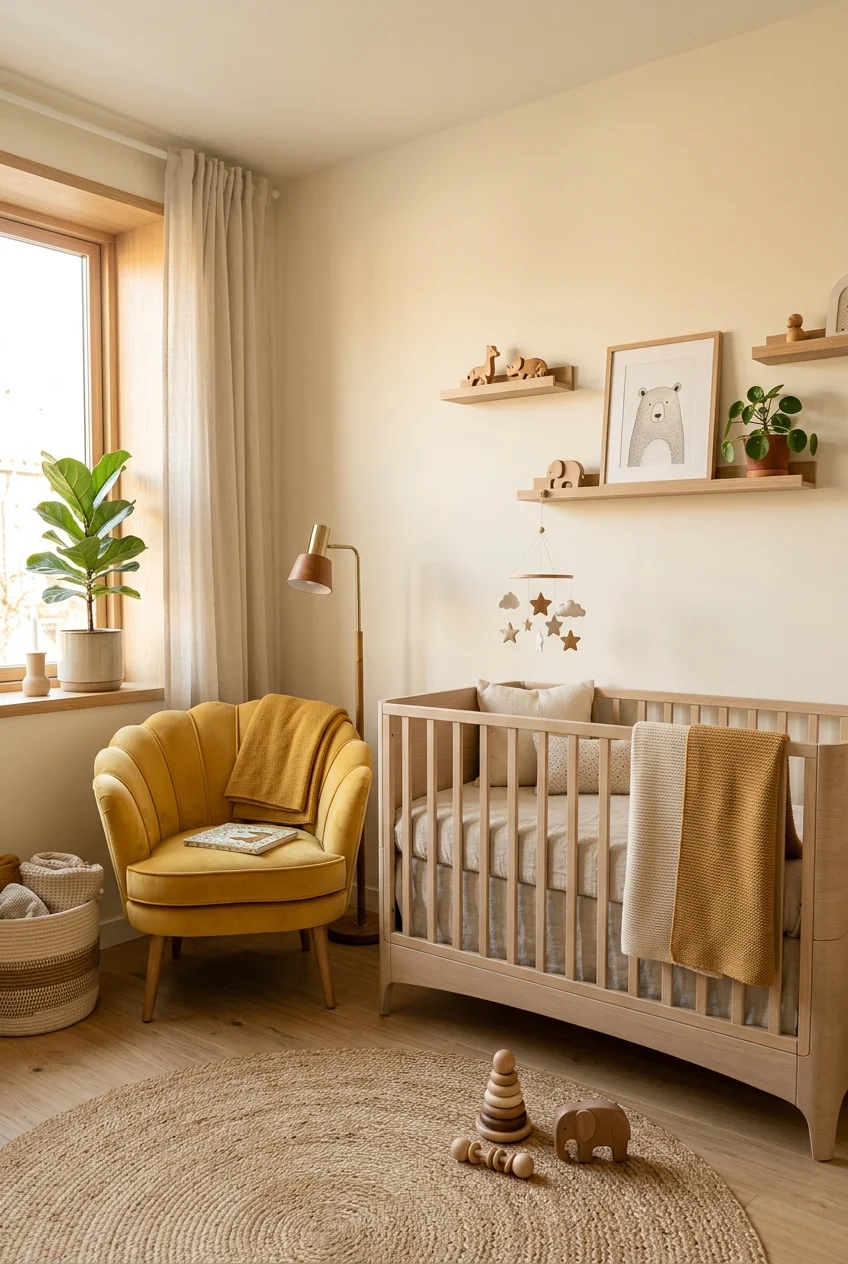
What’s Inside
- Opt for Softer Yellow Hues on Walls
- Prioritize Low-VOC, Washable Paint for Nursery Ideas Yellow
- Embrace Yellow as an Accent Color
- Implement a Half-Painted Wall Design
- Incorporate Washable Yellow Rugs
- Select Soothing Yellow Crib Sheets
- Utilize Yellow Storage Solutions
- Curate a Yellow-Themed Gallery Wall
- Introduce Yellow Through Warm Lighting
- Incorporate Natural Materials with Yellow
- Consider the Room’s Orientation for Nursery Ideas Yellow
- Don’t Forget the Ceiling
- Avoid Overly Bright Yellows on Large Surfaces
- Ensure Adequate Blackout Options for Windows
- Add Yellow Through Books and Shelf Displays
- Choose a Yellow Upholstered Nursery Glider
- Bring in Yellow Florals or Greenery
I painted my very first client’s room the exact color of a school bus back in 2018. It took three days of intense crying and a lot of frantic text messages before I realized why searching for nursery ideas yellow is trickier than it looks. Yellow reflects light aggressively. When you bounce afternoon sun off four saturated walls, you create a glowing neon box that actively prevents a baby from sleeping. I spent my own money to repaint that room a soft cream the following weekend. Since then, I’ve learned exactly how to use this color. You want the warmth and the cheerful energy, but you need to control the stimulation. Let’s walk through the specific formulas, paint codes, and exact textiles that actually work. I’m going to show you how to build a space that feels cozy instead of blinding. It took me years to figure out, but we’ll get it right.
1. Opt for Softer Yellow Hues on Walls

When clients ask for yellow walls, they usually picture a bright, sunny lemon shade. I always talk them out of it. Expert opinions and basic color psychology suggest that overly bright shades overstimulate babies, leading to restlessness and trouble settling down for naps. Instead, you need soft, muted, or pastel yellows. I highly recommend Benjamin Moore’s “Moonlight” for a pale, cool yellow that reads almost like a warm white in direct sunlight. If you want something with a bit more depth, “Hawthorne Yellow HC-4” gives you a traditional buttermilk tone that doesn’t scream at you when you walk in the room. For a warmer, buttery feel, look for shades similar to the old Land of Nod Mythic line, like “Hay is for Horses.” A gallon of quality, low-VOC nursery paint from these premium lines typically ranges from $40 to $80. The extra twenty dollars for premium paint is worth it because cheaper brands require three coats to hide the drywall mud underneath. I learned that the hard way last Tuesday when a client tried to save money with a budget brand, and we spent eight hours doing touch-ups.
2. Prioritize Low-VOC, Washable Paint for Nursery Ideas Yellow

Always select paints with low or zero Volatile Organic Compounds to ensure a healthy environment for your baby. The chemical smell of standard paint can linger in textiles and carpets for months. I strictly use paints certified Greenguard Gold for the highest safety standards. Brands like Benjamin Moore and Sherwin-Williams offer extensive low-VOC lines that actually cover well. You also need an eggshell finish for walls. Flat paint looks beautiful and hides drywall imperfections, but it acts like a sponge for dirt. When your toddler eventually smears banana on the wall, flat paint will absorb the oils permanently. Eggshell is durable and easy to clean. I usually just grab a Kroger brand water wipe and gently rub away smudges on an eggshell surface. It comes right off without taking the pigment with it. A gallon of Sherwin-Williams Harmony or SuperPaint with air-purifying technology runs about $65. It’s a practical choice for a nursery because you’re going to be wiping down these walls more often than you think. Skip the cheap builder-grade flat paint. It looks like wet cardboard after you try to scrub it once.
3. Embrace Yellow as an Accent Color

If you’re hesitant about committing to yellow walls, incorporate the color through heavy accents to prevent overstimulation while still benefiting from its cheerful effect. A bright yellow crib acts as a stunning focal point against neutral walls. I recently used the Babyletto Gelato 4-in-1 Convertible Crib in a custom yellow finish for a client, which retails around $299. We placed it against a wall painted in Benjamin Moore’s “Chantilly Lace.” The contrast was sharp and modern. The hardware on these cribs is usually hidden, letting the color do all the heavy lifting. The tradeoff is that a colored crib limits your future design choices if you want to reuse it for a second child with a different room theme. However, the visual impact in a neutral room is unmatched. It draws the eye immediately without wrapping the entire room in a stimulating color. I’ve found this is the safest way to execute bold nursery ideas yellow without risking the baby’s sleep schedule. Trust me on this.

Criusia Drawer Organizer Clothes
Criusia Drawer Organizer Clothes has been one of the most consistently praised picks in this category. 11 reviewers averaged 4.5/5.
4. Implement a Half-Painted Wall Design

For a trending and balanced approach, paint the lower half of the walls in a soft yellow and the upper half, along with the ceiling, in a warm off-white. This grounds the room and adds warmth without overwhelming the space. I tried this last Tuesday at a client’s house. We created a unique scallop pattern along the dividing line by tracing around a standard 11-ounce Target coffee mug. It adds a playful touch that feels intentional. This technique works incredibly well with rich shades like Farrow & Ball’s “Sudbury Yellow” on the bottom, which costs about $130 a gallon, paired with a crisp white like “Cloud White OC-130” from Benjamin Moore on top. Pro tip: measure your line exactly 36 inches from the floor. If you go higher, the yellow dominates the room. Tracing the mug takes patience, and painting the curves requires a steady hand and a very small angled brush. I messed up the first three scallops and had to wipe them off with a damp rag before the paint dried.
5. Incorporate Washable Yellow Rugs

A yellow rug can brighten the room and add a massive pop of color, but you absolutely must choose one that is machine washable. Babies ruin rugs. It’s just a fact. Brands like Ruggable offer washable yellow rugs that use a two-piece velcro pad system. They range from $99 for smaller sizes to $300 or more for an 8×10 area rug. West Elm’s “Flower Garden Washable Rug” is another excellent option, priced between $99 and $199 depending on the dimensions. The tradeoff with washable rugs is the texture. The Ruggable top layer is quite thin and slightly rougher than a plush wool rug. However, when my six-month-old spit up a full bottle of formula on our nursery rug, I just peeled the top layer off and threw it in the washing machine. It came out smelling like standard Tide detergent instead of sour milk. You can’t do that with a $600 hand-tufted wool rug. The convenience easily outweighs the thinner profile.
6. Select Soothing Yellow Crib Sheets

Introduce yellow through crib sheets in softer or deeper tones to create calming visual interest right where the baby sleeps. Caden Lane offers beautiful floral crib sheets in a deep mustard yellow for about $38. The mustard brings a boho-chic vibe and grounds the bright white of a standard mattress. Alternatively, the “Shadow Dot Crib Fitted Sheet” in “Sunbeam Yellow” provides a subtle, gender-neutral touch for around $25. I strictly buy muslin or high-thread-count organic cotton. Muslin gets softer with every wash, which is crucial because you’ll be washing these sheets constantly. A common mistake is buying cheap microfiber sheets because the yellow color looks vibrant in the package. Microfiber traps heat and makes babies sweat, which leads to middle-of-the-night wakeups. Stick to breathable cotton. The elastic on the Caden Lane sheets is incredibly tight, which is great for safety, but it means you’re going to wrestle with the mattress every time you change it. It’s a minor annoyance for a much safer sleep environment. You might also like: 20 Inspiring Yellow Nursery Lighting Ideas for Every Budget

Criusia Over the Door Organizer
If you want something that just works, Criusia Over the Door Organizer is a safe bet (231 reviews, 4.5 stars).
7. Utilize Yellow Storage Solutions

Keep the nursery organized and add cheerful color with functional yellow storage bins. The MONTARY Multi-functional Nursery Organizer with 6 Bins is made from food-grade HDPE material and runs about $76. It offers safe, accessible storage for toys and heavy board books. If you want something smaller, A Little Lovely Company provides charming storage baskets in various themes for approximately $22. I use small yellow canvas bins to organize tiny items that usually end up lost, like baby socks, pacifiers, and nail clippers. The bright color makes the bins easy to spot when you’re sleep-deprived and searching for a fresh pacifier in the dark. I bought a set of cheap fabric bins from a discount store once, and the cardboard inserts bent and collapsed within a week. Spend the extra money on bins with rigid plastic or thick reinforced sides. They hold their shape when you inevitably stuff too many muslin burp cloths into them. You might also like: 16 Baby Girl Nursery Themes You Need to See
8. Curate a Yellow-Themed Gallery Wall

Create an engaging visual display with a gallery wall featuring yellow-themed art prints. This allows for easy updates as the child grows and their interests change. You can explore options from Etsy for sets of yellow wall art. The “Safari Animal Art Prints” set of four, or the “Rainbow Outer Space Art Prints” set of six, typically range from $20 to $60 for unframed heavy-cardstock prints. I usually frame these in cheap IKEA Ribba frames, which cost about $9.99 each. The plexiglass on the IKEA frames creates a bit of a glare if placed directly opposite a window, so you have to be careful about placement. I hang them exactly two inches apart using a laser level. A gallery wall is the easiest way to inject personality into the room without touching a paintbrush. When the toddler eventually decides they hate safari animals and only want fire trucks, you’re only out $30 for new prints instead of repainting the entire room. You might also like: 15 Baby And Toddler Shared Room That Actually Work
9. Introduce Yellow Through Warm Lighting

Thoughtful lighting can enhance the yellow theme and create a cozy atmosphere that actually promotes sleep. Use yellow-toned light bulbs to cast a warm glow across the room. I use Energetic A19 Yellow Light Bulbs. They are 3W, fit a standard E26 socket, and emit a very soft 1800K light. Neporal Amber Light Bulbs are another good option at 9W. You also need to install a dimmer switch, which costs around $20 to $50 at any hardware store. Being able to control the light intensity is crucial for 3 AM feedings. I tried using standard 4000K daylight bulbs in a nursery once, and the harsh blue light signaled to the baby’s brain that it was time to wake up and play. The warm yellow glow mimics sunset and helps maintain melatonin production. The amber bulbs do make the room look a bit like a darkroom for developing photos, but the sleep benefits are entirely worth the slightly unnatural tint.
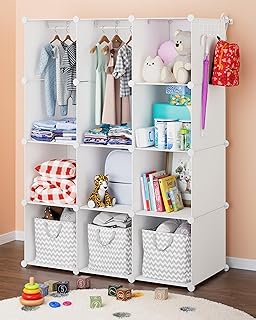
CUBEDIY Baby Closet Organizer for Nursery: Durable Baby
CUBEDIY Baby Closet Organizer for Nursery: Durable Baby Wardrobe for C has been one of the most consistently praised picks in this category. 316 reviewers averaged 4.5/5.
10. Incorporate Natural Materials with Yellow

Blend yellow with natural materials like raw wood, rattan, and woven textures. This aligns perfectly with the Japandi style and natural palettes that are dominating nursery design right now. Pair soft yellow walls with a natural ash wood crib and a chunky knit yellow blanket. I buy rattan storage baskets from The Container Store for $20 to $60 each to hold extra blankets. The smell of natural seagrass and rattan adds a subtle, earthy sensory detail to the room. I also pick up organic cotton items from Sprouts when they have their home goods section stocked. The natural beige of unbleached cotton softens the brightness of the yellow accents. One mistake I made early on was pairing yellow with stark, glossy black furniture. It made the room look like a bumblebee. Natural wood tones absorb the light and make the yellow feel organic and grounded rather than harsh and synthetic.
11. Consider the Room’s Orientation for Nursery Ideas Yellow

The amount of natural light a room receives significantly impacts how yellow paint appears on the walls. This is a crucial detail most people ignore when searching for nursery ideas yellow. For dimly lit, north-facing rooms, the natural light has a cool, bluish tint. This blue light can make pale yellows look sickly or green. In these rooms, you need a yellow with a slightly warmer, peach undertone to counteract the blue. In bright, south-facing rooms, the light is already warm and golden. A pronounced yellow in a south-facing room will amplify throughout the day, eventually glowing like a lightbulb by 4 PM. I always test paint swatches on all four walls and check them at morning, noon, and evening. I skipped this step once and painted a south-facing room a “soft” yellow that turned blindingly bright every afternoon, forcing the parents to keep the blackout curtains drawn all day just to tolerate the space.
12. Don’t Forget the Ceiling

Since babies spend a massive amount of their early life flat on their backs looking up, the ceiling is an often-overlooked canvas for design. Paint the ceiling in a soft yellow or apply a subtle yellow-patterned wallpaper to add whimsy from the baby’s perspective. I recently used a peel-and-stick wallpaper from Spoonflower featuring tiny yellow stars, which runs about $45 per roll. Applying peel-and-stick wallpaper to a ceiling is an absolute physical nightmare. My neck hurt for three days after smoothing out the air bubbles. You definitely need two people for the job. However, the result is stunning. It draws the eye upward and makes the room feel taller. If you choose to paint the ceiling yellow, keep the walls a crisp white. A yellow ceiling reflects a warm glow downward, bathing the room in soft light without the visual weight of four colored walls closing in on you.

Beautiful Wooden Baby Closet Dividers Set of 7
A dependable everyday pick — Beautiful Wooden Baby Closet Dividers Set of 7 – Double-Sided Organize pulls in 11 ratings at 4.5 stars. Not flashy, just solid.
13. Avoid Overly Bright Yellows on Large Surfaces

A frequent error is using a very bright or highly saturated yellow across all four walls. This is highly overstimulating and will agitate young children when they are trying to wind down. Reserve bold, vibrant yellows strictly for small, easily removable accents. I bought a textured yellow, pink, and gray throw pillow from Bed Bath and Beyond for $25 to place on the glider. It adds a punch of bright color, but it’s a small surface area. Neon or primary yellow reflects light so aggressively that it causes visual fatigue. If you walk into a room and your eyes immediately feel tired, the wall color is too saturated. Stick to the 60-30-10 rule. Make 60 percent of the room a neutral white or cream, 30 percent a soft pastel yellow, and save the 10 percent for that bold, primary yellow in the form of a pillow, a mobile, or a small lamp base.
14. Ensure Adequate Blackout Options for Windows

While sheer yellow curtains look beautiful as the sun filters through them, they are useless for a baby’s sleep schedule. You must pair them with effective blackout shades to ensure the room can be completely darkened for daytime naps and early summer mornings. I install heavy-duty blackout roller shades behind sheer mustard-colored curtains. You can get custom-cut roller shades from Home Depot starting around $30 to $50 per window. The sheer curtains give you the aesthetic softness and the yellow color you want during the day, while the roller shade does the actual work of blocking the 5 AM sunrise. The tradeoff with roller shades is that light can still leak around the edges if they aren’t mounted perfectly flush inside the window frame. I usually recommend an outside mount overlapping the trim by an inch on each side to guarantee total darkness. Sleep always takes priority over perfect window aesthetics. No exaggeration.
15. Add Yellow Through Books and Shelf Displays

If you want to test out yellow before committing to paint or expensive textiles, use books and small toys. I install clear acrylic floating shelves from Walmart, which cost about $15 for a set of three. I then arrange books with prominent yellow spines facing outward. The National Geographic Kids series has bright yellow borders that look incredibly uniform and colorful when grouped together. You can also display wooden stacking toys or a yellow classic Tonka truck on these shelves. It’s a very cheap way to add color without any long-term commitment. The downside to clear acrylic shelves is that they show every single speck of dust and every fingerprint. You’ll be wiping them down weekly. But they let the color of the books act as the actual decor, keeping the room looking intentional and organized rather than cluttered with random toys.

Delta Children Nursery Storage 48 Piece Set
Honestly, Delta Children Nursery Storage 48 Piece Set – Easy Storage/Organizatio surprised me — sturdier than it looks in the photos, and over 17 buyers gave it 4.5 stars.
16. Choose a Yellow Upholstered Nursery Glider

I bought a pale yellow upholstered glider from Costco two years ago for $299. The color was beautiful, but the standard cotton fabric was a nightmare. I spilled coffee on it during a 4 AM feeding, and the stain never fully came out, even after scrubbing it with a natural enzyme cleaner from Whole Foods that cost me $14.99. If you want a yellow chair, you need performance fabric. Look for materials treated with Crypton or a heavy-duty microfiber that repels liquids. Wayfair sells several electronic recliners in custom yellow boucle. The boucle texture hides minor stains better than smooth linen, and the electronic recline means you aren’t violently jerking a manual lever and waking the baby you just spent an hour rocking to sleep. The tradeoff with boucle is that it traps crumbs easily. You’ll need a hand vacuum with a brush attachment to pull out the inevitable cracker dust.
17. Bring in Yellow Florals or Greenery

Adding organic textures softens a nursery significantly. I like to buy dried craspedia, also known as billy balls, from the floral section at Trader Joe’s for $4.99 a bunch. They are perfectly round, bright yellow spheres on long green stems. They dry beautifully and keep their vibrant yellow color for over a year. I place them in a heavy, stable ceramic vase on a high floating shelf. You absolutely must keep dried florals completely out of reach of the baby. When dried flowers get crushed, they crumble into a fine dust that is a choking hazard and a mess to clean up. But when placed safely on a top shelf, they add a fantastic pop of yellow and a unique geometric texture to the room. It breaks up the softness of all the blankets and plush toys with a bit of architectural structure.
Designing a yellow nursery doesn’t have to mean creating a room that looks like a fast-food restaurant. By choosing muted paint tones, prioritizing washable fabrics, and layering in natural textures, you can build a space that feels warm and incredibly soothing. I highly recommend starting with the rug and the crib sheets first, then matching your paint color to those textiles, rather than the other way around. It’s much easier to tint a can of paint than it is to find a rug that perfectly matches a wall. Save this list, pin your favorite ideas, and take your time testing those paint swatches in different lighting before you commit.
Frequently Asked Questions
What is the best yellow paint color for a nursery?
Soft, muted yellows work best to prevent overstimulation. Benjamin Moore’s ‘Moonlight’ offers a pale, cool tone, while ‘Hawthorne Yellow HC-4’ provides a traditional buttermilk shade. Always choose low-VOC formulas in an eggshell finish for easy cleaning.
Does a yellow nursery keep babies awake?
Bright, primary yellows can overstimulate babies and disrupt sleep. However, using pale pastel yellows, or incorporating yellow strictly through accents like rugs and crib sheets, provides a cheerful environment without causing visual fatigue or restlessness.
How do I add yellow to a nursery without painting?
You can introduce yellow through washable area rugs, mustard muslin crib sheets, upholstered gliders, or a curated gallery wall. Using yellow storage bins and floating shelves with yellow-spined books also adds color without permanently altering the walls.
What colors pair well with a yellow nursery?
Warm whites, soft creams, and natural wood tones pair beautifully with yellow. Incorporating Japandi-style elements like rattan baskets and unbleached organic cotton helps ground the bright yellow, creating a calm and earthy aesthetic.
