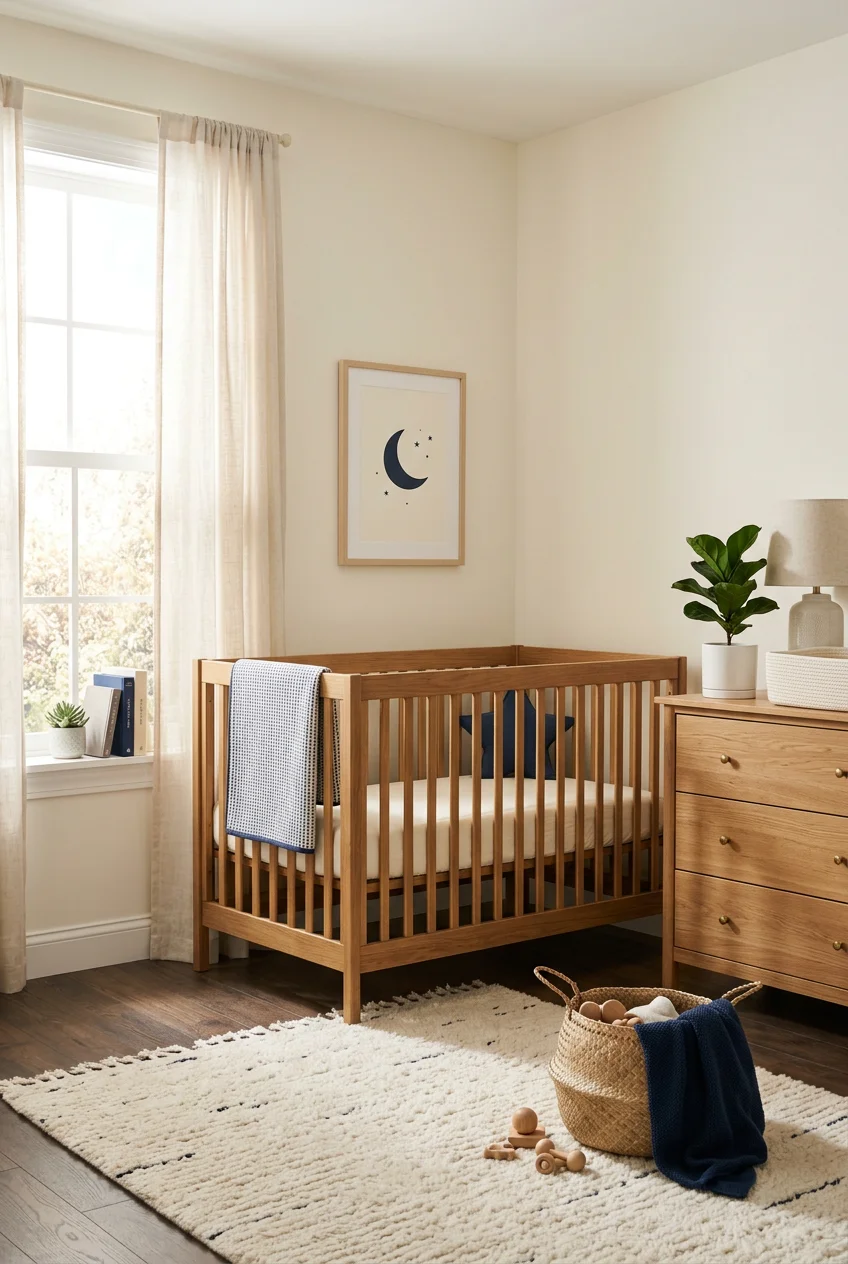
What’s Inside
- Prioritize Air Quality with VOC-Free Paint
- Embrace Trending Neutral and Earthy Color Palettes
- Invest in a GREENGUARD Gold Certified Convertible Crib
- Optimize Lighting with Dimmable Options and Natural Light
- Prioritize Storage with Multi-Functional Furniture
- Anchor All Furniture to Prevent Tip-Overs
- Choose a Comfortable and Functional Glider
- Monitor and Maintain Optimal Humidity Levels
- Enhance Soundproofing for Better Sleep
- Incorporate Air-Purifying Plants Safely
- Design a Future-Proof Nursery with Adaptable Themes
- Utilize the Ceiling as a Design Element
- Maintain a Clean Environment with HEPA Filtration
- Ensure Crib Safety Beyond the Crib Itself
- Place the Crib Strategically for Safety and Sleep
- Choose Washable Rugs for Inevitable Messes
- Install True Blackout Window Treatments
- Organize Tiny Clothes with Adjustable Closet Systems
I spent three weeks crying on the floor of my son’s half-finished room with a paint roller in my hand. Figuring out nursery ideas for boys without defaulting to bright primary colors and cartoon characters is surprisingly hard. Last Tuesday at Whole Foods, I saw a pregnant woman staring blankly at a baby magazine, and it took everything in me not to walk over and tell her to put it down. The stylized photos aren’t real life. Real life is spit-up on the rug and a baby who won’t sleep because the streetlamp outside is too bright. I’m writing this because I’ve made so many expensive mistakes with my first baby. Let’s skip the fluff and talk about what actually works for a functional, safe space.
1. Prioritize Air Quality with VOC-Free Paint

I tried cheap paint first, and the chemical smell lingered for a month. It gave me a headache just walking in. Indoor air can be significantly more polluted than outdoor air, and babies are vulnerable because their lungs are still developing. I ended up repainting the entire room with Sherwin-Williams Zero VOC paint, which costs about $55.98 a gallon. You’ve got to allow ample time for off-gassing before the baby arrives, even with the better paint. I also skipped pressed wood furniture entirely because it releases formaldehyde and other toxins. Instead, I bought a solid wood dresser. To really clean the air, I bought the Solenco Air Purification Pal for $249.99. It filters up to 99.975% of particles and reduces VOCs. If you’re looking for nursery ideas for boys that actually matter, start with the air they breathe. Austin Air and IQAir are other great brands for effective allergen removal, but they cost a bit more. Trust me on this.
2. Embrace Trending Neutral and Earthy Color Palettes

Move beyond traditional baby blue. I painted my first son’s room a bright sky blue, and it felt like living inside a smurf. It was visually overstimulating and incredibly hard to decorate around. Now, I lean heavily into warm neutrals, earthy greens, and soft blues. Sherwin-Williams’ 2026 Color of the Year, “Universal Khaki,” is a warm beige with subtle green undertones that looks incredibly calming on the walls. Valspar’s “Warm Eucalyptus” is another muted green that works perfectly. A gallon costs around $45 to $60 depending on the finish. Sage green and terracotta are emerging as major trends for a soothing atmosphere. Don’t over-gender the room with excessive blue or truck wallpaper. A balanced palette allows for versatility as your child grows, meaning you won’t have to repaint when he turns three and suddenly hates the color blue. Neutral walls let the furniture pop.
3. Invest in a GREENGUARD Gold Certified Convertible Crib

I bought a vintage crib at a flea market and quickly realized the slats were too far apart. It was a massive safety hazard. Ensure crib slats are no more than 6cm apart to prevent entrapment. I ended up buying the Pali Modena Forever Crib for $399. It’s made from solid beechwood and, most importantly, it’s GREENGUARD Gold Certified, ensuring low chemical emissions for healthier indoor air. If you’re on a tighter budget, the daVinci Grove 4-in-1 Convertible Crib is a solid choice at $179. Another great option is the dadada Spirit 8-in-1 Convertible Crib, which transitions from a cradle to a toddler bed and beyond, offering long-term value. You’re going to use this bed for years. It’s worth spending a little more upfront for solid wood and certified safety. I was wandering through Target looking at generic cribs, but the off-gassing smell from the display models was noticeable. Stick to certified options.

Beautiful Wooden Baby Closet Dividers Set of 7
A dependable everyday pick — Beautiful Wooden Baby Closet Dividers Set of 7 – Double-Sided Organize pulls in 11 ratings at 4.5 stars. Not flashy, just solid.
4. Optimize Lighting with Dimmable Options and Natural Light

Poor lighting choices will ruin your life at 3 AM. I installed a harsh overhead light in my nursery, and every time I turned it on for a diaper change, my son would start screaming. You need layered lighting. Install dimmable LED ceiling lights for adjustable brightness. I use Philips 40-watt equivalent dimmable LED bulbs, which cost about $12.99 for a four-pack. Add a small task lamp by the changing table for focused, soft illumination during late-night changes. Maximize natural light with sheer curtains during the day, but you absolutely need blackout shades for sleep. I bought a cheap lamp from Target last year, and the switch was so loud it woke the baby every single time I clicked it. Test the click noise before you buy. A touch-activated lamp is infinitely better for those middle-of-the-night wakeups. You want a soft, warm glow, not a bright white hospital light. No exaggeration.
5. Prioritize Storage with Multi-Functional Furniture

Babies come with gear. Lots of it. I thought I could get away with a tiny three-drawer dresser. I was wrong. By month two, I had piles of clothes on the floor. Build storage into your design from day one. I bought the IKEA Hemnes 8-drawer dresser for $249.99. The drawers are deep, and the top is wide enough to double as a changing station. I use half the drawers for clothes and the other half for diapers, wipes, and burp cloths. I also added floating wall shelves with rounded edges for books and toys, keeping them off the floor and out of reach. I was grabbing diapers at Costco one afternoon and realized I had nowhere to put the massive box. Under-crib storage bins saved me. I use 6-inch high plastic bins that slide perfectly under the frame. Don’t waste money on single-use changing tables.
6. Anchor All Furniture to Prevent Tip-Overs

This isn’t a suggestion. It’s a requirement. I was organizing clothes one afternoon and pulled two dresser drawers open at the same time. The entire dresser tipped forward and slammed into the wall. If my baby had been crawling, it would have been a disaster. Secure all heavy furniture, including dressers, bookshelves, and changing tables, to the wall using anti-tip kits. I use the Safety 1st Furniture Wall Straps, which cost $6.49 for a two-pack. The Juvenile Products Manufacturers Association (JPMA) certifies furniture for safety, and anchoring is a critical step to prevent serious hazards as your baby grows and becomes mobile. It takes ten minutes and a drill. Just do it. Even heavy, solid wood pieces can tip if a toddler climbs on the lower drawers. Don’t trust the weight of the furniture to keep it grounded. I learned this the hard way with a bookshelf. You might also like: 16 Nursery Paint Colors for Every Budget
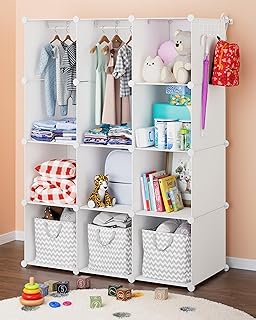
CUBEDIY Baby Closet Organizer for Nursery: Durable Baby
CUBEDIY Baby Closet Organizer for Nursery: Durable Baby Wardrobe for C punches above its price — 316 buyers rated it 4.5 stars. I would buy it again.
7. Choose a Comfortable and Functional Glider

I bought a cheap wooden rocking chair because it looked cute on Pinterest. It was a torture device. My back ached for months. Select a glider that offers comfort, durability, and features like a smooth swivel and recline. I eventually upgraded to the Nurture& The Glider Plus. It costs $1,299, but the adjustable lumbar support and headrest are incredible. If that’s out of budget, the Korser Power Swivel Recliner provides ultra-quiet operation and USB/Type-C ports for $489.99. For tech-savvy parents, the Babyletto Kiwi Electronic Recliner offers power recline. Even a basic model like the Storkcraft Hoop Glider & Ottoman for $199.99 is better than a hard wooden chair. You’re going to spend hundreds of hours in this chair. Make sure it’s soft and the armrests are at the right height to support a nursing pillow. I fell asleep in mine twice last week.
8. Monitor and Maintain Optimal Humidity Levels

I woke up one morning and found condensation dripping down the nursery windows. The room was too humid, and a damp room invites mold. Keep the nursery’s humidity between 35% and 50% to prevent mold, mildew, and dust mites. I bought an AcuRite Digital Hygrometer for $12.98 at a local hardware store to monitor the levels. I was picking up organic wipes at Sprouts and noticed they sell small humidifiers, too. High humidity can invite pollutants, while excessively dry air can lead to respiratory issues. Run a humidifier or dehumidifier as needed. I use the LEVOIT 3-Liter Humidifier ($49.99) during the dry winter months. You’ve got to clean it regularly with half a cup of white vinegar to prevent bacteria buildup. If you skip the cleaning, the humidifier just blasts mold spores into the air. I ruined a good filter by ignoring this. You might also like: 19 Baby Boy Nursery Room Ideas Worth Trying
9. Enhance Soundproofing for Better Sleep

My dogs bark at the mail carrier every day at 1 PM, right in the middle of nap time. I had to soundproof the nursery. I installed Arrowzoom Soundproof Curtains on the windows for $89.99. They are thick and heavy. I also sealed the gaps around the door with Arrowzoom Soundproof Weather Strip for Doors and Windows KK1154, which cost $15.99. Fill the room with furniture, bookshelves, and a large, tufted rug to absorb sound and reduce echoes. A thick wool rug is significantly more effective than a thin cotton one. For optimal sound absorption, consider acoustic panels on walls or ceilings. Arrowzoom Acoustic Foam Panels are a non-toxic option. It won’t make the room completely silent, but it muffles the sharp noises enough that the baby sleeps through the dog barking. I also put a rolled towel under the door gap. You might also like: 20 Baby Boy Room Decor Ideas Worth Trying

Criusia Drawer Organizer Clothes
Honestly, Criusia Drawer Organizer Clothes surprised me — sturdier than it looks in the photos, and over 11 buyers gave it 4.5 stars.
10. Incorporate Air-Purifying Plants Safely

I spilled my Trader Joe’s coffee on the rug while trying to water a hanging fern, and the fern died a week later anyway. I lack a green thumb, but plants help clean the air naturally. Introduce specific plants known for air purification, such as snake plants or spider plants, to help remove toxins. I bought a snake plant in a 10-inch heavy ceramic pot for $34.99. Ensure any plants are placed out of the baby’s reach and are in stable, heavy pots that can’t be easily tipped over. Research plant toxicity to ensure they are safe for a home with children. Snake plants are mildly toxic if ingested, so I keep mine on a high, anchored wall shelf near the window. Spider plants are entirely non-toxic and look great hanging from a sturdy ceiling hook. Just don’t overwater them or you’ll get gnats.
11. Design a Future-Proof Nursery with Adaptable Themes

I went to a baby shower where the nursery was floor-to-ceiling fire trucks. The kid is going to outgrow that by age four. Choose themes that can grow with your child. I prefer a “Modern Woodland” theme with soft earth tones and hand-drawn details. I used a subtle birch tree peel-and-stick wallpaper that cost $45 per roll. A “Space-Themed” nursery focusing on clean interpretations of planets and stars rather than overly literal cartoon designs also works well. Avoid overly specific decor that limits their interests. You want a room that easily transitions from a crib to a toddler bed without requiring a total renovation. Simple geometric patterns or nature-inspired murals are much easier to update with cheap accessories later. Buy neutral big-ticket items and use cheap posters or sheets for the current obsession. I swapped out dinosaur sheets for space sheets for $20.
12. Utilize the Ceiling as a Design Element

Don’t overlook the ceiling. Babies spend most of their time on their backs staring straight up. I painted my son’s ceiling a very soft sage green instead of leaving it stark white. It draws the eye up and makes the room feel taller. You can also add glow-in-the-dark stars for a “Spacescape” theme. A pack of 200 plastic stars costs about $9.99. Hang a mobile out of reach to provide visual stimulation. I bought a wooden solar system mobile for $35. A canopy over the crib can provide a sense of coziness and help control light, aiding in sleep. Just make sure the canopy fabric is securely fastened to the ceiling with a heavy-duty hook so it can’t fall into the crib. I used a toggle bolt that holds up to 50 pounds just to be safe. It adds a nice architectural detail to a plain boxy room.

Criusia Over the Door Organizer
Criusia Over the Door Organizer punches above its price — 231 buyers rated it 4.5 stars. I would buy it again.
13. Maintain a Clean Environment with HEPA Filtration

I used to dry dust the nursery, and I realized I was just pushing the dust into the air. My baby was sneezing constantly. Dust and vacuum the nursery at least once a week. I finally invested in a vacuum cleaner equipped with a HEPA filter. I bought the Miele Classic C1 for $349.00. It captures 99.7% of particles below 0.3 microns. The hum of the vacuum is actually a great white noise for naps. Damp dusting with a 16×16 inch microfiber cloth is much more effective than dry dusting at trapping allergens. I just wet the cloth with warm water. Regular cleaning and HEPA filtration are crucial for reducing allergens and improving indoor air quality. Don’t use harsh chemical sprays on the changing table, either. A simple mix of water and a drop of dish soap works perfectly. I wipe down the crib rails every Sunday.
14. Ensure Crib Safety Beyond the Crib Itself

I bought a beautiful, plush crib bumper because it matched the curtains perfectly. My pediatrician told me to throw it in the trash immediately. Keep the crib free of loose bedding, pillows, bumpers, and stuffed animals. These pose severe suffocation and strangulation hazards. The American Academy of Pediatrics (AAP) and the Consumer Product Safety Commission (CPSC) strongly advise against crib bumpers and excessive bedding. Beyond the crib frame, ensure the mattress is firm and fits snugly without gaps. I bought the Newton Baby Crib Mattress for $299.99. It’s completely breathable and washable. All you need in the crib is a tight-fitting fitted sheet. I use the Burt’s Bees Baby organic cotton sheets, which cost $19.99 each. If you can fit more than two fingers between the mattress and the crib frame, the mattress is too small. It’s a terrifying hazard you can easily avoid.
15. Place the Crib Strategically for Safety and Sleep

I placed my son’s crib right under a beautiful double window because the natural light looked great. It was a massive mistake. The draft made him cold, and the morning sun woke him up at 5 AM every day. Position the crib away from windows, heaters, and electrical cords. Avoid hanging heavy artwork or shelves directly above the crib to prevent potential falling hazards. If possible, place the crib against an interior wall to minimize noise from adjacent rooms and stabilize the temperature. Many parents mistakenly place the crib near a window for natural light or under decorative shelves, creating safety risks and potential sleep disturbances. I moved the crib to the opposite wall, and he instantly slept an hour longer. I also made sure the baby monitor cord was tacked to the wall three feet away. Don’t risk a cord dangling into the crib.

Delta Children Nursery Storage 48 Piece Set
Delta Children Nursery Storage 48 Piece Set – Easy Storage/Organizatio punches above its price — 17 buyers rated it 4.5 stars. I would buy it again.
16. Choose Washable Rugs for Inevitable Messes

I bought a gorgeous, fluffy white Moroccan rug for my first nursery. Three days after bringing the baby home, there was a massive diaper blowout right in the center of it. I scrubbed it for an hour, but the stain never came out. Skip the expensive wool or high-pile rugs if you want to keep your sanity. I replaced it with a Ruggable 5×7 washable rug for $159. When it gets dirty, I just peel the top layer off and throw it in the washing machine. I was at Kroger buying laundry detergent and realized how much I value things I can actually wash. A low-pile washable rug is softer than hardwood floors but infinitely easier to maintain than traditional carpeting. Plus, the low pile means the rolling cart I use for diaper supplies doesn’t get stuck on the fibers. It lays flat and doesn’t trap crumbs.
17. Install True Blackout Window Treatments

I thought standard wooden blinds would block enough light for daytime naps. They don’t. The light bleeds through the slats, and babies are incredibly sensitive to changes in light. I was wandering through Walmart at 8 PM looking for a solution and bought the SUN ZERO blackout panels for $24.99 each. You need a wrap-around curtain rod to pull the fabric tight against the wall. The rod costs about $18.99. This eliminates the halo of light that escapes from the edges. Combined with the soundproof curtains I mentioned earlier, the room becomes a dark, quiet cave. It’s the only way I can get my son to take a two-hour afternoon nap during the summer. I tried the cheap paper blackout shades first, but they ripped after a week and looked terrible from the street. Invest in actual fabric panels.
18. Organize Tiny Clothes with Adjustable Closet Systems

Baby clothes are tiny, which means a standard closet rod is a huge waste of vertical space. I used to hang tiny onesies on a rod that was five feet off the ground, leaving a massive empty gap below. I ripped out the single rod and installed a ClosetMaid 4-to-8 foot adjustable system for $149.98. I added three tiers of hanging rods and a row of wire shelves for shoes and blankets. Sort clothes by size using plastic closet dividers, which cost about $6.99 for a set. Babies grow out of sizes in weeks, and if you don’t organize them by month, you’ll find a pile of unworn 3-month clothes when your baby is already wearing 6-month sizes. I keep the next size up on the middle rod so I can easily grab them when a growth spurt hits overnight. It keeps the chaos contained behind closed doors.
Designing a room for your baby shouldn’t be a source of stress. I learned most of these lessons the hard way, usually at 2 AM while holding a crying infant. Start with the safety basics like a firm mattress and anchored furniture, then layer in the aesthetic details. I’m so glad I finally figured out a system that works. Pin this list or save it to your bookmarks so you can reference these exact products and measurements when you start setting up your own space.
Frequently Asked Questions
What are the best colors for a boy’s nursery?
Move away from traditional bright blue. Warm neutrals, soft sage greens, terracotta, and muted eucalyptus are incredibly popular. These earthy tones create a calming environment and transition easily as your child grows out of the baby phase.
How do I make my nursery safe for a baby boy?
Always anchor heavy furniture to the wall using anti-tip kits. Ensure the crib mattress is firm with no loose bedding, and keep the crib at least three feet away from windows, cords, and heavy wall art.
What kind of lighting is best for a nursery?
Layered lighting is essential. Install dimmable LED overhead lights for daytime and a soft, warm task lamp near the changing table for night feeds. You also need true blackout curtains to ensure solid daytime naps.
How can I maximize storage in a small boy’s nursery?
Skip the single-use changing table and buy a wide 8-drawer dresser instead. Use the top for changing and the deep drawers for clothes and diapers. Add under-crib storage bins and adjustable closet systems to utilize vertical space.
