What’s Inside
- Zone Your Space Clearly for Defined Activities
- Prioritize Child-Sized, Ergonomic Furniture
- Ensure Unobstructed Sightlines for Safety
- Anchor All Tall Furniture and Secure Equipment
- Embrace Montessori-Inspired Accessibility with Low Shelving
- Integrate Movement-Promoting Structures
- Choose Durable, Non-Toxic, and Easy-to-Clean Materials
- Provide Varied Sensory and Age-Appropriate Art Experiences
- Implement Flexible and Multi-functional Furniture (2026 Trend)
- Consider Floor Beds for Napping Areas
- Set Up a Dedicated Calm Down Corner
- Organize with Clear Bins and Picture Labels
- Bring Nature Indoors with Safe Plants and Natural Light
- Use Washable Rugs for Cozy Floor Play
- Create a Welcoming Cubby Area for Parents and Kids
I spent three weeks setting up a commercial play space last October. If you’re looking for daycare toddler room ideas, you need practical strategies that actually survive sticky hands and endless energy. I thought I had everything perfectly arranged until a two-year-old immediately scaled a wobbly bookshelf and knocked over a heavy basket of wooden blocks. That loud crash on a Tuesday morning taught me that aesthetic Pinterest boards don’t translate to real life with toddlers. You need furniture that stays put, surfaces that wipe clean in ten seconds, and layouts that stop chaos before it starts. I tried doing things the cheap way for months before figuring out that investing in the right dimensions and materials saves you hours of daily frustration—took me years to figure out. We aren’t just decorating a room. We’re building an environment where kids can learn to pour their own water, put away their own coats, and safely navigate their day. Let’s look at the exact measurements, specific brands, and practical layouts that make a daycare space function properly.
1. Zone Your Space Clearly for Defined Activities

Toddlers need physical boundaries to understand what happens in different parts of the room. When I first started consulting on room layouts, I left the center of the room wide open. The kids just ran in circles until someone got hurt. You have to divide the room into distinct activity zones for play, learning, eating, and resting. I use low shelves to create these borders without blocking my view. The IKEA KALLAX units are standard for this. They cost between $35 and $100 depending on the size, and they hold up surprisingly well if you secure them properly. For commercial spaces with a bigger budget, I recommend durable room dividers from brands like Gressco or Kaplan Early Learning Company. Their wooden storage units create natural walls that tell a child where the block center ends and the quiet reading corner begins. This physical structure helps toddlers understand expectations. When they step onto the soft rug in the book corner, they know it’s a quiet zone. When they sit at the hard table, they know it’s time for snacks or messy art.
2. Prioritize Child-Sized, Ergonomic Furniture

Most people buy tables that are entirely too tall for young toddlers. I made this mistake at a center in Chicago last year. We bought generic kids tables, and the one-year-olds had their chins resting on the tabletop. You have to invest in tables and chairs specifically designed for toddler heights to ensure proper posture. For toddlers aged 1 to 2 years, you need table heights of exactly 14 inches (35 cm) and chairs around 6 inches (15 cm) high. When they sit, their feet must rest flat on the floor. For 2 to 5 year olds, tables should be 16 to 18 inches (40 to 45 cm) tall, with chairs sitting 7 to 8 inches (19 cm) high. Brands like Community Playthings and Guidecraft build incredibly durable, child-safe options. A Community Playthings wooden chair costs around $85, but it lasts for a decade. Proper ergonomics stop kids from squirming and falling out of their chairs during lunch. It also makes them feel secure, which dramatically cuts down on mealtime behavior issues.
3. Ensure Unobstructed Sightlines for Safety

This is the most critical safety measure in any childcare environment. A common mistake I see constantly is pushing tall storage cabinets into the middle of the room. I once placed a large indoor play tent in a corner and immediately realized I couldn’t see if the kids inside were fighting over a toy. You must arrange all furniture to allow caregivers clear visibility of all children at all times. This includes changing tables, play structures, and shelving. If you’re looking for practical daycare toddler room ideas, start by sitting on the floor in every corner of your room. If you can’t see the door or the nap area from that spot, you have a blind spot. Place your changing table against a wall where you can stand facing the room while changing a diaper. Keep all room dividers strictly under 30 inches tall. This setup enables constant supervision and allows you to respond quickly if a child trips or tries to climb something they shouldn’t.

Baby Sound Machine, Momcozy White Noise Machine for Baby
Honestly, Baby Sound Machine surprised me — sturdier than it looks in the photos, and over 71 buyers gave it 4.5 stars.
4. Anchor All Tall Furniture and Secure Equipment

I can’t stress this enough. Every single piece of furniture taller than 24 inches must be bolted to the wall. I learned this the hard way when I watched a heavy storage cubby tip forward as a toddler tried to pull himself up on the bottom shelf. Luckily I caught it, but it was a terrifying lesson. To prevent tipping accidents, always anchor tall shelves, bookcases, and heavy furniture to the wall studs. You can buy heavy-duty steel furniture anchors at Target or Walmart for about $14.99 a pack. Don’t use the cheap plastic zip-ties that come free with the furniture. They snap under pressure. Ensure all climbing structures and play equipment are securely fastened according to the manufacturer guidelines. This is a non-negotiable safety standard. Even if a shelf feels heavy and stable when empty, the balance changes completely once you load the top bins with wooden toys. Spend the extra weekend hours drilling into the drywall. It’s the only way to ensure the space is actually safe.
5. Embrace Montessori-Inspired Accessibility with Low Shelving

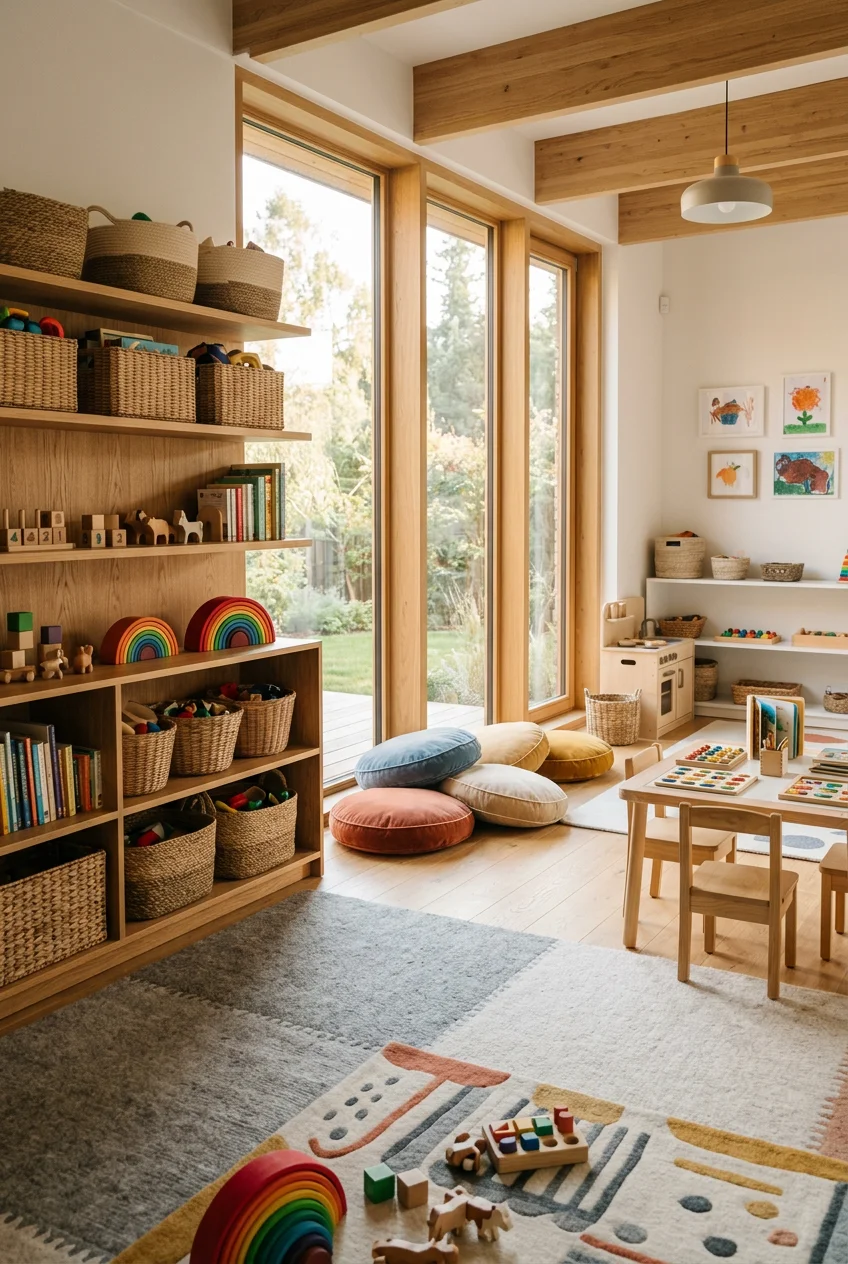
Toddlers thrive when they have control over their environment. Stacking toys in deep plastic bins with lids just guarantees that kids will dump the entire bin on the floor to find one specific car. Instead, implement low, open shelving where toys and books are displayed face-forward. This fosters independence and allows children to choose and return materials themselves. I use units like Kaplan Early Learning Company’s Premium Solid Maple Collection. They run about $250 per shelf, but the solid wood construction handles daily abuse. Gressco’s EdQ Storage Furniture is another excellent option designed specifically for child-led experiences. I put exactly four toys on a shelf at a time. This prevents visual overwhelm. When kids can clearly see a wooden puzzle, a stacking ring, and a set of blocks, they engage with the materials longer. I rotate the items out every two weeks to keep their interest high. It completely changes how they play and dramatically reduces the amount of time you spend cleaning up random toy explosions. You might also like: 20 Baby Girl Room Ideas for Every Budget
6. Integrate Movement-Promoting Structures

Toddlers need to climb. If you don’t give them a designated place to climb, they will use your tables, chairs, and shelves. I spent months telling kids to get down from the window sills before I finally bought an indoor climbing block set. You have to dedicate a portion of the room to safe climbing structures, tunnels, or ride-on toys to support gross motor development. Community Playthings offers incredible toddler climber sets. Their basic wooden indoor gym starts around $450. It features low steps, a small slide, and a tunnel underneath. Placing a structure like this on top of a thick, shock-absorbing mat gives them a safe outlet for their physical energy. On rainy days when we can’t go outside, this area saves my sanity. I usually place it near the center of the active zone, far away from the quiet reading corner. Make sure you leave at least three feet of clearance around the entire structure so kids don’t bump into walls or shelves when they slide down. You might also like: 15 Clever Neutral Small Nursery Ideas for Every Budget

Beautiful Wooden Baby Closet Dividers Set of 7
A dependable everyday pick — Beautiful Wooden Baby Closet Dividers Set of 7 – Double-Sided Organize pulls in 11 ratings at 4.5 stars. Not flashy, just solid.
7. Choose Durable, Non-Toxic, and Easy-to-Clean Materials

Daycare rooms get dirty faster than you can possibly imagine. Between spilled milk, muddy shoes, and messy art projects, you need surfaces that can take a beating. Select furniture, toys, and finishes made from high-quality, eco-conscious, and non-toxic materials that withstand frequent cleaning. I used to buy cheap particle board shelves, but the edges peeled and swelled the minute they got wet from my sanitizing spray. Many professional daycare furniture brands like Kaplan Early Learning Company and Gressco prioritize solid wood and waterborne finishes. These surfaces don’t off-gas harmful chemicals, and you can wipe them down with a bleach solution without ruining the wood. When picking soft furnishings, skip anything that requires dry cleaning. I bought a beautiful wool rug for a reading nook once, and it was ruined within a week after a stomach bug incident—no exaggeration. Stick to vinyl-covered foam mats or machine-washable fabrics. You’ll spend less time scrubbing and more time actually interacting with the children. You might also like: 15 Lovely Baby Boy Crib Bedding Ideas That Are Totally Worth It
8. Provide Varied Sensory and Age-Appropriate Art Experiences

Art time with toddlers is usually a messy disaster if you don’t have the right supplies. Standard crayons snap in half immediately, and liquid paint ends up on the walls. You need to stock a range of art supplies that encourage creativity while minimizing the cleanup. I buy Crayola Egg Crayons. They cost about $12.99 for a set of three, and they are perfect for ages 1 and up because the shape fits perfectly in their palms. For painting, I use washable tempera paint from Colorations or Melissa & Doug. A 16 oz bottle costs around $4.99. If you want a completely mess-free alternative, paint sticks and dot markers are fantastic. I also set up sensory bins weekly. I use a shallow plastic under-bed storage box and fill it with 4 cups of dry oats or kinetic sand. I hide small plastic animals inside for them to dig out. It keeps them focused for twenty minutes straight, which is basically an eternity in toddler time.
9. Implement Flexible and Multi-functional Furniture (2026 Trend)

A major trending approach for 2026 is the use of adaptable furniture. Daycare square footage is expensive, so every piece of furniture needs to serve multiple purposes. I highly recommend opting for height-adjustable tables. The myduckling KAYA Kids Activity Table is a great example. It offers adjustable heights at 39.5, 42.5, and 45.5 cm, meaning the table grows with the classroom demographic. Community Playthings also makes MultiTables that adjust easily. This adaptability allows for quick room reconfigurations. I use low storage units on heavy-duty locking casters. When it’s time for a large group circle time, I just unlock the wheels and push the shelves against the wall to open up the floor space. During free play, I roll them back into the center of the room to act as activity islands. Being able to shift the room layout in under five minutes makes transitions smoother and maximizes the usable space in smaller commercial or home daycare setups.

Criusia Drawer Organizer Clothes
Criusia Drawer Organizer Clothes punches above its price — 11 buyers rated it 4.5 stars. I would buy it again.
10. Consider Floor Beds for Napping Areas

Transitioning from traditional cribs to floor beds for toddlers is a core Montessori approach that many daycares are adopting. For children 12 months and older, a low floor bed promotes autonomy. They can crawl into bed when they feel tired and wake up without screaming for an adult to lift them over a rail. I use 2-inch thick vinyl-covered nap mats placed directly on the floor. You can buy a pack of five from Kaplan for about $150. I assign each child a specific mat color and keep their blanket in a labeled bin nearby. During nap time, the room transforms into a quiet resting space. When they wake up, they learn to fold their blanket and put it away. It takes about two weeks of consistent routine for them to stop wandering off the mats. Once they get it, nap time becomes incredibly peaceful. While they sleep, I usually make a quick run to Sprouts for fresh fruit for the afternoon snack.
11. Set Up a Dedicated Calm Down Corner

Toddlers experience massive emotions and need a safe place to process them. A time-out chair doesn’t work. You need a designated calm down corner. I pick the quietest corner of the room, far from the door and the active play zones. I line the floor with a thick, soft mat and add two heavy weighted pillows I found at Target for $25 each. I stock a small wooden shelf with sensory bottles. I make these myself using empty 16 oz water bottles, filling them with warm water, 2 tablespoons of clear glue, and a handful of fine glitter. Shaking the bottle and watching the glitter settle helps regulate their breathing. I also include a few board books about feelings. When a toddler gets overwhelmed or aggressive, I gently guide them to this corner. I sit with them and let them squeeze the pillows or watch the glitter. It provides sensory relief without punishing them for having age-appropriate emotional outbursts.
12. Organize with Clear Bins and Picture Labels

If you put toys in opaque bins, toddlers will pull every single bin off the shelf just to see what’s inside. I spent months cleaning up massive piles of plastic blocks before I finally switched my storage system. I now use clear plastic shoebox-sized bins. I buy the Y-Weave bins from Target for about $6 each, or bulk clear containers from Costco. The real trick is the labeling. I use a basic label maker from Walmart, but I also print out a clear, color photograph of the toy that belongs in that specific bin. I tape the photo to the front of the bin and a matching photo to the shelf where the bin belongs. This creates a visual matching game for cleanup time. Even a one-year-old can look at a picture of a wooden train, look at the shelf, and put the bin in the right spot. It teaches sorting skills and completely eliminates the confusion of where things go at the end of the day.

Babelio Breathable Crib Mattress, Dual-Sided, Memory Foam
Honestly, Babelio Breathable Crib Mattress surprised me — sturdier than it looks in the photos, and over 17 buyers gave it 4.5 stars.
13. Bring Nature Indoors with Safe Plants and Natural Light

Fluorescent overhead lighting makes toddlers cranky. It gives me a headache, too. I always try to maximize natural light in a daycare space. If you have large windows, keep them unobstructed. If the afternoon sun gets too hot, apply a UV-blocking window film. You can get a large roll on Amazon for $22. It cuts the glare without losing the natural sunlight. I also incorporate plants to soften the room. Real plants are tricky because toddlers will absolutely dig in the dirt and try to eat the leaves. I tried keeping a real spider plant on a high shelf, but dropped leaves became a choking hazard. Now, I use high-quality fake plants from IKEA. A small potted faux plant costs $5.99. I place them on top of the tall anchored storage cabinets. It adds a pop of green and makes the room feel more like a cozy home and less like a sterile institution.
14. Use Washable Rugs for Cozy Floor Play

Toddlers spend 80 percent of their day on the floor. You need a rug that is soft enough for crawling but tough enough to handle ground-in crackers and spilled juice. Traditional area rugs are a nightmare in a daycare setting. I bought a standard rug from Kroger’s home section once, and it smelled like sour milk within a month because I couldn’t wash it properly. Now, I strictly use Ruggable washable rugs. A 5×7 rug costs about $199. They come in two pieces: a non-slip pad and a top cover that peels off. When a kid drops a cup of yogurt on it, I just pull the top layer off and throw it in the washing machine. The washing machine noise in the background is just part of the daycare soundtrack now. Having a clean, soft area defines the central play space and gives the kids a warm surface to sit on during morning circle time.
15. Create a Welcoming Cubby Area for Parents and Kids

The entryway dictates how the entire morning drop-off goes. If it’s cramped and disorganized, parents get stressed, kids start crying, and the day starts terribly. You need a dedicated cubby area right by the door. I use a long wooden bench with open cubbies underneath and heavy coat hooks above. Each child gets a designated hook for their backpack and jacket, plus a plastic bin underneath for extra clothes and shoes. I buy sturdy plastic bins from Costco for $12 a pair. Label everything clearly with the child’s name and photo. This setup gives parents a specific place to put things down while they sign in. It also gives toddlers a routine. They walk in, sit on the bench, take off their shoes, and put their coat on the hook. Establishing this independent routine right at the door sets a calm, organized tone for the rest of the day.
Setting up a functional toddler space takes a lot of trial and error, but focusing on safety, ergonomics, and easy-to-clean materials makes a massive difference. I’ve rearranged rooms a dozen times just to get the flow right, and these specific layouts and products are the ones that actually hold up to daily use. If you found these daycare toddler room ideas helpful, please pin this article to your nursery or daycare planning boards so you can reference the measurements and brands when you start shopping!

JOYMISS Breathable Crib & Toddler Mattress: Soft Cribs
JOYMISS Breathable Crib & Toddler Mattress: Soft Cribs mattresses for punches above its price — 38 buyers rated it 4.5 stars. I would buy it again.
Frequently Asked Questions
What is the best table height for a toddler daycare room?
For toddlers aged 1 to 2 years, tables should be exactly 14 inches high with 6-inch chairs. For older toddlers aged 2 to 5 years, look for tables between 16 and 18 inches high with chairs sitting 7 to 8 inches off the floor.
How do I organize toys in a daycare setting?
Use low, open shelving to display a few toys face-forward. Avoid deep, opaque toy boxes. Store smaller items in clear plastic bins with picture labels so children can easily see what belongs inside and clean up independently.
Are floor beds safe for a daycare toddler room?
Yes, floor beds are a staple of the Montessori method and are safe for toddlers 12 months and older. They promote independence, allowing children to safely crawl in and out of bed without the risk of falling over crib rails.
How can I make a daycare room safer for toddlers?
Anchor all furniture taller than 24 inches to the wall studs using heavy-duty steel hardware. Arrange low shelving to ensure you have unobstructed sightlines across the entire room, and use non-toxic, easy-to-clean materials for all surfaces.
