What’s Inside
- Prioritize Individual Zones with Strategic Room Dividers
- Embrace Neutral-Adjacent Colors for Your Toddler Boy and Girl Shared Room
- Invest in Multi-Functional, Convertible Furniture
- Implement Strategic Sound Masking with White Noise
- Maximize Storage with Smart Built-ins and Bins
- Create Individualized Spaces within the Room
- Incorporate Sensory Elements and Natural Materials
- Coordinate Bedding Without Being Too Matchy
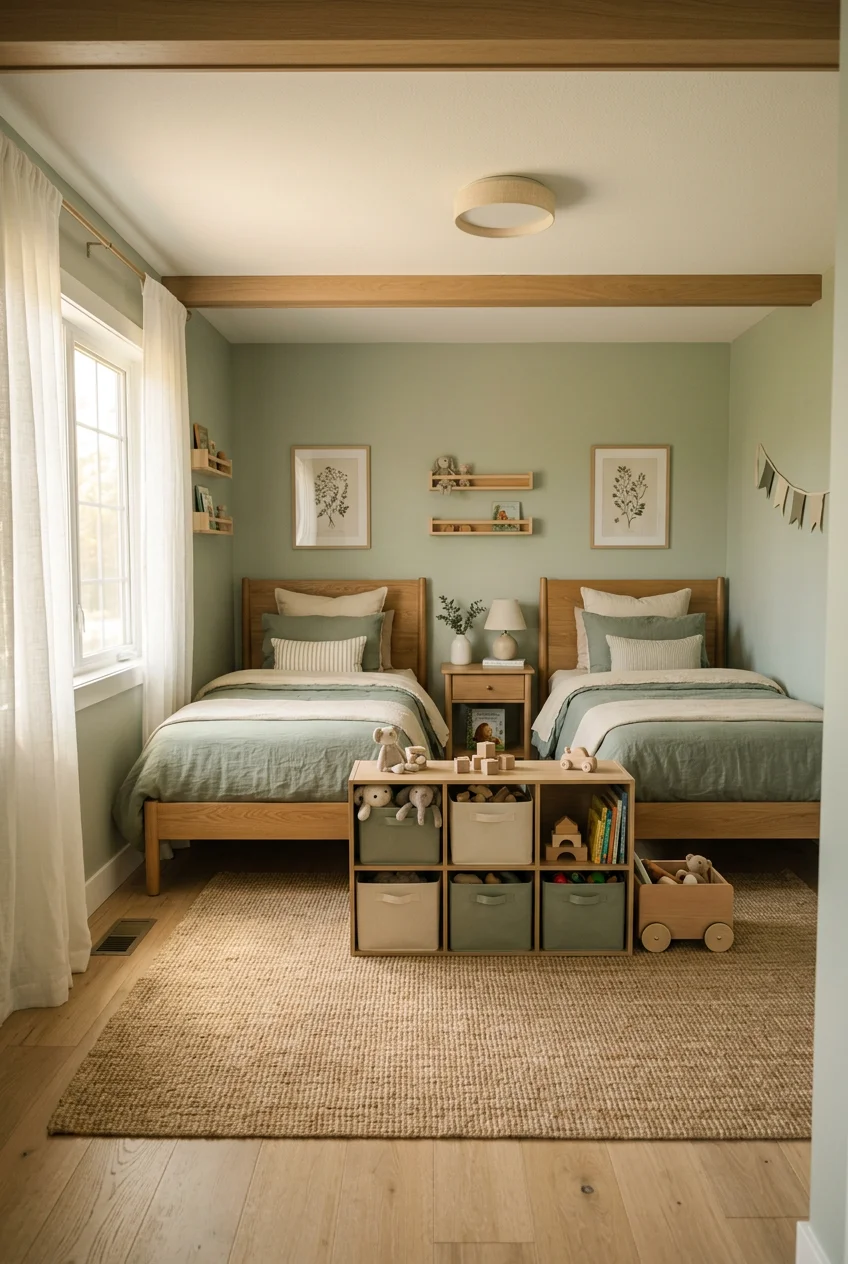
- Use Symmetrical Furniture Placement
- Curate Personalized Wall Art for a Toddler Boy and Girl Shared Room
- Design a Shared Reading Nook
- Layer Dimmable Lighting for Different Sleep Schedules
- Anchor Separate Zones with Washable Area Rugs
- Install a Custom Closet Organization System
- Choose Blackout Window Treatments
- Keep Toy Storage Accessible but Hidden
- Plan for Transitioning Decor as They Grow
I cried on the floor of my twins’ nursery last Tuesday at 2 AM. Setting up a functional toddler boy and girl shared room isn’t just about picking cute matching sheets. It needs a layout that stops them from waking each other up every time someone coughs. I tried to force a Pinterest-perfect aesthetic for months before figuring it out. The reality of a shared room means managing different sleep schedules, distinct toy preferences, and the inevitable squabbles over territory. I bought a cheap rug that smelled like wet dog after one spilled bottle—learned that the hard way—and I arranged their beds so poorly they spent two hours throwing pacifiers at each other. Now, I design these spaces for clients using practical boundaries and durable materials. Here’s exactly how I make it work without losing my mind.
1. Prioritize Individual Zones with Strategic Room Dividers

Creating distinct areas for each child matters when you want them to sleep through the night. A physical barrier stops the late-night staring contests. I use a tall, open-backed bookshelf for this. The IKEA Kallax unit costs $79.99 for the 4×4 size. It breaks up the room while giving you 16 cubbies for storage. If you’ve got a larger budget, Casa Kids offers modular partitions starting at $41.99 and going up to $3,735.99 for custom built-ins. I tried a flimsy folding screen first. My son knocked it over onto his sister’s bed within three days. It was a disaster. Now I stick to heavy, anchored furniture. For a quick fix during sleep training, I draped a heavy quilt over a $15.00 collapsible coat rack from Target. It blocked the visual line of sight perfectly. You just need something heavy enough that a 30-pound toddler can’t push it over. Anchor everything to the studs with 2-inch metal L-brackets.
2. Embrace Neutral-Adjacent Colors for Your Toddler Boy and Girl Shared Room

Skip the stark whites and aggressive primary colors. The current trend leans toward earthy tones mixed with soft whites. I use Sherwin-Williams Agreeable Gray for the main walls. It costs $45.00 a gallon and hides sticky handprints surprisingly well. I painted a client’s room bright yellow once, thinking it felt cheerful. It looked like a fast-food restaurant and the kids refused to nap. Now I stick to sage green, slate blue, or warm taupe. These colors feel calm. You bring in their specific preferences through $20.00 accent pillows or washable cotton throws. I bought two textured linen blankets from Sprouts—of all places—for $14.99 each. One is rust, the other is navy. They sit at the end of the beds and give each kid a specific color identity without fighting the wall paint. The flat finish paint absorbs light, which helps the room feel softer when you turn on a lamp at 4 AM.
3. Invest in Multi-Functional, Convertible Furniture

Buying two standard toddler beds wastes money. They outgrow them in eighteen months. I always specify a 4-in-1 convertible crib that transitions into a toddler bed, daybed, and full-size bed. The Delta Children Emery Convertible Crib is $249.99 at Walmart. It feels incredibly sturdy. You buy it once and use it until they leave for college. I bought a cheap plastic toddler bed for my oldest. The plastic cracked under my weight when I sat down to read a book. The metal springs squeaked every time he rolled over. A solid wood convertible crib prevents that noise. You also need a solid changing table with a removable topper. I use a standard 6-drawer dresser from Costco that cost $399.00. I screwed a $30.00 wooden changing tray to the top. When they potty train, you unscrew the tray and you’re left with a normal piece of furniture. It saves floor space and keeps the room looking intentional.

Beautiful Wooden Baby Closet Dividers Set of 7
Beautiful Wooden Baby Closet Dividers Set of 7 – Double-Sided Organize punches above its price — 11 buyers rated it 4.5 stars. I would buy it again.
4. Implement Strategic Sound Masking with White Noise

You need two sound machines. One for each kid. I learned this the hard way when my daughter’s cough woke my son up four times in one night. The Yogasleep Duet costs $44.99 and allows for precise volume control in 0.5 dBA increments. You place one near each sleeping area to create a sound curtain. I keep them set between 43 and 45 dBA at crib distance. I used to use an app on an old iPad that played ocean waves. The distinct crashing sounds actually kept them awake. True white noise is steady and masks the sharp sounds of a sibling kicking the wall. I bought these machines at Whole Foods last October when I was desperate for sleep. The physical buttons click loudly—no exaggeration—which is annoying when you’re trying to adjust it in the dark, but the fan sound is deep and consistent. Keep them at least three feet away from their heads to protect their hearing.
5. Maximize Storage with Smart Built-ins and Bins

Clutter causes anxiety for both you and the kids. I maximize vertical space with wall-mounted shelves and heavy-duty bins. The IKEA Kuggis bins cost $9.99 each and look incredibly sleek. They feature tight-fitting lids that hide the visual chaos of brightly colored plastic toys. For soft items like stuffed animals, I use the Drona fabric inserts that cost $5.99. I label everything with a $35.00 Brother P-Touch label maker. If you don’t label the bins, you’ll spend twenty minutes looking for one specific wooden train track. I tried using open wire baskets for a while. The kids just pulled everything out through the holes. Solid bins force them to take out one category at a time. I line the bottom of a Kallax unit with four Drona bins for heavy wooden blocks and use the top shelves for delicate items. You need a system that a three-year-old can understand when it’s time to clean up.
6. Create Individualized Spaces within the Room

Even if you skip the heavy furniture dividers, you must arrange the room to give each child a distinct zone. I place their beds on opposite walls. This visual separation matters. A client of mine shoved both beds into one corner to make a massive play area. The kids fought constantly because they felt like they had no personal space. I fixed it by moving the beds apart and hanging a simple curtain between them. A heavy-duty tension rod from Target costs $12.00. I hung a $25.00 canvas drop cloth from it. It sounds industrial, but it looks like thick linen. When they want to play together, you pull the curtain back. When they need quiet time, you close it. You can also use a small 3-foot by 5-foot rug next to each bed to define their specific territory. Kids need to know exactly which 20 square feet belong entirely to them. You might also like: 15 Charming Safari Nursery Lighting Ideas for Every Budget

JolyWell Night Light for Kids
Honestly, JolyWell Night Light for Kids surprised me — sturdier than it looks in the photos, and over 51 buyers gave it 4.5 stars.
7. Incorporate Sensory Elements and Natural Materials

The current trend leans heavily into natural textures. I use FSC-certified wood and rattan instead of molded plastic. A Crate & Kids Rattan Basket costs $49.00. It holds 15 rolled-up swaddles and adds warmth to the room. I bought a cheap plastic toy box a few years ago. It cracked down the side and pinched my son’s finger. Natural materials flex and wear better over time. I incorporate wool rugs, cotton canvas tents, and wooden shelving. You want the room to feel grounded. I found a heavy jute rug at Kroger’s home section for $89.00. It sheds a bit for the first month, which requires frequent vacuuming, but the texture hides stains completely. When designing for two kids, the room gets messy fast. Natural textures like wood grain and woven fibers disguise the inevitable scuffs and dents far better than high-gloss painted furniture. You might also like: 15 Baby And Toddler Shared Room That Actually Work
8. Coordinate Bedding Without Being Too Matchy

Matching bedding in a shared room looks like a hotel. You want the beds to coordinate without being identical. I buy sheets from Pottery Barn Kids. They cost $39.00 for a fitted sheet. I pick a unifying pattern, like a small ticking stripe, but in different colors. He gets the slate blue stripe, she gets the sage green stripe. This gives them ownership over their beds. I bought identical dinosaur sheets once. They fought every night over whose blanket was whose. Now, I stick to a strict color code. You can find great coordinating sets at Macy’s during their weekend sales. I pair the patterned sheets with a solid colored quilt. A $65.00 cotton quilt from Target holds up to weekly washing. The key is keeping the fabrics the same. If one kid uses a heavy velvet duvet and the other uses a thin cotton blanket, the visual weight of the room feels unbalanced. You might also like: 16 Toddler Room Ideas You Need to See
9. Use Symmetrical Furniture Placement

Symmetry tricks the eye into thinking a messy room is clean. I always place the beds parallel to each other if the room allows it. I bought two identical metal twin beds from Wayfair for $189.99 each. I placed a single nightstand directly between them. This creates a mirrored effect that instantly calms the space. I tried an L-shaped layout first. It left a weird dead zone in the middle of the room where dust bunnies gathered. The symmetrical layout gives you a clear walkway down the center. I use a $79.00 narrow wooden nightstand from IKEA. It features two drawers. He gets the top drawer for his pacifiers and books, she gets the bottom drawer. You establish fair boundaries through the furniture layout. If the room is too narrow for parallel beds, place them end-to-end along the longest wall with a small $45.00 storage trunk acting as a divider between the footboards.

JOYMISS Breathable Crib & Toddler Mattress: Soft Cribs
JOYMISS Breathable Crib & Toddler Mattress: Soft Cribs mattresses for has been one of the most consistently praised picks in this category. 38 reviewers averaged 4.5/5.
10. Curate Personalized Wall Art for a Toddler Boy and Girl Shared Room

Wall art is the easiest way to clearly define whose side is whose. I buy digital prints from Etsy for $5.50 each. You print them at a local print shop on heavy 110lb cardstock for about $2.00. I frame them using basic black frames from Michael’s that cost $14.99 when you use their weekly coupon. I hang a large 16×20 print directly over each bed. For my son, I chose a vintage botanical print of a fern. For my daughter, a vintage print of a moth. They coordinate because they share the same vintage aesthetic and black frames, but they reflect different subjects. Don’t use heavy glass frames over a toddler’s bed. I made that mistake and spent an hour vacuuming shattered glass out of a rug after a rogue bouncy ball hit the wall. Always buy frames with acrylic or plexiglass fronts. Secure the bottom of the frame to the wall with a $4.99 pack of Command Strips so they sit flush and can’t be knocked down.
11. Design a Shared Reading Nook

A shared reading space encourages quiet time. I use a corner of the room to set up a small library. I install 36-inch clear acrylic bookshelves from Amazon. A pack of two costs $24.99. You mount them low to the ground so the kids can reach the books themselves. I place a $60.00 oversized corduroy bean bag chair underneath. I used to keep all their books in a deep wooden toy box. They ripped the covers off half the books trying to dig out their favorites. Displaying the books facing outward solves this completely. I bought my acrylic shelves last spring. The plastic scratches if you scrub it with a rough sponge, so only use a microfiber cloth to dust them. I rotate the books every Sunday night. I put his favorites on the left side of the shelf and hers on the right. It stops the shoving matches when they both want to read at the same time.
12. Layer Dimmable Lighting for Different Sleep Schedules

Overhead lighting is too harsh for winding down. You need layered, dimmable options. I use the Hatch Rest+ sound machine and nightlight combo. It costs $89.99. You control the brightness and color from your phone. I set it to a dim red light at 7:00 PM to signal bedtime. Red light doesn’t interfere with melatonin production. I bought a cheap bright white plug-in nightlight from the dollar store once. It lit the room up like a stadium and kept them awake for hours. I also install a small $25.00 plug-in wall sconce next to each bed. I use a 4-watt amber LED bulb. If my son wakes up early and wants to look at a book, he turns on his specific sconce without flooding his sister’s side of the room with light. The cords must be secured to the wall with $6.00 plastic cord covers so no one gets tangled in them during the night.

Graco Premium Crib & Toddler Mattress
If you want something that just works, Graco Premium Crib & Toddler Mattress – GREENGUARD Gold Certified is a safe bet (515 reviews, 4.5 stars).
13. Anchor Separate Zones with Washable Area Rugs

Rugs define spaces better than almost anything else. I use a Ruggable 5×7 washable rug under the main play area. It costs $159.00. You need washable rugs in a toddler room. I bought a beautiful, expensive wool rug from West Elm three years ago. My son spilled a full cup of milk on it, and despite professional cleaning, it smelled terrible for months. I threw it out. Now I only use rugs I can stuff into my washing machine. I put a small 3×5 faux sheepskin rug next to each bed. They cost $29.99 at IKEA. It gives them something soft to step on when they wake up. The texture contrasts nicely with the flat weave of the Ruggable. Make sure you use a heavy-duty non-slip pad under every rug. I skipped the pad once to save twenty bucks, and I slipped while carrying a laundry basket, bruising my knee badly on the hardwood floor.
14. Install a Custom Closet Organization System

Sharing a single closet requires extreme organization. A single hanging rod wastes 60 percent of the vertical space. I install the Elfa system from The Container Store. A basic setup for a small closet costs around $350.00. I split the closet right down the middle. He gets the left side, she gets the right side. I use two hanging rods on each side, one at 40 inches high and one at 80 inches high. Toddler clothes are short. You can easily fit two rows of hanging space. I use $12.00 velvet hangers because the clothes don’t slide off. I tried using thick wooden hangers, but they took up too much horizontal space on the rod. I put a row of mesh drawers down the center column for socks and underwear. I bought this system after I found myself digging through a massive pile of clean laundry on the floor for twenty minutes looking for a matching pair of pants.
15. Choose Blackout Window Treatments

Light control dictates how long your kids sleep. You need true blackout curtains. I buy the Eclipse Blackout Curtains from Walmart. They cost $19.98 per panel. They feel slightly stiff because of the foam backing, but they block 100 percent of the sunlight. I pair them with a $35.00 blackout cellular shade mounted inside the window frame. I tried using regular cotton curtains with a room darkening liner. They let in a halo of light around the edges that woke my kids up at 5:30 AM every summer morning. You’ve got to mount the curtain rod high and wide. I install the rod four inches below the ceiling and extend it eight inches past the window frame on each side. This ensures no light leaks through the sides. I bought a cheap tension rod for curtains once. My daughter pulled on the fabric and the heavy metal rod crashed down onto her toy kitchen. Always screw the hardware directly into the wall studs.

SNSLXH 5 Pack Stackable Closet Storage Basket
SNSLXH 5 Pack Stackable Closet Storage Basket has been one of the most consistently praised picks in this category. 4 reviewers averaged 4.5/5.
16. Keep Toy Storage Accessible but Hidden

Visual clutter stimulates toddlers and makes it harder for them to sleep. You need storage that hides the toys completely. I use Pillowfort Rope Baskets from Target. They cost $16.00 each. They hold a massive amount of wooden blocks and plastic cars. The soft sides mean no one gets a bruised shin if they trip over them in the dark. I bought rigid wooden toy chests in the past. The heavy lids are a pinching hazard, and they take up too much floor space. I slide three of these rope baskets under a $99.00 wooden bench at the foot of the beds. You just throw the toys in and slide the basket away. I keep a strict rule of only keeping ten toys in the bedroom at a time. The rest live in the living room or a hall closet. If you put fifty toys in their bedroom, they will dump every single basket on the floor before breakfast.
17. Plan for Transitioning Decor as They Grow

Toddlers change their preferences every six months. You can’t hardwire a dinosaur or princess theme into the architecture of the room. I keep all the expensive elements completely neutral. The $400.00 dresser is plain white wood. The $200.00 rug is a simple gray geometric pattern. I only allow themes in cheap, easily replaceable items. I use $4.99 Command Strips to hang lightweight canvas art. When my son stopped liking trucks and started liking space, it cost me $15.00 to swap out his wall art. I bought a $50.00 truck-shaped lamp once. Three months later, he hated it and refused to turn it on. I ended up giving it away. Now, I buy standard brushed nickel lamps for $35.00 at Home Depot and let them put $3.00 removable vinyl stickers on the base. It gives them control over their space without costing you a fortune when they inevitably change their minds.
Designing a shared space for a boy and a girl requires patience and a lot of tape measures. I’ve rearranged my kids’ room four times in the last two years, tweaking the layout as they grow. Stick to neutral furniture, invest in serious sound machines, and give them clear physical boundaries. You’ll save yourself hours of refereeing arguments. Pin this guide for later when you’re standing in the middle of a messy room trying to figure out where to put a second bed.
Frequently Asked Questions
How do you divide a toddler boy and girl shared room?
I use heavy, open-backed bookshelves like the $79.99 IKEA Kallax to create a physical barrier. It breaks up the space while adding storage. You can also use a heavy tension rod with a thick canvas curtain for a cheaper, temporary fix.
What are the best colors for a shared boy and girl room?
Skip the bright primary colors. I stick to neutral-adjacent tones like sage green, slate blue, or Sherwin-Williams Agreeable Gray. These earthy colors feel calming. You bring in their specific gender preferences through easily swappable bedding and $20.00 accent pillows.
How do you manage different sleep schedules in a shared room?
You need two dedicated white noise machines. I place a $44.99 Yogasleep Duet near each bed to create a sound curtain. I also use layered, dimmable lighting like a small 4-watt amber sconce so one child can read without waking the other.
How should you arrange beds in a shared toddler room?
I always place the beds parallel to each other on opposite walls if the room allows it. This symmetrical layout tricks the eye into thinking the room is clean. I put a shared nightstand right in the middle to establish clear physical boundaries.
