What’s Inside
- Earthy, Muted Color Palettes for a Minimalist Gender Neutral Nursery Walls
- Prioritize GREENGUARD Gold Certified Furniture
- Invest in Multi-Functional, Convertible Cribs
- Layer Textures for Warmth and Visual Interest
- Implement a Layered Lighting Scheme with Dimmers
- Opt for Integrated and Concealed Storage Solutions
- Avoid Over-Theming; Focus on Mood-First Design
- Anchor All Tall Furniture to the Wall
- Choose Non-Toxic, Zero-VOC Paints
- Incorporate Natural Elements Beyond Wood
- Create Dedicated Care Zones and Sleep Zones
- Utilize Mirrors Strategically for Light
- Embrace Dramatic Textiles for Personality
- Don’t Sacrifice Practicality in Your Minimalist Gender Neutral Nursery
- Adopt the Japandi Aesthetic
- Use Washable Rugs for Inevitable Spills
- Hide Diaper Pails Inside Dedicated Cabinetry
- Install Blackout Curtains with Hidden Tracks
- Keep Open Shelving Strictly Curated
Back in 2019, I set up my first minimalist gender neutral nursery. I painted the walls a harsh, hospital-grade white and bought a rigid acrylic crib. The room echoed whenever I walked in and smelled like a science lab for weeks. I spent night after night freezing in a stiff chair, trying to soothe a crying infant in what felt like a modern art museum. It was a disaster. Since then, I’ve learned that a minimalist nursery isn’t about stripping away warmth. It’s about being intentional. Let’s walk through nineteen ways to get this right without repeating my early mistakes.
1. Earthy, Muted Color Palettes for a Minimalist Gender Neutral Nursery Walls

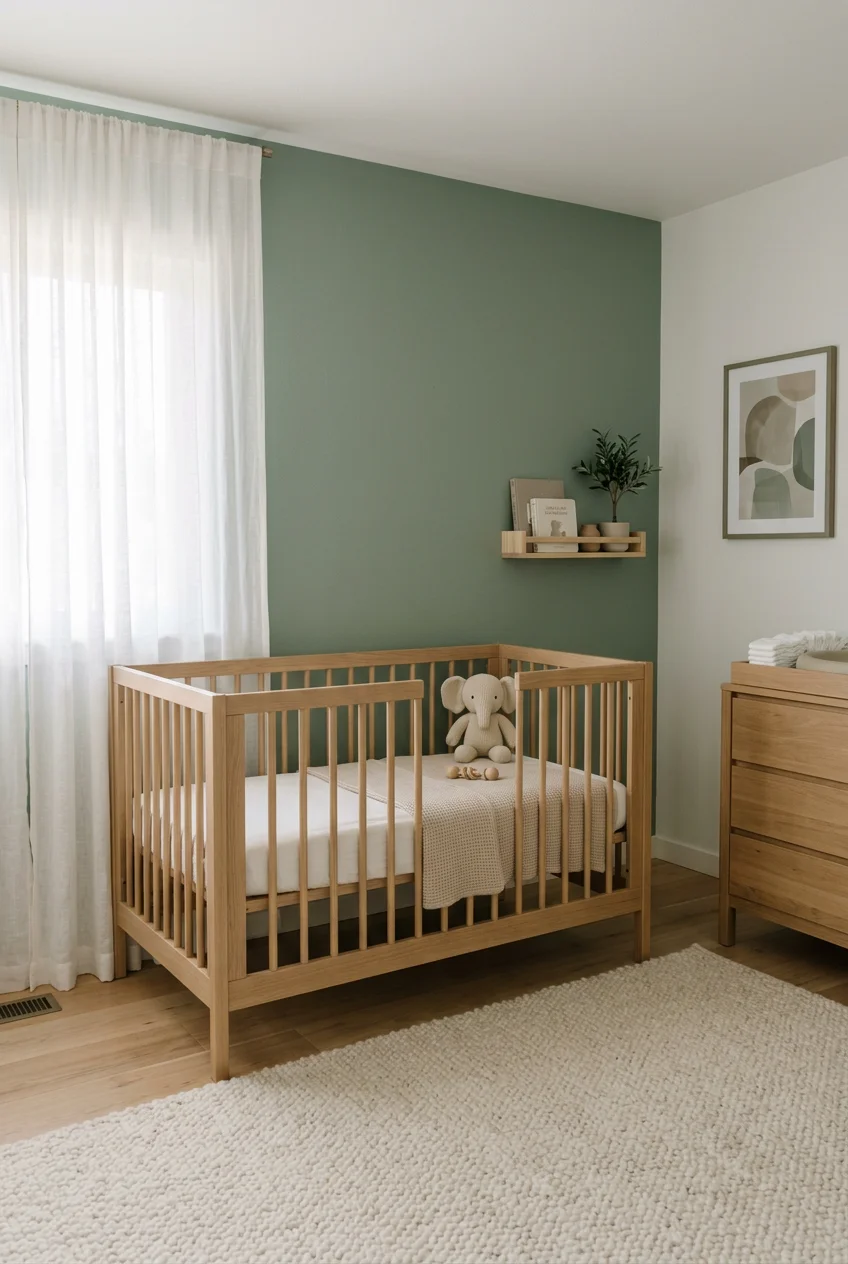
Move beyond stark whites. They show every fingerprint and make a room feel icy. Last Tuesday, I was eating a $4.99 bag of plantain chips from Trader Joe’s while staring at a client’s wall painted in Benjamin Moore’s Saybrook Sage (HC-114, about $75 a gallon). That muted green instantly grounded the space. If you’re avoiding green, look at Sherwin-Williams’ Creamy (SW 7012) or a blush taupe like Malted Milk (SW 6057). These earthy tones create a calm environment that won’t clash with the plastic toys your relatives will inevitably buy. I’ve found that a mushroom tone like Benjamin Moore’s Indian River (985) hides scuffs perfectly. You’ll need about two gallons for a standard 10×12 room. Skip the accent wall. Paint the entire room, including baseboards, in one solid, flat finish to blur the edges. It’s a simple trick designers use to improve standard drywall. It took me years to figure that out.
2. Prioritize GREENGUARD Gold Certified Furniture

New furniture often arrives smelling like a chemical factory. That sour odor comes from volatile organic compounds (VOCs) off-gassing into your baby’s sleeping space. I learned this the hard way after unboxing a cheap dresser that gave me a migraine for two days. Now, I exclusively buy GREENGUARD Gold certified pieces. They’re tested for over 10,000 chemicals. The Babyletto Hudson 3-in-1 Convertible Crib runs around $399 and uses sustainably sourced New Zealand pinewood. It doesn’t have that toxic smell right out of the box. Nestig’s The Cloud Crib ($749) and Oeuf NYC’s Sparrow Crib ($960) are other solid choices made from Brazilian pine or Baltic birch. The certification label usually sits on a small green sticker on the bottom of the frame. It means you aren’t trapping your newborn in a room full of invisible formaldehyde fumes. I can’t stress this enough: indoor air quality matters more than looks.
3. Invest in Multi-Functional, Convertible Cribs

Buying a crib that only lasts eighteen months is a waste of money. I prefer convertible cribs that adapt as the child grows. The Dream On Me Violet 7-in-1 Convertible Crib costs $169 and transitions from a mini-crib to a full-size bed. You just need the $45 conversion kit. If you want something heavier, the Evolur Aurora 5-in-1 Convertible Crib costs $349 and has a solid, substantial weight. I’ve assembled both. The Evolur took me forty-five minutes with a standard hex key. When you’re buying these, purchase the toddler rail and full-bed conversion kits on the same day you buy the crib. Manufacturers discontinue finishes constantly. If you wait three years to buy the rail, you’ll end up with a mismatched piece of wood that ruins the design. A convertible crib saves you from buying three different beds before your kid turns ten.

Criusia Drawer Organizer Clothes
Criusia Drawer Organizer Clothes has been one of the most consistently praised picks in this category. 11 reviewers averaged 4.5/5.
4. Layer Textures for Warmth and Visual Interest

A room with only flat, painted surfaces feels institutional. Fix this by layering textures. I use a simple formula: one rough, one fluffy, one smooth. I usually start with a 5×7 foot soft jute rug from Serena & Lily ($198) over hardwood floors. It feels slightly scratchy under bare feet but adds incredible visual warmth. Then, I drape a heavy bouclé knit throw ($89 from West Elm) over the nursing chair. Finally, I use smooth, organic linen crib sheets ($42 from Parachute). The contrast between the rough jute, the nubby bouclé, and the crisp linen stops the room from feeling flat. I bought a cheap polyester blanket at Walmart last year in a pinch, and it sparked so much static electricity it actually shocked me when I picked up the baby. Stick to natural fibers. They look better and function well.
5. Implement a Layered Lighting Scheme with Dimmers

Overhead lighting feels hostile. Flipping a switch at 3:00 AM and blinding yourself and a crying infant was a mistake I only made once. Every main light fixture needs a dimmer. You can buy a Lutron LED dimmer for $29 at Home Depot, and it takes ten minutes to wire. Beyond the ceiling light, you need ambient sources. I place a simple wood tripod floor lamp ($129 from Target) near the nursing chair. For the changing station, the Happiest Baby Snoobie ($149) works perfectly. It’s a small, rechargeable table lamp that emits a soft, warm glow and doubles as a white noise machine. It doesn’t emit blue light, so it won’t disrupt your sleep during night feeds. Keep the bulbs around 2700K to maintain a warm, amber tone. Cool white bulbs make a nursery look like a dental clinic.
6. Opt for Integrated and Concealed Storage Solutions

Babies require a staggering volume of plastic gear. If you leave it out, your minimalist aesthetic dies immediately. You need concealed storage. I skip dedicated changing tables entirely. They’re useless after diapering ends. Instead, I use a wide dresser like the Evolur Audrey Double Dresser ($599) and secure a $30 Keekaroo Peanut changer on top. The top two drawers hold diapers, wipes, and creams. The bottom drawers hold clothes. For display, I mount solid White Ash floating shelves with leather straps ($85 per shelf from Etsy) high on the wall. I only put wooden toys or books on these shelves. Everything else goes into opaque, lidded baskets. Last month, I grabbed three large woven water hyacinth baskets from Costco for $24.99 each. They hide breast pump parts, extra wipes, and ugly plastic toys perfectly. I’ve organized dozens of these dressers, and it’s the only way to keep your sanity.

Criusia Over the Door Organizer
Honestly, Criusia Over the Door Organizer surprised me — sturdier than it looks in the photos, and over 231 buyers gave it 4.5 stars.
7. Avoid Over-Theming; Focus on Mood-First Design

Forget the nautical anchors or woodland creature themes. Rigid themes look dated within two years. Instead, design for a specific mood. I usually aim for calm and airy. This means avoiding cartoon characters entirely. If a client insists on a pattern, I suggest a subtle, forest-inspired wallpaper on a single accent wall, like the Chasing Paper Tree Toile ($45 per 2×4 foot panel). It feels mature and won’t require tearing down when the kid turns four. I’ve seen too many parents rip out expensive character wallpaper after just two years. I lean heavily on botanical prints. I frame pressed fern leaves in 11×14 inch thin matte black frames ($19.99 from Michaels). It brings the outside in without looking like a theme park. A room should feel like a natural extension of your home, not an isolated, primary-colored funhouse. You’re the one spending hours in there, so it needs to appeal to your adult sensibilities too. You might also like: 20 Baby Girl Room Ideas for Every Budget
8. Anchor All Tall Furniture to the Wall

This is a non-negotiable safety mandate. I don’t care how heavy or stable your dresser feels. Once a twenty-pound toddler opens all the top drawers and uses them as a ladder, that dresser will tip. I witnessed a bookshelf wobble dangerously close to falling during a client consultation in 2021, and it made my stomach drop. Wall anchor kits cost $12.99 on Amazon. You need a stud finder, a drill, and fifteen minutes. Secure bookshelves, dressers, and even floor mirrors directly into the wooden wall studs. Don’t use drywall anchors for heavy furniture; they will rip right out under force. If you hire a handyman, it costs maybe $75. Just get it done before the baby arrives so you don’t forget when sleep deprivation hits. A minimalist space isn’t safe if the furniture isn’t bolted down. You might also like: 15 Baby Girl Nursery Room Ideas for Every Budget
9. Choose Non-Toxic, Zero-VOC Paints

Standard paint releases chemicals into the air for months after it dries. You don’t want a newborn breathing that in. I exclusively use zero-VOC paints for nursery projects. Benjamin Moore’s Natura line was my standard, but since they discontinued it, I now use their Eco Spec line (around $65 per gallon). Sherwin-Williams’ Harmony line ($70 per gallon) is another excellent option because it contains technology that helps reduce ambient room odors. I painted a nursery with cheap paint once in my twenties, and the fumes gave me a headache for a week. Never again. When you’re buying zero-VOC paint, make sure the tint they add at the hardware store is also zero-VOC. Some stores use chemical-heavy colorants that negate the point of buying the clean base paint. Ask the mixing counter to confirm the colorant formula before they blend it. You might also like: 20 Clever Daycare Nursery Room Ideas You Can Try Today
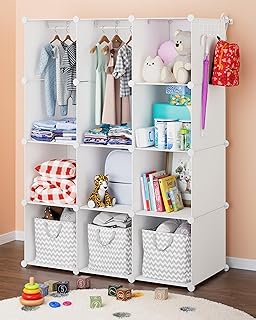
CUBEDIY Baby Closet Organizer for Nursery: Durable Baby
CUBEDIY Baby Closet Organizer for Nursery: Durable Baby Wardrobe for C punches above its price — 316 buyers rated it 4.5 stars. I would buy it again.
10. Incorporate Natural Elements Beyond Wood

Wood furniture looks great, but you need softer organic elements to bring life into the space. I use GOTS organic cotton bedding exclusively. The Crate & Kids Organic Cotton Gauze Lullaby Baby Swaddles come in a set of three for $45. They have this crinkly, breathable texture that feels incredibly soft. I also bring in live plants, provided they aren’t toxic to pets and kids. I was at Whole Foods last week buying a $5 bunch of eucalyptus when I realized how much better a room feels with real greenery. A medium-sized Calathea or a Boston Fern in a heavy ceramic pot ($35 at a local nursery) adds a pop of green and helps purify the air. I place them on high shelves, out of reach. Just remember to water them. I once bought an expensive Fiddle Leaf Fig for a client and it dropped all its leaves within a month.
11. Create Dedicated Care Zones and Sleep Zones

A chaotic layout leads to a chaotic routine. I divide every nursery into strict zones. The sleep zone contains only the crib and a small side table for a monitor. No heavy art hangs above the crib. The care zone is the dresser, the changing pad, and a tightly organized top drawer. When you’re dealing with a blowout at 4:00 AM, you shouldn’t have to walk across the room for a wipe. I use acrylic drawer dividers ($15.99 for a set of four at Target) to separate diapers, a $12 tube of Aquaphor, and a $10 pack of WaterWipes. Everything is visible and grab-able with one hand. Keep the nursing chair in its own corner with a small table for your water bottle and phone. Physical separation of these tasks makes the room function well. You won’t trip over the diaper pail while trying to put a sleeping baby in the crib.
12. Utilize Mirrors Strategically for Light

Minimalist rooms need abundant natural light to prevent them from feeling like prison cells. If your nursery only has one small window, a large mirror is your best tool. I like to hang a 24×36 inch curved neutral mirror with a brass or wood frame ($149 from West Elm) on the wall directly opposite the window. It bounces sunlight back into the room and creates the illusion of a much larger space. Make sure the glass is shatterproof if possible, and use heavy-duty D-rings and a stud to hang it. I hung a cheap mirror with a wire back once, and it constantly tilted forward, distorting the reflection. A securely mounted, flat-laying mirror makes the room feel airy and expansive without adding any physical clutter. It’s a simple trick that drastically alters the lighting.

Delta Children Nursery Storage 48 Piece Set
Honestly, Delta Children Nursery Storage 48 Piece Set – Easy Storage/Organizatio surprised me — sturdier than it looks in the photos, and over 17 buyers gave it 4.5 stars.
13. Embrace Dramatic Textiles for Personality

When the walls are beige and the furniture is natural wood, the room needs a pulse. I add this through textiles. Instead of painting a mural, I’ll drop down a bold, neutral animal print rug. Ruggable makes a washable Cheetah print rug in a 5×7 for $219. It’s tan and cream, so it fits the color palette, but the pattern adds serious visual weight. I also use heavy linen curtains with a contrasting trim. A 96-inch panel from Pottery Barn Kids costs about $129. I layer a heavily stitched, mustard-yellow muslin quilt ($75 from Spearmint Love) over the back of the glider. These textiles bring the drama and personality that minimalist rooms often lack, but they won’t overwhelm the senses the way bright plastic toys or busy wallpapers do. You get visual interest without the headache of visual clutter.
14. Don’t Sacrifice Practicality in Your Minimalist Gender Neutral Nursery

Aesthetic choices that make your life harder are bad design. I see parents buy these sleek, low-profile, mid-century modern rocking chairs for $800 because they look amazing online. I sat in one at a client’s house. The back was so low it offered zero neck support, and the armrests were hard wood. You can’t nurse a baby in that for forty-five minutes. I prefer the Babyletto Kiwi Glider ($799). It has a high back, plush armrests, and a hidden electronic recliner button. It looks modern but functions like a traditional recliner. The same goes for changing pads. Woven changing baskets look beautiful, but you have to wash the fabric liner every time there’s a mess. A wipeable polyurethane changing pad ($130 Hatch Grow) is infinitely more practical. Form must follow function, especially in a space where you’ll be operating on two hours of sleep.
15. Adopt the Japandi Aesthetic

The Japandi trend blends Japanese wabi-sabi with Scandinavian minimalism. It’s the perfect framework for a nursery. It relies on low-profile furniture, pale oak or solid ash woods, and a strict palette of stone, off-white, and soft sage. I recently used a crib from Oliver Furniture (the Wood Mini+ at $1,100) and a dresser from Kas Kopenhagen ($850) for a Japandi-inspired room. The pieces have soft, rounded edges and no visible hardware. The beauty is in the craftsmanship, not decorative fluff. To nail this look, keep clutter to absolute zero. Store everything behind closed doors. Use a single, large-scale piece of textured canvas art ($150 from Crate & Barrel) instead of a gallery wall. It creates a serene, deeply calming environment that feels sophisticated. You won’t feel the urge to redecorate when your toddler turns three.

Beautiful Wooden Baby Closet Dividers Set of 7
If you want something that just works, Beautiful Wooden Baby Closet Dividers Set of 7 – Double-Sided Organize is a safe bet (11 reviews, 4.5 stars).
16. Use Washable Rugs for Inevitable Spills

Babies spit up. Toddlers spill milk. Dogs track in mud. Putting an expensive, dry-clean-only wool rug in a nursery is a rookie mistake. I ruined a $600 vintage Turkish rug this way in 2018 when a bottle of gripe water spilled and permanently stained the fibers. Now, I strictly use washable rugs in care spaces. Ruggable’s Kamran Hazel Rug (around $219 for a 5×7) has a faded, vintage look that fits perfectly into a muted design scheme, but you can peel the top layer off and throw it in a standard washing machine. I usually buy the thicker cushioned pad ($50 extra) because the standard pad is too thin for crawling babies. While I was at Kroger last week buying a $3 box of chamomile tea, I spilled some on a client’s Ruggable sample. It washed out perfectly on cold. Trust me on this.
17. Hide Diaper Pails Inside Dedicated Cabinetry

Nothing ruins a carefully curated room faster than a giant, plastic trash can full of dirty diapers. Even the nice steel ones eventually smell. I use the Ubbi Steel Odor Locking Diaper Pail ($79.99). It doesn’t require special bags, which saves money. But I don’t leave it out. I create a custom enclosure using an IKEA base cabinet ($120 for a SEKTION unit) positioned next to the changing dresser. I remove the internal shelves and slide the Ubbi inside. You just open the cabinet door, drop the diaper in, and close it. It completely hides the visual clutter and provides a second barrier against odors. Just make sure you measure the internal height before you install the cabinet door hinges to ensure the pail lid can open fully. It’s a small adjustment that makes a massive visual difference.
18. Install Blackout Curtains with Hidden Tracks

Light control remains the most important functional element of a nursery. Standard curtain rods leave a one-inch gap at the top where sunlight blasts through at 5:30 AM, waking the baby. I stopped using standard rods entirely. Instead, I install ceiling-mounted curtain tracks ($35 on Amazon) and hang heavy blackout curtains that brush the ceiling and floor. Pottery Barn Kids makes a fantastic Peace & Quiet Blackout Curtain (around $119 per panel). The ceiling track eliminates the light gap entirely. It also draws the eye upward, making the ceiling look taller. I usually layer a sheer linen panel on a double track so you can have privacy during the day while letting soft light in. I’ve installed these tracks in my last five projects, and they work well. It’s a hotel-style trick that makes the room look custom. You’ll sleep better, and your baby will sleep better.
19. Keep Open Shelving Strictly Curated

Open shelving becomes a trap if you aren’t disciplined. People tend to stuff every stuffed animal and plastic toy onto floating shelves, creating instant visual chaos. I enforce a strict rule for open shelves: they are for curated display only. I limit it to three items per shelf. Usually, that’s a classic wooden stacking toy ($24.99 from Melissa & Doug), a small framed photo, and a stack of three aesthetically pleasing books. Everything else goes into closed drawers. I was at Sprouts picking up a $6 bottle of organic baby wash, and I saw a woman buying brightly colored plastic bath toys. Those go in a bin under the sink, not on the nursery shelf. If you overcrowd the walls, the room feels smaller and more stressful. Keep it sparse. Your minimalist design depends entirely on empty space.
Creating a functional, beautiful space doesn’t mean you have to buy into the loud, primary-colored plastic aesthetic. You can build a room that feels like a natural extension of your home. I’ve used these methods in dozens of homes, and they hold up to the daily wear and tear of parenthood. Remember, you’re building a calm environment for both you and the baby. Pin this list or bookmark it for when you’re ready to start painting and ordering furniture. You’ll want to reference these specific dimensions and brands when you start shopping.
Frequently Asked Questions
What colors work best for a minimalist gender neutral nursery?
Earthy, muted tones like warm taupe, soft sage green, and mushroom gray work best. They provide a calming backdrop that won’t clash with colorful toys. I prefer Benjamin Moore’s Saybrook Sage or Sherwin-Williams’ Creamy over stark, hospital-grade whites.
How do I add warmth to a minimalist nursery?
You add warmth by layering natural textures rather than adding visual clutter. Combine a soft jute rug, a heavy bouclé knit throw on your nursing chair, and organic linen crib sheets. This textural contrast prevents the room from feeling cold or institutional.
What type of crib is best for a minimalist design?
A low-profile, multi-functional convertible crib is ideal. Look for GREENGUARD Gold certified options made from natural woods like ash or pine. A 5-in-1 convertible crib adapts as your child grows, meaning you won’t need to buy a new bed for years.
Where should I store baby items in a minimalist room?
Concealed storage is essential. Skip the open changing table and use a wide dresser with a changing pad on top. Use acrylic dividers inside the drawers for diapers and wipes, and store bulky items in lidded water hyacinth baskets on high shelves.
