What’s Inside
- Embrace Warm Neutrals and Earthy Tones
- Prioritize a Firm, Snug-Fitting Crib Mattress
- Invest in a High-Quality, Easy-to-Clean Glider
- Opt for a Multi-Functional Changing Station
- Implement Layered, Dimmable LED Lighting
- Select the Right Rug Size for Comfort
- Maximize Storage with Vertical Solutions
- Anchor All Heavy Furniture to the Wall
- Avoid Overly Themed or Gender-Specific Decor
- Plan Your Layout Before Buying Furniture
- Prioritize Non-Toxic and Low-VOC Materials
- Install True Blackout Curtains for Better Sleep
- Utilize a Dedicated White Noise Machine
- Consider Cordless, Rechargeable Lighting
- Don’t Overcrowd the Room with Gear
- Integrate Personal Touches Thoughtfully
- Position the Crib for Maximum Safety
I tried painting my first son’s room a dark navy blue on a humid Tuesday in July, and the fumes combined with the claustrophobic cave-like result made me cry on the plastic drop cloth. Finding boy nursery ideas simple enough to execute without a design degree shouldn’t end in tears. I spent months buying the wrong furniture and fighting terrible layouts before figuring out what actually works at 3 AM. Let’s fix the layout and buying mistakes I made early on, so you don’t repeat them. Trust me on this.
1. Embrace Warm Neutrals and Earthy Tones

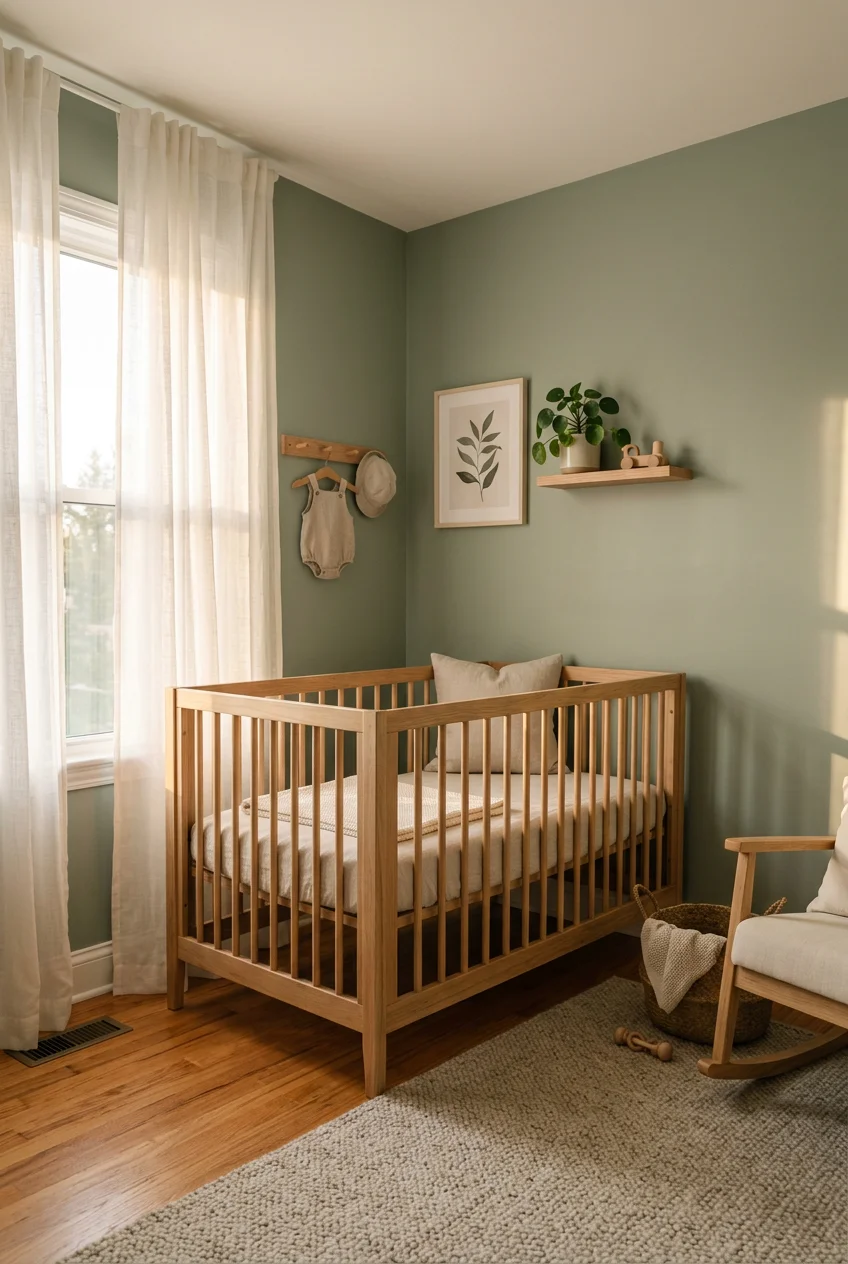
I spent three weeks swatching traditional baby blues before realizing they made the room feel like a chilly pediatrician’s office. If you want boy nursery ideas simple and timeless, start with warm neutrals. We’re seeing a heavy shift toward soft cocoa, walnut, camel, and mushroom tones. These shades bring warmth without suffocating the space. I painted a client’s nursery in Sherwin-Williams Accessible Beige ($72 per gallon at Lowe’s) last October. It completely altered the room’s temperature. The afternoon light hits it and makes the walls look like a cozy cashmere sweater instead of a sterile box. It pairs beautifully with natural walnut wood finishes. Skip the cool grays that dominated 2018. They feel dated and cold. A warm beige or a muted sage green gives you a baseline that transitions easily. You won’t have to repaint when your toddler suddenly demands truck posters. Just swap the textiles. I bought a 4-ounce sample jar first to test it on the south-facing wall because natural light changes everything. Learned that the hard way.
2. Prioritize a Firm, Snug-Fitting Crib Mattress

The crib mattress is a functional safety tool, not a luxury cloud for your baby. I learned this the hard way when I bought a plush organic mattress from a local boutique that ended up sagging in the middle after three months. You need an extra-firm surface that scores an 8 to 10 on a firmness scale. It shouldn’t conform to a baby’s head shape at all. I switched to the Newton Baby Essential Crib Mattress ($249 at Target). The core is made of a food-grade polymer that looks like dry ramen noodles, making it entirely breathable and firm. Fit is equally critical. You shouldn’t be able to fit more than two fingers between the mattress edge and the crib frame. Any gap larger than two finger widths is a dangerous entrapment hazard. All mattresses sold in the US after August 15, 2022, meet updated CPSC safety standards, but you still have to test the fit in your specific crib model. I physically shoved my fingers down the sides of the hot white crib frame at 2 AM to verify this.
3. Invest in a High-Quality, Easy-to-Clean Glider

I spent the first four months of my son’s life nursing in a cheap, stiff armchair I found at a thrift store. My lower back ached constantly, and the cotton upholstery absorbed every single spit-up stain until it smelled faintly of sour milk. You’re going to spend hundreds of hours in this chair. Buy a glider with performance fabric. I eventually bought the Babyletto Kiwi Power Recline Swivel Glider ($799 at Crate & Kids). The water-repellent fabric means I can wipe off spilled formula with a wet paper towel, leaving zero water marks. It also has a built-in USB charging port, which keeps my phone alive during 45-minute contact naps. When looking for boy nursery ideas simple to maintain, stain-resistant seating is non-negotiable. Look for GREENGUARD Gold certified options so you aren’t trapping chemical off-gassing in a small room. The Nurture& The Glider ($899) is another solid choice if you have a taller partner, as the backrest sits about three inches higher than the Babyletto.

Beautiful Wooden Baby Closet Dividers Set of 7
If you want something that just works, Beautiful Wooden Baby Closet Dividers Set of 7 – Double-Sided Organize is a safe bet (11 reviews, 4.5 stars).
4. Opt for a Multi-Functional Changing Station

Buying a standalone changing table is a rookie mistake I see clients make constantly. They take up a massive footprint and become completely useless the day your kid is potty trained. Instead, buy a standard dresser and attach a removable changing topper. This gives you immediate storage for tiny onesies and converts back to a normal piece of furniture later. I recommend the Pottery Barn Kids Kendall 7-Drawer Dresser And Topper Set ($1,099). The drawers have smooth glides, which means you can open them with one hand while holding a squirming infant with the other. If you’re on a strict budget, the Milliard Modern Changing Table Dresser runs about $130 on Amazon. It’s engineered wood, so it won’t last until college, but it gets the job done safely. I keep the top right drawer strictly for diapers and wipes. I used to keep them in a basket on top, but my son learned to grab the wipes and pull them out one by one like a magician’s handkerchief. Hide the supplies in the drawer.
5. Implement Layered, Dimmable LED Lighting

Overhead lighting in most standard bedrooms is harsh, casting sharp shadows that will jolt a sleepy baby wide awake. I used to flip on the main switch for 3 AM diaper changes and my son would squint and start screaming. You need layered, dimmable lighting. Install a dimmer switch for the ceiling fixture. It costs about $25 at Home Depot and takes twenty minutes to wire if you follow a YouTube tutorial. Then, add a task lamp near the glider. I use a Philips Hue White and Color Ambiance LED smart bulb ($50). I programmed it on my phone to turn a deep red color at 10 percent brightness after 8 PM. Red light doesn’t inhibit melatonin production the way cool daylight LEDs do. If you want boy nursery ideas simple to control, a smart bulb prevents you from fumbling for switches in the dark. I also keep a cheap $8 salt lamp from HomeGoods on the dresser for a permanent, soft amber glow. Just make sure the cord is tucked securely behind heavy furniture.
6. Select the Right Rug Size for Comfort

A tiny 3×5 rug floating in the middle of the room looks awkward and trips you when you’re carrying a baby. For a standard 100-square-foot nursery, you need a 4×6 or 6×9 rug. The front legs of the crib and the glider should sit firmly on the rug to anchor the space. I bought a 6×9 Ruggable Washable Rug in a muted geometric print ($269). Last November, a stomach bug hit our house, and being able to peel the top layer off and shove it in my standard washing machine saved the rug from the dumpster. Wool rugs are beautiful, but they shed fibers that end up in your baby’s mouth during tummy time. I spent weeks picking wool fuzz off my daughter’s pacifier before I rolled up our expensive West Elm rug and put it in the guest room. Stick to low-pile, washable options. Ensure the rug extends at least 24 inches beyond the crib on the accessible sides so you have a soft place to stand during midnight soothing sessions. You might also like: 20 Cozy Gender Neutral Baby Nursery Decor Ideas for Any Style

Criusia Over the Door Organizer
If you want something that just works, Criusia Over the Door Organizer is a safe bet (218 reviews, 4.5 stars).
7. Maximize Storage with Vertical Solutions

Babies accumulate a shocking volume of small, awkwardly shaped items. Stacking everything on the floor or the dresser top creates visual chaos. You have to use your vertical wall space. I installed three IKEA LACK wall shelves ($14.99 each) staggered above the reading nook. They hold board books, a sound machine, and a few wooden toys. Make sure you use heavy-duty drywall anchors, not the flimsy plastic ones that come in the box. I learned that lesson when a shelf holding twenty hardback books pulled straight out of the drywall and crashed onto the floor. Thankfully the room was empty. I also hang a canvas over-the-door organizer ($24 at Target) on the inside of the closet door. It holds rolled-up burp cloths, swaddles, and extra pacifiers. When you need a clean burp cloth while holding a spit-up-covered baby, you don’t want to dig through a deep dresser drawer. Having them visible and at arm’s reach in a vertical organizer solves that problem immediately. You might also like: 15 Cozy Baby Nursery Decor Ideas for Any Style
8. Anchor All Heavy Furniture to the Wall

This isn’t a design suggestion. It’s a mandatory safety requirement. Children pull on dresser drawers to stand up, and the shifted center of gravity will pull a heavy dresser forward in seconds. I anchor absolutely everything. I use the Safety 1st Furniture Wall Straps ($12 for a two-pack at Walmart). They are heavy-duty nylon webbing, not cheap plastic zip ties that degrade over time. You must drill the bracket directly into a wall stud. Drywall anchors aren’t strong enough to hold a 150-pound dresser filled with clothes. I bought a basic Zircon stud finder ($20 at Lowe’s) specifically for this task. It takes ten extra minutes during the nursery setup, but it prevents catastrophic tip-over accidents. I even anchor small bookshelves that look harmless. A 30-inch high bookshelf full of board books is heavy enough to cause serious injury. Don’t skip this step because you don’t want to put holes in the wall. A little spackle later is worth the peace of mind now. You might also like: 20 Creative Crib Bedding Ideas to Transform Your Space
9. Avoid Overly Themed or Gender-Specific Decor

Painting a massive pirate ship mural on the wall seems like a fun idea until your kid turns three and develops a paralyzing fear of pirates. Highly specific themes trap you. They also tend to look visually cluttered. Instead of committing to a rigid theme, use a neutral base and add personality through temporary elements. I used Lambs & Ivy Jungle Party Wall Decals ($19 on Amazon) for a client who wanted a safari theme. They peel off like stickers without damaging the paint. We paired them with solid green curtains and a natural jute rug. When the kid inevitably pivots to a construction truck phase, the parents can peel off the monkeys and swap the sheets. You don’t need bedding covered in baseballs or trucks to make a room feel appropriate for a boy. Solid colors, textured blankets, and a few framed prints do the job much better. I bought a set of three digital download prints from Etsy for $15, printed them at Walgreens, and framed them in cheap black frames. Simple, cheap, and easily changeable.

Delta Children Nursery Storage 48 Piece Set
A dependable everyday pick — Delta Children Nursery Storage 48 Piece Set – Easy Storage/Organizatio pulls in 17 ratings at 4.5 stars. Not flashy, just solid.
10. Plan Your Layout Before Buying Furniture

Most parents walk into a baby store, see a massive, gorgeous crib, buy it, and then realize it blocks the closet door. I did this with a bulky rocking chair that ended up wedged against the window, making it impossible to open the blinds. You must plan the layout first. I use a roll of blue Scotch painter’s tape ($6 at Home Depot) to tape out the exact dimensions of the furniture on the floor. This visualizes the traffic flow. You need at least three feet of clearance in front of the dresser to open the drawers comfortably. Map out your three distinct zones: sleep, changing, and feeding. The glider needs enough clearance to rock backward without hitting the wall. I recommend leaving at least 14 inches between the back of the glider and the baseboard. I use the free online room planner from West Elm to drag and drop basic shapes before I spend a single dollar. It prevents the awful realization that the $800 dresser you ordered doesn’t fit next to the door frame.
11. Prioritize Non-Toxic and Low-VOC Materials

A nursery is a small, enclosed space where a baby sleeps for up to 16 hours a day. The chemical off-gassing from fresh paint, synthetic rugs, and engineered wood furniture can severely impact indoor air quality. I learned about VOCs (volatile organic compounds) when a cheap particleboard bookshelf I bought gave me a headache from the chemical smell for a week. I immediately put it on the curb. Now, I only specify low or zero-VOC paints. Benjamin Moore Eco Spec or Natura lines run about $80 a gallon, but they emit virtually no odor. When buying furniture, look for the GREENGUARD Gold certification. This means the product has been tested for over 10,000 chemicals and VOC emissions. Solid wood is always better than MDF or particleboard, which are glued together with formaldehyde-based resins. If you do buy engineered wood furniture, unbox it in the garage and let it air out for at least two weeks before bringing it into the house. It’s a minor inconvenience that significantly improves the air your baby breathes.
12. Install True Blackout Curtains for Better Sleep

Regular curtains are useless against the 2 PM summer sun. If you want your baby to nap longer than twenty minutes, you need a dark room. I spent months fighting short naps before I realized the ambient light filtering through cheap blinds was keeping my son in a light sleep cycle. I bought the Pillowfort Blackout Curtain Panels ($25 per panel at Target). They have a thick, rubbery white backing that blocks 100 percent of the light. Make sure you install the curtain rod at least four to six inches above the window frame, and extend it a few inches past the sides of the window. If you mount the rod flush with the window, light bleeds out of the top and sides, creating a glowing halo effect that defeats the purpose. I also use double-sided fabric tape to secure the outer edges of the curtains directly to the wall during the summer months. It looks slightly intense, but it creates a pitch-black cave that dramatically improved my son’s afternoon naps. No exaggeration.

Criusia Drawer Organizer Clothes
Criusia Drawer Organizer Clothes punches above its price — 1 buyers rated it 4.5 stars. I would buy it again.
13. Utilize a Dedicated White Noise Machine

I initially tried using a white noise app on an old iPad, but the sound looped awkwardly and the battery died constantly. You need a dedicated, plug-in white noise machine to mask the sound of the Amazon delivery driver dropping packages on the porch or the dog barking at a squirrel. I use the Hatch Rest+ ($89.99 at Target). The sound quality is deep and continuous, mimicking the loud, rushing blood sounds of the womb. It also has a built-in backup battery, which saved us during a two-hour power outage last winter. The machine kept playing, and my baby slept right through the storm. Keep the machine at least seven feet away from the crib and keep the volume under 50 decibels to protect their developing hearing. I place ours near the bedroom door to create a sound barrier against hallway noise. Skip the machines that play lullabies or heartbeat sounds. Basic, continuous white noise or brown noise is much more effective for connecting sleep cycles.
14. Consider Cordless, Rechargeable Lighting

Electrical cords are a massive strangulation hazard, and trying to hide them behind furniture limits where you can place lamps. I discovered rechargeable, battery-powered lighting by accident when I needed a small light for a camping trip. I brought the Mubarek Squishy Silicone Night Light ($18 on Amazon) into the nursery, and it completely changed my nighttime routine. I keep it right on the changing table. It charges via USB-C during the day and holds a charge for nearly a week. Because it has no cord, my toddler can’t pull it off the dresser by yanking a wire. You can just tap the top to turn it on, which is crucial when you have one hand holding a baby’s ankles in the air during a blowout. Using cordless lamps gives you total flexibility to rearrange the room later without worrying about outlet placement. I also keep a rechargeable puck light ($15 for a 3-pack at Costco) stuck to the inside of the closet frame so I can grab clothes in the dark.
15. Don’t Overcrowd the Room with Gear

It’s incredibly easy to treat the nursery like a storage unit. Before my first baby was born, I had a swing, a bouncer, a massive pile of stuffed animals, and three giant boxes of Kirkland diapers from Costco crammed into a 10×10 room. I could barely walk to the crib without tripping over a plastic toy. A cluttered room creates a stressful environment. When looking for boy nursery ideas simple and clean, negative space is your best friend. Keep the large gear in the living room where you actually use it. Store the bulk boxes of diapers in the garage or a hallway closet. The nursery should only contain the crib, the dresser, the glider, and immediate essentials. I moved the diaper stockpile out of the room and suddenly the space felt breathable. You don’t need a dedicated nursing cart, a bottle warmer, and a wipe warmer taking up floor space. Wipe warmers just dry out the wipes anyway. Keep the footprint minimal so you have room to sit on the floor and play.

Vailando 6-Shelf Hanging Closet Organizer with 3 Drawers
Honestly, Vailando 6-Shelf Hanging Closet Organizer with 3 Drawers surprised me — sturdier than it looks in the photos, and over 35 buyers gave it 4.5 stars.
16. Integrate Personal Touches Thoughtfully

A perfectly curated room straight out of a catalog feels sterile. You need personal elements to make it feel like a home, but they shouldn’t clutter the space. I avoid generic “Baby Boy” signs. Instead, I incorporate family history or specific interests. I took a page from a vintage botanical book my grandmother gave me, matted it, and put it in a simple wood frame ($12.99 at Michaels). It sits on the top shelf, out of reach. I also framed a black-and-white map of the city where my husband and I met. These touches mean something to us during those long, quiet hours in the rocking chair. Make sure any art hung above the crib or changing table is lightweight. I use canvas prints or acrylic frames instead of heavy glass. If an earthquake or a slammed door knocks it off the wall, acrylic won’t shatter into a thousand dangerous pieces. I learned this when a glass frame fell in my hallway and took me forty minutes to vacuum the microscopic shards out of the carpet.
17. Position the Crib for Maximum Safety

Where you place the crib matters more than what the crib looks like. I originally put my daughter’s crib directly under a beautiful double window because the natural light looked great for photos. I quickly realized the window drafts made the crib freezing in November, and the blind cords dangled dangerously close to the mattress. Move the crib to an interior wall. It must be at least three feet away from windows, drapery cords, baby monitor wires, and heating vents. If you have an active toddler, they will reach through the slats and pull anything they can grab. I route the baby monitor cord through a hard plastic cord concealer ($15 at Home Depot) stuck directly to the wall. Never run a cord under a rug or leave it hanging loose. I also keep the crib away from large wall art. Even securely anchored frames can be a hazard if a child throws a toy at them. The safest crib environment is a bare wall and a flat, empty mattress. Keep the layout simple and secure.
Designing a nursery doesn’t require a massive budget or a complicated theme. Sticking to warm neutrals, prioritizing safety with anchored furniture, and investing in functional pieces like a good glider will serve you far longer than a trendy mural. I wasted so much money on things that looked cute but functioned terribly. Focus on how the room works at 3 AM. If you found these simple boy nursery ideas helpful, pin this article to your nursery planning board on Pinterest so you can reference the exact paint colors and safety tips later.
Frequently Asked Questions
What are the best colors for a boy nursery?
Warm neutrals like camel, mushroom, and soft cocoa are trending over traditional blues. A color like Sherwin-Williams Accessible Beige provides a calming base that pairs well with natural wood furniture and grows with your child.
How do I make a simple boy nursery?
Focus on functional essentials rather than heavy themes. Use a multi-purpose dresser instead of a standalone changing table, stick to low-VOC paint, and incorporate layered dimmable lighting. Keep floor space clear of bulky gear.
What size rug is best for a standard nursery?
For a standard 100-square-foot room, a 4×6 or 6×9 foot rug works best. Ensure the front legs of the crib and glider sit on the rug, and leave at least 24 inches of soft coverage next to the crib for late-night standing.
How can I maximize storage in a small nursery?
Utilize vertical space by installing heavy-duty floating shelves anchored to wall studs. Hang an over-the-door canvas organizer for burp cloths and pacifiers, and choose a crib or dresser with built-in drawer compartments to hide diapering supplies.
