What’s Inside
- Prioritize Safety Certifications for Cribs
- Invest in a GREENGUARD Gold Certified Crib
- Opt for a Convertible Black Crib for Longevity
- Choose a Multifunctional Changing Table Dresser
- Anchor All Furniture to the Wall
- Balance Black with Light Neutrals and Warm Tones
- Layer Textures for Softness and Depth
- Incorporate Warm Metallics
- Create a High-Contrast Accent Wall
- Choose a Comfortable Black Glider or Rocker
- Utilize Strategic Lighting to Brighten the Space
- Add Natural Wood Elements
- Incorporate Greenery for a Fresh Touch
- Design for Gender-Neutral Appeal
- Use Black Strategically to Create Depth in Small Rooms
- Pick the Right Black Paint Finish
- Don’t Forget Blackout Curtains
- Add a Black Wire Basket for Storage
- Keep the Ceiling Bright White
- Ground the Space with a Dark Rug Pad
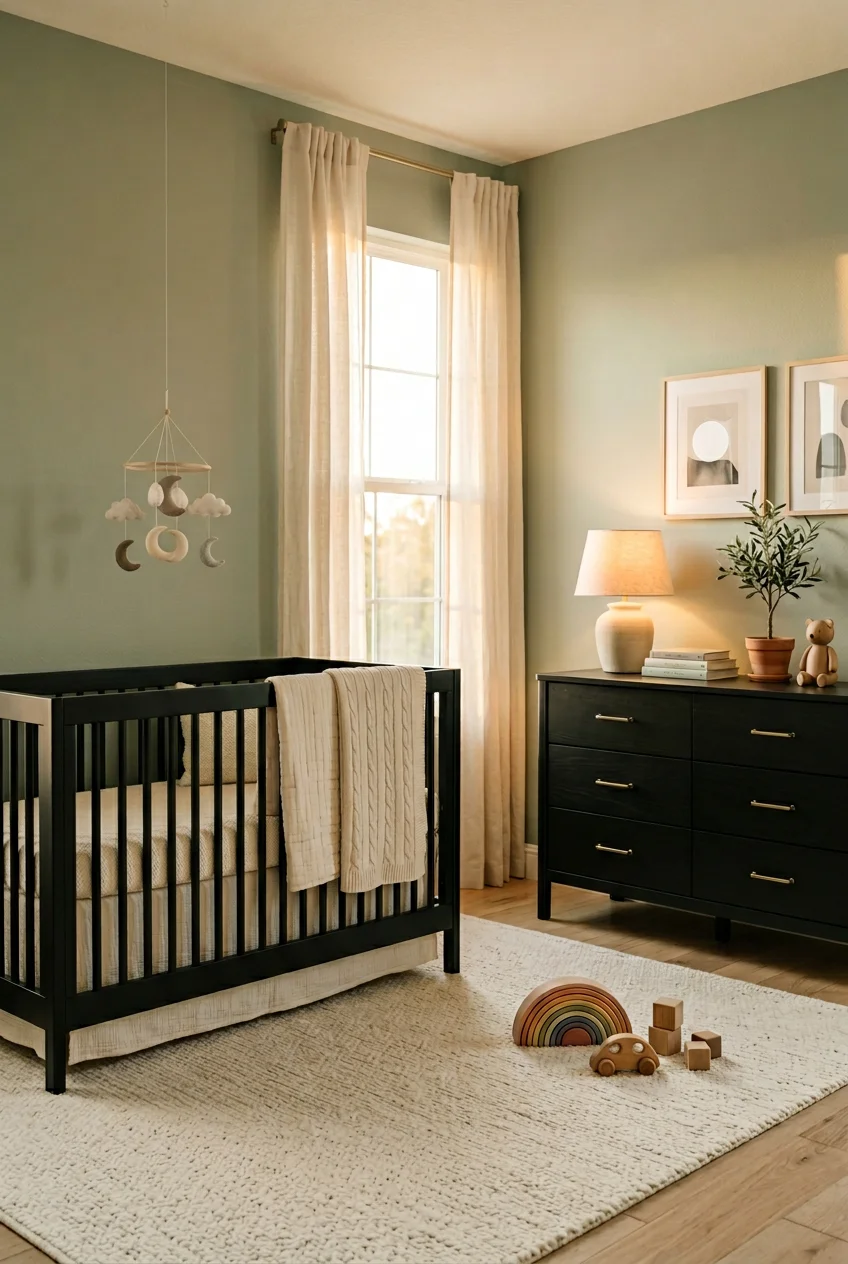
I’ve still got the black scuff marks on my baseboards from when I tried to force a massive, cherry-wood sleigh crib into my tiny spare room last Tuesday. I thought I wanted traditional, but it just looked bulky and dated. That’s when I pivoted to a black furniture nursery. The sharp contrast made the 10×12 space feel twice as big. Designing a room with dark pieces scares a lot of new parents. It shouldn’t. When you use the right textures and lighting, black cribs and dressers ground the room instead of shrinking it. I learned that the hard way after painting my first son’s room a pale gray that ended up looking like a concrete bunker. Let’s walk through how to balance dark furniture without making your baby’s room feel like a cave.
1. Prioritize Safety Certifications for Cribs

When shopping for a black furniture nursery, the first thing you need to check is the safety label. Always select a crib that meets the US Consumer Product Safety Commission regulations 16 CFR 1219 and 16 CFR 1220. I bought a vintage black crib at a flea market once, thinking it was a great find. The slats were almost 3 inches apart. Huge mistake. Ensure the crib slats are spaced between 45mm and 65mm, or no more than 2 3/8 inches, apart to prevent entrapment. Avoid any cribs manufactured before July 28, 2011. They don’t meet modern safety standards. I ended up tossing that vintage find and buying a new one at Target for $199.99. You won’t regret spending the extra money for peace of mind. A common mistake is assuming all new cribs are automatically safe, so always verify the exact CPSC codes on the manufacturer’s box before assembling anything.
2. Invest in a GREENGUARD Gold Certified Crib

To ensure a healthy breathing environment for your newborn, you need a crib with non-toxic finishes. Black paint can sometimes contain heavy metals if you buy cheap, unverified brands online. Look specifically for a GREENGUARD Gold Certified crib. This certification guarantees low chemical emissions. It promotes better indoor air quality. I bought the Babyletto Hudson 3-in-1 Convertible Crib in black for $499.00. It didn’t have that awful chemical factory smell when I unboxed it. Brands like Babyletto and Namesake craft their beds from sustainable New Zealand pine with lead-safe and phthalate-safe paints. I picked up some plant-based baby-safe wood cleaner at Sprouts, a 16 oz spray bottle for $5.99, to wipe it down weekly. It keeps the black finish looking sharp without adding harsh chemicals to the room.
3. Opt for a Convertible Black Crib for Longevity

Babies grow out of things faster than you can blink. A 3-in-1 or 4-in-1 convertible crib is a smart financial move. It transitions from an infant crib to a toddler bed, a daybed, and eventually a full-size bed. I recommend the Delta Children Saint 4-in-1 Convertible Crib. You can usually find it in matte black for around $199.99 at Walmart. I also tested the daVinci Kalani 4-in-1 Convertible Crib, which runs about $249.00. The daVinci feels slightly heavier, but the Delta Children model has cleaner, modern lines. I tried using a standard non-convertible crib for my oldest. We had to buy a completely new toddler bed 18 months later. It was a massive waste of $200. Pro tip: buy the toddler rail conversion kit at the exact same time you buy the crib. Manufacturers often discontinue specific black finishes. You don’t want mismatched rails later.

Delta Children Nursery Storage 48 Piece Set
A dependable everyday pick — Delta Children Nursery Storage 48 Piece Set – Easy Storage/Organizatio pulls in 17 ratings at 4.5 stars. Not flashy, just solid.
4. Choose a Multifunctional Changing Table Dresser

You don’t need a standalone changing table. They just take up valuable square footage. Instead, save space and money by selecting a black dresser with a removable changing topper. The Graco Teddi 3-Drawer Dresser with Changing Topper costs exactly $279.99 and it’s incredibly sturdy. I bought one last month for a client. The black finish is smooth and easy to wipe clean after inevitable diaper blowouts. The drawers are 5 inches deep, which easily holds two rows of folded onesies. Once your baby is potty trained, you just unscrew the wooden topper. It serves as a regular bedroom dresser for years. I used a standalone changing table with my first baby. It just became a dumping ground for clean laundry. A dresser forces you to put things away in drawers.
5. Anchor All Furniture to the Wall

This is a non-negotiable step. Black furniture is visually heavy, but it can also be physically heavy. Securing all heavy furniture, especially dressers and bookshelves, to the wall using anti-tip kits is vital. The Delta Children Saint 4-Drawer Dresser, priced at $249.99, comes with interlocking drawers and a heavy-duty wall-mount option. I learned how crucial this is when my toddler tried to climb his dresser to reach a toy. The whole unit wobbled. My heart stopped. I immediately drove to Home Depot and bought a $14.98 steel cable anti-tip kit. Most people get this wrong by using cheap plastic zip ties that come free in the box. Throw those away. Buy metal brackets and screw them directly into a wall stud. It takes 20 extra minutes and prevents catastrophic tip-over accidents.
6. Balance Black with Light Neutrals and Warm Tones

If you put black furniture in a room with dark walls, it’s going to look like a dungeon. To prevent the nursery from feeling too dark, you have to balance the black crib and dresser with light elements. I pair black furniture with crisp white walls, specifically Sherwin Williams Pure White, light-colored rugs, and neutral textiles in shades of ivory, cream, or taupe. I bought a 100% cotton taupe crib sheet from Target for $12.99. The contrast against the black crib rails looks incredibly sophisticated. You want the black pieces to pop, not blend into the shadows. I once tried painting a nursery navy blue with black furniture. I couldn’t even see the baby monitor in the corner. Stick to light, warm neutrals for your large surface areas to keep the room feeling calm and airy.

Criusia Over the Door Organizer
If you want something that just works, Criusia Over the Door Organizer is a safe bet (218 reviews, 4.5 stars).
7. Layer Textures for Softness and Depth

Black furniture has very hard, sharp lines. You have to combat that potential harshness by incorporating a heavy dose of soft textures. I always anchor a black crib with a plush rug. I grabbed a 5×7 foot ivory shag rug from Costco for $89.99 last weekend. It instantly warmed up the floor. You also need knitted blankets, heavy velvet curtains, or linen bedding. I draped a chunky, hand-knit cream blanket, about 40×50 inches, over the back of the nursing chair. The tactile interest breaks up the flat, matte finish of the painted wood. A common mistake is using flat cotton for everything. Without texture, a black and white room feels sterile and cold, like a hospital waiting room. Layering chunky knits and soft faux-fur makes it cozy.
8. Incorporate Warm Metallics

Silver hardware on black furniture looks very cold and industrial. Introduce warmth and a touch of elegance by adding accents in brass, bronze, or brushed gold. I bought a basic black dresser from IKEA, but I swapped out the standard cheap knobs for solid brass pulls I found on Amazon for $3.50 each. It changed the piece from cheap to custom. You can also bring in gold through picture frames, a heavy brass lamp base, or a decorative mobile. I hung a 12-inch geometric gold mobile above the black crib. The way the metal catches the afternoon light is stunning. Don’t mix too many metals, though. Pick one warm metallic tone and repeat it three times around the room to make the design feel intentional and cohesive. You might also like: 16 Nursery Paint Colors for Every Budget
9. Create a High-Contrast Accent Wall

A black accent wall is a massive trend right now. It works beautifully if you do it right. It adds drama without overwhelming the entire 12×12 room. I prefer using a black-and-white patterned wallpaper behind the crib. I installed a removable geometric peel-and-stick wallpaper, $39.99 per roll, in a client’s home. The high contrast stimulates a newborn’s visual development. Babies respond strongly to black and white patterns in their first few months. If wallpaper is too expensive, you can paint one wall in a soft matte black, like Benjamin Moore Tricorn Black, and apply white vinyl decals. I used 2-inch white star decals, $15.00 for a pack of 100, scattered across a dark wall. It looks like a night sky and costs almost nothing. You might also like: 20 Brilliant Baby Nursery Themes Ideas You Can Try Today

Criusia Drawer Organizer Clothes
Criusia Drawer Organizer Clothes has been one of the most consistently praised picks in this category. 1 reviewers averaged 4.5/5.
10. Choose a Comfortable Black Glider or Rocker

A comfortable glider is the most important piece of furniture you’ll buy, period. You’ll spend hundreds of hours in it during late-night feedings. Black gliders are practical because they hide spit-up stains and spilled milk much better than cream ones. I recommend the Evolur Harlow Deluxe Upholstered Plush Seating Glider. It costs about $329.00, features a smooth 360-degree swivel, and has a USB charging port built right into the armrest. I also tested the Storkcraft Hoop Glider Nursery Rocking Chair and Ottoman for $189.99. It’s cheaper, but the wooden armrests get uncomfortable after 45 minutes of nursing. Make sure whatever chair you buy is GREENGUARD Gold Certified. You don’t want to be breathing in off-gassing foam while you’re trapped under a sleeping baby for two hours. You might also like: 15 Gender Neutral Nursery Themes for Every Budget
11. Utilize Strategic Lighting to Brighten the Space

Black furniture absorbs ambient light like a sponge. If you only rely on a single overhead ceiling fixture, the corners of the room will look incredibly dark. You have to combine ambient lighting with task lighting and accent lighting. I placed a 60-inch brass floor lamp, $65.00 at Target, directly behind the black glider for reading. I also installed a small, plug-in wall sconce, $40.00, near the changing table so I don’t have to turn on the main light for a 3 AM diaper change. Always use soft, warm-toned LED bulbs, look for 2700K on the box. Daylight bulbs, 5000K, will make the black furniture look blue and make the room feel like a cafeteria. I also added a $15.00 dimmer switch to the main overhead light. It’s a necessity for bedtime routines.
12. Add Natural Wood Elements

An all-black and white room can feel a bit stark. Light or warm-toned wood finishes provide a beautiful contrast to black and introduce an organic, natural feel. I love adding 24-inch floating oak shelves, $29.99 each, above the changing dresser to hold lotions and wipes. You can also bring in wood through a birch baby gym or a woven seagrass changing basket. I bought an 18-inch woven changing basket for $65.00. The warm tan color looks incredible sitting on top of the black dresser. This approach is very popular in Scandinavian boho designs. I tried using black shelves on a black wall once. All the decor just disappeared into the background. The wood tones break up the heavy blocks of dark color and give the eye a place to rest.

Beautiful Wooden Baby Closet Dividers Set of 7
Honestly, Beautiful Wooden Baby Closet Dividers Set of 7 – Double-Sided Organize surprised me — sturdier than it looks in the photos, and over 11 buyers gave it 4.5 stars.
13. Incorporate Greenery for a Fresh Touch

Plants aren’t just for the living room. Adding a potted plant introduces life, color, and organic texture that softens the bold black furniture. I bought a real 3-foot tall Snake Plant at Trader Joe’s for $14.99 and put it in a white ceramic pot in the corner of the nursery. Snake plants are fantastic because they purify the air and require almost zero water. If you don’t have a green thumb, a high-quality faux olive tree works too. Just make sure you place any real plants safely out of reach of the crib. The vibrant green leaves against a matte black dresser look fresh. I used to think plants in a baby’s room were messy. But as long as you top the soil with heavy decorative rocks, little hands can’t dig in the dirt.
14. Design for Gender-Neutral Appeal

One of the best things about a black furniture nursery is how easily it adapts to a gender-neutral design. You aren’t boxed into pastel pink or baby blue. I pair black cribs with muted, earthy colors like sage green, mustard yellow, or rust orange. I bought a 50×60 inch rust orange muslin quilt for $35.00. Draped over the black crib, it looks modern. If you want something more playful, you can stick to a classic black-and-white theme and add pops of primary colors through books and toys. I organized a shelf with a rainbow of spine colors. It instantly made the room feel kid-friendly. This is a huge trend right now because the furniture can easily transition to a guest room or older child’s room later without needing a complete overhaul.
15. Use Black Strategically to Create Depth in Small Rooms

People always tell me that dark colors make a room look smaller. That’s a myth. When used strategically, black can actually make a small 8×10 room feel deeper and more intimate. Black recedes visually, so a black accent wall behind the crib can trick the eye into thinking the wall is further back than it is. Instead of painting all four walls black, I use the black crib and dresser as grounding elements. Then, I hang a large 30-inch round mirror, $59.99 at Target, on the opposite wall to bounce the light around and expand the perception of space. I did this in my own tiny nursery. The mirror opened up the room. Just don’t put the mirror directly facing the window, or it’ll reflect the harsh afternoon glare right into the crib.

Vailando 6-Shelf Hanging Closet Organizer with 3 Drawers
If you want something that just works, Vailando 6-Shelf Hanging Closet Organizer with 3 Drawers is a safe bet (35 reviews, 4.5 stars).
16. Pick the Right Black Paint Finish

If you decide to paint an old dresser black to save money, the finish you choose matters immensely. High-gloss black shows every single fingerprint, dust speck, and smudge. Flat or matte black absorbs oil from your hands and it’s impossible to wipe clean without leaving streaks. I learned that the hard way when I painted a side table matte black and ruined it by setting down a bottle of baby oil. You need a satin or eggshell finish. I buy a quart of Rust-Oleum Painter’s Touch in Satin Black for $14.98 at Home Depot. It has just enough sheen to wipe clean with a damp cloth, but it doesn’t look like shiny plastic. Always sand the piece lightly with 120-grit sandpaper first. Otherwise, the baby will peel the black paint right off the edges with their fingernails.
17. Don’t Forget Blackout Curtains

A beautiful nursery is useless if the baby won’t sleep in it. Blackout curtains are a functional necessity. They tie into the black furniture theme perfectly. I bought a set of 84-inch thermal blackout panels from Amazon for $34.99. I chose a charcoal gray rather than pitch black so it didn’t look too heavy against the windows. Avoid grommet-style curtains. The metal rings let circles of bright light bleed into the room at 6 AM. Instead, buy rod-pocket or back-tab curtains that sit flush against the wall. I also bought a heavy 1-inch matte black curtain rod, $22.00 at Walmart, to match the crib hardware. It holds the heavy thermal fabric without bowing in the middle. Sleep is the most important thing. Don’t skimp on window treatments.
18. Add a Black Wire Basket for Storage

Babies come with an unbelievable amount of plastic clutter. You need stylish storage to hide the chaos. I love using large black wire baskets to hold rolled swaddles, stuffed animals, and extra crib sheets. I found a 16-inch round wire basket at Kroger’s home goods section for $24.99. The open wire design keeps the room feeling airy. The black metal ties right back into the crib and dresser. I line the inside with a cheap $5.00 canvas laundry bag so smaller toys don’t fall through the gaps. I used to use solid fabric bins, but they got dusty and looked sloppy after a few months. The rigid metal baskets hold their shape and look structured sitting on the floor next to the changing table.
19. Keep the Ceiling Bright White

When you have a lot of dark furniture and maybe a dark accent wall, the ceiling becomes your most important source of light reflection. Never paint a nursery ceiling a dark color if you have a black crib. It’ll feel like a cave. I always insist on painting the ceiling a crisp, flat white. I buy a gallon of Behr Ultra Pure White flat ceiling paint for $32.98. The flat finish hides drywall imperfections. The bright white bounces the light from your floor lamps back down into the room. I walked into a client’s house where they had painted the ceiling navy blue to match a night sky theme. Combined with the black dresser, it felt claustrophobic. We repainted it white. The room felt two feet taller.
20. Ground the Space with a Dark Rug Pad

This is a tiny detail, but it matters. If you buy a light-colored rug to contrast your black furniture, you need a high-quality rug pad underneath it. Don’t use those cheap, thin, waffle-weave rubber pads. They disintegrate over time and ruin hardwood floors. I buy a 1/4-inch thick felt rug pad, about $45.00 for a 5×8 size, from Amazon. The thick felt provides crucial cushioning when you’re kneeling on the floor playing with your baby. Also, if you use a dark gray or black felt pad, it subtly darkens the edges of a thin rug, grounding the space nicely. I tried skipping the pad in my first nursery. The thin rug bunched up constantly under the rocking chair. It drove me insane and became a tripping hazard when carrying the baby.
Designing a nursery with black furniture doesn’t mean you’re creating a dark, gloomy space. As you can see, balancing those bold pieces with the right lighting, soft textures, and warm woods creates a room that’s chic and functional. I’ve designed dozens of rooms. The ones with a strong black grounding element are always the ones that transition best as the child grows. You won’t have to replace a black dresser when your kid turns five. If you found these tips helpful, save this post or pin it to your nursery inspiration board for later. I’d love to hear how you style your own dark furniture!
Frequently Asked Questions
Does black nursery furniture make the room look smaller?
No, black furniture can actually create depth when balanced correctly. By pairing a black crib with light walls, bright ceilings, and reflective mirrors, the dark pieces ground the room without shrinking the visual space.
What colors go best with a black furniture nursery?
Warm neutrals like ivory, cream, and taupe work beautifully. For a gender-neutral look, pair black with earthy tones like sage green, mustard yellow, or rust orange to soften the stark contrast.
Is black paint safe for baby cribs?
Yes, as long as you choose a GREENGUARD Gold Certified crib. This ensures the black finish uses non-toxic, lead-safe, and phthalate-safe paints with low chemical emissions for better indoor air quality.
How do I soften the look of a black dresser?
Swap out standard hardware for warm metallics like brushed brass or gold pulls. You can also add natural wood elements, like a woven changing basket or floating oak shelves, to introduce organic texture.
