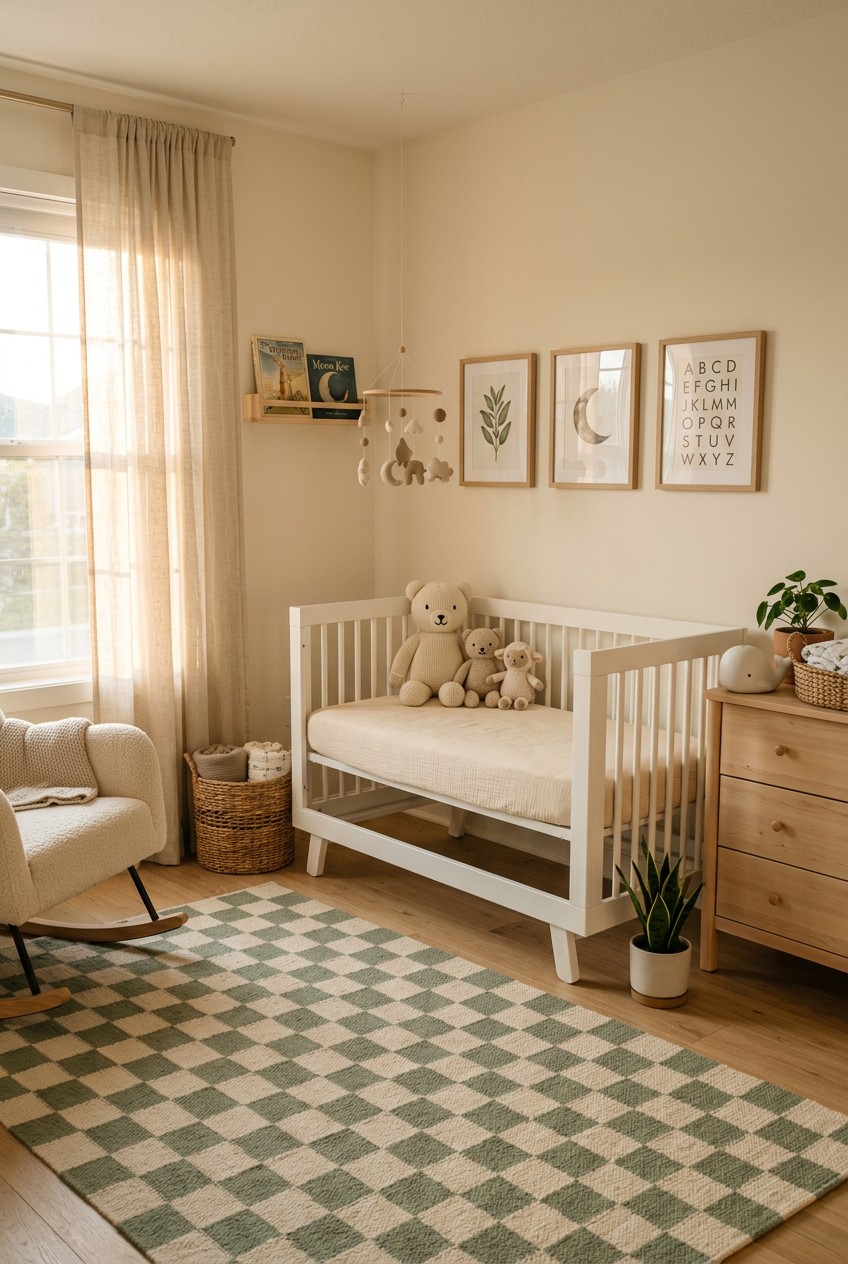
What’s Inside
- Anchor with a Removable Checkered Accent Wall for a Checkered Nursery Baby Boy
- Opt for GOTS Certified Organic Cotton Crib Sheets
- Ground the Room with a Washable Checkered Rug
- Balance Bold Patterns with Solid Neutrals
- Embrace Muted, Earthy Color Palettes
- Prioritize Safety by Anchoring All Furniture
- Invest in Multi-functional, Convertible Furniture
- Layer Lighting with Dimmers for Optimal Mood
- Incorporate Woven Checkered Storage Baskets
- Avoid Overcrowding the Space with Clutter
- Stimulate Visual Development with High-Contrast Checkers
- Introduce Varied Textures for Sensory Play
- Utilize the Ceiling as a Fifth Wall in Your Checkered Nursery Baby Boy
- Choose Sustainable and Non-Toxic Materials
- Integrate Personalized Touches with Custom Accents
I spent three hours crying on the floor of my son’s half-finished room last Tuesday. I was staring at a permanent checkerboard wall I’d painted completely lopsided. If you’re planning a checkered nursery for a baby boy, please learn from my miserable, paint-covered mistakes. I’m Lauren. I design nurseries for a living, but my own space was a disaster at first. I tried taping off squares by hand. I got blue painter’s tape stuck in my hair. The paint bled under the edges. It looked terrible. I realized I needed a better approach to get that perfect, trendy grid pattern without losing my mind. Let’s talk about what actually works.
1. Anchor with a Removable Checkered Accent Wall for a Checkered Nursery Baby Boy

I’ll never paint a checkerboard pattern again. It’s a massive waste of time. Instead, I personally swear by peel-and-stick wallpaper. Brands like Project Nursery offer gorgeous checkered wallpaper options. Their rolls are typically 23 inches wide and cost between $120 and $700 depending on how much square footage you’re covering. I used a soft sage green check for a client last month. The vinyl material feels thick and smooth. It doesn’t tear easily when you pull it back to reposition it. I bought a cheap $3.99 plastic squeegee from Target to smooth out the air bubbles. You just peel off the backing and press it onto a clean wall. Honestly, this changed how I approach accent walls entirely. If you’re renting, or if you know you’ll want to change the room in three years, permanent paint is a mistake. The peel-and-stick option gives you that perfect geometric grid without the headache. Plus, it smells totally neutral, unlike the sharp chemical stench of fresh latex paint. Make sure your walls aren’t heavily textured, though. I tried sticking this onto a heavy orange-peel wall once, and it peeled right off two days later. Learned that the hard way.
2. Opt for GOTS Certified Organic Cotton Crib Sheets

Your baby will spend roughly 14 hours a day sleeping. Skip the cheap polyester sheets. They trap heat and feel like wet cardboard after a few washes. You need breathable fabrics. I’d highly recommend looking at brands like Pehr or The Peanutshell. They make beautiful GOTS certified organic cotton crib sheets in subtle checkered prints. You’re looking at spending about $30 to $45 per sheet. They fit a standard 28 by 52 inch crib mattress perfectly. The organic cotton feels incredibly soft, almost like your favorite worn-in vintage t-shirt. I bought three sets for my own home. Last Thursday I was browsing the baby aisle at Sprouts while grabbing my favorite 8 oz bag of organic gummy bears, and I noticed how rough the conventional cotton sheets felt compared to these. You want something that won’t irritate sensitive newborn skin. I made the mistake of buying a stiff, scratchy linen blend for my first baby because it looked aesthetically pleasing on social media. He hated it and woke up with red marks on his cheeks. Stick to the soft, certified organic cotton. It washes beautifully and actually gets softer over time.
3. Ground the Room with a Washable Checkered Rug

Let’s talk about bodily fluids. Babies spit up. They have blowouts. If you put a $900 dry-clean-only wool rug under the crib, you’re going to cry. You need a washable rug. I recommend a 5×7 foot or 8×10 foot size to properly anchor the space. Lorena Canals makes phenomenal washable, eco-friendly rugs that cost between $150 and $500. While their exact checkered stock rotates, you can often find grid patterns or layer a smaller checkered accent rug over one of their solid bases. The low-pile cotton feels plush under your bare feet during 3 AM feedings. Last Tuesday at Whole Foods, I was buying a 32 oz bottle of natural stain remover, remembering the time I ruined a beautiful vintage rug because I couldn’t get a sweet potato puree stain out of it. Washable rugs save your sanity. You just shove the entire thing into your standard washing machine with 2 tablespoons of gentle detergent. It comes out smelling like fresh laundry instead of holding onto weird odors. The low pile also means your rolling cart won’t get stuck in deep shag fibers. Don’t buy shag. It’s a nightmare to vacuum.

Mr. Pen- Baby Diaper Caddy Organizer, Gray, Medium
If you want something that just works, Mr. Pen- Baby Diaper Caddy Organizer is a safe bet (39 reviews, 4.5 stars).
4. Balance Bold Patterns with Solid Neutrals

Most people get this wrong. They pick a checkered wallpaper, checkered sheets, and a checkered rug. The room ends up looking like a dizzying funhouse. You must balance bold patterns with calm, solid neutrals. If your accent wall is a busy grid, you need solid curtains. I love the 84-inch linen blackout drapes from Pottery Barn Kids. They cost exactly $129 per panel. The thick linen fabric has a beautiful, heavy drape and a slightly rough, natural texture. I chose a warm oatmeal beige color for my son’s room. It softens the hard geometric lines of the checkerboard. I tried hanging patterned curtains first. It was a massive mistake. The room felt chaotic and loud, even when it was perfectly quiet. The eye needs a place to rest. Stick to solid colors for your large upholstered items, like your glider and your curtains. You can add a 16 by 16 inch checkered throw pillow for $24.99, but keep the big pieces quiet. This creates a balanced, serene environment. You want the nursery to feel like a cozy retreat, not a loud geometric explosion.
5. Embrace Muted, Earthy Color Palettes

Bright, primary colors give me a headache. A neon blue and cherry red checkerboard belongs in a 1990s roller rink, not a modern nursery. For a calming space, you need muted, earthy tones. I’m obsessed with warm neutrals and smoky blue-greens. Look at paint colors like Valspar Warm Eucalyptus or Behr Hidden Gem. A 1-gallon can of premium interior paint costs about $45. These soft, clay-based shades are incredibly soothing. The Valspar Eucalyptus looks like a foggy morning in a pine forest. It’s soft, gray-tinged, and completely relaxing. I painted a small wooden side table in this exact shade. The brushstrokes dried down to a smooth, chalky matte finish. Before I learned about color psychology, I painted a room bright lemon yellow. I thought it would be cheerful. Instead, the glare bouncing off the walls made the room feel hot and anxious. My baby wouldn’t nap in there. Muted tones absorb light rather than reflecting it aggressively. When you pair a soft mushroom tone with a creamy white in your checkered pattern, it feels sophisticated. It’s a color scheme your boy won’t outgrow by his third birthday. You might also like: 15 Lovely Nursery Lighting Ideas to Transform Your Space
6. Prioritize Safety by Anchoring All Furniture

This isn’t just a design tip. It’s a mandatory safety rule. You must anchor every single piece of heavy furniture to the wall. I skipped this step once when I was exhausted. I left a heavy, 4-drawer oak dresser unanchored for three weeks. One afternoon, my toddler opened two drawers at once and tried to climb up. The dresser tilted forward. I caught it just in time, but the heavy thud of the wood hitting the floor still haunts me. It was terrifying. Buy a 2-pack of Safety 1st furniture wall straps for $14.99. You can grab them at Walmart in the babyproofing aisle. They come with heavy-duty metal brackets and nylon straps. You’ll need a power drill and a 3/16 inch drill bit to find the wall stud. Don’t just use drywall anchors. They will rip right out of the wall under pressure. Secure your changing table, your bookshelves, and your tall lamps. Safety is the absolute foundation of any good nursery. You can’t relax in a beautifully designed room if you’re constantly worried a piece of furniture might crush your child. Take the extra twenty minutes and bolt everything down. You might also like: 20 Inspiring Gold Crib Bedding Ideas You Can Try Today

Modanais Baby Diaper Caddy Organizer Cart
Honestly, Modanais Baby Diaper Caddy Organizer Cart – 3 Tier Rolling Cart with D surprised me — sturdier than it looks in the photos, and over 617 buyers gave it 4.5 stars.
7. Invest in Multi-functional, Convertible Furniture

Buying a single-use bassinet that your baby outgrows in four months is a massive waste of money. You need multi-functional furniture that adapts. I always recommend the Babyletto 8-in-1 convertible crib. Depending on the finish, it costs between $400 and $800. The standard dimensions are 53.6 by 29.9 by 34.5 inches. The solid New Zealand pine wood feels incredibly sturdy. It doesn’t wobble when you shake it. This piece transitions from a bassinet to a full toddler bed. I bought a cheap, flimsy crib for my first apartment. The particleboard chipped within a month, and the metal mattress spring squeaked loudly every time the baby rolled over. It drove me insane. The Babyletto crib is completely silent. I love the washed natural wood finish. It pairs beautifully with a checkered theme, adding a touch of organic warmth against the crisp grid pattern. When you’re spending hundreds of dollars, you want furniture that lasts until your kid is in elementary school. Convertible pieces are heavier and harder to assemble, but the long-term value is undeniable. Just clear your schedule for a full afternoon to put it together. You might also like: 20 Stunning Layout Small Nursery Ideas That Are Totally Worth It
8. Layer Lighting with Dimmers for Optimal Mood

Never rely on a single, blazing overhead light. It’s awful. If you flip on a 60-watt overhead bulb at 3 AM to change a dirty diaper, your baby will think it’s playtime. You’ll spend the next two hours trying to rock them back to sleep. You need layered lighting with dimmers. I love the soft-glow ceramic table lamps from Crate & Kids. They run about $100 to $200. I use a warm, 40-watt equivalent LED bulb. The light filters through the linen shade, casting a soft, buttery yellow glow across the room. It’s just enough light to see the wipes and the diaper cream, but not enough to wake up the baby fully. I bought a bulk 6-pack of dimmable LED bulbs at Costco for $15.99 last month. I also installed a Lutron dimmer switch on the main overhead fixture. It costs about $29.98 and takes ten minutes to wire if you know basic electrical safety. The combination of a dim overhead light and a soft table lamp creates a serene, cozy atmosphere. Fussy, bright lighting ruins the mood of a nursery instantly. Keep the light soft and warm.
9. Incorporate Woven Checkered Storage Baskets

You’re going to have so much stuff. Burp cloths, tiny socks, tubes of diaper rash cream, and endless plastic toys. If you leave them out, the room looks like a disaster zone. You need contained storage. I love using woven baskets with a subtle checkered pattern to hide the mess. Olli Ella makes gorgeous natural material baskets that cost between $40 and $100. A 12 by 12 inch rattan basket is the perfect size for holding rolled-up swaddle blankets. The rough, nubby texture of the dried seagrass adds a beautiful tactile element to the room. It literally smells like a sunny beach. I tried using cheap, open-top canvas bins at first. They slouched over and looked incredibly messy. The rigid structure of a woven basket keeps everything looking tidy. You can slide three of them under the changing table to hold extra packs of wipes and the 4 oz tubes of zinc oxide cream. The natural tan and brown tones of the woven checkers blend perfectly with an earthy color palette. It gives you that trendy pattern without overwhelming the space with too much color.
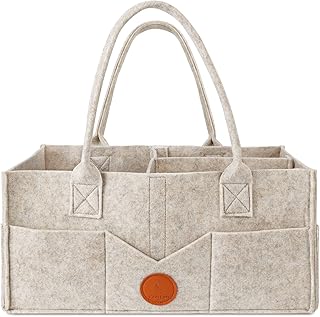
Maliton Baby Diaper Caddy Organizer for Changing Table
If you want something that just works, Maliton Baby Diaper Caddy Organizer for Changing Table is a safe bet (32 reviews, 4.5 stars).
10. Avoid Overcrowding the Space with Clutter

Stop buying giant, life-sized stuffed giraffes. Just stop. They take up a massive amount of floor space and gather dust. A common mistake I see clients make is trying to fit a crib, a massive dresser, a bookshelf, a toy chest, and a huge glider into a tiny 10 by 10 foot room. You literally can’t walk without tripping over something. You need to stick to the absolute essentials. A crib, a changing unit with built-in storage, and a comfortable chair for feeds. That’s it. I went to Kroger last weekend and bought a heavy-duty box of 30-gallon trash bags just to clear out the unnecessary junk in my own house. An overcrowded room feels cramped, stressful, and totally impractical. When you’re carrying a sleeping baby in the dark, you need clear pathways. You don’t want to stub your toe on a decorative wooden rocking horse. Keep the center of the room completely open. Let the checkered rug be the star of the floor. The negative space makes the room feel larger and much more breathable. Less furniture means less dusting, which is a huge win.
11. Stimulate Visual Development with High-Contrast Checkers

Newborns have terrible eyesight. They can’t see soft pastel colors for the first few months. They only register high-contrast patterns. This is where a checkered theme is actually brilliant for their development. You can incorporate a small dose of black and white checkers to stimulate their visual processing. I recommend the Manhattan Toy Wimmer-Ferguson infant mobile. It costs $24.99 and features bold, black and white geometric shapes, including checkers. It has a 10-inch diameter and hangs perfectly over the changing pad. Do not hang it directly over the crib, or they won’t sleep. I made that mistake. My son stared at the contrasting squares for an hour instead of napping. I had to move it to the changing station. It’s fascinating to watch their tiny eyes lock onto the sharp edges of the black and white grid. The stark contrast helps their optic nerves develop. You don’t need to paint the whole room black and white. Just a few strategic elements, like the mobile or a set of three 5 by 7 inch high-contrast art prints framed on the wall, will do the trick perfectly.
12. Introduce Varied Textures for Sensory Play

A room with only smooth surfaces feels cold and sterile. If you have flat painted walls, a flat cotton rug, and flat cotton sheets, the room lacks depth. You must introduce varied textures. Pair your crisp checkered wallpaper with a chunky, heavy knit blanket. I bought a cream-colored Threshold knit blanket from Target for $35. It measures 50 by 60 inches. The thick, twisted yarn feels heavy and incredibly cozy. I drape it over the back of my nursery glider. Speaking of gliders, choose a nubby boucle fabric. The looped threads of the boucle feel like a soft, curly sheep. It adds a wonderful sensory richness to the room. When your baby starts grabbing things, exposing them to different textures like smooth wood, rough rattan, and soft boucle helps their sensory processing development. I once bought a sleek, faux-leather rocking chair because it looked modern. It was a terrible choice. It felt sticky in the summer and freezing cold in the winter. Soft, varied textiles make the room feel inviting. The contrast between the rigid, organized checkered pattern and the soft, messy textures is design perfection.

PeraBella Diaper Caddy Organizer for Changing Table
Honestly, PeraBella Diaper Caddy Organizer for Changing Table surprised me — sturdier than it looks in the photos, and over 19 buyers gave it 4.5 stars.
13. Utilize the Ceiling as a Fifth Wall in Your Checkered Nursery Baby Boy

Most people paint their ceilings flat white and completely forget about them. It’s a huge missed opportunity. If you’re feeling adventurous, treat the ceiling as the fifth wall. You can add a subtle checkered wallpaper up there, or paint it a complementary solid color. I recently painted a nursery ceiling a soft, muted clay color. I used 1 quart of Behr Ultra Pure White mixed with a custom clay tint for $19.98. It created a cozy, enveloping feel, almost like a warm tent. Now, I’ve got to be honest. Painting a ceiling is physically miserable. Your neck will cramp. Paint will drip into your hair. I ruined a perfectly good gray t-shirt doing this. You need a sturdy ladder, an extension pole, and a 3/8 inch nap roller. But the result is stunning. When your baby is lying on their back in the crib, they’re staring straight up. Giving them a soft color or a very subtle, low-contrast checkered pattern to look at is a brilliant design move. It pulls the whole room together and makes the space feel custom-designed and deeply intentional.
14. Choose Sustainable and Non-Toxic Materials

You don’t want your baby breathing in toxic chemicals while they sleep. Conventional furniture and paints often off-gas Volatile Organic Compounds, or VOCs, for months. The chemical smell makes me nauseous. You need to prioritize sustainable, non-toxic materials. Look for dressers made from FSC-certified wood. I bought a beautiful 6-drawer dresser with GreenGuard Gold certification for $399. The certification means it’s been tested for over 10,000 chemicals and VOC emissions. It smells like real, natural wood, not formaldehyde. For the walls, only use zero-VOC interior paint. I was building a bookshelf last week, snacking on a handful of organic almonds from Trader Joe’s, and I realized how much the industry has improved. Ten years ago, finding non-toxic nursery furniture was nearly impossible and insanely expensive. Now, it’s accessible. Look for textiles with OEKO-TEX Standard 100 labels. This guarantees the fabric is free from harmful substances. I bought a cheap, uncertified rug once. It smelled like burnt plastic for three weeks, even after I left the windows open. I ended up throwing it away. Don’t risk it. Invest in clean, safe materials for your baby’s lungs. Trust me on this.
15. Integrate Personalized Touches with Custom Accents

A beautifully designed room can still feel like a generic catalog showroom if you don’t add personal touches. You need custom elements to make the space uniquely yours. I love integrating a personalized checkered name sign. I ordered one from a small seller on Etsy last month. You search for “Checkered Name Sign Nursery Kids Room Name Flag” and you’ll find dozens of options. They usually cost between $20 and $60. I bought an 18-inch wide sign made from laser-cut Baltic birch wood. The seller painted the background in a soft beige and white checkerboard, with the baby’s name layered on top in a raised, smoky blue acrylic font. It looks incredibly high-end. I hung it right above the reading nook using two heavy-duty Command strips. I don’t like hanging heavy wooden signs directly over the crib for safety reasons. A custom piece like this anchors the room’s theme without feeling overly mass-produced. It reflects the growing trend of creating deeply personal, meaningful spaces. Plus, it’s a keepsake you can save long after they outgrow the nursery.
Designing a checkered nursery for a baby boy doesn’t have to end in tears and paint-stained hair like my first attempt. If you stick to removable wallpaper, soft organic textures, and muted color palettes, you’ll create a gorgeous, calming space. I personally swear by these 15 tips because I’ve tested them all in real homes. Don’t forget to anchor that heavy furniture. If you loved these ideas, please save this post and pin your favorite images to your nursery mood board. You’re going to create a beautiful room for your little one. No exaggeration.

Modanais Baby Diaper Caddy Organizer Cart
Modanais Baby Diaper Caddy Organizer Cart – 3 Tier Rolling Storage Car punches above its price — 308 buyers rated it 4.5 stars. I would buy it again.
Frequently Asked Questions
How do I balance a checkered pattern in a nursery?
You must balance bold geometric patterns with solid, calm neutrals. If you use a checkered accent wall, stick to solid-colored curtains, a plain rug, and neutral upholstery to prevent the room from feeling chaotic.
Are checkered patterns good for baby visual development?
Yes, high-contrast patterns are excellent for newborns. Black and white checkers, like those on a small mobile or framed art print, help stimulate their developing optic nerves and improve focus during the first few months.
What colors work best for a checkered nursery baby boy?
Muted, earthy tones are incredibly soothing. Instead of bright primary colors, try a soft sage green, smoky blue, or warm mushroom tone paired with creamy white. These shades create a calming environment for sleep.
Should I paint or use wallpaper for a checkered wall?
I highly recommend using peel-and-stick vinyl wallpaper. Painting a checkerboard pattern by hand is tedious and often bleeds under the tape. Wallpaper provides crisp, perfect lines and is easy to remove later.
