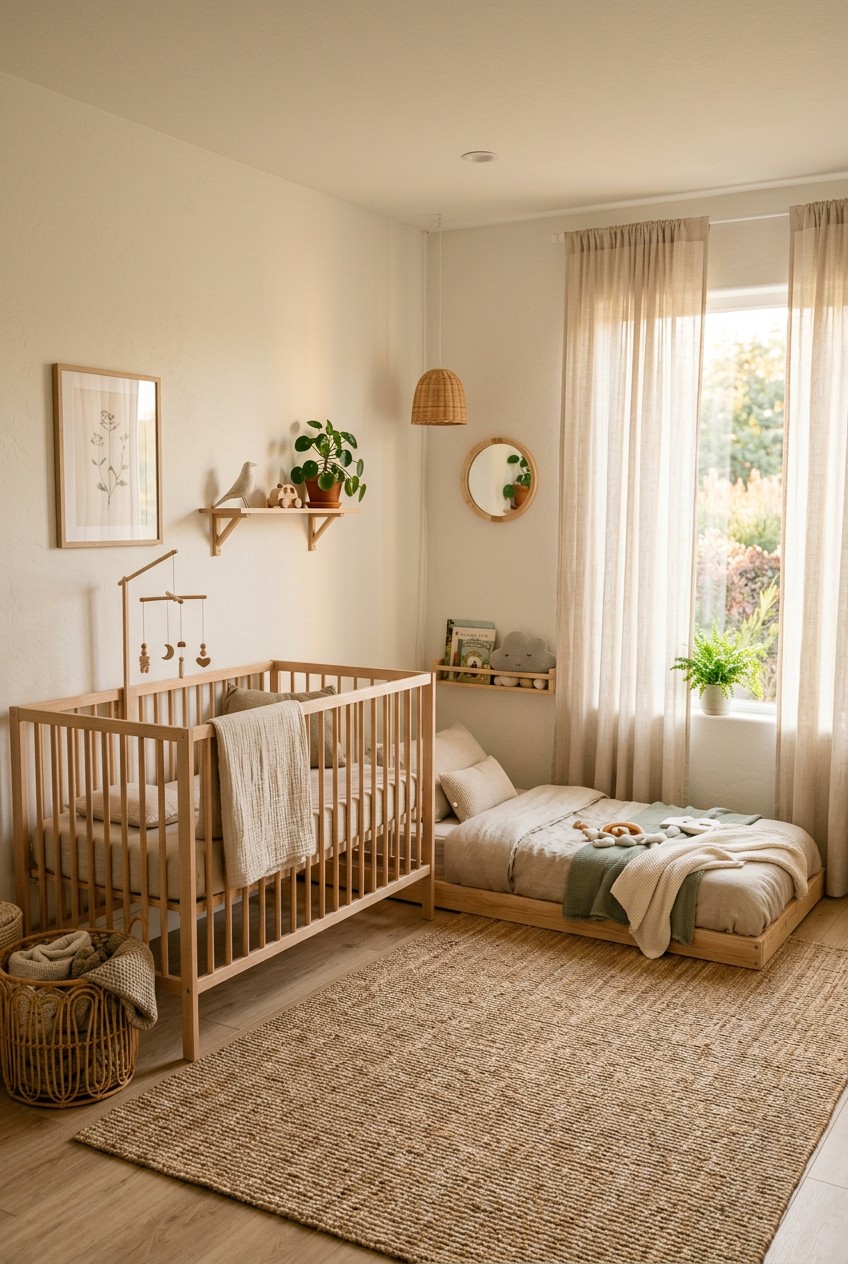
What’s Inside
- Prioritize 2026 Crib Safety Standards
- Invest in a Firm Mattress
- Maintain Optimal Temperature
- Implement Dimmable, Diffuse Lighting
- Utilize Blackout Curtains for Consistent Sleep
- Incorporate a White Noise Machine
- Choose Non-Toxic and Sustainable Materials
- Select a Washable, Non-Toxic Rug
- Childproof Outlets with Secure Covers
- Create a Comfortable Feeding Nook
- Maximize Storage with Multi-Functional Furniture
- Incorporate a Quiet Cool-Mist Humidifier
- Embrace Biophilic Design for a Calm Toddler And Baby Room
- Avoid Overly Themed Toddler And Baby Room Designs
- Create a Screen-Free Zone for Enhanced Development
- Stock Up on Healthy Snacks for Late Nights
- Organize with Clear Acrylic Shelving
Last Tuesday at Target, I stood staring at a $400 matching crib set that smelled like cheap plastic and realized I’d completely messed up my first nursery. Designing a toddler and baby room doesn’t mean you have to buy a matching showroom set that feels cold and sterile. I tried the whole matching theme with my firstborn, and it ended up looking like a cartoon exploded in a 10×10 space. You want a toddler and baby room that actually functions for 3 AM blowouts while still feeling like a cohesive part of your home. I spent months buying the wrong things. I bought sheer curtains that let the sun blast in at 5 AM. I bought a rug that couldn’t be washed. Let’s fix the mistakes I made so you don’t have to repeat them. Trust me on this.
1. Prioritize 2026 Crib Safety Standards

Most people buy a crib based on how it looks on Instagram. I did exactly this. I bought a vintage wooden crib at a flea market because I loved the aesthetic. It was a huge mistake. The slats were too far apart, and the paint was chipping. You need to ensure your crib meets the latest U.S. Consumer Product Safety Commission safety standards. Specifically, you want to look for compliance with ASTM F2933-25, which became effective on May 3, 2026. This standard includes updated performance requirements and test methods for crib mattresses to address entrapment hazards. I personally swear by the Delta Children Emery 4-in-1 Crib. It costs exactly $199.99 and converts as your child grows. The wood feels solid, and it doesn’t have that sharp chemical smell when you take it out of the box. Skip the antique store finds. They aren’t worth the anxiety when you’re trying to sleep. When you assemble it, make sure the hardware is tightened flush against the wood. I left a screw sticking out by a mere 1/4 inch once, and it snagged my favorite sweater.
2. Invest in a Firm Mattress

A soft mattress feels nice to us adults, but it’s incredibly dangerous for an infant. A firm, flat crib mattress is crucial for reducing the risk of Sudden Infant Death Syndrome. The CPSC and American Academy of Pediatrics recommend a mattress that doesn’t conform to the shape of your baby’s head. It should rate between an 8 and 10 on a firmness scale. Avoid memory foam mattresses completely. Their conforming properties can increase suffocation risks. I learned this the hard way while wandering the aisles at Costco. I saw a memory foam crib mattress for $49.99 and almost bought it because it felt plush. Thankfully, my pediatrician warned me. I ended up buying the Newton Baby Crib Mattress for $299.99. Yes, it’s expensive, but it’s completely breathable. You can literally press your face into it and breathe normally. It weighs about 11 pounds, making it easy to lift during those frantic 2 AM sheet changes. The core is made of a food-grade polymer that you can wash in the shower. It smells like absolutely nothing, which is exactly what you want.
3. Maintain Optimal Temperature

Keeping the nursery at the right temperature is harder than it sounds. You want to keep the room temperature between 16 and 20 degrees Celsius (68 to 72 degrees Fahrenheit) to prevent overheating. Overheating is a major risk factor for infant sleep issues. I used to guess the temperature based on how I felt in my heavy winter pajamas. That was a bad plan. I’d wake up sweating, and my baby would be fussy with damp hair sticking to his forehead. Now, I use a simple room thermometer to monitor the climate accurately. The Lullaby Trust Groegg costs $39.99 and changes color based on the room temperature. It glows a soft yellow when the temperature is perfect and turns angry red if it gets too hot. It sits on a 5-inch base on my dresser and doubles as a gentle nightlight. Don’t rely on your home thermostat. The temperature in a small nursery with the door closed can be five degrees hotter than your hallway.

Hotmoon Sound Machine Baby Night Light
Hotmoon Sound Machine Baby Night Light punches above its price — 194 buyers rated it 4.5 stars. I would buy it again.
4. Implement Dimmable, Diffuse Lighting

Harsh lighting is the enemy of sleep. I used to flip on the main overhead light for midnight diaper changes. The bright, downward-directed spotlight would blind both of us, and it took hours to get my baby back to sleep. You need to install dimmable light fixtures to create a soothing environment. This allows you to adjust brightness for daytime activities, gentle nighttime feeds, and diaper changes without fully waking anyone up. I highly recommend the Govee Smart Floor Lamp. It costs $69.99 and stands 55 inches tall. You can control it from your phone, setting it to a warm, amber glow that mimics a sunset. It doesn’t cast harsh shadows on the walls. Avoid exposed bulbs or fixtures that point straight down into the crib. The soft, diffuse light makes the room feel warm and cozy, rather than looking like a sterile hospital room. Plus, you won’t trip over the laundry basket in the dark anymore.
5. Utilize Blackout Curtains for Consistent Sleep

If you want your baby to nap past 6 AM, you need 100 percent blackout curtains. I tried using cheap, sheer curtains from Walmart for months. The morning sun would blast through the window, hitting my baby right in the face. It was a disaster. You need panels that actually block out external light, promoting longer and more consistent sleep cycles. Brands like Nicetown offer amazing blackout panels. I bought their 52 by 84-inch thermal insulated panels for $24.99 per panel. They feel heavy and slightly velvety to the touch. They don’t have that stiff, plastic backing that crackles when you move them. To get the best results, mount the curtain rod at least 4 inches above the window frame and let the fabric extend past the sides. This prevents that annoying halo of light from bleeding through the edges. The room should feel like a dark cave during nap time. It makes a massive difference in their mood. You might also like: 20 Charming Gender Neutral Crib Bedding Ideas for Every Budget
6. Incorporate a White Noise Machine

Silence is actually terrifying to a newborn. They’re used to the loud, rhythmic whooshing sounds of the womb. A white noise machine helps mask household sounds and creates a consistent sleep environment. I used to tiptoe around the house, terrified that the dog barking or the floorboards creaking would wake the baby. Then I discovered the SNOOZ White Noise Machine. It costs $99.99 and contains a real mechanical fan inside. It doesn’t play a looping digital track that sounds tinny and fake. It produces a deep, rushing wind sound that completely drowns out the noise of the garbage truck outside. It’s about 5.6 inches wide, so it fits perfectly on a small side table. If you want something with more features, the Hatch Restore 3 is another great option. It offers customizable sounds and sunrise lighting. Just keep the volume around 50 decibels, which is roughly the sound of a quiet shower. Place it at least 7 feet away from the crib to protect their tiny ears. You might also like: 15 Lovely Nursery Lighting Ideas to Transform Your Space

Modanais Baby Diaper Caddy Organizer Cart
Honestly, Modanais Baby Diaper Caddy Organizer Cart – 3 Tier Rolling Cart with D surprised me — sturdier than it looks in the photos, and over 617 buyers gave it 4.5 stars.
7. Choose Non-Toxic and Sustainable Materials

A major trend for 2026 is sustainable chic. This means focusing on organic fabrics, non-toxic paints, and upcycled furniture. When I painted my first nursery, I used a cheap gallon of standard paint. The chemical smell lingered for three weeks, giving me a massive headache. You don’t want your baby breathing in those fumes. Look for VOC-free paints from brands like Benjamin Moore or Sherwin-Williams. I used Benjamin Moore Natura paint for my second baby. It costs about $75 per gallon, but it has zero volatile organic compounds and absolutely no odor. It rolls onto the walls smoothly and dries in about an hour. For furniture, look for pieces made from FSC-certified wood. It gives the room an earthy, grounded feel. You don’t need everything to be brand new. An old wooden dresser sanded down and finished with a non-toxic beeswax polish looks incredible. It adds character and texture to the space without introducing harmful chemicals into your home. You might also like: 15 Charming Safari Nursery Lighting Ideas for Every Budget
8. Select a Washable, Non-Toxic Rug

Babies spend a massive amount of time on the floor. They roll, crawl, and inevitably spit up on whatever surface is beneath them. Therefore, you must choose rugs made from 100 percent natural fibers like organic cotton or wool. Look for certifications from GOTS, OEKO-TEX Standard 100, or Greenguard Gold. Avoid rugs with synthetic fibers, flame retardants, or chemical treatments that can off-gas VOCs. I made the mistake of buying a beautiful, fluffy synthetic rug. It felt like plastic straw after two months, and it trapped every crumb of dirt. Worse, it was dry-clean only. Now, I only use washable rugs. Lorena Canals makes gorgeous, non-toxic options. I bought their 4 by 5-foot Bereber Rhombs rug for $259. It’s made of soft cotton and fits right into my standard washing machine. When my toddler spilled a 4 oz bottle of milk on it, I just tossed it in the wash with a mild detergent. It came out looking brand new. Sage and Wild also offers great organic options.
9. Childproof Outlets with Secure Covers

Electrical outlets are a major hazard that you can’t ignore. Babies are naturally curious, and those little wall sockets are right at their eye level. I caught my son trying to shove a plastic spoon into an outlet once, and my heart stopped. You need secure outlet covers that are difficult for children to remove. Don’t rely on those cheap, flimsy plastic inserts that pop out easily. I use the Munchkin Baby Proofing Outlet Plug Covers. You can get a 36-pack for $10.99. They fit incredibly tight, so a toddler can’t pry them off with their fingernails. For outlets that you use frequently, like the one for the white noise machine, use a box-style cover. The Wappa Baby Safety Outlet Cover Box costs $14.99. It completely encloses the plugged-in cord inside a hard plastic shell. It’s bulky, measuring about 5 inches long, but it prevents your child from yanking the cord out of the wall. It’s a small price to pay for peace of mind.

JolyWell Night Light for Kids
Honestly, JolyWell Night Light for Kids surprised me — sturdier than it looks in the photos, and over 51 buyers gave it 4.5 stars.
10. Create a Comfortable Feeding Nook

A comfortable feeding area is essential for both parent and baby. You’ll spend countless hours in this spot, so don’t skimp on the seating. I initially bought a stiff, wooden rocking chair because it looked cute. By week two, my lower back was screaming in agony. You need an ergonomic glider. Brands like Babyletto and Monte Design make incredible options. I splurged on the Babyletto Kiwi Electronic Glider for $799. It reclines silently with the push of a button and has a built-in USB port to charge my phone during marathon feeding sessions. Pair your chair with a supportive nursing pillow. The My Brest Friend pillow costs $68.95 and wraps completely around your waist, providing firm back support. It has a flat surface so the baby doesn’t roll off. Alternatively, the Momcozy CozyPro runs about $62.99 and offers great stability. Keep a small basket nearby with a 16 oz water bottle, lip balm, and burp cloths. You won’t want to get up once you’re settled.
11. Maximize Storage with Multi-Functional Furniture

As urban living spaces become more compact, multi-functional furniture is a necessity. You don’t need a standalone changing table that will become useless in two years. I bought one for my first baby, and it just ended up being a dumping ground for clean laundry. Instead, opt for a changing table that doubles as a dresser. The IKEA Hemnes 8-drawer dresser costs $299.99. It’s exactly 37.75 inches tall, which is the perfect height for changing diapers without hunching over. Just secure a changing pad to the top. Utilize vertical shelving and labeled baskets to maximize space. I use the Threshold woven baskets from Target. They cost $16 each and hide ugly plastic toy packaging perfectly. I line them up on floating shelves to keep things off the floor. When you use multi-functional pieces, the room feels larger and less cluttered. It also makes transitioning the space from a nursery to a big kid room much easier down the road.
12. Incorporate a Quiet Cool-Mist Humidifier

A cool-mist humidifier is a lifesaver when your baby has a cold or when the winter air dries out the house. Dry air leads to crusty noses and rough, irritated skin. I used to use a warm-mist humidifier, but it made the room feel like a tropical swamp and posed a burn risk. You want a quiet, cool-mist model with a large water tank for overnight use. The Levoit Classic 300S is fantastic. It costs $79.99 and holds 6 liters of water, meaning it runs for up to 60 hours on the lowest setting. It emits a fine, invisible mist and operates at a whisper-quiet 26 decibels. If you want something that also filters the air and water, the Canopy Nursery Humidifier 2.0 is incredible. It runs around $150 and uses paper filters to trap minerals and bacteria, so it never spits white dust onto your furniture. I keep mine on a small wooden stool in the corner of the room.

Modanais Baby Diaper Caddy Organizer Cart
Honestly, Modanais Baby Diaper Caddy Organizer Cart – 3 Tier Rolling Storage Car surprised me — sturdier than it looks in the photos, and over 308 buyers gave it 4.5 stars.
13. Embrace Biophilic Design for a Calm Toddler And Baby Room

The 2026 trends heavily emphasize bringing nature indoors, a concept known as biophilic design. This means incorporating natural materials like wood, rattan, and bamboo, along with earthy tones such as sage green, terracotta, and warm neutrals. I used to think a nursery had to be pastel pink or baby blue. Now, I love using rich, grounding colors. I painted an accent wall in a deep olive green, and it completely changed the vibe of the room. Add non-toxic plants to create a soothing atmosphere. I bought a real Spider Plant at Sprouts for $14.99 and hung it from the ceiling, completely out of reach. It purifies the air and gives the baby something fascinating to look at when the leaves sway in the breeze. Skip the fake plastic plants. They just collect dust and look cheap. Incorporating natural textures like a woven rattan basket or a raw wood picture frame supports sensory growth and makes the space feel incredibly calm.
14. Avoid Overly Themed Toddler And Baby Room Designs

Instead of overwhelming themes, modern design leans towards subtle personalization and calm, development-friendly spaces. With my first child, I went all-in on a nautical theme. I had anchor wallpaper, a sailboat mobile, and navy blue striped curtains. By the time he was two, he hated boats and only wanted dinosaurs. I had to rip everything out and start over. Focus on a cohesive color palette and natural textures, allowing for easy updates as your child grows. Use framed art prints or removable wall decals to add personality. You can buy a set of beautiful, watercolor animal prints on Etsy for $15 and frame them in simple oak frames. When your kid outgrows them, you just swap out the paper. A room with neutral walls, a solid wood crib, and a textured rug provides a blank canvas. It feels elegant and timeless, rather than looking like a chaotic toy store aisle.
15. Create a Screen-Free Zone for Enhanced Development

A surprising trend for 2026 is the strict emphasis on screen-free nurseries. This encourages tactile exploration and better sleep. I used to keep an iPad on the nursing cart to watch shows during late-night feeds. The blue light completely wrecked my sleep cycle, and the glowing screen distracted the baby from eating. Now, I keep all digital devices out of the room. Instead of digital distractions, incorporate sensory elements like textured fabrics, soft lighting, and calming sounds. I hung a mobile made of soft, felted wool balls over the changing pad. It costs $35 from a small shop and gives my baby something physical to focus on. Without a glowing screen in the room, the environment feels significantly more peaceful. You’re forced to be present, listening to the white noise and feeling the soft cotton of the rocking chair. It enhances engagement and supports emotional well-being for both of you.

Baby Sound Machine, Momcozy White Noise Machine for Baby
Honestly, Baby Sound Machine surprised me — sturdier than it looks in the photos, and over 7 buyers gave it 4.5 stars.
16. Stock Up on Healthy Snacks for Late Nights

This is a tip strictly for the parents, but it dictates how the room functions. You’ll get hungry at 2 AM. I used to stumble into the kitchen in the dark, stubbing my toe on the doorframe, just to grab a stale cracker. Now, I keep a dedicated snack jar right next to the glider. You need snacks that are quiet to chew and don’t require two hands. I swear by the Trader Joe’s Peanut Butter Filled Pretzels. A 16 oz bag costs just $3.99. They’re salty, filling, and don’t leave sticky residue on your fingers. I also keep a stash of mixed nuts from Whole Foods in a glass jar with a rubber seal so it doesn’t clank when I open it. If you prefer something sweet, grab some dried mango slices from Kroger. Having food within arm’s reach prevents you from leaving the cozy environment of the nursery. It helps you stay drowsy so you can actually fall back asleep when the baby does.
17. Organize with Clear Acrylic Shelving

Books are notoriously difficult to organize. They come in weird shapes and sizes, and stacking them on the floor just invites a toddler to rip the pages. I used to keep them in a deep toy box, but we never read them because we couldn’t see the covers. The solution is clear acrylic wall shelving. I bought the NIUBEE Clear Acrylic Wall Shelves. A 6-pack costs $32.99 on Amazon. They’re 15 inches long and stick out just 2 inches from the wall. You mount them low to the ground so your toddler can see the front covers and pick out their own books. The clear plastic makes the books look like they’re floating against the wall. It turns your book collection into functional art. Plus, the smooth acrylic edges are rounded, so there’s no sharp corner for a wobbly walker to hit their head on. It keeps the floor clear and makes cleanup take about ten seconds. Took me years to figure out.
Designing a toddler and baby room doesn’t have to be a stressful ordeal filled with regret and return receipts. I’ve made all the expensive mistakes so you don’t have to. By focusing on safety, natural materials, and functional furniture, you can create a beautiful space that actually works for your family. Skip the cheap plastic trends and invest in a firm mattress, blackout curtains, and a comfortable chair. You’ll thank yourself during those long nights. Pin this list for later, and share it with a friend who’s currently stressing over paint swatches! No exaggeration.
Frequently Asked Questions
What is the safest temperature for a toddler and baby room?
The safest temperature for a nursery is between 16 and 20 degrees Celsius (68 to 72 degrees Fahrenheit). This range prevents overheating, which is a known risk factor for SIDS. Use a dedicated room thermometer to monitor the climate accurately.
What kind of mattress is best for a baby’s crib?
You need a firm, flat mattress that rates between an 8 and 10 on a firmness scale. Avoid memory foam completely, as it conforms to the baby’s head and increases suffocation risks. Look for breathable, washable options that meet current CPSC standards.
How can I make my toddler and baby room more conducive to sleep?
Install 100 percent blackout curtains to block morning sunlight, use a mechanical white noise machine to mask household sounds, and add dimmable floor lamps. These elements create a dark, soothing environment that promotes longer sleep cycles.
What are the best non-toxic materials for a nursery?
Opt for VOC-free paints, FSC-certified solid wood furniture, and rugs made from 100 percent natural fibers like organic cotton or wool. Avoid synthetic rugs and flame retardants, which can off-gas harmful chemicals into the room.
