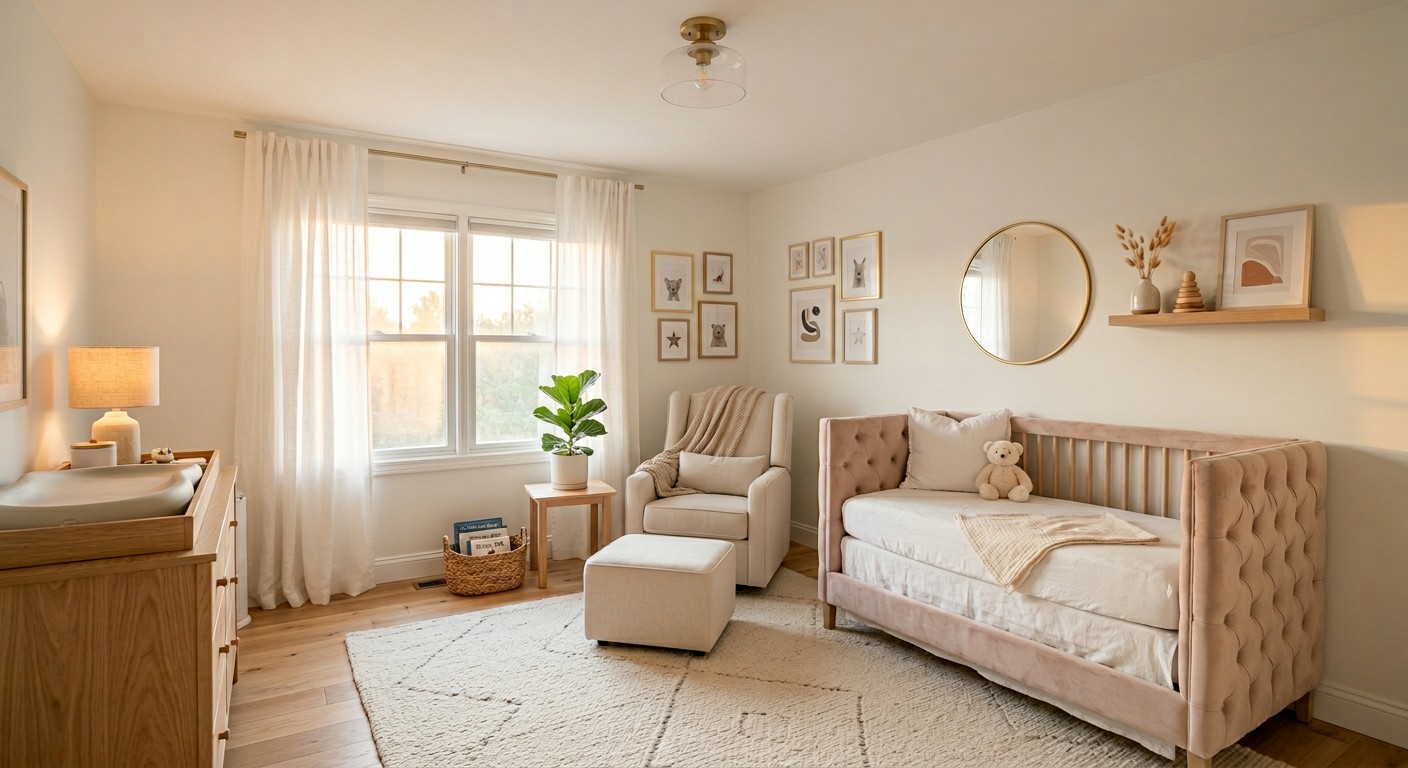
What’s Inside
- 1. Bring in Biophilic Elements for Baby Girl Nursery Room Ideas
- 2. Ditch the Bright Pink for Earthy, Muted Tones
- 3. Create a Screen-Free Sensory Zone
- 4. Invest in Multifunctional, Convertible Furniture
- 5. Layer Textures for Ultimate Coziness
- 6. Size Your Rug Correctly (Don’t Make This Mistake)
- 7. Hang Wall Art at the Right Height and Proportion
- 8. Pick Furniture with Soft Curves and Organic Forms
- 9. Hide the Clutter with Integrated Storage
- 10. Stick to Non-Toxic and Sustainable Materials
- 11. Stock Up on Breathable Swaddles
- 12. Add Family Storytelling Elements
- 13. Layer Your Lighting for Better Sleep
- 14. Try a Mood-First Approach for Baby Girl Nursery Room Ideas
- 15. Sneak in Subtle Black and White Elements
I stood in the middle of my first daughter’s room, crying over a $600 pastel pink rug that smelled like chemical glue and looked exactly like spilled Pepto-Bismol. I was exhausted. If you need baby girl nursery room ideas that actually work in real life, I’m here to tell you to skip the Pinterest perfection traps. Searching for nursery ideas usually leads you down a rabbit hole of sterile spaces that get destroyed the second a blowout happens. I’ve designed dozens of rooms since that pink rug disaster. I learned the hard way that a nursery needs to function at 3 AM when you’re running on two hours of sleep and a cold cup of coffee. Last week I was buying cheap tulips at Trader Joe’s and realized how much I rely on simple, natural comforts now. Let’s get into the nitty-gritty. I’m sharing the measurements, the specific brands, and the honest mistakes I made so you don’t repeat them. (Learned that the hard way, trust me.)
1. Bring in Biophilic Elements for Baby Girl Nursery Room Ideas
I’m obsessed with bringing the outdoors inside. Biophilic design sounds like a fancy architectural term, but it just means using natural elements to create a sanctuary. Last Tuesday at Whole Foods, I was buying overpriced organic strawberries and noticed how my shoulders dropped when I walked past their fresh eucalyptus buckets. You want that same reaction in your nursery. Skip the heavy plastics and glossy manufactured woods. Instead, use materials like light natural ash, woven rattan, bamboo, and raw jute. I always recommend the Babyletto Hudson 3-in-1 Convertible Crib in their washed natural finish. It costs $399 at most retailers. It smells like real, clean wood instead of factory chemicals. It’s Greenguard Gold certified, so it won’t off-gas nasty toxins into your baby’s sleeping space. Pair that natural wood crib with a heavy woven jute basket for dirty laundry. The rough texture of the jute against the smooth wood creates a balance that feels grounding.

2. Ditch the Bright Pink for Earthy, Muted Tones
Let’s talk about paint. Most people get this wrong. I painted my niece’s room a bright bubblegum pink five years ago. It gave me a headache after sitting in there for twenty minutes. The light bounced off the walls and turned everything an aggressive neon shade. You’re going to spend hours in this room rocking a crying infant. You need colors that lower your blood pressure. The top trending colors for 2026 are muted and earthy. Think soft sage green, warm terracotta, mushroom taupe, and cocoa brown. I swear by Sherwin-Williams paint in “Accessible Beige” for the main walls. A gallon of their low-VOC interior latex costs about $45. It’s the perfect creamy neutral that doesn’t pull yellow or gray. Paint three walls in that beige, then do one solid accent wall behind the crib in a muted clay blush or olive green. This gives the room depth without screaming at your eyeballs. The earthy tones mimic nature, making the space feel like a cozy cave.

3. Create a Screen-Free Sensory Zone
I’m begging you to keep the screens out of the nursery. It’s tempting to mount a small TV or keep an iPad on the side table for those marathon midnight feedings. I did this with my second kid. The blue light wrecked my rhythm. Prioritize a screen-free space to encourage better sleep and tactile development. Instead of digital distractions, load the room with heavy sensory elements. Buy a glider covered in nubby, textured boucle fabric. Hang thick, heavy linen blackout curtains that feel substantial. The sound of the heavy fabric swishing closed is soothing. Last month, I was pushing a massive cart through Costco, grabbing my usual 900-pack of unscented baby wipes, and I saw these incredible faux-fur throw pillows. I bought three. Tossing a heavy, textured pillow onto your nursing chair gives your baby something fascinating to touch as they get older.

Beautiful Wooden Baby Closet Dividers Set of 7
A dependable everyday pick — Beautiful Wooden Baby Closet Dividers Set of 7 – Double-Sided Organize pulls in 11 ratings at 4.5 stars. Not flashy, just solid.

4. Invest in Multifunctional, Convertible Furniture
Babies grow fast. I bought a tiny bassinet that my daughter slept in for exactly three weeks before she got too long for it. It was a waste of $200. You need to invest in multifunctional, convertible furniture from the start. You want pieces that adapt. The Delta Children Frankie 4-in-1 Convertible Crib is a great budget option at around $250. If you have a slightly higher budget, the Babyletto Yuzu 8-in-1 Convertible Crib is phenomenal. It costs about $599 and transitions from a tiny bassinet to a midi crib, a standard full-size crib, a toddler bed, a daybed, and finally a junior bed. You’re buying one piece of furniture that lasts until they leave for middle school. You usually have to buy the toddler rail conversion kits separately for about $89. The peace of mind is worth it. You aren’t scrambling to buy a new bed every two years. It’s a heavy, solid piece of furniture that anchors the room.

5. Layer Textures for Ultimate Coziness
A room with only smooth, flat surfaces feels cold. You have to layer your textures to build warmth. I learned this trick from an old mentor. She told me a room isn’t finished until it has at least five different textures you can feel with your eyes closed. Think about the scratchy warmth of a wool rug, the crisp coolness of organic cotton percale crib sheets, and the chunky weight of a knitted throw blanket. I can’t recommend the Barefoot Dreams Cozychic Lite Stroller Blanket enough. It costs $78. Yes, that’s expensive, but it feels like wrapping yourself in a warm, melted marshmallow. I drape one over the back of the nursery glider. It adds an immediate touch of luxury. When you’re shivering at 4 AM trying to get a burp out of a fussy baby, pulling that plush fabric over your shoulders feels like a lifesaver. Mix that super soft fleece with a crisp linen crib skirt and a woven seagrass basket. The visual friction makes the room look professionally styled. You might also like: 20 Inspiring Yellow Nursery Lighting Ideas for Every Budget

6. Size Your Rug Correctly (Don’t Make This Mistake)
This is the number one mistake I see. People buy a tiny 3×5 foot rug, plop it in the middle of the floor, and it looks like a sad little bath mat floating in an ocean of hardwood. I ruined my first nursery design doing exactly this. I bought a cheap, tiny rug from Target because it had cute llamas on it. It constantly slid around, and I tripped over the corner every single night. For a standard 10×12 foot nursery, you need a rug that’s at least 6×9 feet; an 8×10 foot rug is actually the ideal size. You want the rug to be large enough that the front legs of your crib, your glider, and your dresser all sit firmly on top of it. This anchors the furniture and makes the room cohesive. If you’re working with a tiny nursery, under 8 square meters, you still need a decent size. Go for a 120×180 cm rug, roughly 4×6 feet, and tuck it under the front edge of the crib. Buy a thick, half-inch felt rug pad for $45. It’s essential. You might also like: 15 Beautiful Baby Room Organization Ideas You Haven’t Thought Of

Criusia Drawer Organizer Clothes
Criusia Drawer Organizer Clothes punches above its price — 1 buyers rated it 4.5 stars. I would buy it again.

7. Hang Wall Art at the Right Height and Proportion
Hanging art is another area where sleep-deprived parents miss the mark. I’ve walked into so many nurseries where a tiny 5×7 inch picture frame is hung three feet above the changing table. It looks like a postage stamp stuck to a billboard. There’s a strict mathematical formula for hanging art, and you can’t ignore it. When you’re placing art above a piece of furniture like a crib or a dresser, the artwork needs to span 60 to 75 percent of the furniture’s total width. Let’s say you have a standard 54-inch wide crib. Your art piece, or your gallery wall grouping, needs to be 36 to 40 inches wide total. If it’s smaller, it looks disproportionate. Also, hang it lower than you think. The bottom edge of the frame should be exactly 6 to 10 inches above the top rail of the crib or the top edge of the dresser. I used to hang things at my own eye level, which is way too high. Keep a tape measure handy and follow the 60 percent rule. You might also like: 15 Charming Safari Nursery Lighting Ideas for Every Budget

8. Pick Furniture with Soft Curves and Organic Forms
Sharp, rigid angles in a nursery just feel wrong. The trend for 2026 is moving toward soft curves and organic, flowing forms. This isn’t just an aesthetic choice; it’s rooted in a science called neuroaesthetics. Research shows that the human brain processes curved lines with a sense of relaxation and safety, while sharp angles trigger a subtle subconscious alarm. You want the room to feel safe. Look for cribs with rounded spindles and arched backs. The Namesake Winston 4-in-1 Convertible Iron Crib is stunning. It has these beautiful, sweeping metal arches and costs about $299. Newton Baby also makes incredible mattresses that fit perfectly into these curved frames. I swapped out my boxy, square nursing chair for a glider with a curved, barrel-style silhouette. The difference in the room’s energy was instant. It felt like the furniture was giving the room a hug.

9. Hide the Clutter with Integrated Storage
Nurseries accumulate an insane amount of plastic junk in a matter of weeks. You start out with a few cute wooden toys, and suddenly you’re drowning in bright plastic noise-makers, nasal aspirators, and endless tubes of diaper cream. You need massive amounts of integrated storage to hide the visual clutter. Visual clutter equals mental stress. I recommend the Delta Children Universal 6-Drawer Dresser. It runs about $300 and is heavy, sturdy, and features incredibly deep drawers. Use the top surface as your changing table by securing a $30 contoured changing pad to it. This eliminates the need for a separate, flimsy changing table that you’ll throw away in two years. I organize the top two drawers with small fabric bins. Last week I was at Kroger buying groceries and grabbed a bunch of their cheap baby wipes. I stack them vertically in the top left drawer so I can grab one with one hand.

Modanais Baby Diaper Caddy Organizer Cart
Modanais Baby Diaper Caddy Organizer Cart – 3 Tier Rolling Storage Car punches above its price — 303 buyers rated it 4.5 stars. I would buy it again.

10. Stick to Non-Toxic and Sustainable Materials
I can’t stress this enough. You have to read the labels on what you’re bringing into your baby’s room. I bought a cheap particle-board bookshelf once. I opened the box and the chemical smell of formaldehyde hit me so hard my eyes watered. I had to leave it in the garage for a month before it stopped stinking. Babies have incredibly sensitive respiratory systems. You must prioritize non-toxic, low-VOC materials. VOC stands for Volatile Organic Compounds, which are the nasty chemicals that off-gas from fresh paint and cheap glues. Always buy Benjamin Moore Eco Spec or Sherwin-Williams Harmony paint. They cost around $65 a gallon and have zero VOCs. You can paint the room in the morning and sleep in it that night without smelling a thing. Look for furniture made from solid, sustainably sourced wood like New Zealand pine. Check for the GREENGUARD Gold certification label on cribs and mattresses.
11. Stock Up on Breathable Swaddles
Let’s talk practical survival gear. The internet will tell you that you only need three swaddles: one to wash, one to wear, and one to spare. That’s a hilarious lie told by people who have clearly never dealt with a baby with acid reflux. You need 6 to 8 high-quality swaddles, minimum. I once had to do a frantic midnight run to Walmart because my daughter spit up on three different swaddles in the span of four hours, and I was completely out of clean ones. Standing in the fluorescent aisles of Walmart at 1 AM taught me to over-prepare. Buy breathable, lightweight fabrics like cotton muslin or bamboo. Aden + Anais makes the best classic muslin swaddles. A 4-pack costs about $45. Little Unicorn is another amazing brand that makes slightly softer bamboo blends for around $50 a pack. You want these specific brands because the fabric is large enough, 47×47 inches, to actually wrap a tight, secure burrito around your baby.
12. Add Family Storytelling Elements
I’m tired of walking into nurseries that look exactly like a page out of a catalog. They have zero personality. You need to move away from the basic cookie-cutter trends and inject your actual family history into the room. This doesn’t mean hanging up a giant, cheesy family portrait. It means weaving subtle storytelling elements into the decor. I framed a handwritten recipe card from my great-grandmother and hung it near the rocking chair. It cost me $15 for a custom mat and a cheap frame, but it’s the most meaningful thing in the room. Bring in a vintage brass lamp you found at a flea market, or drape a quilt that your aunt knitted over the edge of the crib. If you’re artistic, paint a tiny, custom mural in the corner. I painted a small cluster of wildflowers behind my daughter’s door. It took me two hours and a $5 sample pot of paint. (Took me years to figure out that less is more.)

Modanais Baby Diaper Caddy Organizer Cart
Modanais Baby Diaper Caddy Organizer Cart – 3 Tier Rolling Cart with D has been one of the most consistently praised picks in this category. 613 reviewers averaged 4.5/5.
13. Layer Your Lighting for Better Sleep
Lighting is everything. If you only have one harsh overhead dome light in the center of the ceiling, you’re going to hate being in that room. Bright overhead lights signal to the brain that it’s daytime, which is the exact opposite of what you want during a 2 AM diaper change. You have to layer your lighting. You need a dimmable wall sconce near the glider for reading, a small lamp on the dresser for changing diapers, and a dedicated nightlight. I’m strict about this rule. You absolutely must buy the Hatch Rest+ sound machine and nightlight. It costs between $90 and $100 depending on the retailer. It connects to your phone via Bluetooth. You can set the light to a soft, dim red color, which is scientifically proven not to disrupt melatonin production. It also plays continuous white noise. The sound of the heavy rain setting is so relaxing I bought a second one for my own bedroom.
14. Try a Mood-First Approach for Baby Girl Nursery Room Ideas
Stop picking a rigid theme for your nursery. Themes are a trap. If you pick a mermaid theme, you end up buying a bunch of cheap, plastic shells and turquoise netting that looks tacky within six months. Instead, I want you to try a mood-first design approach. Pick a feeling you want to experience when you walk through the door. Do you want it to feel calm, warm, whimsical, or grounded? Use that word to guide every single purchase. If your word is calm, you won’t buy the loud, battery-operated plastic mobile. You’ll buy the silent, floating felt clouds. I was feeling incredibly stressed during my third trimester, so I drove to Sprouts, bought a massive box of chamomile tea, and sat at my kitchen table writing down how I wanted the room to feel. I chose the word serene. That single word stopped me from buying a chaotic patterned rug and led me to a soft, tone-on-tone cream carpet instead.
15. Sneak in Subtle Black and White Elements
This is my favorite surprising tip. While we’ve talked endlessly about soft, earthy tones and muted colors, you actually need a tiny bit of high contrast in the room. Newborns have terrible eyesight. For the first few months of their lives, they can only see about 8 to 12 inches in front of their faces, and they respond best to stark black and white patterns. I used to think black had no place in a baby girl’s room. I was wrong. You don’t want to paint the walls black, but you do want to integrate subtle black and white elements to stimulate their developing optic nerves. Buy a graphic black and white geometric mobile and hang it securely over the changing pad. It gives them something fascinating to stare at while you’re wiping them down. You can also buy a woven storage basket with a thick black stripe around the middle, or frame a bold, high-contrast black and white art print.
Designing a nursery shouldn’t make you want to pull your hair out. It’s supposed to be a fun, creative nesting phase. I’ve spent years figuring out what works, from the height of the wall art to the specific $65 can of non-toxic paint. If you stick to natural textures, heavy layers, and smart convertible furniture, you’ll create a room that you actually want to spend time in. I’d highly recommend starting with the rug size and the paint color, then building your mood from there. Don’t forget to save and pin this article so you have all the brand names and measurements handy when you’re standing in the store with a cart full of baby stuff. You’ve got this. (No exaggeration.)
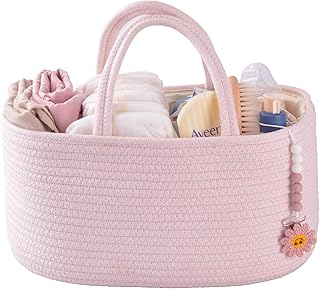
Baby Diaper Caddy Organizer for Girl Boy Rope Nursery
Baby Diaper Caddy Organizer for Girl Boy Rope Nursery Storage Bin Bask has been one of the most consistently praised picks in this category. 21 reviewers averaged 4.5/5.

Frequently Asked Questions
What are the best colors for a baby girl nursery?
Move away from bright pinks and opt for earthy, muted tones. Soft sage green, warm terracotta, mushroom taupe, and cocoa brown are calming and age beautifully as your child grows.
What size rug do I need for a standard nursery?
For a standard 10×12 foot room, an 8×10 foot rug is ideal. It anchors the crib, glider, and dresser safely. Never buy a tiny 3×5 rug that floats in the middle of the floor.
How many swaddles should I buy for a newborn?
You need 6 to 8 high-quality breathable muslin or bamboo swaddles. Babies frequently spit up or have blowouts, and having extras on hand prevents frantic midnight laundry sessions.
How high should I hang art above a crib?
Artwork should span 60 to 75 percent of the crib’s width. Hang the bottom edge of the frame exactly 6 to 10 inches above the top rail of the crib for the best visual proportion.
3 thoughts on “15 Baby Girl Nursery Room Ideas for Every Budget”