What’s Inside
- 1. Opt for a Mini Crib in Your Small Nursery Layout
- 2. Swap the Changing Table for a Dresser Topper
- 3. Maximize Vertical Space with 24-Inch Floating Shelves
- 4. Hang Wall-Mounted Baskets for Burp Cloths
- 5. Stash Out-of-Season Clothes in Under-Crib Bins
- 6. Squeeze in a Slim-Profile Tuba Glider
- 7. Double Your Closet Rods Immediately
- 8. Try Organic Minimalism for a Calmer Vibe
- 9. Paint the Walls a Warm Mushroom Neutral
- 10. Layer Your Lighting with Dimmable LED Strips
- 11. Mount Acrylic Book Ledges Behind the Door
- 12. Roll a Utility Cart into Your Small Nursery Layout
- 13. Keep a 3-Foot Walkway Clear for 3 AM Pacing
- 14. Pick Sculptural Furniture with Soft Curves
- 15. Bring in Biophilic Rattan and Bamboo Textures
- 16. Hang a 30-Inch Round Mirror to Fake Square Footage
I’m sitting on the floor of my tiny spare bedroom. It’s 2 AM. I’ve got a tape measure in one hand and a half-eaten bag of Trader Joe’s Dark Chocolate Peanut Butter Cups (the $4.49 tub) in the other. I’m trying to figure out a small nursery layout that won’t make me feel like I’m sleeping in a closet. My first attempt was a total disaster. I tried cramming a massive standard crib into a 9×9 room. I couldn’t even open the door all the way. It banged against the heavy wood frame with a loud thud every single time I walked in. The room smelled like fresh paint and pure panic. You don’t have to repeat my mistakes. Figuring out a small nursery layout takes some brutal editing and a lot of measuring tape. But it’s entirely possible to make it look chic. Let’s skip the fluff. Here are sixteen specific things I’ve learned about making a tiny baby room actually function.
1. Opt for a Mini Crib in Your Small Nursery Layout

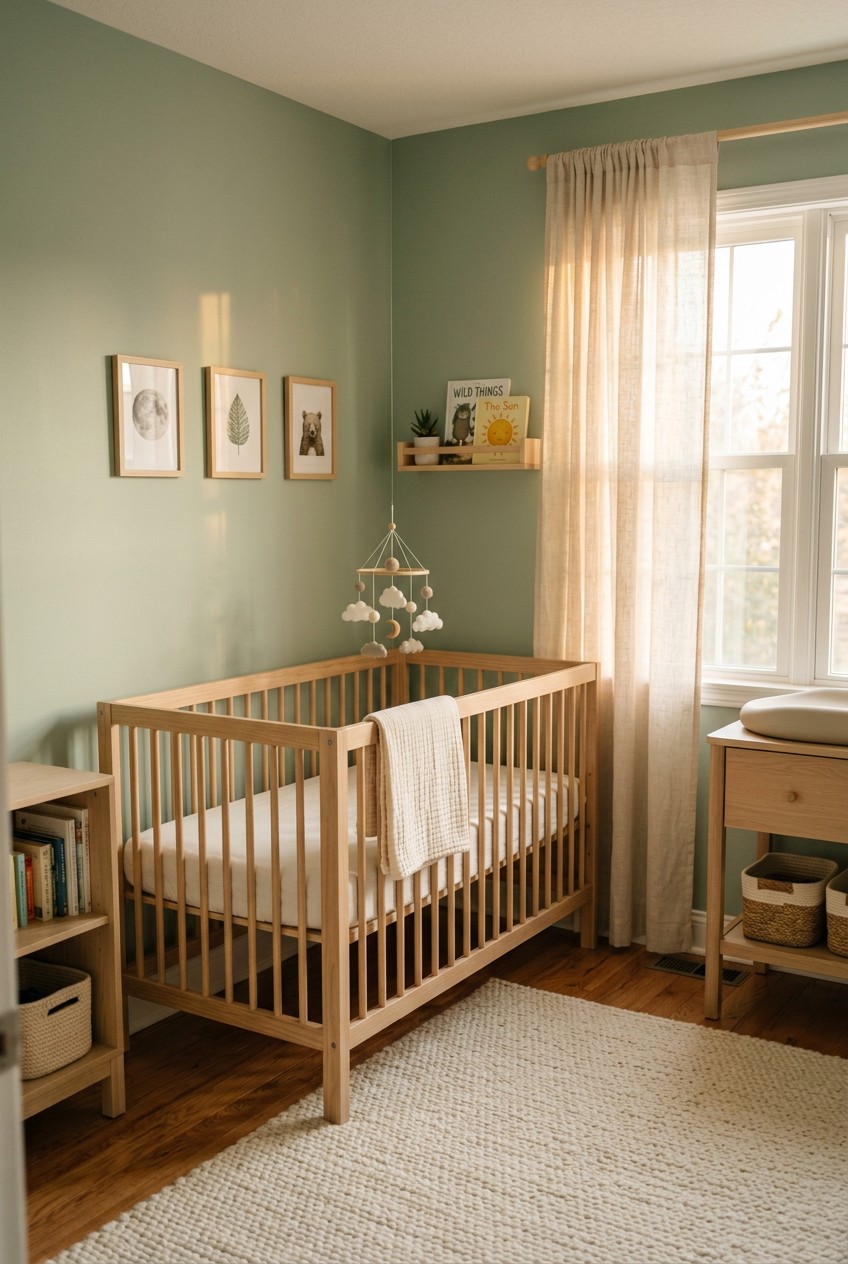
I’m convinced standard cribs are a space-stealing scam for tiny rooms. Instead of a standard crib measuring a massive 52 inches long and 28 inches wide, you need a mini crib. It’s the easiest way to fix a cramped small nursery layout. A mini crib typically measures around 38 inches long and 24 inches wide for the mattress. You’re saving about 14 inches in length and 4 inches in width. That’s a massive chunk of floor space. I personally swear by the Babyletto Origami Mini Crib. It costs exactly $269 and measures 39.25 inches long by 25.75 inches wide. The smooth pine wood feels sturdy, and the caster wheels let you push it around with a soft squeak. Another solid option is the Delta Children Folding Portable Mini Crib for $199. It’s roughly 39 inches long and 25 inches wide. Don’t buy a giant wooden sleigh crib. It won’t fit, and you’ll hate bumping your hips into it every single night. Trust me on this.
2. Swap the Changing Table for a Dresser Topper

Most people get this wrong on their first try. I certainly did. Last year, I bought a standalone changing table from a Facebook Marketplace seller in a Sprouts parking lot. It cost me $50. It smelled faintly of sour milk and wobbled every time I touched it. What a waste of floor space. You’re much better off investing in a sturdy dresser that does double duty. The IKEA Hemnes 3-Drawer Chest is my holy grail. It costs $199 and measures exactly 42.5 inches wide by 19.625 inches deep. It fits perfectly in tight corners. Pair it with a wipeable changing pad like the Keekaroo Peanut Changer. It costs $149 and measures 32 inches long by 17 inches wide. It’s totally impermeable to fluids. When a diaper blowout happens, you just wipe the cold, rubbery surface clean with a damp cloth. You won’t have to wash a single fabric cover. It saves so much time and precious space.
3. Maximize Vertical Space with 24-Inch Floating Shelves

When you can’t build out, you have to build up. Utilizing your vertical wall area is non-negotiable in a tiny room. I’m obsessed with installing sturdy floating shelves right above the changing station. Head to Target and grab their Room Essentials floating shelves. They cost $15 each and measure exactly 24 inches wide. Mount three of them vertically on the wall. I use them to hold 4 oz glass baby bottles, stacks of clean wipes, and a tiny 6-inch faux potted plant. A quick warning though. I’ve hit my forehead on low-hanging shelves before, and it hurts like crazy. Make sure you mount them high enough so you aren’t dodging them during midnight diaper changes. Also, ensure they are securely anchored into the drywall and completely out of reach of a standing baby. You want to keep all heavy items off the bottom shelf just in case. It frees up your dresser top beautifully.

Criusia Drawer Organizer Clothes
If you want something that just works, Criusia Drawer Organizer Clothes is a safe bet (1 reviews, 4.5 stars).
4. Hang Wall-Mounted Baskets for Burp Cloths

Wall hooks are a brilliant way to save space in tiny rooms. I don’t know why more people don’t use them. I bought a gorgeous wooden peg rack from Pottery Barn Kids for $39. It’s 20 inches long and holds four heavy-duty pegs. I mounted it right next to the closet door. Instead of hanging coats, I hang 10-inch cotton rope storage baskets from the pegs. I stuff them full of 12×12 inch muslin burp cloths and extra pacifiers. Last Thursday at Costco, I bought a massive bulk box of baby wipes. I took them out of the ugly cardboard box and stacked the soft plastic packs right into these hanging baskets. It keeps the floor entirely clear. You can also hang an over-the-door fabric organizer to hold tiny baby shoes and hair bows. Just make sure the door can still click shut. Keeping the floor visible makes the whole room feel twice as big.
5. Stash Out-of-Season Clothes in Under-Crib Bins
Look under your crib right now. If there’s empty space, you’re wasting prime real estate. Many mini cribs have at least 6 inches of clearance underneath. You need to fill that gap with storage. I buy the IKEA Drona fabric boxes in bulk. They cost $4.99 each and measure exactly 13 by 15 by 13 inches. They fit perfectly under most standard and mini cribs. I use them to stash out-of-season clothes, extra crib sheets, and bulk diapers. I tried storing baby sweaters in plastic garbage bags once. When I opened them six months later, they smelled like stale basement air and dusty plastic. Don’t do that. Use breathable fabric bins. They slide easily over the carpet with a soft, satisfying shhh sound. Just make sure the bins fit snugly so they don’t collect dust bunnies. It’s a hidden storage trick that completely clears out your dresser drawers for the things you actually use every day. You might also like: 15 Lovely Nursery Lighting Ideas to Transform Your Space
6. Squeeze in a Slim-Profile Tuba Glider

You need a comfortable spot to sit, but traditional nursing gliders are offensively large. I bought a massive overstuffed recliner for my first baby. I couldn’t even recline the back without it hitting the drywall. It squeaked loudly every time I rocked, and I constantly stubbed my bare toe on the metal base. Skip the bulky chairs. You’re better off with a compact design like the Babyletto Tuba Glider. It costs $499 and measures a very reasonable 30 inches wide by 32 inches deep. It fits perfectly into a tight corner without eating the whole room. The soft velvet fabric feels amazing against tired skin at 3 AM. It swivels smoothly without a single sound. You get a comfortable nook without overwhelming the square footage. If you can’t afford a new glider, look for a small upholstered vintage armchair. Just make sure the seat depth is at least 20 inches so you have room for a nursing pillow. You might also like: 20 Lovely Space Saving Small Nursery Ideas for Every Budget

DIMJ Drawer Organizer Clothes, 12 Pack Dresser Organizer
A dependable everyday pick — DIMJ Drawer Organizer Clothes pulls in 13 ratings at 4.5 stars. Not flashy, just solid.
7. Double Your Closet Rods Immediately

If your tiny room actually has a closet, you need to optimize every single inch of it. Baby clothes are tiny. A 0-3 month onesie only needs about 20 inches of vertical hanging drop. Leaving a single high rod in a nursery closet is a massive waste of space. Go to Home Depot and buy a ClosetMaid adjustable hanging rod. It costs $12.98 and expands from 24 to 48 inches. You just hook it onto your existing top rod, and instantly, you’ve doubled your hanging space. I hang all the tiny tops on the upper rod and the pants on the lower rod. I also pulled the closet doors off completely. They were those awful, heavy bi-fold doors that pinch your fingers and block half the light. Removing them creates an open-concept style that makes the room feel significantly larger. Just be warned. You have to actually keep the closet organized if it’s constantly on display. You might also like: 20 Brilliant Baby Nursery Themes Ideas You Can Try Today
8. Try Organic Minimalism for a Calmer Vibe

There’s a massive trend happening in 2026 interior design, and it’s perfect for small spaces. It’s all about organic minimalism. The entire concept focuses on buying fewer, better pieces and choosing thoughtful shapes rather than excess decor. I used to hoard brightly colored plastic baby toys. I stuffed them into a giant toy box that took up half the room. It looked like a neon explosion and stressed me out. Now, I stick to the essentials. I bought a beautiful natural wood side table from Crate & Kids for $129. It’s only 14 inches wide and holds a single lamp and a 4 oz bottle of water. Skip the cheap plastic bins. They crack in a week and look like trash. Choose furniture with clean lines and natural materials. It creates a calm, intentional space that feels peaceful and surprisingly luxurious. When you have less stuff, a tiny room suddenly feels like a serene boutique hotel room.
9. Paint the Walls a Warm Mushroom Neutral

Color changes everything in a tight space. The 2026 color trends are moving away from stark, clinical whites and leaning heavily into warm mushroom, cocoa brown, sage green, and muted greige. I painted a tiny room bright lemon yellow once. I thought it would look cheerful. Instead, it gave me a raging headache and made the walls feel like they were closing in. Don’t do bright colors in a tiny room. Go to Sherwin Williams and buy a gallon of Cocoa Brown in an eggshell finish for $65. These soft, atmospheric neutrals create a grounding, cocoon-like space. The room will smell like fresh latex paint for about a day, but once it dries, it feels incredibly calm. Warm earth tones actually make a small room feel more expansive and serene. They bounce the natural light beautifully without glaring into your baby’s eyes during nap time. It’s the cheapest way to make the room look professionally designed.

Criusia Over the Door Organizer
Criusia Over the Door Organizer has been one of the most consistently praised picks in this category. 205 reviewers averaged 4.5/5.
10. Layer Your Lighting with Dimmable LED Strips
Harsh overhead lighting is completely out for 2026. It’s also the worst thing you can do to a sleeping baby. I made the mistake of flipping on the bright ceiling fan light at 2 AM once. The baby woke up completely and screamed like a banshee for an hour. You need layered, soft lighting. Wall-mounted sconces are ideal because they don’t take up an inch of floor space. I also highly recommend the Philips Hue Lightstrip. It costs $79.99 for an 80-inch strip. I stick them directly onto the back of the dresser. It casts a soft, warm glow against the wall that is perfect for midnight diaper changes. You can dim them straight from your phone. Dimmable lights are crucial for creating a restful environment and easing transitions to sleep. You want the room to feel like a cozy, dimly lit cave, not a bright hospital cafeteria.
11. Mount Acrylic Book Ledges Behind the Door
This is a surprising trick that most people completely ignore. The space behind the bedroom door is usually dead space. Adding a book ledge behind the nursery door is a brilliant way to maximize unused square footage. I bought a set of NIUBEE clear acrylic shelves on Amazon. They cost $22.99 for a set of two 15-inch wide ledges. I tried mounting thick wooden shelves back there first, but the door wouldn’t open all the way and slammed into the wood. The acrylic ledges are barely two inches deep. They don’t protrude far at all. I line them up with 6×6 inch cardboard baby books. Because the shelves are totally clear, the books look like they’re floating on the wall. It adds gorgeous visual appeal and essential storage without impeding your movement in the room. Just make sure the door handle doesn’t smash into the books when you swing it open.
12. Roll a Utility Cart into Your Small Nursery Layout
If you don’t have room for a wide dresser, a tiered rolling cart is your best friend. I’m obsessed with the IKEA RÅSKOG utility cart. It costs $39.99 and measures a tiny 13.75 inches wide by 17.75 inches long and 30.75 inches high. I load the top tier with a tub of wipes, 2 tablespoons of organic nipple balm I bought at Whole Foods, and a stack of fresh diapers. The metal wheels glide over the carpet so easily. You can pull it right up to the glider during a feed, and then shove it into a closet corner when you’re done. I will admit, I accidentally rolled the heavy metal wheel over my bare toe last month. It bruised instantly and hurt for days. I learned that the hard way. Keep your feet out of the way. But honestly, the mobility is unbeatable. It’s perfect for shared spaces or if you want to drag your diaper supplies into the living room.

Beautiful Wooden Baby Closet Dividers Set of 7
Beautiful Wooden Baby Closet Dividers Set of 7 – Double-Sided Organize has been one of the most consistently praised picks in this category. 11 reviewers averaged 4.5/5.
13. Keep a 3-Foot Walkway Clear for 3 AM Pacing
When you’re designing a small room, it’s tempting to shove furniture into every single corner. Don’t do it. Storage should never interfere with crib placement guidelines. You absolutely need at least 3 feet (about 90 cm) of clear walking space around the crib for safe access. I learned this the hard way. I once tripped over a giant stuffed bear I left on the floor in the dark. I completely wiped out and spilled a fresh 4 oz bottle of breastmilk all over the carpet. I sat there and cried. Keep your walkways completely bare. I put down a 3×5 foot Ruggable washable rug right in the center of the room. It costs $119 and has a very low pile that won’t trip you up. A clear floor plan makes nighttime feedings and diaper changes infinitely less stressful. If you can’t pace back and forth with a crying baby without dodging furniture, your layout is too crowded.
14. Pick Sculptural Furniture with Soft Curves
Boxy, square furniture makes a small room feel harsh and cramped. Trending in 2026 is sculptural furniture that instantly adds sophistication without demanding attention. Look for pieces with soft curves and round silhouettes. I have a permanent scar on my left thigh from bumping into a sharp, square dresser corner in the middle of the night. Sharp corners are a nightmare in tight spaces. I swapped it for a gorgeous West Elm sculptural wooden stool that I use as a side table. It costs $149 and is only 12 inches wide. The round edges bring a gentle movement into the room. A rounded crib or an organic-shaped mirror can add so much character without adding visual bulk. It aligns perfectly with the soft organic trend. When your eyes can easily glide over the curved edges of your furniture, the entire room feels softer, safer, and remarkably more spacious.
15. Bring in Biophilic Rattan and Bamboo Textures

Biophilic design is a huge trend right now. It’s all about bringing nature indoors through natural materials and earthy tones. It’s perfect for softening a cramped room. I love using materials like raw wood, rattan, and bamboo. I bought a stunning Opalhouse rattan storage basket from Target for $25. It’s 11 inches high and smells faintly of sweet, dried grass. I use it to hold rolled-up swaddle blankets. I also picked up a cheap, 6-inch potted snake plant at Kroger last week. I put it on the top floating shelf, completely out of reach of the baby. I tried buying a delicate real fern once. I killed it in two weeks, and it dropped crunchy brown leaves all over the crib mattress. Stick to sturdy, low-maintenance plants or high-quality faux greenery. Adding subtle botanical textures promotes a calm atmosphere and actually supports your baby’s sensory growth without cluttering the room.

Delta Children Nursery Storage 48 Piece Set
Delta Children Nursery Storage 48 Piece Set – Easy Storage/Organizatio punches above its price — 17 buyers rated it 4.5 stars. I would buy it again.
16. Hang a 30-Inch Round Mirror to Fake Square Footage
If your room feels like a dark cave, you need a mirror. It’s the oldest interior design trick in the book, but it works flawlessly. Hanging a large mirror reflects the natural light from your window and tricks your brain into thinking the room is twice as deep. I bought a Mainstays 30-inch round mirror from Walmart for just $29.98. The thin brass frame looks high-end. I hung it directly opposite the single tiny window in my nursery. The moment I put it up, the afternoon sunlight bounced across the walls and the room instantly felt expansive. Just make absolutely sure you use heavy-duty drywall anchors or drill it directly into a wooden wall stud. You can’t risk a heavy mirror falling in a baby’s room. Keep it hung high above the dresser, completely out of reach of sticky toddler fingers. It’s a cheap, beautiful way to fake square footage. No exaggeration.
Designing a tiny baby room doesn’t have to end in tears and bruised shins. I’ve made every layout mistake in the book so you don’t have to. If you focus on clever vertical storage, multi-functional furniture, and keeping your walkways clear, you’ll create a gorgeous space that actually works. I’d love to hear how your room turns out. If you found these tips helpful, please save this post to your favorite Pinterest nursery board so you can find it later when you’re standing in the paint aisle. You’ve got this!
Frequently Asked Questions
What is the best crib for a small nursery layout?
A mini crib is the best choice for a small nursery layout. Measuring around 38 by 24 inches, it saves significant floor space compared to a standard crib while still providing a safe sleep environment.
How can I maximize storage in a tiny baby room?
Maximize storage by using vertical space. Install floating shelves high on the walls, use wall-mounted baskets on peg hooks, and slide fabric storage bins underneath the crib for out-of-season clothing.
Do I need a changing table in a small nursery?
No. Skip the standalone changing table and use a sturdy dresser instead. Add a wipeable, waterproof changing pad on top to create a multi-functional piece of furniture that saves valuable square footage.
What colors make a small nursery look bigger?
Warm, earthy neutrals like mushroom, cocoa brown, and soft greige make a small nursery feel expansive and calming. Avoid stark whites or overly bright colors, which can make a tight space feel harsh.
3 thoughts on “16 Small Nursery Layout You Need to See”