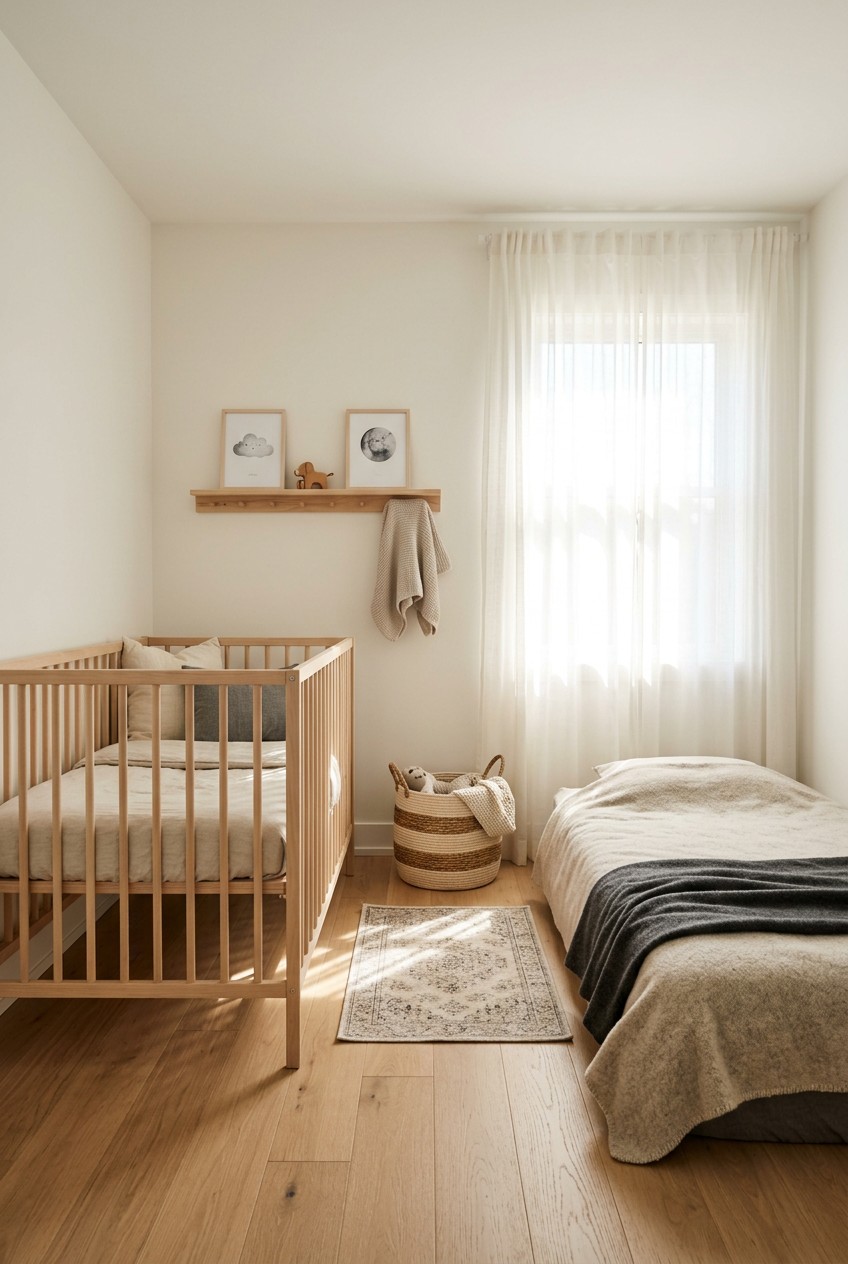
What’s Inside
- Prioritize Separate Sleep Training for the Baby First
- Invest in Hardcore Blackout Solutions for a Baby and Toddler Shared Room
- Strategically Place White Noise Machines
- Anchor All Furniture to the Wall (No Excuses)
- Opt for Space-Saving Cribs and Beds
- Implement Smart Vertical Storage Solutions
- Create Subtle Visual Separation in Your Baby and Toddler Shared Room
- Stagger Bedtimes to Minimize Disruptions
- Thoroughly Childproof for Both Age Groups
- Embrace Multifunctional and Convertible Furniture
- Incorporate 2026 Nursery Design Trends: Moody Warmth
- Utilize a Time-to-Rise Clock for Toddlers
- Conduct Bedtime Routines Outside the Shared Room
- Consider a Dual-Firmness Crib Mattress
- Use a Temporary Barrier During Initial Sleep Training
I spent three weeks crying on the floor of my kids’ bedroom at 2 AM. Setting up a shared room sounded sweet until I actually tried it, resulting in a screaming infant waking up an exhausted three-year-old. My first attempt was a mess. I bought into the cute matching bedding and ignored the logistics. I remember sitting there in the dark. I smelled the faint scent of sour milk on my sweatshirt. I listened to them both wail. I thought I’d ruined their sleep forever. But after a lot of trial and error (and drinking a 1/2 cup of cold coffee every single morning), I figured out how to make it work. I’m sharing everything I learned. Let’s get into the messy, real details.
1. Prioritize Separate Sleep Training for the Baby First

Don’t even think about putting them in the same room on day one. I tried this wrong for months. I thought my toddler would just sleep through the newborn grunts. Wrong. Every tiny squeak had my oldest standing up in his crib like a zombie. Pediatric sleep experts actually recommend keeping the baby in your room until they consistently sleep through the night. I finally caved and bought a Guava Lotus Travel Crib for $230 and set it up next to my bed. It was a tight squeeze. I kept stubbing my toe on the cold metal leg every single night. But sleep training the baby separately saved my sanity. Once the baby could link sleep cycles without screaming for a 4 oz bottle at 3 AM, the transition was so much easier. If you try to force it too early, you’re just guaranteeing nobody sleeps. Wait until the baby is solid. Your toddler’s routine is sacred. Don’t mess with it until you have to. It’s tough, but it’s worth the wait.
2. Invest in Hardcore Blackout Solutions for a Baby and Toddler Shared Room

Light is the enemy of sleep. This is true when you have two kids on different nap schedules. I used to tape black garbage bags to the windows. It looked terrible and sounded like a crinkling chip bag every time the AC kicked on. Skip the cheap paper blinds. You need serious darkness. I highly recommend the SlumberPod. It costs around $180 to $200 USD, and it’s worth every penny. It’s a portable blackout canopy that fits right over most playards and mini-cribs. It creates a pitch-black cave. The fabric feels like a heavy, stretchy athletic shirt. It blocks out the harsh afternoon sun. I bought mine at Target after a brutal afternoon where the baby wouldn’t nap because the toddler opened the curtains. The SlumberPod lets the baby sleep in total darkness while the toddler can still have a dim nightlight on the other side of the room. It solves the biggest lighting arguments instantly. You won’t regret buying one. Trust me.
3. Strategically Place White Noise Machines

One sound machine isn’t enough for two kids. You need a wall of sound between them. I learned this the hard way when my toddler dropped a heavy wooden block on the hardwood floor during the baby’s nap. The crack echoed like a gunshot. Now, I use two machines. Place a white noise machine exactly 12 to 24 inches from each child’s head. The AAP says to keep the volume below 50 to 60 dBA at crib distance. I swear by the Yogasleep Dohm UNO. It’s about $37 on Walmart’s website. It uses a real mechanical fan inside, not a digital loop. It sounds like a deep, rushing wind. I also tried the SNOOZ Smart White Noise Machine for $99. I love that I can control it from my phone while hiding in the hallway. If the baby starts fussing, I just bump the volume up two notches on the app to protect the toddler’s sleep. It works like magic. Don’t skip the second machine.

Hotmoon Sound Machine Baby Night Light
Honestly, Hotmoon Sound Machine Baby Night Light surprised me — sturdier than it looks in the photos, and over 194 buyers gave it 4.5 stars.
4. Anchor All Furniture to the Wall (No Excuses)

I can’t stress this enough. You’ve got to anchor everything. I used to think my heavy solid wood dresser was fine. Then I walked in and caught my toddler trying to scale it to reach a stuffed animal. My stomach dropped. The whole thing was wobbling. Buy heavy-duty metal furniture wall straps. The Safety 1st Furniture Wall Straps are only $9.99 for a pack of two at Walmart. Don’t buy the cheap plastic zip-tie ones. They get brittle and snap. You need to anchor the dressers, the bookshelves, and even small side tables if they’re tippy. When you have a baby on the floor and a toddler climbing like a monkey, the room has to be a safe zone. I spent a whole Saturday afternoon drilling into studs. The drywall dust got everywhere. It smelled like chalk and coated my hands. But knowing that heavy furniture won’t crush my kids is the only way I can sleep at night. Just do it.
5. Opt for Space-Saving Cribs and Beds

Standard cribs are massive. They take up 60 inches of wall space. When you’re fitting two kids in one room, every inch matters. I made the mistake of trying to shove two giant sleigh cribs into a 10×10 room. We had exactly three inches to walk between them. It was a nightmare. I bruised my hips constantly. Ditch the bulky furniture. Look for mini-cribs or smart convertible options. The dadada Soho 3-in-1 Convertible Crib is gorgeous. It’s made from solid Beechwood and costs around $499. It converts to a toddler bed and a daybed without taking up the whole room. If you need something even smaller, look at the babyletto Origami Mini Crib for $299. It actually folds up. It has caster wheels, so you can roll it out of the way when they need floor space to play. The mattress is smaller, but babies don’t need a massive mattress anyway. Save the floor space for their inevitable giant pile of plastic building blocks. You might also like: 15 Beautiful Baby Room Organization Ideas You Haven’t Thought Of
6. Implement Smart Vertical Storage Solutions

Floor storage is a trap. Toy boxes just become bottomless pits of broken crayons and missing puzzle pieces. You have to go vertical. I bought three IKEA KALLAX shelving units. The 4-cube ones are $49.99 each. I stacked them horizontally and anchored them tight to the wall. Then I filled them with those stiff fabric bins. Put the baby’s stuff in the top bins (like diapers, wipes, and the $15 tube of Aquaphor that the toddler keeps trying to eat). Put the toddler’s safe toys in the bottom bins. This setup is brilliant because it keeps the dangerous little toddler toys completely out of the baby’s reach. Last Tuesday at Whole Foods, I saw a mom buying those expensive trendy rope baskets. Skip them. They sag and look messy after a week. Stick to structured fabric bins. Maximizing your wall space keeps the floor clear so you aren’t tripping over wooden trains at 4 AM. It’s a simple fix that changes everything. You might also like: 15 Cozy Baby Nursery Decor Ideas for Any Style

Modanais Baby Diaper Caddy Organizer Cart
A dependable everyday pick — Modanais Baby Diaper Caddy Organizer Cart – 3 Tier Rolling Storage Car pulls in 308 ratings at 4.5 stars. Not flashy, just solid.
7. Create Subtle Visual Separation in Your Baby and Toddler Shared Room

You don’t need to build a literal wall down the middle of the bedroom. Full room dividers are clunky and usually pose a tipping hazard. Instead, create subtle visual zones. I used a low, heavy, anchored bookshelf to split the room into two sides. I also used rugs to define the spaces. I bought a 5×7 washable Ruggable rug for $169 for the toddler’s side and a thick, soft sheepskin rug for $45 from Costco for the baby’s side. The texture difference is huge. The toddler knows his rug is his big kid zone for building blocks. The baby stays on the soft rug for tummy time. It gives them a sense of ownership without shrinking the room. Honestly this changed how I managed their daytime play. They feel like they have their own little apartments. Just make sure whatever you use to divide the space is low enough that you can see over it from the doorway. It’s all about visual cues. You might also like: 20 Stunning Layout Small Nursery Ideas That Are Totally Worth It
8. Stagger Bedtimes to Minimize Disruptions

Putting them to bed at the exact same time is a rookie mistake. I tried it. It turned into a chaotic circus of crying, stealing pacifiers, and stalling. You have to stagger their bedtimes. Put the child who requires more sleep down first. Usually, this means the baby goes down at 7:00 PM. The house is quiet. I do the baby’s routine, put them in the crib, and shut the door. The toddler gets to stay up for an extra 30 minutes of big kid time. We read books on the couch. At 7:30 PM, I sneak the toddler into the dark room. He thinks it’s a fun, secret mission to be quiet. We whisper in the dark. I smell his lavender lotion as I tuck him into his toddler bed. It completely eliminates the bedtime battle. If you try to wrestle a toddler into pajamas while a baby is screaming for a bottle in the same room, you’ll lose your mind. Staggering is the only way to survive.
9. Thoroughly Childproof for Both Age Groups

Childproofing for two different ages is exhausting but mandatory. A room that is safe for a baby might be a death trap for a toddler, and vice versa. You must look at the room from two different heights. First, cover every single electrical outlet. The Safety 1st Outlet Covers are $3.99 for a 36-pack at Target. Buy them. Use them. Next, deal with the window blinds. Cut the cords or buy cordless shades. Toddlers will find hanging cords and wrap them around things. Finally, use the toilet paper roll test. If a toddler’s toy can fit inside an empty toilet paper roll, it’s a choking hazard for the baby. I literally walked around the room with a cardboard tube on my hands and knees. I found three rogue Lego pieces and a dried-up grape under the dresser. All small toys must live in another room. Keep the shared bedroom strictly for sleeping and safe, oversized toys. You can’t be too careful here.

Baby Sound Machine, Momcozy White Noise Machine for Baby
Baby Sound Machine has been one of the most consistently praised picks in this category. 7 reviewers averaged 4.5/5.
10. Embrace Multifunctional and Convertible Furniture

The biggest trend I’m seeing for 2026 is sustainability and practicality. Nobody wants to buy a piece of furniture they have to throw away in two years. You need things that pull double duty. I bought a Delta Children changing table that actually converts into a regular dresser. It was $229 at Sprouts. The top changing tray just unscrews and comes off. It’s solid wood and heavy. We also got a Hemnes Daybed from IKEA for $299 for the toddler. It has three massive drawers underneath. Those drawers hold all the bulky winter sweaters and extra crib sheets. I love the smell of the pine wood when you open the drawers. If you buy single-use furniture, you’ll run out of space in a week. Look for beds with hidden storage. Look for dressers that can serve as changing tables. When you combine functions, the room feels so much bigger and less cluttered. It’s the smartest way to furnish a small space.
11. Incorporate 2026 Nursery Design Trends: Moody Warmth

Forget the sterile, all-white nurseries from five years ago. They always felt like a doctor’s waiting room. The current vibe for 2026 is moody warmth. Think rich, earthy color palettes. I painted my kids’ room a deep sage green. I used Sherwin Williams Clary Sage, which is about $70 a gallon. It instantly made the room feel like a cozy, dark cave. You can also use clay pinks, smoky blues, or warm ochres. Bring in natural materials to warm it up even more. I hung a woven rattan pendant light from World Market for $89 and layered some heavy linen curtains over the blackout shades. The textures make a huge difference. The linen feels rough and organic. Avoid overly themed rooms with giant cartoon decals on the walls. They look dated so fast. Moody warmth creates a timeless, calming aesthetic that works for a baby and a toddler. It feels sophisticated but still soft enough for kids.
12. Utilize a Time-to-Rise Clock for Toddlers

Toddlers have zero concept of time. If they wake up and see a sliver of light, they think it’s time to party. And if they start yelling in a shared room, the baby wakes up too. You need a time-to-rise clock. The Hatch Rest+ is a lifesaver. Depending on the generation, it runs from $46.99 to $99.99 on Amazon. It uses light and sound cues to tell your toddler when they’re allowed to get out of bed. I set ours to glow red all night. Red means stay in bed. At 6:30 AM, it turns green and plays a soft birdsong track. My toddler knows he can’t make a peep until the light turns green. I tried a cheaper $15 knockoff clock first, but the light was so harsh it actually woke him up. The Hatch has a soft, glowing light that you can adjust from your phone. It stopped the 5 AM wake-ups completely. It’s worth the price tag.

Modanais Baby Diaper Caddy Organizer Cart
Modanais Baby Diaper Caddy Organizer Cart – 3 Tier Rolling Cart with D punches above its price — 617 buyers rated it 4.5 stars. I would buy it again.
13. Conduct Bedtime Routines Outside the Shared Room

Do not read books or sing songs in the shared room if one kid is already sleeping. I made this mistake once. I tried to quietly read Goodnight Moon to my toddler by the light of my iPhone flashlight while the baby was asleep three feet away. I dropped the phone. It hit the hardwood floor, the flashlight strobed, the baby woke up screaming, and my toddler started crying. It was awful. Learned that the hard way. Now, we do the entire bedtime routine in the living room. We do the bath, the lotion, the 14 glasses of water, and the stories out on the couch. By the time we enter the shared bedroom, the routine is completely over. The room is dark. The white noise is on. It’s strictly for sleeping. This prevents you from overstimulating the child who is trying to wind down. Keep the bedroom boring. All the fun stuff happens outside. You’ll save yourself so much stress.
14. Consider a Dual-Firmness Crib Mattress

Mattresses are expensive, so buy one that lasts. I highly recommend getting a dual-firmness crib mattress. The Graco Premium Foam Crib and Toddler Mattress is a popular one, but I really love the Sleep & Grow Crib Mattress. It costs around $149. It has two different sides. One side is extra-firm for infants. Babies need a rock-hard surface for safety. It feels almost like sleeping on a tight yoga mat. Then, when they hit the toddler stage, you just flip it over. The other side has a softer, more comfortable foam layer. My toddler slept so much better once we flipped his mattress to the soft side. It saves you from having to buy a brand new mattress when you convert the crib to a toddler bed. Just make sure you leave the tag on so you remember which side is which. I accidentally put my newborn on the soft side for a week before I realized my mistake. Don’t do that.
15. Use a Temporary Barrier During Initial Sleep Training

This is my weirdest but most effective trick. When you first move the baby into the shared room, they will look for you. If they wake up and see their sibling, or see you sneaking in, they won’t go back to sleep. You need a temporary visual barrier. I bought a cheap metal collapsible garment rack from Kroger for $19.99. I draped a dark, heavy bedsheet over it. I placed it right between the two cribs. It blocked the baby’s line of sight completely. It looked ridiculous. My husband laughed at me. But it worked. The baby couldn’t see the toddler rolling around. Just be incredibly careful with safety. The rack must be far enough away that the baby can’t reach through the crib slats and pull the sheet down. I used it for about three weeks until the baby was used to the new room, then I folded it up and hid it in the closet. It’s a lifesaver. No exaggeration.
Setting up a shared space for your little ones isn’t easy, but it’s totally worth the effort. I love peeking in and seeing them sleeping peacefully in the same room. It takes some planning, a lot of wall anchors, and a few rolls of blackout tape before you get the good curtains. But once you nail the setup, it’s magical. I really hope these tips save you some of the headaches I went through. If you found this helpful, please save this post or pin it to your nursery Pinterest board so you can find it later when you’re knee-deep in furniture assembly!

JolyWell Night Light for Kids
Honestly, JolyWell Night Light for Kids surprised me — sturdier than it looks in the photos, and over 51 buyers gave it 4.5 stars.
Frequently Asked Questions
How do I sleep train in a baby and toddler shared room?
Sleep train the baby in your room first until they sleep through the night. Once they consolidate sleep, move them in. Use white noise and a temporary visual barrier like a dark sheet during the transition.
What is the best white noise setup for a shared nursery?
Place a dedicated white noise machine 12 to 24 inches from each child’s bed. Keep the volume between 50 and 60 dBA. This creates a sound barrier that prevents them from waking each other up.
How can I divide a small shared kids room?
You don’t need a full wall. Use a low, securely anchored bookshelf or different textured floor rugs to create subtle visual zones. This gives each child their own space without making the room feel cramped.
Should a baby and toddler have the same bedtime?
No, stagger their bedtimes. Put the child who needs more sleep down first. Usually, the baby goes down 30 minutes earlier. This lets you settle the older child quietly in the dark without a chaotic bedtime battle.

3 thoughts on “15 Baby And Toddler Shared Room That Actually Work”