What’s Inside
- Prioritize Zero-VOC Paints for Healthy Air Quality
- Embrace Earthy Neutrals and Nature-Inspired Tones
- Anchor All Furniture for Safety
- Invest in a Convertible Crib for Longevity
- Select a Medium-Firm Toddler Mattress
- Install 100% Blackout Curtains
- Implement Layered, Dimmable LED Lighting
- Choose the Right-Sized Rug for Play and Comfort
- Design with a Montessori-Inspired Approach
- Hang Wall Art at Toddler Eye Level
- Maximize Storage with Accessible Solutions
- Create a Dedicated Play Zone
- Involve Your Toddler in Design Choices
- Ditch Overly Themed Decor for Adaptability
- Incorporate Interactive Wall Elements
Last Tuesday at Whole Foods, I stood in the produce aisle clutching a $6.99 carton of organic strawberries while my two-year-old had a complete, ear-piercing meltdown over a bruised banana. My brain was fried. I’m a nursery designer by trade, but at that exact moment, my own son’s room was a total disaster zone of plastic toys and tangled blankets. I realized I needed a massive reset at home. If you’re hunting for toddler boy room ideas that actually work in real life, I’ve got you covered. Figuring out practical toddler boy room ideas isn’t about achieving some impossible magazine perfection. It’s about surviving the daily chaos while creating a space that feels calm and safe. I tried doing this wrong for months before finally figuring it out. I bought the wrong rugs, the wrong curtains, and definitely the wrong paint. Let’s fix your space together so you aren’t making the same expensive mistakes I did. (Learned that the hard way.)
1. Prioritize Zero-VOC Paints for Healthy Air Quality

I personally swear by zero-VOC paints. Most people get this wrong and just grab whatever cheap gallon is on sale at the hardware store. I made this exact mistake three years ago. I painted a client’s nursery with a budget brand, and the room smelled like a toxic chemical plant for three straight weeks. The fumes gave me a throbbing migraine behind my right eye. You can’t risk that with tiny, developing lungs. Opt for paints with zero volatile organic compounds. Brands like Benjamin Moore Eco Spec cost about $65.99 per gallon, but they’re worth it. Farrow & Ball’s natural zero VOC paints are another beautiful, thick option. ECOS Paints or AFM Safecoat are excellent choices too, typically ranging from $50 to $100 per gallon. The texture of these premium paints goes on like butter. For a unique, breathable finish, consider limewash from Portola Paints or Venetian plaster from Romabio or Vasari. They actually absorb CO2 and regulate humidity in the room. I recently used Portola’s limewash in a muted clay tone. The walls felt like soft, powdery stone when dry. It’s completely worth the extra twenty bucks. Skip the cheap stuff. It smells like wet cardboard and gives you a headache.
2. Embrace Earthy Neutrals and Nature-Inspired Tones

For a calming and timeless base, choose a palette of sage greens, terracotta, clay browns, muted olive, or warm beige. I’ve learned the hard way that painting a room neon blue is a recipe for disaster. Bright primary colors overstimulate little brains. They won’t sleep. You won’t sleep. It’s a nightmare. These earthy colors create a serene atmosphere that ages well. You’re allowing yourself room to update the decor as your child’s interests inevitably evolve. I recently did a Target run and grabbed two $15.99 chunky knit throw pillows in a burnt terracotta shade. They warmed up a stark white glider chair in the corner of my son’s room. The rough, nubby texture of the yarn felt cozy against my hands. Avoid overly bright or saturated hues on all four walls. Honestly, this changed how I approach every single design project. Stick to nature tones. If you want a fun pop of color, bring it in through a $12.99 mustard yellow cotton blanket or a small, framed piece of art. Keep the heavy lifting to the neutrals.
3. Anchor All Furniture for Safety

This is non-negotiable. Secure all heavy furniture to the wall. This includes heavy dressers, tall bookshelves, and changing tables. Use heavy-duty anti-tip kits. Toddlers are essentially tiny, drunk stuntmen. They climb absolutely everything. Last year, I heard a massive, house-shaking crash from my son’s room. A small wooden bookshelf tipped over. Thankfully, he wasn’t under it. My heart pounded so hard I could hear it in my ears. I immediately drove to Walmart and bought three packs of Safety 1st anti-tip straps for $9.98 each. I spent the entire Saturday afternoon drilling directly into wall studs. It’s a critical safety measure you can’t skip. Also, ensure your crib slats are no more than 6 cm apart to prevent dangerous entrapment. I always measure this myself with a metal tape measure. Don’t trust the naked eye. The metal brackets of a good anti-tip kit feel heavy and solid in your hand. Flimsy plastic zip-ties won’t cut it. Buy the solid metal ones. Screw them directly into the wall studs. You’ll sleep better knowing that heavy oak dresser isn’t going anywhere.

Hotmoon Sound Machine Baby Night Light
Hotmoon Sound Machine Baby Night Light punches above its price — 194 buyers rated it 4.5 stars. I would buy it again.
4. Invest in a Convertible Crib for Longevity

Choose a convertible crib that can transition into a toddler bed and eventually a full-sized bed. This provides long-term financial value and crucial familiarity for your child. I used to think buying a separate, tiny toddler bed was cute. It’s a waste of money. You’ll use it for maybe six months. Then you’re stuck storing a tiny wooden frame in your damp garage for the next ten years. Many brands offer amazing convertible options, with prices typically ranging from $300 to $1000+. I bought a Delta Children convertible crib at Costco for exactly $399.99. The solid pine wood felt sturdy. It smelled faintly of fresh sawdust when we unboxed it in the living room. This aligns perfectly with flexible and adaptable decor trends. Your kid gets to stay in the exact same bed they’ve known since birth. The transition is easier when the physical footprint of the bed doesn’t change. Just remove the front panel, attach the $49.00 toddler rail, and you’re done. It saves you money and prevents a solid week of stressful bedtime tantrums.
5. Select a Medium-Firm Toddler Mattress

For optimal spinal alignment and safety, choose a medium-firm to firm mattress for your toddler. A recent 2024 NIH study confirmed that soft mattresses increase SIDS risk by 2.36 times. The specific danger metric is an indentation greater than 14.5mm under a 2.5lbs weight. I don’t mess around with sleep safety. I personally swear by Newton Baby. They offer ultra-breathable crib and toddler mattresses that are exactly 5.5 inches thick. They have a firmness rating of 6.8 out of 10. They cost around $299.99. The core of a Newton mattress looks like a massive block of spun sugar or dry ramen noodles. It’s weirdly fascinating. You can literally shove your face into it and breathe normally. I tested this myself on my living room rug. It’s designed for maximum safety and minimal height. Skip the plush, pillow-top mattresses. They feel nice to an adult, but they’re dangerous for a toddler. A firm surface supports their rapidly growing bones. Plus, the Newton cover zips right off. You can throw it in the washing machine with a 1/2 cup of mild liquid detergent. You might also like: 20 Inspiring Gold Crib Bedding Ideas You Can Try Today
6. Install 100% Blackout Curtains

Ensure quality sleep by installing 100% blackout curtains. I tried using regular, unlined cotton curtains for months. The bright morning sun blasted through the window at 5:15 AM every single day. My son woke up screaming. I was a walking zombie. Brands like Sleepout offer certified safe options. They have GREENGUARD Gold and OEKO-TEX STANDARD 100 Class 1 certifications. They block all light. This is crucial for maintaining consistent sleep schedules. Pottery Barn Kids and Crate & Barrel Kids also offer gorgeous blackout styles. Prices typically range from $50 to $150+ per panel. I bought a heavy, navy blue velvet blackout curtain from Pottery Barn for $129.00. The fabric feels thick, heavy, and luxurious. When you pull them shut, the room goes pitch black. It’s like a dark cave. You can’t see your hand in front of your face. Buy a wraparound metal curtain rod for $24.99 to ensure no light bleeds through the sides. It’s worth every single penny to get an extra hour of sleep. You might also like: 20 Brilliant Baby Nursery Themes Ideas You Can Try Today

Dream On Me Baby Fairy Dust 5” Full-Size Crib & Toddler
A dependable everyday pick — Dream On Me Baby Fairy Dust 5” Full-Size Crib & Toddler Mattress – GRE pulls in 35 ratings at 4.5 stars. Not flashy, just solid.
7. Implement Layered, Dimmable LED Lighting

Create a versatile lighting scheme with dimmable LED ceiling lights, a task lamp for reading, and a soft night light. Choose LED bulbs with a warm color temperature between 2700K and 3000K. This promotes nighttime relaxation. I used to have bright white 5000K bulbs in my nursery. It felt like a sterile operating room. My kid was wired at 8 PM. I swapped them out for warm bulbs. The difference was instant. The room bathed in a soft, golden glow. I picked up a GE smart bulb at Kroger for $12.99 while buying weekly groceries. I can easily dim it from my phone. Ensure all lamp cords are concealed. Toddlers will chew on them like puppies. I use cordless lamps to prevent hazards entirely. I found a rechargeable, silicone bear night light for $16.99. It feels squishy like a giant marshmallow. My son carries it around like a tiny pet. Layered lighting means you aren’t flipping on a blinding overhead light for a 2 AM diaper change. You just tap the squishy bear. You might also like: 20 Creative Crib Bedding Ideas to Transform Your Space
8. Choose the Right-Sized Rug for Play and Comfort

Select a rug that defines the play area and provides a soft surface for crawling and sitting. Most people buy rugs that are way too small. It looks like a tiny bath mat floating aimlessly in the middle of the floor. For a medium nursery, which is usually 8 to 12 square meters, a 160×230 cm rug works well. That’s approximately 5 by 7 feet. It covers the central activity area perfectly. For larger rooms, 6 by 9 feet or 8 by 10 feet rugs are much more suitable. If you’re placing it under a crib, ensure the rug extends at least 24 inches beyond the crib on all accessible sides. I bought a 5×7 wool rug from West Elm for $299.00. The natural wool fibers feel slightly scratchy at first, but they soften up beautifully over time. Avoid cheap synthetic rugs. They off-gas a weird, chemical plastic smell for weeks. I made that mistake once and it smelled like burnt rubber. Stick to natural fibers like cotton or wool. They hold up to spilled milk and crushed crackers so much better.
9. Design with a Montessori-Inspired Approach

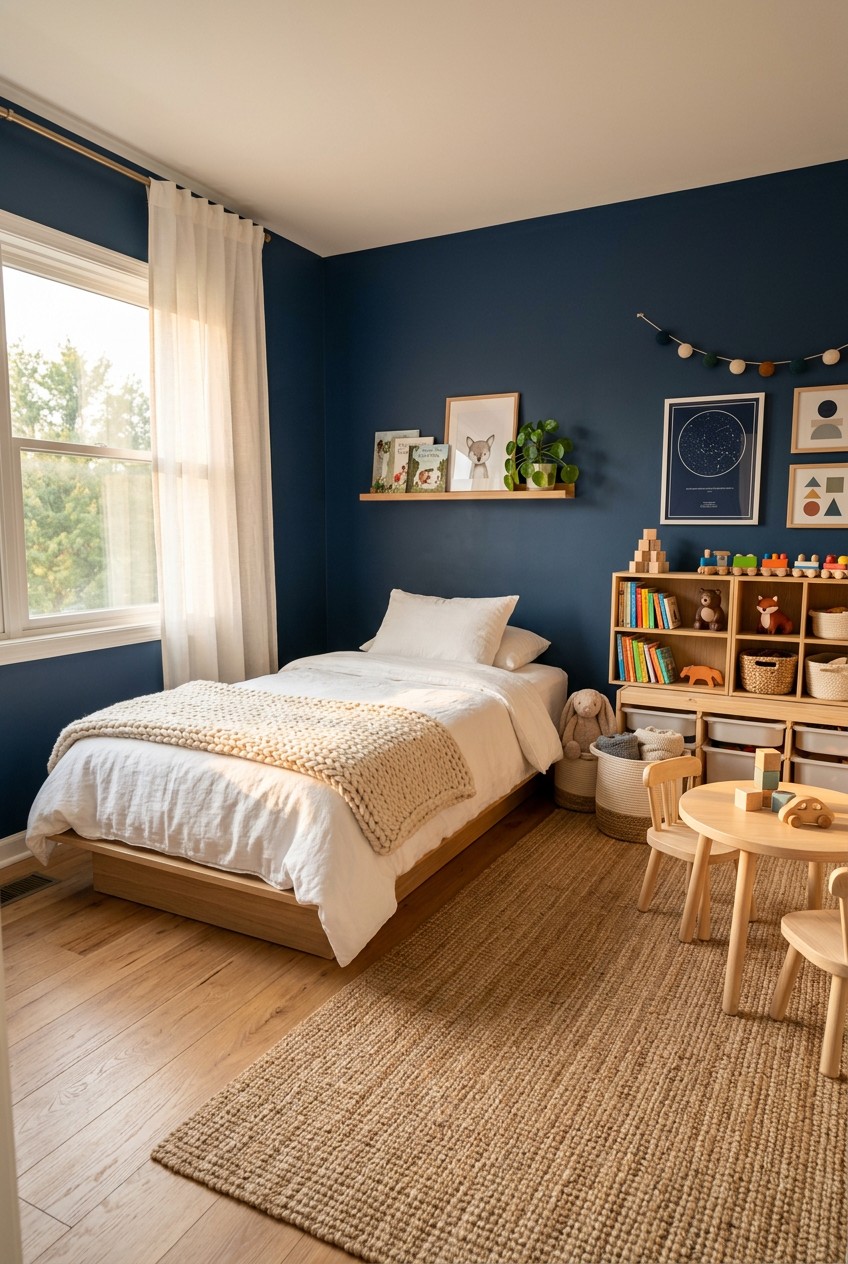
Build independence by incorporating basic Montessori principles. Use child-sized furniture. A low bed or floor bed allows your toddler to safely get in and out independently. Install low, open shelving to display toys. I use the IKEA KALLAX units. They cost exactly $39.99. They are absolute workhorses in a playroom. Only display 6 to 8 toys or books at a time. Rotate them weekly to maintain interest and prevent visual overwhelm. I used to dump fifty toys into a massive plastic bin. My son would dump the entire bin on the floor, look at the giant mess, and cry. It was too much visual noise. Now, I put four wooden blocks, two metal cars, and two board books on the KALLAX shelf. He actually plays with them. The smooth, white laminate of the KALLAX is easy to wipe down. I just use a damp cloth and 1 tablespoon of mild dish soap. Less is more. When they can see their options clearly, they play independently for much longer.

Delta Children Nursery Storage 48 Piece Set
Honestly, Delta Children Nursery Storage 48 Piece Set – Easy Storage/Organizatio surprised me — sturdier than it looks in the photos, and over 17 buyers gave it 4.5 stars.
10. Hang Wall Art at Toddler Eye Level

Instead of hanging art at adult eye level, place it where your toddler can actually appreciate it. This is a huge pet peeve of mine. I see beautiful nurseries with art hung six feet off the ground. The kid can’t even see it. If you’re hanging art above furniture like a dresser or crib, position the bottom edge of the frame 8 to 10 inches (20 to 25 cm) above the furniture. Ensure the artwork spans 60 to 75 percent of the furniture’s width. For example, use 40 to 54 inches of art width for a 6-foot crib. Use lightweight materials like canvas or acrylic plexiglass instead of glass. Heavy glass frames are a safety hazard. I bought three 11×14 inch acrylic frames from Target for $14.99 each. I framed some vintage train prints. When my son stands in his crib, he can actually point at the trains and babble at them. He touches the smooth acrylic surface. It makes the room feel like it belongs to him, not me.
11. Maximize Storage with Accessible Solutions

Integrate smart storage solutions to keep clutter at bay. Opt for solid dressers with deep drawers. Use low shelves with bins or baskets made from natural materials like woven seagrass or wood. I love the smell of dried seagrass. It brings a subtle, earthy scent into the room. Consider a low rail in the wardrobe. Install hooks at your child’s height, around 30 to 36 inches from the floor. This encourages independent dressing and tidying. Last week, I was at Sprouts buying a $4.99 natural all-purpose cleaner. I realized I needed a better way to store his tiny, muddy shoes. I bought a shallow woven basket for $18.00. Now it sits right by his door. He actually throws his shoes in there. Well, most of the time. I installed three wooden peg hooks at 32 inches high. He hangs up his own $25.00 fleece jacket. It’s not perfectly neat, but it’s off the floor. Giving them accessible storage changes the entire dynamic of the room.
12. Create a Dedicated Play Zone

Designate a specific area in the room for play with ample open floor space. Define it with a soft rug or a padded play mat. This helps your child understand spatial boundaries. It encourages highly imaginative play. Incorporate a small child-sized table and chair set. I highly recommend the solid wood sets from IKEA or Melissa & Doug. They typically cost between $50 and $150. I bought a Melissa & Doug wooden table for $129.99. The blonde wood is heavy and doesn’t tip when he leans his entire body weight on it. The smooth surface is perfect for coloring. Having a dedicated zone means the rest of the room stays relatively calm. The bed is for sleeping. The table is for playing. I keep a small metal bucket filled with 24 chunky crayons right in the center of the table. The sharp, waxy smell of the crayons always reminds me of my own childhood. Don’t let toys bleed into every single corner of the room. Contain the chaos.

Premium Hypoallergenic Baby Crib Mattress and Toddler
Honestly, Premium Hypoallergenic Baby Crib Mattress and Toddler Mattress – 52″ x surprised me — sturdier than it looks in the photos, and over 17 buyers gave it 4.5 stars.
13. Involve Your Toddler in Design Choices

Allow your toddler to have input on certain design elements. Let them choose colors for an accent wall or select wall decals. This builds a strong sense of ownership. It makes the scary transition to their new room smoother. I bribe my kid with $2.99 peanut butter pretzels from Trader Joe’s while we look at decor online. I let him pick out removable wall stickers from Eliza Doodle Designs. A pack costs exactly $24.00. He chose a set of watercolor pine trees. We spent an hour peeling the sticky vinyl off the backing and smoothing it onto the wall. The decals have a slightly textured, matte finish. If he places one crooked, I can easily peel it off and fix it. They don’t strip the expensive paint. When he inevitably decides he hates trees and only loves dump trucks, I can peel them off in ten minutes. Giving them a tiny bit of control prevents huge power struggles down the road.
14. Ditch Overly Themed Decor for Adaptability

Resist the urge to commit to an intense, fleeting theme. Please don’t paint a giant cartoon character mural on the wall. I made this horrible mistake with my nephew. I painted a massive, bright Paw Patrol mural. Six months later, he was suddenly terrified of dogs. We had to prime and repaint the entire room. It was exhausting. Instead, choose a neutral foundation. Incorporate playful elements through easily changeable decor. Think bedding, wall art, or small accessories. This ensures the room can adapt as your child’s interests change without requiring a complete, expensive overhaul. I bought a $34.99 organic cotton duvet cover with tiny green dinosaurs on it. When he outgrows dinosaurs, I’ll just buy a new duvet cover. The walls stay sage green. The furniture stays natural wood. The heavy, expensive items remain neutral. You’re saving yourself so much money and weekend labor. Let the cheap stuff carry the theme.
15. Incorporate Interactive Wall Elements

Add elements to the walls that your toddler can actually touch and play with. Think chalkboard paint, felt boards, or magnetic panels. I painted the lower half of his closet door with Rust-Oleum chalkboard paint. A quart costs $17.98. It took three coats and smelled pretty strong, so I did it outside. But the final result is amazing. The gritty, matte black texture is perfect for thick, dusty chalk. He spends thirty minutes a day just scribbling. I also hung a large felt board for $22.50. I bought a pack of 50 colorful felt shapes. The soft, fuzzy pieces stick perfectly to the board. He moves them around to create weird little scenes. It keeps things off the floor and uses vertical space. It’s brilliant for small rooms. Plus, it gives them a sanctioned place to draw on the walls. It saves my actual painted walls from rogue crayon attacks. (Took me years to figure out.)
I’ve spent years tweaking these spaces, and honestly, the best toddler boy room ideas are the ones that save your sanity. Skip the impossible Pinterest perfection. Focus on safety, dark curtains, and storage they can actually reach. Don’t forget to pin this article for later when you’re standing in the paint aisle feeling overwhelmed. You’ve got this.

Letmxiu Premium Crib & Toddler Mattress,100% Knitted Fabric
If you want something that just works, Letmxiu Premium Crib & Toddler Mattress is a safe bet (3 reviews, 4.5 stars).
Frequently Asked Questions
What are the best colors for a toddler boy room?
Stick to earthy neutrals like sage green, terracotta, clay brown, and warm beige. These tones create a calming environment that promotes better sleep and won’t overstimulate your toddler.
How can I make my toddler’s room safer?
Always anchor heavy furniture like dressers and bookshelves to wall studs using metal anti-tip kits. Ensure crib slats are under 6 cm apart and use cord-free lighting to prevent hazards.
What is a Montessori-inspired toddler room?
A Montessori room focuses on building independence. It features child-sized furniture, floor beds, and low, open shelving with a limited number of accessible toys to prevent overwhelm.
Are blackout curtains necessary for a toddler room?
Yes, 100% blackout curtains are crucial. They block early morning sunlight and artificial street lights, helping your toddler maintain a consistent, healthy sleep schedule without waking up at dawn.
