What’s Inside
- Optimize Sleep Environments with Individual Sound Machines
- Implement True Blackout Window Treatments
- Utilize an “OK to Wake” Clock for Toddlers
- Prioritize Bunk Bed Safety for Older Toddlers
- Anchor All Furniture to the Wall in a Shared Toddler Room
- Implement Vertical Storage Solutions
- Create Defined Zones with Room Dividers
- Opt for Multi-Functional Furniture
- Color-Code Storage for Individual Belongings
- Incorporate Sensory-Friendly Elements
- Designate Individual “Special Spots”
- Plan for a Safe and Accessible Play Area
- Create Opportunities for Sibling Bonding Activities
- Embrace Sustainable and Non-Toxic Materials
- Establish Clear Routines and Expectations
- Use Rugs to Anchor Separate Spaces in a Shared Toddler Room
- Maximize Closet Space with Double Hang Rods
Three years ago, I stood in the doorway of my house at 2 AM. My two-year-old was screaming, and the baby was wailing in stereo. Designing a shared room felt impossible that night. I’d spent weeks picking out matching crib sheets and a cute rug, totally ignoring the logistics of putting two tiny humans with different sleep schedules in a 10×12 box. The air smelled like stale milk and desperation. My feet were freezing on the hardwood floor because I’d forgotten my slippers. I realized right then that aesthetics don’t matter if nobody sleeps. If you’re staring down the barrel of room-sharing, I’m here to tell you how to survive it. Let’s skip the pretty magazine photos and talk about what works. I’ve made every mistake so you don’t have to. It took me years to figure this out. Here’s my guide to making it work without losing your mind.
1. Optimize Sleep Environments with Individual Sound Machines

I tried using one central sound machine for three miserable months. It’s a massive mistake. The baby would cry, the toddler would wake up, and nobody slept. You need a dedicated machine right next to each crib or bed to create a personalized sound bubble. I’m obsessed with the Hatch Rest+ 2nd Gen. It costs $89.99 and gives you a nightlight, sound machine, and a time-to-rise function controlled by your phone. For the baby’s side, I prefer a natural, non-looping fan sound. The Yogasleep Dohm Nova runs between $64.99 and $74.99 and provides a deep, mechanical noise that drowns out toddler chatter. The digital LectroFan EVO ($49.95) gives you more volume, but the Dohm’s analog fan sounds less tinny to me. Put the machine about 3 feet away from the bed. Keep the volume around 50 decibels, like a normal shower. It creates a wall of sound between them. It changed how I handle nap times.
2. Implement True Blackout Window Treatments

Don’t fall for the “room darkening” label at the store. I bought those once, and they only block 90 percent of the light. That remaining 10 percent wakes a toddler at 5:15 AM when the summer sun comes up. You need 100 percent blackout curtains. Look for thick, tightly woven fabrics with a heavy lining. I bought the Pillowfort Blackout Curtains from Target for $24.99 per panel; they feel like thick canvas. To make this work, the curtain must extend beyond the window frame by at least 6 inches on all sides. I overlap the middle panels by 4 inches and use a wrap-around curtain rod ($19.98 at Walmart) so the fabric sits flush against the wall. No light leaks. No early wake-ups. The room should be so dark you can’t see your hand in front of your face. Wash them first to get rid of that new-package plastic smell.
3. Utilize an “OK to Wake” Clock for Toddlers

Before I got a sleep clock, my oldest would climb out of bed, walk over to the crib, and poke the baby in the eye at dawn. It’s infuriating. You have to give your toddler a visual cue so they know when it’s safe to move around. The Gro-clock is a classic, priced between $64.90 and $98.07. It shows a blue star for sleep and a yellow sun for morning. Personally, I prefer the LittleHippo MELLA Ready to Rise clock. It costs $64.00 on Amazon and looks like a cute robot face. The yellow light glows for 15 minutes before turning green, giving your toddler a heads-up. I put this on a 12-inch nightstand next to the toddler bed. Enforce the rule strictly. If they get up before the green light, silently walk them back to bed. I’ve done this 14 times in one morning. It takes a week, but it works.

Hotmoon Sound Machine Baby Night Light
Hotmoon Sound Machine Baby Night Light punches above its price — 194 buyers rated it 4.5 stars. I would buy it again.
4. Prioritize Bunk Bed Safety for Older Toddlers

Bunk beds save floor space, but they terrify me if they aren’t set up perfectly. The Consumer Product Safety Commission has strict rules for a reason. Children under 6 should never sleep in the top bunk. Period. If you’re moving an older sibling up there, measure everything. The guardrails must be on all four sides and extend at least 5 inches above the mattress. I bought a 6-inch memory foam mattress ($119.00 at Costco) to ensure the rails were high enough. The gap between the rail and mattress can’t exceed 3.5 inches. I checked every gap with a tape measure. You also need 36 inches of clearance between the top mattress and the ceiling. I bought the Storkcraft Caribou Solid Hardwood Twin Bunk Bed for $249.99; the wood feels sturdy and smooth.
5. Anchor All Furniture to the Wall in a Shared Toddler Room

I can’t stress this enough. When you put two kids in one room, they’ll eventually try to climb the furniture. Last Tuesday, I caught my youngest trying to scale a dresser. If that hadn’t been anchored, it would have crushed him. Anchoring is non-negotiable. Throw away the cheap plastic zip-ties that come with the furniture. Go to Home Depot and buy the Safety 1st Metal Furniture Straps for $9.99. You get metal brackets and a steel cable. Screw the bracket directly into a wooden wall stud, not just the drywall. Use a stud finder ($14.97) and a 2-inch wood screw. I anchored a heavy 6-drawer IKEA Hemnes dresser ($299.00) this way. It doesn’t budge. The peace of mind is worth the 20 minutes of drilling. You might also like: 15 Lovely Baby Boy Crib Bedding Ideas That Are Totally Worth It
6. Implement Vertical Storage Solutions

Floor space is your most valuable real estate. If you cover the floor with toy boxes, nobody has room to play. Build up. I’m a massive fan of the IKEA TROFAST system. I bought the tall pine frame for $69.99 and filled it with 6 plastic bins ($4.00 each). Put the heavy, safe toys in the bottom bins where the toddler can reach them. Put the baby supplies—like diapers and a 16 oz tub of Aquaphor—in the top bins. I also installed a row of 4 wooden peg hooks ($12.99 at Target) for jackets and backpacks. This keeps the floor clear. I learned that the hard way after stepping on a sharp plastic Lego barefoot in the middle of the night. My heel bled for an hour. Keep the floor clean. You might also like: 15 Charming Safari Nursery Lighting Ideas for Every Budget

SNSLXH 5 Pack Stackable Closet Storage Basket
SNSLXH 5 Pack Stackable Closet Storage Basket has been one of the most consistently praised picks in this category. 39 reviewers averaged 4.5/5.
7. Create Defined Zones with Room Dividers

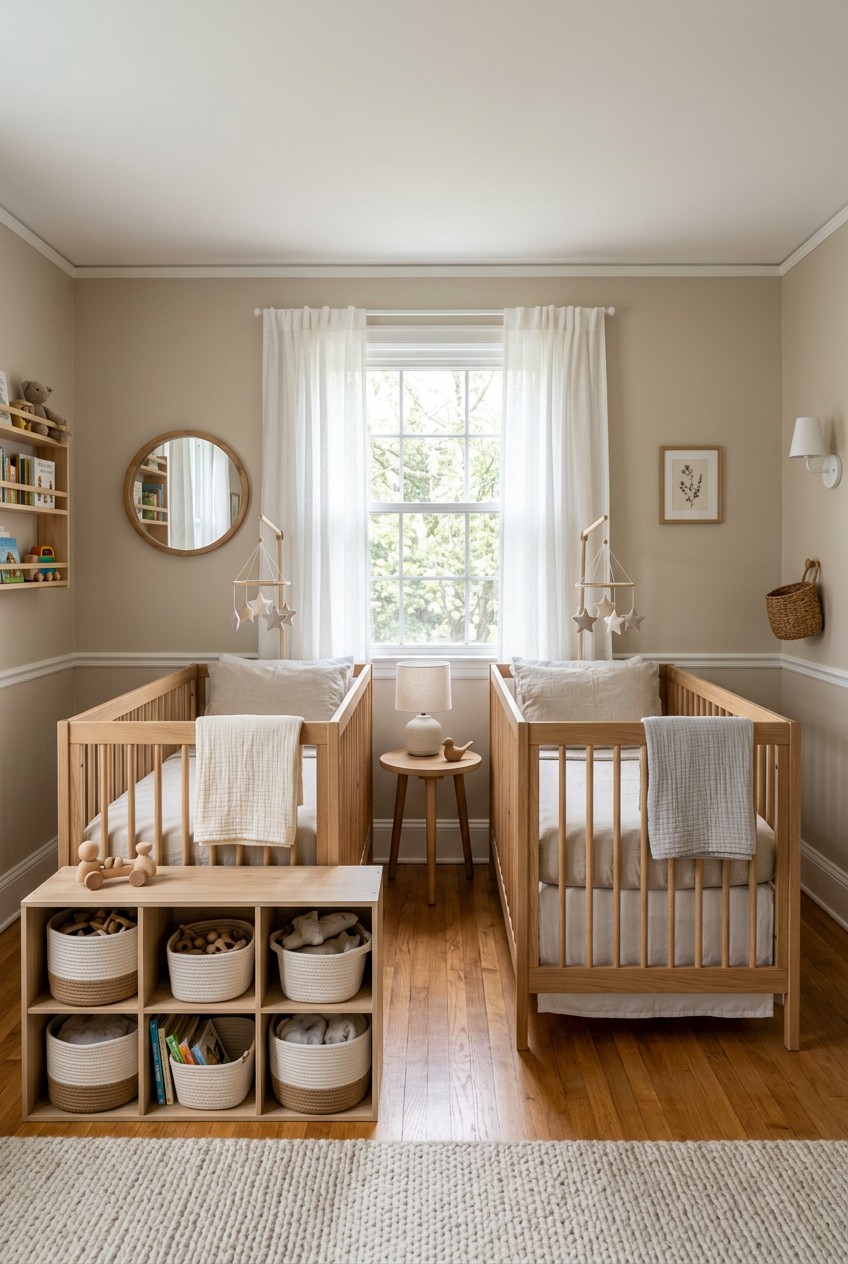
Even in a tiny 10×10 room, kids need their own territory. You don’t need a wall, but a visual barrier stops fights. I used an IKEA Kallax 4-cube bookshelf ($49.99) placed perpendicular to the wall between the two beds. It creates a physical barrier and gives you 4 extra cubbies for storage. Anchor the side of the shelf to the wall so it doesn’t tip. If you’re short on space, buy a heavy-duty tension rod from Costco for $19.99 and hang a curtain down the middle of the room. I bought a soft, linen-blend panel ($15.00) that adds a nice touch. You can pull it shut during nap time so they can’t make eye contact and giggle. It’s a cheap, temporary fix that makes a massive difference in sleep quality. You might also like: 15 Cozy Baby Nursery Decor Ideas for Any Style
8. Opt for Multi-Functional Furniture

When you’re cramming two lives into one room, every piece of furniture needs to pull double duty. Skip the single-purpose rocking chair. I bought a storage bench from Sprouts for $49.99. I keep 4 extra boxes of organic fruit snacks ($4.99 each) and spare crib sheets inside it. It gives me a place to sit while nursing, and it hides clutter. For the baby, I recommend a convertible crib that turns into a toddler bed. The Delta Children Emery 4-in-1 Crib ($199.99) is fantastic. The white paint is smooth and doesn’t chip. I also bought flat, rolling plastic storage drawers ($14.99 at Walmart) that slide under the toddler’s bed for out-of-season clothes. If a piece of furniture only does one thing, it doesn’t belong here.
9. Color-Code Storage for Individual Belongings

Toddlers are territorial. If the baby touches a toy that belongs to the older kid, a meltdown is guaranteed. You need a system they understand. Toddlers can’t read, but they understand colors. I assigned blue to my oldest and yellow to the baby. I bought 6 blue Y-weave plastic baskets from Target ($4.00 each) for the toddler’s side and 6 yellow ones for the baby. The plastic has a matte finish and wipes clean. When it’s cleanup time, I just say, “Put your cars in the blue basket.” It eliminates confusion. I even color-coded their laundry hampers with mesh pop-up ones ($6.99 each). It sounds crazy, but this stopped 80 percent of the crying during cleanup. They know exactly what belongs to them.

SCHNAUZER HOME Crib Mattress
SCHNAUZER HOME Crib Mattress punches above its price — 88 buyers rated it 4.5 stars. I would buy it again.
10. Incorporate Sensory-Friendly Elements

A shared room gets chaotic fast. You need to add elements that calm their nervous systems. I focus on texture and smell. I bought a plush, high-pile shag rug from Rugs USA for $129.00. It feels like a cloud and absorbs sound. I also installed a dimmer switch on the main light ($24.98 from Home Depot) to keep things low during the bedtime routine. For smell, I used to buy cheap lavender spray, but it smelled like chemicals and cardboard. I threw it out. Now I buy 365 Everyday Value Organic Lavender Essential Oil from Whole Foods (0.5 oz for $9.99). I put 3 drops in a ceramic diffuser ($19.99) with 1/2 cup of water. It fills the room with a soft, natural scent that makes my shoulders drop the second I walk in.
11. Designate Individual “Special Spots”

Kids in a shared space need a tiny piece of real estate that is 100 percent theirs. It doesn’t have to be big. For my toddler, I created a “treasure box” using a small wooden crate from Trader Joe’s. The original was too rough, so I sanded it down with 120-grit sandpaper and painted it red. I bought a tiny brass padlock ($5.99) and gave him the key. He keeps rocks, broken crayons, and stickers in there. The baby isn’t allowed to touch it. For the baby, I installed a 24-inch acrylic floating wall ledge ($16.99 on Amazon) next to the crib to display three special board books. Giving them these protected zones makes them much more willing to share the rest of the room.
12. Plan for a Safe and Accessible Play Area

You have to carve out an empty 4×4 foot square of floor for play. If the room is just beds and dressers, they’ll play in the hallway. I laid down Skip Hop Playspot Interlocking Foam Floor Tiles ($84.99). They’re 0.5 inches thick and feel squishy but firm. It’s perfect for the baby’s tummy time and wipes clean when the toddler spills applesauce. Keep this area in the center or near the window. I keep a soft-sided canvas bin ($12.99) on the edge of the mat with 5 or 6 shared toys. Everything else stays in the TROFAST bins. If you leave too many toys out, the play area just becomes a messy tripping hazard. Keep it minimal.

Beautiful Wooden Baby Closet Dividers Set of 7
Beautiful Wooden Baby Closet Dividers Set of 7 – Double-Sided Organize punches above its price — 11 buyers rated it 4.5 stars. I would buy it again.
13. Create Opportunities for Sibling Bonding Activities

While separation is important for sleep, you want them to like each other. I set up a tiny reading corner for them. I bought an oversized floor pillow from Target for $39.99 covered in soft, ribbed corduroy. I keep a stack of picture books nearby. Before bed, they both sit on the pillow while I read. It forces them into close, calm physical proximity. On rainy days, I take a king-sized flat sheet and drape it over the crib and bed to make a massive tent. I bought a 64-pack of Crayola crayons ($5.99) and a roll of butcher paper ($14.99). I roll out 4 feet of paper under the tent and let them color. It’s messy, but hearing them giggle under that sheet makes the struggle worth it.
14. Embrace Sustainable and Non-Toxic Materials

Toddlers lick everything. Babies chew on crib rails. You want the materials in their room to be safe. I used to buy cheap sheets, but they pilled after three washes. Now, I only buy organic cotton. I bought the Pottery Barn Kids Organic Cotton Fitted Crib Sheet for $29.00. The fabric feels crisp and holds up beautifully. When painting, you must use zero-VOC paint. I used Clare Paint in “Fresh Kicks” ($64.00 per gallon). It goes on thick and has zero chemical smell. You can paint the room on a Saturday morning and let the kids sleep in it that same night. It’s a bit more expensive, but worth it for their little lungs.
15. Establish Clear Routines and Expectations

You can buy perfect furniture, but if your routine is a mess, the room will be a disaster. You have to stagger their bedtimes. I put the baby down at 7:00 PM. The room is dark, the Hatch sound machine is on, and the door is shut. At 7:45 PM, I bring the toddler in. We use a visual routine chart I bought on Etsy for $12.50. It has little velcro pictures of pajamas, a toothbrush, and a book. The toddler knows he has to use his “whisper voice” the second we cross the threshold. If he yells, we leave and try again. It took three weeks of frustration to get this right. I was exhausted. But sticking to the same sequence every night wires their brains to calm down. Consistency is your best weapon.

Modanais Baby Diaper Caddy Organizer Cart
Honestly, Modanais Baby Diaper Caddy Organizer Cart – 3 Tier Rolling Storage Car surprised me — sturdier than it looks in the photos, and over 308 buyers gave it 4.5 stars.
16. Use Rugs to Anchor Separate Spaces in a Shared Toddler Room

If you have hardwood floors, a large rug is essential. Don’t just throw one big rug in the middle. I like using two smaller rugs to visually anchor each child’s sleeping zone. I bought two Ruggable washable rugs in 3×5 size ($109.00 each). I put one under the baby’s crib and one under the toddler’s bed. I made the mistake of buying cheap jute rugs once; they shed coarse fibers and felt like walking on a Brillo pad. Never again. The Ruggable ones have a soft, low-pile texture, and you can peel the top layer off to wash it when someone throws up. Which will happen. Buy the cushioned rug pad ($39.00) so they don’t slide around on the hardwood.
17. Maximize Closet Space with Double Hang Rods

Closet space is a nightmare with two kids. Tiny clothes don’t need 5 feet of vertical space. You’re wasting room. I went to Home Depot and bought a ClosetMaid Adjustable Double Hang Closet Rod for $16.98. It hooks onto your existing rod and creates a second bar 3 feet lower. I hang the toddler’s shirts and pants on the top using velvet non-slip hangers ($14.99 for a 50-pack at Target). I hang the baby’s onesies on the bottom. It doubles your capacity. I also installed a 12-inch deep wire shelf ($9.98) above the floor for shoes. Before this, the bottom of the closet was a mountain of mismatched socks and dirty sneakers. Now, it’s perfectly divided and functional.
Designing a shared space isn’t about making it look like a catalog. It’s about survival, sleep, and creating a space where your kids feel safe. I’ve rearranged my kids’ room five times, and I’m sure I’ll do it again. Don’t stress if it takes a few weeks for them to adjust. Stick to your routines, anchor that furniture, and invest in a good sound machine. You’ve got this. If you found these tips helpful, pin this article to your nursery design board so you can find the product links when you’re ready to start building!
Frequently Asked Questions
How do I keep my toddler from waking the baby?
Use individual sound machines near each bed to create personalized sound bubbles. The Hatch Rest+ is great for toddlers, while a mechanical fan sound like the Yogasleep Dohm works best for babies. Staggering bedtimes also prevents them from keeping each other awake.
Is it safe to use bunk beds in a shared toddler room?
Only if the older child is at least 6 years old. The Consumer Product Safety Commission mandates guardrails on all sides extending 5 inches above the mattress, and gaps no larger than 3.5 inches to prevent entrapment.
How can I divide a small shared toddler room?
You don’t need a real wall. Use a low bookshelf like an IKEA Kallax anchored to the wall, or install a heavy-duty tension rod with a soft curtain. This creates a visual barrier that helps kids feel they have their own space.
What is the best way to organize toys for two kids?
Color-code everything. Assign blue bins to the toddler and yellow bins to the baby. Use vertical storage like the IKEA TROFAST system, placing safe toddler toys on the bottom and baby supplies out of reach on the top shelves.
