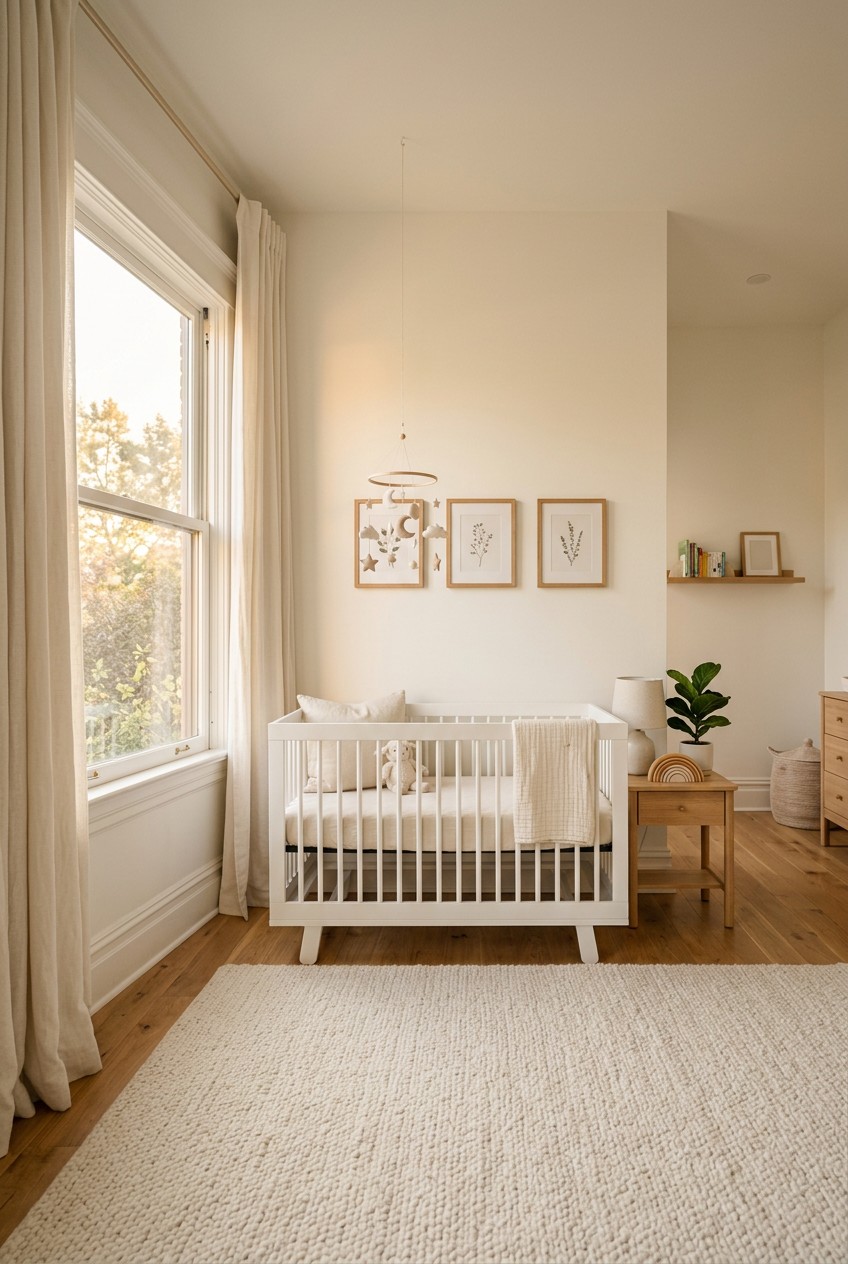
What’s Inside
- Create a Dedicated Drop Zone by the Door
- Prioritize Safe Crib Placement Away from Hazards
- Optimize Your Changing Station for Ergonomics
- Invest in a Multi-Functional Glider
- Implement Layered and Dimmable Lighting
- Install Total Blackout Window Treatments
- Maximize Vertical Storage with Smart Solutions
- Enhance Air Quality with a HEPA Purifier
- Choose Non-Toxic Natural Fiber Rugs
- Embrace Biophilic Design Elements
- Implement Strategic Soundproofing for Tranquility
- Plan for Future Growth with Convertible Furniture
- Avoid Overcrowding the Floor Space
- Integrate Calm Technology Beautifully
- Secure All Heavy Furniture to the Wall
- Organize Closets by Clothing Size
- Build a Mobile Nursing Station
- Keep Toy Storage Low and Accessible
- Design a Cozy Floor Play Area
Three years ago, I tripped over a rogue humidifier cord at 2 AM, dumped four ounces of breastmilk onto clean onesies, and sat on the floor sobbing. That was the moment I realized my baby’s room was a wreck. When you’re plotting nursery layouts, it’s easy to get distracted by cute wallpaper. But if the room isn’t functional, you’re going to be miserable. I’m Lauren, a nursery design consultant, and I’ve seen every layout mistake. I tried setting up rooms wrong for months before I finally figured it out. You need a space that supports sleep deprivation, keeps your baby safe, and feels calm. Let’s walk through 19 specific, gorgeous layout strategies. I’m sharing exact measurements, real prices, and the brutal lessons I learned the hard way.
1. Create a Dedicated Drop Zone by the Door

I used to walk into my daughter’s room and immediately drop dirty burp cloths on the nearest clean surface. It drove me crazy. You need a drop zone right by the entrance. I’m talking about a specific spot for the chaos. I grabbed a simple woven basket from Target for $14.99 and placed it to the right of the door. Now, when I walk in at 3 AM with a squirming baby and 2 tablespoons of spit-up on my shoulder, I’ve got a place to dump the mess. This stops clutter from taking over your clean surfaces. You don’t need anything fancy. A small wall-mounted hook or a canvas bin works perfectly. Keep it within a 24-inch radius of the door frame so you aren’t tracking messes across the room. I learned that the hard way after ruining a gorgeous rug with a dropped bottle.
2. Prioritize Safe Crib Placement Away from Hazards

When planning your nursery, the crib placement is your first step. I originally wanted our crib under the window because it looked pretty on Pinterest. Big mistake. You must keep the crib away from windows, blinds, and electrical cords to prevent strangulation risks and falls. Position the crib in a quiet corner, ideally near the door so you can peek in without waking the baby. Ensure there aren’t any heavy shelves or wall hangings directly above the mattress. For safety, you need a crib made after 2011 to meet current standards. I bought the Babyletto Hudson 3-in-1 crib for $399, and it fits perfectly in the corner. Skip the bumper pads and loose blankets. They look cute, but they aren’t safe. Keep the space around the crib completely bare within a 3-foot radius. Trust me on this.
3. Optimize Your Changing Station for Ergonomics

My lower back was destroyed during the first three months of motherhood because I used a changing table that was too low. Set your changing surface at an ergonomic height to prevent back strain. For most adults, this means finding a surface between 36 to 43 inches high. It should hit right where your elbows bend at a 90-degree angle when standing. I eventually switched to the IKEA HEMNES dresser, which costs around $199, and added a changing pad on top. Keep your essentials like diapers, wipes, and creams within a 10 to 16-inch reach from the front edge. I keep 4 oz tubes of diaper cream and stacks of wipes in the top drawer. You shouldn’t have to take your hands off the baby to reach a clean diaper. If you can’t reach it instantly, move it closer.

Beautiful Wooden Baby Closet Dividers Set of 7
If you want something that just works, Beautiful Wooden Baby Closet Dividers Set of 7 – Double-Sided Organize is a safe bet (11 reviews, 4.5 stars).
4. Invest in a Multi-Functional Glider

You’re going to spend hundreds of hours in your nursery chair. I bought a cheap, stiff rocking chair initially and regretted it every single night. A glider is a non-negotiable essential. Look for models with a power recline, a smooth swivel, and built-in USB ports. I’m obsessed with the Babyletto Kiwi, which runs about $799, or the Nurture& The Glider Plus if you’ve got a larger budget at $1,499. You want performance fabrics that wipe clean easily because milk spills are inevitable. Last Tuesday at Whole Foods, I was telling a pregnant friend to skip the aesthetic linen chairs and buy something functional. I keep a small basket next to my glider with a 16 oz water bottle and a stash of granola bars. You won’t want to get up once the baby finally falls asleep on your chest.
5. Implement Layered and Dimmable Lighting

Overhead lighting is usually too harsh for a sleepy infant. You need a mix of ambient, task, and night lighting. I installed dimmable overhead lights and added a small table lamp near the glider. A nightlight is crucial for 2 AM diaper changes, but it can’t be too bright or it will ruin your baby’s sleep. I highly recommend smart bulbs like the Philips Hue color-changing bulbs, which cost roughly $44.99 each. You can control the dimming and set the color temperature to a warm amber right from your phone. I tried using a standard 60-watt bulb in a nursery lamp for months before figuring out it was keeping my son awake. Now, I keep the lighting below 20 lumens during night feedings. It makes a massive difference in how quickly we both get back to sleep.
6. Install Total Blackout Window Treatments

If you want your baby to sleep past 5 AM, you need near-total darkness. I’m talking about blocking 98 to 99 percent of all incoming sunlight. Regular curtains won’t cut it. I personally swear by the ChrisDowa Blackout Roller Shades, which I grabbed on Amazon for $29.99. You must choose cordless options to eliminate strangulation hazards. LazBlinds Cordless Cellular Blinds are another fantastic, safe choice. I used to tape black trash bags to the windows during the summer because our original curtains leaked so much light. It looked terrible. Proper blackout shades promote healthy sleep cycles by encouraging melatonin production. Make sure the shade overlaps the window frame by at least 2 inches on each side to prevent light from bleeding through the edges. Your future, well-rested self will thank you for this one. You might also like: 20 Lovely Space Saving Small Nursery Ideas for Every Budget

Criusia Over the Door Organizer
Criusia Over the Door Organizer has been one of the most consistently praised picks in this category. 208 reviewers averaged 4.5/5.
7. Maximize Vertical Storage with Smart Solutions

Floor space is precious in a small room. Combat the clutter by using your vertical space. Floating shelves, wall bins, and clear book ledges can hold so much stuff without eating up your walking area. I’m a huge fan of the IKEA RÅSKOG utility cart. It’s only $39.99 and holds all my portable diaper and feeding essentials. I can roll it right next to the glider or push it into the closet when guests come over. For the actual closet, the IKEA PAX wardrobe system is incredible for organization. Inside the drawers, I use IKEA SKUBB boxes, which come in sets starting at $4.99, to separate tiny socks from onesies. I used to dig through massive piles of clothes before I started folding things vertically in these little boxes. It keeps everything visible and accessible. You might also like: 15 Lovely Baby Boy Crib Bedding Ideas That Are Totally Worth It
8. Enhance Air Quality with a HEPA Purifier

Babies spend a massive amount of time indoors, making the air quality in their room extremely important. I didn’t think about this until my daughter got her first cold. Now, I won’t set up a room without a HEPA air purifier with an activated carbon filter. These machines remove dust, allergens, and VOCs from the air. I bought the Levoit Core 300S for $149.99, and it fits perfectly on a small side table. If you’ve got a larger room, the Levoit Core 600S runs between $200 and $250 and is incredibly quiet. I keep ours running on the lowest setting 24/7. It doubles as a gentle white noise machine. Just make sure you place it at least 15 inches away from the wall so the air can circulate properly. Don’t shove it behind a heavy dresser. You might also like: 20 Inspiring Gold Crib Bedding Ideas You Can Try Today
9. Choose Non-Toxic Natural Fiber Rugs

Your baby is going to spend an absurd amount of time doing tummy time, crawling, and playing on the floor. You want rugs made from natural, non-toxic materials like organic cotton, wool, jute, or hemp. Look for certifications like GOTS or OEKO-TEX Standard 100. Avoid rugs with PVC backings, synthetic stain treatments, or flame retardants. I bought a cheap synthetic rug from a discount store once, and it smelled like harsh chemicals for three straight weeks. I ended up throwing it away. Now, I stick to 100 percent wool or washable cotton. If there’s a spill, I just mix 1/2 cup of baking soda with water to spot clean it. It’s much safer for tiny hands that constantly end up in their mouths. A 5×8 foot organic cotton rug usually costs around $150, and it’s worth every penny.

Delta Children Nursery Storage 48 Piece Set
If you want something that just works, Delta Children Nursery Storage 48 Piece Set – Easy Storage/Organizatio is a safe bet (17 reviews, 4.5 stars).
10. Embrace Biophilic Design Elements

A massive trend for 2026 is biophilic design, which basically means bringing natural elements indoors to create a calming, screen-free environment. I’m loving this shift. Incorporate natural materials like raw wood, rattan, and bamboo furniture. Use earthy color palettes like sage green, terracotta, and warm neutrals instead of loud primary colors. I picked up a gorgeous, baby-safe snake plant from Sprouts for $12.99 and placed it on a high floating shelf out of reach. It adds a pop of life to the room and helps purify the air. I also added a rattan light fixture that casts beautiful, natural shadows on the ceiling. You don’t need to turn the room into a jungle. Just adding three or four wooden accents and a live plant completely softens the vibe. It feels much more relaxing for both of you.
11. Implement Strategic Soundproofing for Tranquility

This is a lesser-known tip that completely saved my sanity. To minimize disruptions from the rest of the house, you need subtle soundproofing. I hung thick, heavy CUCRAF Total Blackout Curtains, which cost $35.99 a pair, over the windows to absorb street noise. I also placed a large, thick wool pad under the area rug to deaden footsteps. If you share a wall with a noisy living room, consider hanging acoustic art panels. You can buy Arrowzoom Acoustic Foam Panels for about $45 a pack and cover them with pretty fabric. I also bought a $9.99 roll of weatherstripping from Walmart and sealed the gaps around the nursery door. Before I did this, every time the dog barked downstairs, the baby woke up crying. Now, the room is a quiet little vault.
12. Plan for Future Growth with Convertible Furniture

The newborn stage goes by in a flash. A common mistake is buying furniture that only works for a six-pound infant. You need to invest in convertible pieces. Buy a crib that converts into a toddler bed and eventually a daybed. Buy a standard, wide dresser and securely attach a changing tray to the top, rather than buying a standalone changing table that you’ll throw out in two years. I bought a solid wood dresser from Costco for $350, and it still looks brand new in my four-year-old’s room today. This approach ensures longevity and saves you so much money. When you’re sketching out your floor plan, make sure you leave enough room for that crib to eventually become a toddler bed with a safety rail. You won’t want to rearrange the entire room when they turn two.

Criusia Drawer Organizer Clothes
If you want something that just works, Criusia Drawer Organizer Clothes is a safe bet (1 reviews, 4.5 stars).
13. Avoid Overcrowding the Floor Space

I see so many parents cramming a crib, a massive dresser, a bookshelf, a glider, an ottoman, and a toy chest into a tiny room. It makes the space feel cramped and stressful. Focus on the essentials first: the crib, the changing station, and the glider. You must leave enough clear floor space for movement and tummy time. I recommend keeping a bare minimum of a 3×3 foot square of open floor space right in the center of the room. When my son started rolling, he kept bumping into the legs of an oversized side table I owned. I finally moved it to the hallway, and the room felt instantly lighter. Less furniture means fewer things for a newly walking toddler to crash into. Keep it simple and spacious.
14. Integrate Calm Technology Beautifully

Modern nurseries are leaning heavily into calm tech, which means smart devices that blend into the decor without blinking lights or ugly wires. Choose low-EMF baby monitors like the ones from Bebcare, which run about $259. You want to conceal all cords with natural cable covers or hide them completely behind heavy furniture. My favorite piece of calm tech is the Hatch Rest+ sound machine. It typically costs between $60 and $90, and it offers white noise, a customizable night light, and a time-to-rise feature all in one sleek, minimalist unit. I control it entirely from my phone. I used to own a separate ugly fan, a plug-in nightlight, and a bulky clock radio on the dresser. Consolidating to one sleek device cleared up so much surface space and made the room look much more intentional.
15. Secure All Heavy Furniture to the Wall

This is a non-negotiable safety measure. Every single dresser, bookshelf, and tall piece of furniture in that room must be securely anchored to the wall studs using anti-tip kits. Once your baby becomes mobile, they will pull up on drawers and try to climb shelves. I bought a heavy-duty pack of metal anti-tip straps from Walmart for $12.99. It took my husband twenty minutes to install them on the dresser and the bookshelf. I vividly remember reading a terrifying news story about a falling dresser, and I immediately went upstairs with a drill. Don’t trust the plastic zip-tie anchors that come free with cheap furniture. They can snap under pressure. Buy the metal bracket kits. It’s a tiny investment of time and money that guarantees your child’s safety when you aren’t in the room.

StorageWorks Hanging Closet Organizer with Metal Rod
If you want something that just works, StorageWorks Hanging Closet Organizer with Metal Rod is a safe bet (18 reviews, 4.5 stars).
16. Organize Closets by Clothing Size

Baby clothes are impossibly tiny, and keeping them organized is a nightmare if you don’t use a system. I highly recommend buying a set of plastic closet dividers. You can find simple white ones at Target for $5.99. Label them by size: Newborn, 0-3 Months, 3-6 Months, and so on. Hang everything up by size, and keep a dedicated canvas bin on the floor for clothes they’ve outgrown. I used to shove outfits that were too small back into the drawer, which meant I was constantly trying to squeeze my baby into tight onesies during frantic morning changes. Keeping a specific bin for outgrown clothes changed my life. Once the bin fills up, I tape it shut, label it, and put it in the attic. It keeps the active wardrobe streamlined and stress-free.
17. Build a Mobile Nursing Station

You’re going to spend a lot of time trapped under a sleeping or feeding baby. A mobile nursing station is a lifesaver. I used a small, three-tier rolling cart and stocked the top tier with things I needed instantly: nipple cream, burp cloths, and a massive water tumbler. The middle tier held my snacks. I always grabbed a box of peanut butter pretzels from Trader Joe’s for $2.99 and kept them right there for 3 AM cravings. Skip the fat-free stuff. It tastes like wet cardboard, and you need the calories. The bottom tier held a spare swaddle and extra pacifiers. Being able to roll this cart from the glider to the living room couch was incredible. You won’t want to carry armfuls of supplies around the house while balancing a newborn on your hip. Took me years to figure out.
18. Keep Toy Storage Low and Accessible

When you’re designing the room, think about how your child will use it in a year. You want toy storage to be low to the ground so they can reach things safely without climbing. I bought three soft, woven cotton rope bins from Kroger for $19.99 each and lined them up along the baseboard. I keep soft plushies in one, wooden blocks in another, and board books in the third. Avoid heavy wooden toy chests with lids that can slam down on little fingers. I made that mistake with my first child and ended up taking the lid completely off the hinges after a scary pinch. Soft bins are lightweight, safe, and easy for a toddler to dig through. Plus, they add a nice textural element to the room’s design.
19. Design a Cozy Floor Play Area

Your final step in planning nursery layout ideas is creating a dedicated, soft spot for floor play. Babies need a safe, clean area to practice rolling and sitting up. I bought a thick, quilted organic cotton play mat from Whole Foods for $45 and placed it right in the center of the room. I layered it over our main rug for extra padding. Keep this area completely free of heavy furniture legs or sharp corners. I sit on this mat every single morning with my coffee while my youngest does tummy time. It defines the play zone and protects the main rug from the inevitable spit-up incidents. You can easily toss the cotton mat into the washing machine on hot, which you definitely can’t do with a giant area rug. It’s the perfect finishing touch. No exaggeration.
Designing your baby’s room shouldn’t feel like a stressful puzzle. If you focus on safe crib placement, ergonomic changing stations, and keeping the floor clear, the rest naturally falls into place. I honestly wish I had known these tips before I brought my first baby home. It would have saved me so many tears. Don’t forget to pin this article so you can reference these nursery layout ideas when you’re standing in the room with a tape measure. You’ve got this!
Frequently Asked Questions
Where is the safest place to put a crib in a nursery?
Position the crib in a quiet corner away from windows, blinds, and electrical cords to eliminate strangulation and fall risks. Ensure there aren’t any heavy shelves or wall hangings directly above the mattress.
How much floor space do I need in a nursery?
You should leave a bare minimum of a 3×3 foot square of clear, open floor space in the center of the room. This provides a safe area for tummy time and prevents the room from feeling cramped.
What is the best height for a nursery changing station?
An ergonomic changing station should sit between 36 to 43 inches high, hitting right where your elbows bend at a 90-degree angle. This prevents severe lower back strain during frequent diaper changes.
How can I block out light in my baby’s room?
Install high-quality, cordless blackout roller shades or cellular blinds that block 98 to 99 percent of sunlight. Ensure the shades overlap the window frame by at least 2 inches on each side to prevent light bleeding.
