What’s Inside
- Invest in a GREENGUARD Gold Certified Convertible Crib
- Choose a Breathable, Firm Crib Mattress
- Opt for a Comfortable, Ergonomic Glider
- Modern Nursery Ideas Always Embrace Biophilic Design
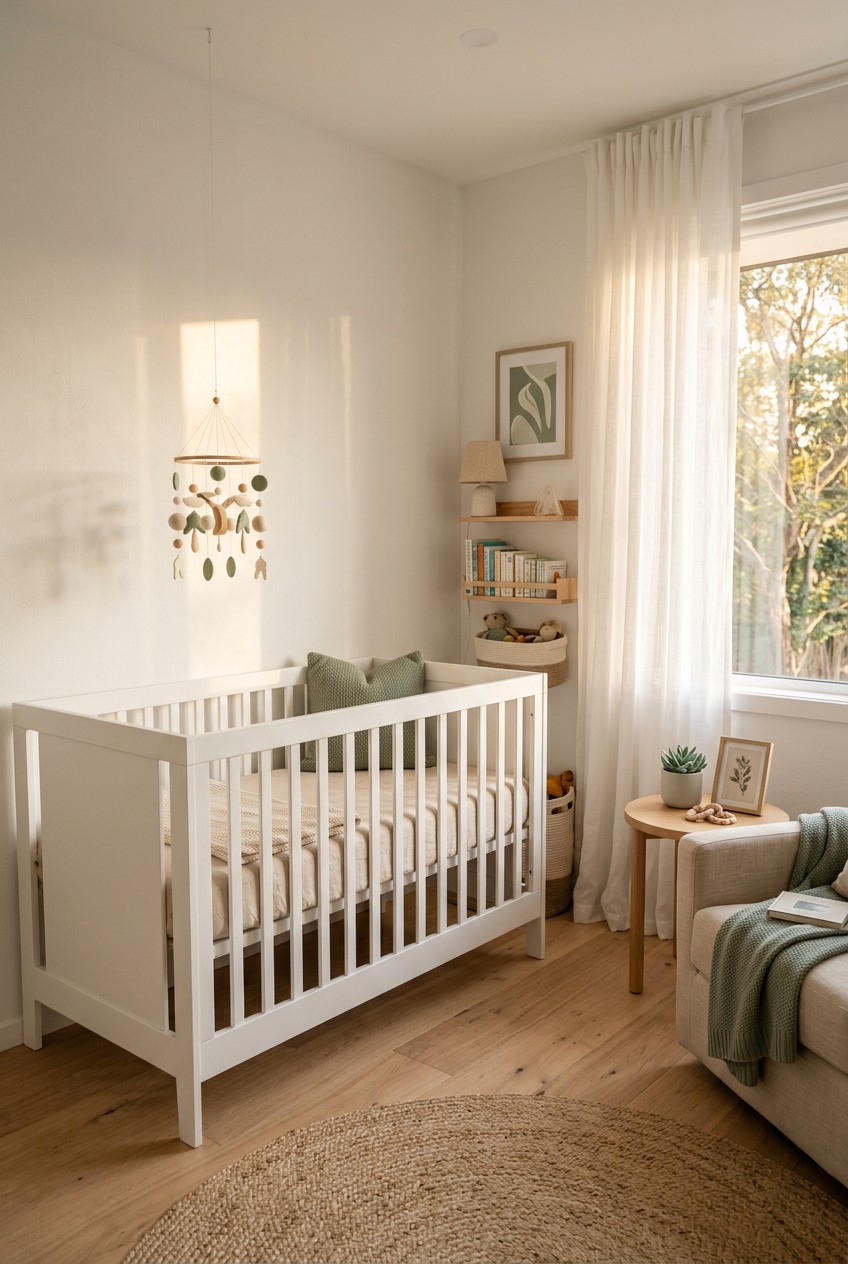
- Utilize Earthy, Muted Color Palettes
- Prioritize Multifunctional Furniture
- Implement Smart Storage Solutions
- Install Dimmable Lighting and Blackout Curtains
- Incorporate Safe, Air-Purifying Plants
- Choose the Right Rug Size for Play and Comfort
- Avoid Overly Themed Rooms
- Anchor All Heavy Furniture
- Create a Screen-Free Zone for Better Sleep
- The Best Modern Nursery Ideas Start With Functional Layout Zones
- Consider a Smart Crib for Enhanced Sleep Support
Last Tuesday at Whole Foods, I saw a pregnant woman crying in the baby aisle over a $14.99 organic swaddle blanket. I knew exactly how she felt. Finding nursery ideas shouldn’t make you want to rip your hair out in the grocery store. When I designed my first daughter’s room, I was overwhelmed. I ended up with a space that smelled like harsh chemical paint and featured a squeaky rocking chair that woke the baby every time I stood up. If you want nursery ideas that actually work, learn from my massive disaster. I’m sharing fifteen specific things I’ve learned from designing dozens of nurseries. We’re skipping the useless fluff. Let’s get into the exact pieces, measurements, and layouts that make a room beautiful and functional. I’ve made all the expensive mistakes so you don’t have to.
1. Invest in a GREENGUARD Gold Certified Convertible Crib

When I had my first baby, I bought a cheap crib online. It arrived smelling like a chemical factory. The sharp, bitter scent of cheap paint and glue filled the room for weeks. I returned it. You absolutely need to prioritize air quality. I’m telling you right now, invest in a GREENGUARD Gold Certified crib. This certification means the product has been tested for thousands of chemicals and VOCs. It helps ensure the air your baby breathes is clean. I personally swear by the Babyletto Hudson 3-in-1 Convertible Crib. It costs exactly $399.00 at Target. It’s made from sustainable New Zealand pine. The best part is that it transitions from a crib to a toddler bed and a daybed. You’re getting years of use out of one purchase. When you’re shopping, measure the slats. Ensure the slat spacing is no more than 2 3/8 inches apart to prevent your baby from getting trapped. Don’t skip this measurement. It’s a non-negotiable safety standard set by the CPSC and ASTM. Skip the cheap particleboard options. They aren’t worth the headache or the toxic smell. Trust me on this.
2. Choose a Breathable, Firm Crib Mattress

I tried this wrong for months before figuring it out. I bought a standard mattress and wrapped it in a crinkly, cheap plastic waterproof cover. Every time my daughter moved, it sounded like someone crumbling a bag of potato chips. Nobody slept. You need a breathable, firm crib mattress. A firm, snug-fitting mattress is crucial for reducing the risk of SIDS. My top recommendation is the Newton Baby Crib Mattress. You’ll spend about $299.99 for it, but it’s worth every penny. It measures 52 inches long, 28 inches wide, and 5.5 inches thick. It fits standard cribs perfectly. The core is made of a polymer material that is completely breathable. If your baby rolls over, they can breathe right through it. Plus, you can wash the entire core right in your shower. I remember standing in the baby aisle at Walmart last year, watching a mom stress over mattresses. I walked right up to her and told her to order the Newton online. Don’t mess around with soft mattresses. They feel nice to us, but they aren’t safe for infants.
3. Opt for a Comfortable, Ergonomic Glider

You’re going to spend countless hours in your nursery chair. You’ll be feeding, rocking, and crying in this chair at 3 AM. Comfort is key. Do not buy a cheap, stiff rocking chair from a thrift store. I did that. I ended up with horrible lower back pain. I had to make an emergency run to Costco just to buy a giant bottle of ibuprofen. You need an ergonomic glider with thick padding. Look for gliders with solid back support, padded armrests, and a smooth, quiet motion. The Babyletto Kiwi Swivel Glider Recliner is incredible. It costs $799.00. It features a power recline button and a built-in USB charging port. You can charge your phone while you’re trapped under a sleeping baby for two hours. Another great option is the Nestig Drift Glider Recliner. Expect to pay anywhere from $500 to over $1,000 for a high-quality model. It feels like a lot of money upfront. However, you’ll sit in it every single day for at least two years. Your back will thank you.

Beautiful Wooden Baby Closet Dividers Set of 7
Honestly, Beautiful Wooden Baby Closet Dividers Set of 7 – Double-Sided Organize surprised me — sturdier than it looks in the photos, and over 11 buyers gave it 4.5 stars.
4. Modern Nursery Ideas Always Embrace Biophilic Design

Biophilic design is just a fancy way of saying we need to bring nature indoors. It’s a massive trend for 2026, and I love it. This approach creates a soothing atmosphere and encourages tactile exploration for your baby. Choose furniture made from natural materials like sustainable New Zealand pine or American poplar hardwood. For textiles, stick to organic cotton, linen, or soft boucle. I recently bought a pack of Burt’s Bees Baby Organic Cotton Crib Sheets for $19.95. The texture is incredibly soft and breathable. When you touch these natural fabrics, they feel grounded and warm. Avoid cheap polyester blankets. They trap heat and make babies sweat. I remember sweating through a cheap synthetic shirt while grocery shopping at Sprouts last month. I realized babies feel the exact same discomfort in synthetic bedding. Bring in natural textures through woven baskets, wooden toys, and linen curtains. A room filled with natural elements actually smells better. It smells earthy and clean, instead of like a plastic factory. This is how you make a space feel truly calming.
5. Utilize Earthy, Muted Color Palettes

Move away from bright primary colors immediately. I painted my first nursery a bright, shocking teal. It literally hurt my eyes when the morning sun hit it. It felt chaotic and loud. Modern trends favor warm, moody, and rich tones. Think sage green, terracotta, warm ochre, smoky blue, and deep putty neutrals. These colors mimic nature and naturally calm the nervous system. Paint three walls in a soft neutral and use one wall as an accent for depth. You get visual interest without overwhelming the tiny space. I highly recommend Clare Paint. Their shade called ‘Current Mood’ is a stunning, moody green. It costs $64.00 per gallon. The paint goes on smooth and doesn’t have a harsh chemical odor. When I was buying blue painter’s tape at Walmart for $4.98, I saw a couple arguing over neon yellow paint. I wanted to warn them. Stick to earthy tones. They grow with your child and won’t give you a headache when you’re rocking a teething baby at midnight. You might also like: 15 Clever Neutral Small Nursery Ideas for Every Budget
6. Prioritize Multifunctional Furniture

Babies grow out of things at a terrifying speed. If you buy a dedicated changing table, you’ll use it for maybe eighteen months. Then it just becomes a useless piece of junk in the corner. To maximize space and longevity, select pieces that adapt as your child grows. Buy a standard, high-quality dresser instead. Then, pair it with a secured changing pad on top. I’m obsessed with the Keekaroo Peanut Changer. It usually costs around $149.95. It’s made of a solid, impermeable foam. When your baby inevitably has a massive blowout, you just wipe the Keekaroo clean with a damp cloth. No extra laundry required. I used to wash cloth changing pad covers every single day. It was miserable. Once your kid is potty trained, you just remove the Keekaroo. Boom. You have a normal, beautiful dresser for their room. I bought my nursery dresser at Target for $250.00. It has six deep drawers. It holds everything from tiny onesies to bulky winter sweaters. Buy furniture for the teenager, not just the infant. You might also like: 20 Lovely Space Saving Small Nursery Ideas for Every Budget

Delta Children Nursery Storage 48 Piece Set
Honestly, Delta Children Nursery Storage 48 Piece Set – Easy Storage/Organizatio surprised me — sturdier than it looks in the photos, and over 17 buyers gave it 4.5 stars.
7. Implement Smart Storage Solutions

Babies come with a ridiculous amount of gear. If you don’t have a system, your nursery will look like a disaster zone in three days. I used to just shove things into drawers. Finding a clean pacifier in the dark was impossible. You need smart storage solutions. Use baskets on open shelves to store smaller items. The IKEA Kallax units are legendary for this. A 4-cube Kallax costs $39.99. It’s incredibly affordable and versatile. You can slide fabric bins into the cubes to hide ugly plastic toys and extra wipes. For the dresser, you absolutely need drawer dividers. Tiny baby socks and rolled-up onesies will become a tangled mess without them. I bought a set of OXO Tot Drawer Dividers for $19.99. They keep everything visually separated. Keep only what’s currently needed in the nursery. Store out-of-season clothes or toddler toys in a plastic bin in the garage. After assembling my last Kallax unit, I drove straight to Kroger to buy a $12.99 bottle of wine. Organization is exhausting, but it pays off. You might also like: 15 Inspiring Rustic Nursery Room Ideas to Inspire Your Next Project
8. Install Dimmable Lighting and Blackout Curtains

Lighting can make or break your baby’s sleep schedule. You need to create a sleep-friendly environment with layered lighting. When I brought my son home, we only had a harsh overhead ceiling light. Turning it on for a 2 AM diaper change felt like staring into the sun. It woke him up completely, and it took an hour to get him back to sleep. You need dimmable overhead lights and a soft nightlight. The Hatch Rest Sound Machine acts as a perfect, dimmable nightlight and costs $69.99. You can control the brightness from your phone. You also desperately need blackout curtains. They’re crucial for regulating sleep cycles, especially during summer months when the sun sets at 9 PM. I bought a set of Eclipse Blackout Curtains for $34.99 per panel. They’re heavy, thick, and block out 100 percent of the light. Make sure you buy a wrap-around curtain rod so light doesn’t bleed through the sides. A dark room signals to your baby’s brain that it’s time to sleep. Don’t skip this step.
9. Incorporate Safe, Air-Purifying Plants

Adding greenery to a nursery completely changes the vibe of the room. Certain plants can improve air quality and add to a beautiful biophilic aesthetic. However, you have to be extremely careful. Many popular house plants are highly toxic to pets and kids. I once bought a gorgeous Monstera plant, only to realize later it was toxic if chewed. I had to give it away. Safe options include the Cast Iron Plant, Parlor Palm, Pilea Peperomioides (often called the Pancake Plant), and the classic Boston Fern. I regularly pick up Boston Ferns at Trader Joe’s for about $12.99. They have bright, feathery fronds that look amazing on a high shelf. Always place them out of direct reach of curious hands. Even non-toxic plants can cause an upset stomach if your toddler decides to eat a handful of dirt. Use heavy, stable ceramic pots so they can’t be easily knocked over. Plants bring a subtle, fresh scent to the room and visually soften hard furniture edges. They make the space feel alive and grounded.

Criusia Over the Door Organizer
Criusia Over the Door Organizer has been one of the most consistently praised picks in this category. 208 reviewers averaged 4.5/5.
10. Choose the Right Rug Size for Play and Comfort

A rug adds warmth, defines the space, and provides a soft surface for floor play. Floor time is crucial for your baby’s motor development. Hardwood floors are cold and unforgiving when a baby is learning to sit up. Choosing the wrong rug size is a mistake I see constantly. People buy a tiny rug that floats awkwardly in the middle of the room. For larger nurseries, opt for a 6×9 feet to 8×10 feet rug to anchor multiple furniture pieces. In medium nurseries, a 5×7 feet rug works perfectly under the front legs of the crib. For smaller spaces, a 3×5 feet rug can be placed directly in front of the changing table. I personally love the Ruggable Kamran Hazel rug. A 5×7 size costs $219.00. The best part? It’s completely machine washable. When your baby spits up milk all over it, you just peel off the top layer and throw it in the washing machine. I bought heavy-duty rug tape at Target for $12.99 to keep the corners flat. A tripping hazard in a nursery is a nightmare.
11. Avoid Overly Themed Rooms

A common mistake is to choose a rigid, overly themed nursery. When I was pregnant the first time, I went crazy with a heavy woodland theme. I had bear wallpaper, a $150 giant plush deer head on the wall, and tree-stump side tables. By the time my daughter was two, it felt incredibly dated and overwhelming. She hated the deer head. It terrified her in the dark. Instead of locking yourself into a rigid theme, focus on timeless, adaptable designs. Use subtle nature-inspired elements or gender-neutral palettes that can evolve with your child’s interests. Buy a few themed accessories that are easy to swap out. I love the Pehr Pom Pom Storage Pint bins. They cost $24.00 each and add a playful touch of texture without screaming a specific theme. You can easily change out art prints, crib sheets, and small toys as your child grows. Let the room breathe. A neutral foundation allows your kid’s colorful books and toys to provide the personality. You won’t have to repaint the entire room in three years.
12. Anchor All Heavy Furniture

This is the most important tip on this entire list. Safety evolves as a baby grows. Even before your baby is mobile, you must secure all heavy furniture to the wall. Dressers, bookshelves, and changing tables are extreme tipping hazards. An expert opinion I read recently stated that a child is injured by a tipping piece of furniture every 46 minutes. That statistic is horrifying. I once heard a loud thud in my living room and ran in to find my toddler had pulled a heavy floor lamp down. Thankfully, she wasn’t hurt, but it scared me to death. Use anti-tip kits on everything. I buy the Safety 1st Furniture Wall Straps. A pack costs exactly $6.99. It takes ten minutes and a power drill to install them. Do it before the baby arrives. Once you’re sleep-deprived, you won’t have the energy to find the stud finder. Don’t trust that a heavy dresser won’t tip. When you open all the front drawers, the center of gravity shifts forward. Anchor it to the wall. It’s a non-negotiable step.

Criusia Drawer Organizer Clothes
Criusia Drawer Organizer Clothes punches above its price — 1 buyers rated it 4.5 stars. I would buy it again.
13. Create a Screen-Free Zone for Better Sleep

A massive trending approach in 2026 is designing screen-free nurseries. The goal is to encourage tactile exploration and better sleep hygiene. Screens emit blue light, which suppresses melatonin production and ruins sleep quality. I made the mistake of leaving an iPad in the nursery to play lullabies. One night, an auto-play feature triggered a loud, flashing advertisement at 2 AM. My baby woke up screaming. Keep tablets, televisions, and phones out of the nursery. The only exception should be a high-quality smart monitor. I highly recommend the Nanit Pro Camera. It costs $299.00 and mounts securely over the crib. It tracks sleep patterns and breathing without adding a glowing screen to the baby’s visual field. The video streams directly to your phone, which you should keep in the hallway or your bedroom. A screen-free room forces you to engage with your baby using books, wooden toys, and eye contact. It turns the nursery into a true sanctuary. Less digital noise equals a calmer baby and a much calmer parent.
14. The Best Modern Nursery Ideas Start With Functional Layout Zones

Expert advice suggests dividing the nursery into functional zones. If you just shove furniture against whatever wall is empty, the room will feel chaotic. You need a sleep zone, a changing zone, and a feeding zone. Place the crib in the sleep zone, far away from windows, heavy curtains, or blind cords. The changing zone should feature your dresser with the changing pad on top, plus a diaper pail right next to it. You shouldn’t have to take a single step away from the baby to grab a clean diaper. The feeding and cuddling zone needs your ergonomic glider, a small side table for your water bottle, and a dimmable lamp. This thoughtful layout improves daily flow and convenience. I used to have my glider on the opposite side of the room from my side table. I’d sit down to nurse and realize my water was out of reach. I’d sit there thirsty and annoyed for forty minutes. Plan the layout before you move the heavy pieces. It makes the late-night shifts so much easier.
15. Consider a Smart Crib for Enhanced Sleep Support

For a surprising, lesser-known tip, explore smart cribs. Technology has advanced so much in the last few years. If you have the budget, the Cradlewise All-in-One Smart Crib is an absolute masterpiece of engineering. It functions as a smart bassinet and a full-sized crib. It costs $1,999.00. While that is a premium investment, it replaces several other expensive gadgets. It includes a built-in baby monitor and a high-quality sound machine. The most incredible feature is its ability to sense a baby’s early stirring. Before the baby fully wakes up and starts crying, the crib gently bounces them back to sleep. The bounce mimics the motion of a parent rocking them. A client of mine recently purchased one, and she swears it gave her back three hours of sleep a night. I wish this existed when my kids were infants. I spent hours bouncing on a squeaky exercise ball in the dark. If you’re looking for integrated technology that genuinely supports maternal mental health through better sleep, this is the ultimate upgrade. Took me years to figure out that sleep is worth the splurge.
Designing a nursery doesn’t have to end in a grocery store breakdown. If you focus on safety, natural materials, and functional layouts, you’ll create a beautiful room that actually works for your daily life. I’ve made all the expensive mistakes so you don’t have to. Pick the pieces that fit your specific budget, and ignore the pressure to make it look like a rigid museum exhibit. Your baby just needs a safe, calm environment and you. I’d love to hear which of these modern nursery ideas you’re planning to use. Pin this article to your nursery mood board so you have all the exact measurements and prices when you’re ready to shop!

Vailando 6-Shelf Hanging Closet Organizer with 3 Drawers
If you want something that just works, Vailando 6-Shelf Hanging Closet Organizer with 3 Drawers is a safe bet (34 reviews, 4.5 stars).
Frequently Asked Questions
How do I incorporate modern nursery ideas on a tight budget?
Focus on multifunctional pieces like a dresser with a changing pad instead of a dedicated changing table. Paint is cheap, and shopping at places like Target or IKEA for storage bins keeps costs low.
What colors work best for modern nursery ideas?
Move away from bright primary colors. Choose earthy, muted palettes like sage green, terracotta, warm ochre, and deep putty neutrals to create a calming, nature-inspired environment.
Are themes still popular for modern nursery ideas?
Rigid themes are outdated. Instead, use a neutral foundation with subtle, nature-inspired elements. You can swap out small accessories as your child grows without repainting the entire room.
How important is biophilic design in modern nursery ideas?
It’s essential. Using natural materials like organic cotton, linen, and sustainable wood creates a soothing atmosphere. Adding safe, air-purifying plants improves air quality and brings a calming, earthy vibe to the room.
