What’s Inside
- Prioritize Low-VOC Paints
- Invest in GREENGUARD Gold Certified Cribs
- Choose an Organic Crib Mattress
- Opt for Solid Wood Furniture
- Select Organic Cotton Bedding
- Introduce Safe Air-Purifying Plants
- Utilize Natural Cleaning Products
- Smartly Incorporate Secondhand Items
- Implement Dimmable LED Lighting
- Choose Natural Flooring Options
- Embrace Earthy Green Nursery Ideas
- Don’t Overlook Daily Ventilation
- Reduce Hidden EMF Exposure
- Integrate Biophilic Design Elements
- DIY Non-Toxic Decor
- Choose PVC-Free Wall Decals
- Utilize Sustainable Storage Baskets
- Select Natural Wood and Rubber Toys
- Hang Organic Linen Window Treatments
I spent three weeks crying on the floor of my first baby’s room because it smelled like a toxic chemical factory. Last Tuesday at Whole Foods, I caught a whiff of harsh floor cleaner by the produce aisle, and it instantly brought me back to that awful headache. I thought I’d bought safe nursery items back then, but the stinging in my eyes proved otherwise. That was my brutal introduction to finding real green nursery ideas that actually work. I’ve made all the expensive mistakes so you won’t need to. Let’s talk about the green nursery ideas that actually matter. Skip the greenwashed stuff. It usually smells like wet cardboard and falls apart in a week. Trust me on this.
1. Prioritize Low-VOC Paints

You can’t just slap any paint on the walls and call it a day. I learned that the hard way. I bought a cheap generic paint for my son’s room, and the chemical smell lasted for months. Now, I strictly use Backdrop paint. Their standard finish is $69 for a 1-gallon can, and it’s completely low-VOC. When you’re painting, do it at least four weeks before the baby arrives. You need to keep the windows open for exactly 15 minutes daily to let the room breathe. The fresh air pulls the lingering odors out. I love their muted tones. The paint rolls on thick, almost like melted butter, and dries without that eye-watering chemical stench. Most people get this wrong and paint the week before their due date. Don’t do that. Your baby’s tiny lungs aren’t ready for those fumes. I’ve seen parents rush this step, and they always regret it.
2. Invest in GREENGUARD Gold Certified Cribs

This certification isn’t just a fancy sticker. It means the crib was tested for over 10,000 chemicals. I personally swear by the Babyletto Gelato 4-in-1 Convertible Crib. It costs exactly $399 at Target, and it’s made from solid New Zealand pine. The wood feels incredibly smooth to the touch, and there’s no sharp chemical glue smell when you open the box. I remember unboxing a cheaper crib from a discount site once. It smelled like sour vinegar and felt rough on my hands. I returned it immediately. With the Babyletto, you get a lead-free and phthalate-free finish. It weighs about 40 pounds, making it sturdy but easy enough to move. A pro tip is to assemble it in the nursery. It’s too wide to fit through most standard doorways once built. You won’t believe how many parents get stuck trying to shove a fully built crib down a hallway.
3. Choose an Organic Crib Mattress

Babies sleep a lot. Sometimes up to 16 hours a day. That means their face is smashed against a mattress for the majority of their early life. Skip the cheap polyurethane foam. It traps heat and smells like burnt plastic. I highly recommend the Avocado Luxury Organic Crib Mattress. It retails for $349 for a standard 28 by 52-inch size. It features a 2-inch coconut-husk layer that makes it incredibly breathable. When you press your hand into it, you feel a firm, supportive bounce, not a sinking foam pit. Last month at Costco, I saw a bulk stack of synthetic mattresses wrapped in thick plastic. The off-gassing smell just walking past them was nauseating. The Avocado mattress uses GOTS-certified organic cotton and natural latex. It’s a heavy beast at 28 pounds, but it’s worth every penny for safe sleep. I’d never buy anything else.

Criusia Drawer Organizer Clothes
A dependable everyday pick — Criusia Drawer Organizer Clothes pulls in 1 ratings at 4.5 stars. Not flashy, just solid.
4. Opt for Solid Wood Furniture

Please don’t buy particleboard dressers. They’re held together with formaldehyde-based glues that slowly leak toxins into your home. I bought a cheap MDF bookshelf once. Within a week, the edges started peeling, and it smelled like stale fish. Instead, choose solid wood pieces with FSC certification. The Oeuf Sparrow 3-Drawer Dresser is stunning. It costs $895 for a 36-inch wide unit. Yes, it’s an investment, but the Baltic birch plywood and eco-MDF are finished with water-based, non-toxic coatings. The drawers glide open with a soft, satisfying click. You won’t find any harsh smells here. It just smells like clean, natural wood. If you’re on a budget, look for solid pine options. Just make sure the finish is water-based. Your nursery should smell like a calming sanctuary, not a lumber yard’s chemical dipping vat. I’ve ruined clothes by storing them in cheap dressers that off-gassed.
5. Select Organic Cotton Bedding

Your baby’s skin is incredibly thin and absorbs everything. Standard cotton is heavily sprayed with pesticides. I tried standard polyester blend sheets once, and my daughter broke out in a red, itchy rash behind her knees. Now, I only use the Babyletto GOTS organic cotton fitted sheets. They cost $24 for a single 52 by 28-inch sheet. The fabric feels like your favorite worn-in t-shirt. It’s soft, breathable, and washes beautifully without pilling. I wash them using exactly 2 tablespoons of unscented liquid detergent. A common mistake is piling the crib with blankets and bumpers. Don’t do it. A bare crib with one tight fitted sheet is the safest environment. The organic cotton keeps them cool, so they aren’t waking up in a puddle of sweat. It’s a small change that makes a massive difference in how well they sleep through the night.
6. Introduce Safe Air-Purifying Plants

Plants are nature’s air filters. But you can’t just grab any leafy green thing. Some are highly toxic to pets and babies. I stick to Spider Plants. I bought a lush, 6-inch potted Spider Plant from Sprouts for $12.99 last Friday. The long, striped leaves look beautiful draped over a high shelf. They actively pull pollutants out of the air. Just keep them up high. I once left a fern on a low stool, and my toddler ripped a handful of leaves off and tried to eat them. It was a terrifying five minutes calling poison control. Now, I use a ceiling hook and hang a 10-inch macrame planter. It adds a gorgeous natural texture to the room. Plus, watering them with exactly 1/2 cup of filtered water every Sunday is a relaxing little ritual. I’ve killed a lot of plants, but this one is indestructible. You might also like: 20 Clever Daycare Nursery Room Ideas You Can Try Today

Beautiful Wooden Baby Closet Dividers Set of 7
A dependable everyday pick — Beautiful Wooden Baby Closet Dividers Set of 7 – Double-Sided Organize pulls in 11 ratings at 4.5 stars. Not flashy, just solid.
7. Utilize Natural Cleaning Products

You don’t need industrial bleach to clean a nursery. Those harsh chemicals linger in the air and stick to surfaces. I used a standard bleach spray on a changing pad once, and the chemical fumes gave me a sore throat for two days. Now, I only use Puracy Natural Surface Cleaner. It costs $7.99 for a 16 oz spray bottle at Target. It’s plant-based and smells faintly of green tea and lime. You just need 3 sprays to wipe down a whole changing table. It cuts through sticky messes without leaving a greasy residue. I also use their dish soap for baby bottles. It’s thick and lathers up perfectly. Skip the heavy synthetic fragrances. Your baby doesn’t need to smell like an artificial pine forest. Clean should just smell like nothing at all. I’ve completely ditched all my old chemical cleaners because of this. You might also like: 15 Charming Safari Nursery Lighting Ideas for Every Budget
8. Smartly Incorporate Secondhand Items

I love a good thrift find, but you’ve got to be smart about it. A huge mistake is buying used car seats or crib mattresses. Never do this. Mattresses harbor mold, dust mites, and bacteria that you can’t see. I bought a used mattress at a garage sale once to save money. When I unzipped the cover, it was covered in yellow stains and smelled like mildew. I threw it straight in the dumpster. However, secondhand clothes and wooden toys are great. I found a gorgeous wooden rocking horse at a local thrift shop for $15. I wiped it down with a cloth soaked in 1 cup of warm water and 1 tablespoon of white vinegar. It cleaned up beautifully. Always check CPSC.gov for recalls on any used gear. It takes five minutes and gives you total peace of mind. I’ve dodged a few recalled strollers this way. You might also like: 20 Inspiring Gold Crib Bedding Ideas You Can Try Today
9. Implement Dimmable LED Lighting

Harsh overhead lighting is the enemy of sleep. Traditional incandescent bulbs get dangerously hot, too. I brushed my arm against an old nursery lamp once and got a nasty red burn. Now, I only use GE Relax dimmable LED bulbs. A 4-pack costs $8.99 at Walmart. You want bulbs in the 2700K color temperature range. This gives off a warm, amber glow that mimics sunset. It signals to your baby’s brain that it’s time to sleep. I installed a Lutron dimmer switch for $24.99. It’s a lifesaver for 3 AM feedings. You can keep the light just bright enough to see what you’re doing without waking the baby fully. Avoid exposed bulbs. I use a 12-inch wide linen drum shade to diffuse the light perfectly. It makes the whole room feel cozy and safe. I can’t stand harsh blue light anymore.

Criusia Over the Door Organizer
Honestly, Criusia Over the Door Organizer surprised me — sturdier than it looks in the photos, and over 208 buyers gave it 4.5 stars.
10. Choose Natural Flooring Options

Wall-to-wall synthetic carpet is a nightmare for indoor air quality. It traps dust, pet dander, and off-gasses VOCs for years. I ripped up the old carpet in our nursery, and the cloud of gray dust underneath made me cough for an hour. If you’ve got hardwood floors, leave them bare and just add a natural fiber rug. I bought a Safavieh 5 by 8-foot hand-tufted wool rug for $159. Wool is naturally flame-resistant and incredibly soft underfoot. The texture is thick and springy, perfect for tummy time. It initially sheds a bit. You’ll need to vacuum it twice a week for the first month. I use a Dyson V8 with the HEPA filter attachment. If you’re stuck with existing synthetic carpet, sprinkle 1 cup of plain baking soda over it, let it sit for 20 minutes, and vacuum thoroughly to neutralize odors. I’ve done this in rentals and it works wonders.
11. Embrace Earthy Green Nursery Ideas

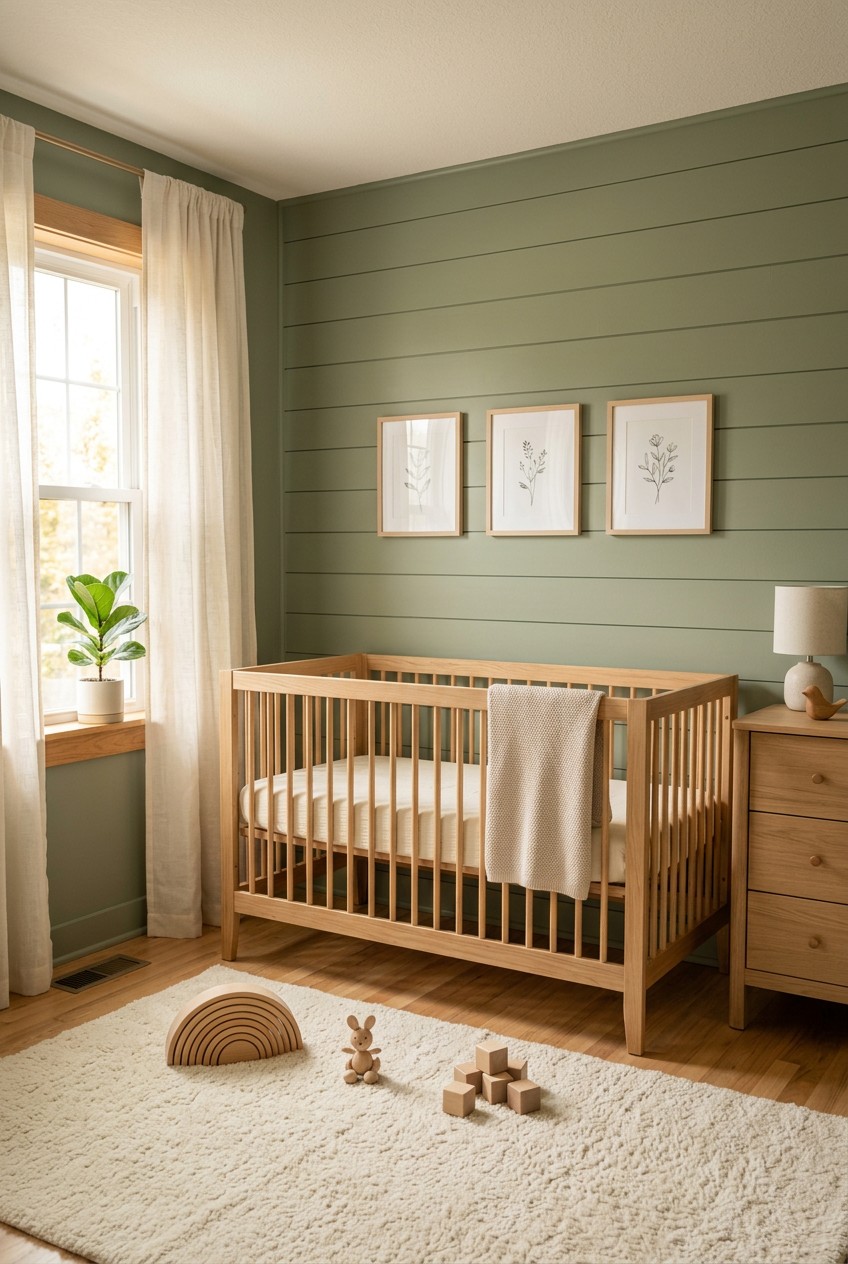
The trend of bright primary colors is over. They overstimulate babies and look chaotic. I tried painting a bright yellow accent wall once. It looked like a fast-food restaurant and gave me a headache. Now, I lean heavily into muted, earthy palettes. Sage green is my absolute favorite. I used a color called ‘Surf Camp’ by Backdrop. It’s a calming, dusty green that looks stunning in morning light. Paired with warm hazelnut wood tones, it creates a serene environment. I bought two 18-inch square creamy alabaster linen pillows from Trader Joe’s home section for $14.99 each. They add the perfect soft contrast to the green walls. This color scheme grows with your child, so you aren’t repainting when they turn three. It feels sophisticated, grounding, and deeply connected to nature. I’d never go back to those loud, obnoxious baby colors.
12. Don’t Overlook Daily Ventilation

You can buy all the organic stuff in the world, but if the air is stagnant, the room isn’t healthy. I used to keep the nursery door and windows shut tight to keep it warm. The room ended up smelling stuffy, like old milk and diapers. Now, I force myself to open the window for exactly 15 minutes every single morning. Even in winter. The blast of crisp, cold air flushes out the stale air and reduces any lingering VOCs. I also run a Honeywell HEPA Air Purifier. It costs $139 on Amazon. It’s a 15-inch tall cylinder that sits in the corner. It emits a soft, low hum that doubles as a white noise machine. The filter catches dust and pollen beautifully. I change the filter every 6 months, and it’s always shocking to see how gray and dirty it gets. I can’t sleep without it now.

Delta Children Nursery Storage 48 Piece Set
Honestly, Delta Children Nursery Storage 48 Piece Set – Easy Storage/Organizatio surprised me — sturdier than it looks in the photos, and over 17 buyers gave it 4.5 stars.
13. Reduce Hidden EMF Exposure

Most parents don’t even think about electromagnetic fields. I certainly didn’t. I used to clip a Wi-Fi camera right onto the crib railing. Then I read about the constant radio frequency emissions and felt terrible. Now, I keep all electronics at least 5 feet away from the crib. I use the Nanit Pro Camera. It’s $299, and I mounted it on the wall far away from the mattress. The video quality is perfectly clear even from a distance. I also bought a basic wired sound machine for $19.99 instead of a Bluetooth one. I unplug it every morning. It’s a small hassle to reach behind the dresser, but it dramatically reduces the electronic buzz in the room. Your baby’s developing brain needs a quiet, low-frequency environment to rest properly. It’s an easy fix that makes a big difference. I won’t compromise on this rule.
14. Integrate Biophilic Design Elements

Biophilic design sounds like a pretentious architectural term, but it just means bringing nature indoors. It’s incredibly grounding. I used to decorate with stark, modern plastic pieces. The room felt cold and sterile, like a doctor’s office. Now, I focus on natural textures. I bought a set of three 8 by 10-inch botanical prints from an Etsy seller for $15. They feature delicate fern leaves printed on thick, recycled paper. I framed them in raw oak frames. I also hung sheer, unbleached cotton curtains. They let the natural sunlight filter through beautifully, casting soft, dancing shadows on the walls. This natural light is crucial for setting your baby’s circadian rhythm. When the sun hits the wood furniture and the green plants, the whole room feels alive and warm. It’s a sensory experience that plastic just can’t replicate. I’ve completely fallen in love with this style.
15. DIY Non-Toxic Decor

You don’t need to spend a fortune to get a beautiful green nursery. I love making my own decor. Last fall, I gathered oak leaves from my yard and pressed them inside a heavy dictionary for two weeks. I bought a 4 oz bottle of Mod Podge for $4.99 at Walmart and sealed the leaves onto a piece of canvas. It cost almost nothing and looks like expensive custom art. I also repurposed an old wooden crate into a bookshelf. I sanded it down and rubbed exactly 2 tablespoons of food-grade mineral oil into the wood. The oil brought out a rich, warm grain without any chemical stains. My biggest DIY fail was trying to make my own natural paint from berries. It rotted on the canvas and smelled like a dumpster. Stick to simple, dry natural elements like wood, leaves, and cotton twine. You won’t regret keeping it simple.

Vailando 6-Shelf Hanging Closet Organizer with 3 Drawers
Vailando 6-Shelf Hanging Closet Organizer with 3 Drawers punches above its price — 34 buyers rated it 4.5 stars. I would buy it again.
16. Choose PVC-Free Wall Decals

Wall decals are a great way to add personality without the commitment of wallpaper. But most cheap decals are made of PVC, which off-gasses phthalates. I bought a $10 pack of plastic dinosaur decals once. They smelled like a cheap shower curtain and peeled off the wall within a week, taking the paint with them. Now, I only use fabric-based decals. Urban Walls makes incredible PVC-free options. A pack of 40 sage green leaf decals costs $65. They’re made from a woven polyester fabric with a water-based adhesive. They feel slightly textured, almost like thin canvas. You can peel them off and reposition them easily. I spent an hour placing them above the crib to look like falling leaves. There’s zero chemical smell, and they don’t curl at the edges. It’s a simple, safe way to bring green nursery ideas to life. I’d buy them again in a heartbeat.
17. Utilize Sustainable Storage Baskets

Babies come with a ridiculous amount of stuff. You need storage, but plastic bins are ugly and bad for the environment. I used to use those clear plastic tubs, and the lids always cracked, pinching my fingers. Now, I strictly use natural woven baskets. I bought three Pehr canvas storage bins for $36 each. They are 13 inches tall and made from heavy-weight cotton canvas. They hold their shape perfectly. I also use a large water hyacinth basket from Target for $25 as a laundry hamper. It has a gorgeous braided texture and a faint, earthy smell like dried grass. I line it with a washable cotton bag. Using natural materials for storage adds instant warmth and texture to the room. Plus, when your kid inevitably chews on the edge of the basket, you aren’t panicking about them ingesting plastic shards. It’s a massive relief.
18. Select Natural Wood and Rubber Toys

The toys you display in the nursery matter. Plastic toys in bright, obnoxious colors ruin the calm aesthetic and often contain questionable dyes. I bought a plastic piano toy once that flashed bright red lights and played a shrill tune. It drove me insane. I donated it after two days. Now, I stick to solid wood and natural rubber. I found a beautiful 50-piece set of Hape wooden blocks in the Kroger toy aisle for $19.99. They are colored with water-based paints and feel solid and smooth. I display them on a low wooden shelf. I also love the CaaOcho natural rubber teething toys. They cost $17 and are made from 100% pure rubber tree sap. They smell faintly of natural rubber, not vanilla-scented plastic. They look beautiful sitting out and are completely safe for mouthing. I won’t allow cheap plastic toys in the nursery anymore.
19. Hang Organic Linen Window Treatments

Window treatments are a massive dust trap. Heavy synthetic drapes hold onto allergens and can off-gas. I had thick polyester blackout curtains in my first apartment, and they always felt dusty and static-y. For the nursery, I upgraded to Quince European linen curtains. They cost $89 for a set of two 50 by 84-inch panels. The fabric is thick, slightly slubby, and drapes beautifully. They block out enough light for naps but still look elegant. I hung them on a simple wooden rod. To wash them, I use 1/4 cup of mild liquid soap on a gentle cold cycle. They shrink slightly, so I always hang them back up while they’re damp to stretch them out. The linen adds a soft, organic texture to the walls that completely changes the space. It’s the perfect finishing touch. I’ve never loved a room more.
Creating a safe space for your baby doesn’t have to be overwhelming. I’ve been there, staring at a wall of paint swatches, terrified of making the wrong choice. Just take it one step at a time. Swap the paint, invest in a good mattress, and open those windows. I personally swear by these green nursery ideas because they gave me peace of mind when I needed it most. No exaggeration. If you’re planning your nursery right now, pin this list and save it for later. You won’t regret prioritizing natural, safe materials for your little one.
Frequently Asked Questions
What are the best green nursery ideas for painting?
Always use low-VOC or zero-VOC paints like Backdrop. Paint at least four weeks before your baby arrives and open the windows for 15 minutes daily to ensure proper ventilation and eliminate lingering odors.
Why is a GREENGUARD Gold certified crib important?
This certification ensures the crib has been rigorously tested for over 10,000 chemicals and VOCs. It guarantees that the furniture won’t off-gas harmful toxins into your baby’s sleeping environment.
Are secondhand items safe for a green nursery?
Most secondhand items like wooden toys and clothes are great. However, you shouldn’t ever buy used car seats or crib mattresses, as they can harbor hidden bacteria, mold, or fail current safety standards.
How can I improve air quality in my baby’s nursery?
Open the windows daily to let fresh air circulate. Add baby-safe air-purifying plants like Spider Plants on high shelves, and run a HEPA air purifier to continuously filter out dust and pollen.
