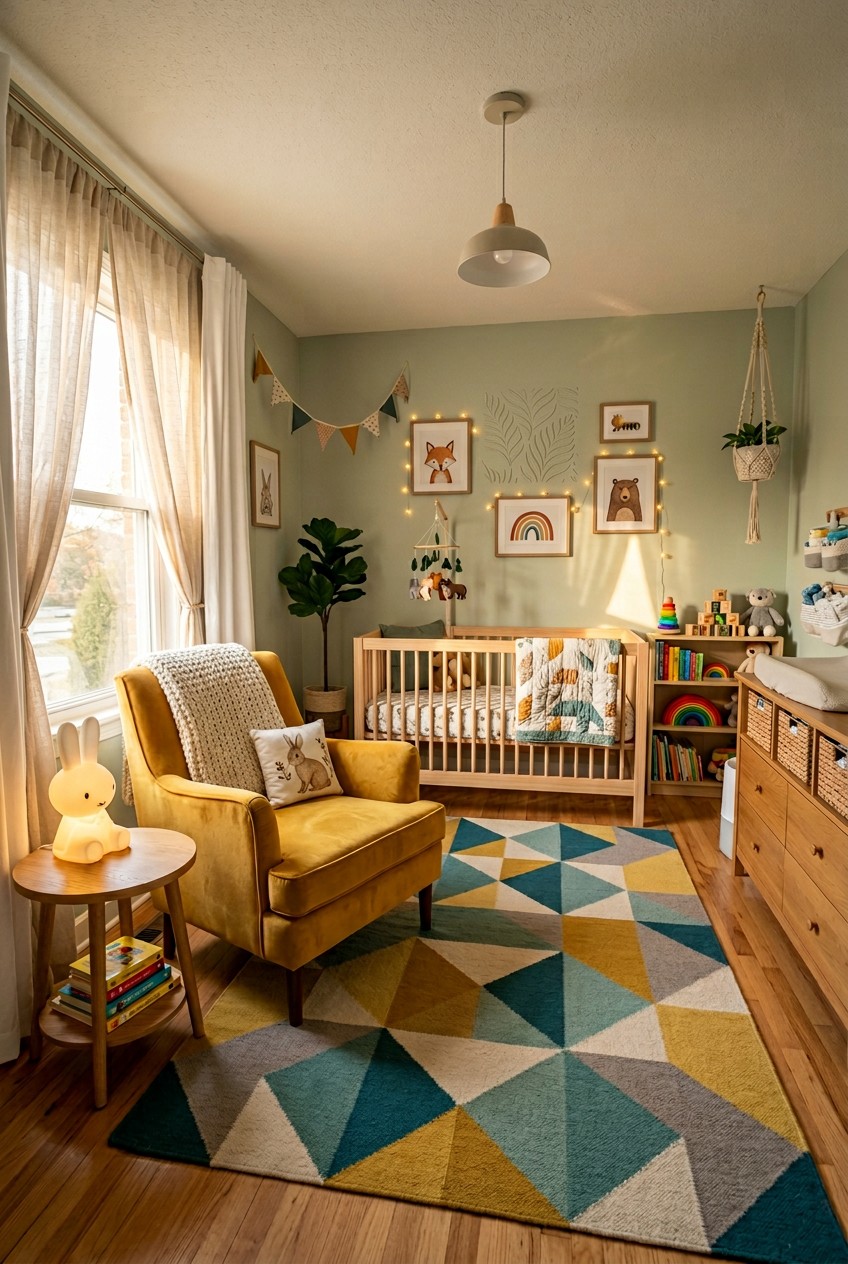
What’s Inside
- Embrace Earthy, Complex Color Palettes for a Soothing Vibe
- Prioritize Air Quality with Zero-VOC, GREENGUARD Gold Certified Paint
- Invest in a Convertible Crib for Long-Term Value and Sustainability
- Select a Performance Fabric Glider for Durability and Easy Cleaning
- Choose the Right Rug Size to Define the Space and Encourage Play
- Implement Layered Lighting with Dimmers for Versatility and Comfort
- Opt for Warm White Bulbs (2700K-3000K) to Enhance Relaxation
- Position Lighting Safely, Avoiding Direct Glare and Hazards
- Utilize Cordless Blinds and Blackout Shades for Optimal Sleep
- Anchor All Furniture to the Wall to Prevent Tip-Overs
- Avoid Hanging Heavy or Loose Items Directly Above the Crib
- Integrate Multifunctional Storage Solutions that Grow with Your Child
- Incorporate Natural Materials and Textures for a Lived-in Aesthetic
- Create a Dedicated Reading Nook with a Comfortable Glider
- Personalize the Space with Heirloom Pieces and Meaningful Art
- Fun Nursery Ideas Include DIY Mobiles with Natural Textures
- Try a Removable Wallpaper Accent Wall for Instant Character
- Add a Smart Sound Machine for Uninterrupted Sleep
- Fun Nursery Ideas Need Washable Laundry Hampers
I spent three weeks crying on the floor of my first apartment because I bought a giant, heavy crib that wouldn’t fit through the bedroom door. I’m Lauren, and I’ve made every rookie mistake possible so you don’t have to when brainstorming nursery ideas. If you’re stressed about building a beautiful room for your baby, take a breath. My list of nursery ideas is built on trial, error, and a lot of spilled coffee. I remember standing in Target last month, staring at a $250 decorative mirror, realizing it was completely impractical for a toddler. Skip the fancy, fragile stuff. You want a room that works hard and looks good doing it. Let’s get into the details.
1. Embrace Earthy, Complex Color Palettes for a Soothing Vibe

I’m over the bright, primary colors that scream baby room. Instead, look at earthy, complex tones. I tried painting my first nursery a bright lemon yellow, and it felt like walking into a highlighter. It gave me a headache within five minutes. Now, I recommend soft terracottas, sage greens, and mushroom taupes. Paint three walls in a soft neutral like Sherwin-Williams Creamy SW 7012 (it runs about $70 per gallon). Then, use one accent wall with Benjamin Moore Saybrook Sage HC-114. This gives the room depth without overwhelming your tired eyes. Last Tuesday at Whole Foods, I was holding a 16 oz iced matcha that matched this sage green perfectly, and it just felt so calming. The earthy tones create a tranquil environment for you and the baby. Plus, it won’t clash with the rest of your house. It’s a simple fix that makes a massive difference in how the room feels at 3 AM.
2. Prioritize Air Quality with Zero-VOC, GREENGUARD Gold Certified Paint

Most people get this wrong and just grab the cheapest paint on the shelf. I did this with my first apartment, and the chemical smell lingered for two months. It smelled like burning plastic and made me feel sick. Infants sleep 14 to 18 hours per day in their nursery, so you can’t ignore air quality. Always choose paints labeled as Zero-VOC and GREENGUARD Gold certified. Brands like Benjamin Moore Eco Spec (around $65 per gallon) are fantastic. Before you commit, buy a 4 oz paint sample and test it on a piece of white poster board. Move that board around the room to see how the light hits it. I’ve learned the hard way that paint looks different in the store than it does in your home. Taking the time to test a 4 oz sample will save you from repainting the entire room when you realize the color looks like muddy water in natural light.
3. Invest in a Convertible Crib for Long-Term Value and Sustainability

Please don’t buy a standalone bassinet, a standalone mini crib, and a standalone toddler bed. You’re just throwing money away. Instead, opt for a convertible model that transitions with your kid. The Babyletto Hudson 3-in-1 Convertible Crib costs around $499 and is a workhorse. It converts to a toddler bed and a daybed, and it’s GREENGUARD Gold certified. Another amazing option is the Nestig Cloud Crib ($749), which goes from a mini crib to a full-size crib. Back in 2021, I couldn’t visualize how much space a crib would take up, so I stacked empty Costco diaper boxes (they were exactly 2 feet wide) in the corner to mock up the footprint. It looked ridiculous, but it worked perfectly to show me I needed a smaller profile crib. Multifunctional furniture is the only way to go if you want to save your sanity and your wallet over the next five years.

Delta Children Nursery Storage 48 Piece Set
Delta Children Nursery Storage 48 Piece Set – Easy Storage/Organizatio has been one of the most consistently praised picks in this category. 17 reviewers averaged 4.5/5.
4. Select a Performance Fabric Glider for Durability and Easy Cleaning

Prioritizing style over function is a mistake when picking a nursery chair. I bought a gorgeous, cheap velvet rocker for my first baby. Within a week, I had to scrub 2 tablespoons of sour milk out of the seat cushion. It smelled like rotting cheese for a month, and the fabric was ruined. You need synthetic performance fabrics like polyester. They’re durable and wipe clean easily. The Babyletto Kiwi Electronic Recliner And Swivel Glider runs about $999, but it’s worth every penny. It has a built-in USB charging port and performance fabric that repels liquid. If you’re on a tighter budget, the DaVinci Olive Glider is under $399 and comes with an ottoman. Just make sure the glider has at least an 18-inch wide seat and a weight limit of 250 lbs. You’ll spend hundreds of hours in this chair. It needs to be comfortable, and it must be easy to clean.
5. Choose the Right Rug Size to Define the Space and Encourage Play

A rug that’s too small makes a room look cheap and disconnected. I see this all the time. Parents buy a tiny 3’x5′ rug and float it in the middle of the floor. It looks like a bath mat. For a standard 100-square-foot nursery, a 4’x6′ rug is the bare minimum. It provides coverage under the front legs of the crib and your rocking chair. If you have a larger room, size up to an 8’x10′ rug. I personally swear by Ruggable washable rugs (around $159 for a 3’x5′, but spend the extra for the 5’x7′ at $219). Babies are messy. You’ll want to wash that rug. Last year, I bought some cheap $4.88 rug tape from Walmart to hold down a corner, and it left a sticky, yellow residue on my hardwood floors that took me three hours to scrape off with a butter knife. Skip the cheap tape and just buy a heavy rug pad.
6. Implement Layered Lighting with Dimmers for Versatility and Comfort

Relying on a single overhead light is a rookie mistake. Have you ever turned on a bright ceiling light at 2 AM while holding a screaming infant? It’s blinding and wakes the baby up. You need layered lighting. Install a dimmer switch for your overhead fixture, add a table lamp near the glider, and plug in a small night light near the door. This lets you adjust the intensity. You want it bright for blowing out diapers, but soft for nighttime feeds. I picked up a simple Target Threshold ceramic lamp for $35, and it’s perfect for the side table. I use a 60-watt equivalent dimmable bulb in it. Pediatric sleep experts always recommend low-intensity lighting to support natural sleep cycles. If you only have a bright overhead light, you’re going to struggle to get your baby back to sleep. Layered lighting fixes this problem immediately.

Criusia Over the Door Organizer
Criusia Over the Door Organizer has been one of the most consistently praised picks in this category. 208 reviewers averaged 4.5/5.
7. Opt for Warm White Bulbs (2700K-3000K) to Enhance Relaxation

Harsh, cool-toned lights will stress you and your baby out. I used to buy whatever bulbs were on sale. Once, I accidentally bought daylight LEDs (5000K) for the nursery. The room looked like a sterile hospital cafeteria. It was awful. You want light bulbs with a warm color temperature, specifically between 2700K and 3000K. This provides a peaceful, warm glow that won’t yellow your paint colors but still signals relaxation. I always grab the GE Relax LED bulbs (they’re about $9.98 for a 4-pack). Last week, I was doing a late-night run to Kroger to buy batteries and these exact bulbs because I refuse to use anything else in a bedroom. Cool daylight LEDs disrupt a baby’s circadian rhythm. Stick to the warm white bulbs, and you’ll notice a huge difference in how cozy the room feels after the sun goes down. You might also like: 20 Charming Gender Neutral Crib Bedding Ideas for Every Budget
8. Position Lighting Safely, Avoiding Direct Glare and Hazards

Here’s a tip most people don’t think about: keep your lamps below the eye level of the crib mattress. If a lamp is too tall, the baby will stare directly into the bare bulb while lying on their back. It’s terrible for their eyes. I measure my side tables to ensure the bulb sits roughly 32 inches off the ground. Also, avoid floor lamps entirely. I had a beautiful brass floor lamp in my first nursery. The second my son started crawling, he pulled the cord, and the heavy metal shade crashed inches from his head. It was terrifying. Stick to table lamps or wall sconces. Ensure all light fixtures are completely childproofed with cord covers. You can buy a 10-foot plastic cord cover for about $12 on Amazon. It’s a cheap fix that prevents a massive safety hazard. Don’t risk it with wobbly floor lamps. You might also like: 20 Inspiring Gold Crib Bedding Ideas You Can Try Today
9. Utilize Cordless Blinds and Blackout Shades for Optimal Sleep

Cords on window blinds are a massive strangulation hazard. You can’t have them in a nursery. Always choose cordless blinds. As a bonus, you need blackout shades if you want your baby to nap during the day. I bought the Home Decorators Collection cordless blackout shades from Home Depot for $45 each, and they block out 99% of the light. Before I had these, I tried pinning dark sheets over the windows. It looked terrible and barely worked. I remember sitting in my car in the Trader Joe’s parking lot, gripping a 12 oz cup of hot coffee, crying because my baby woke up at 5 AM due to the sunlight creeping through cheap curtains. Total darkness is a crucial sleep cue. Spend the money on actual blackout shades. It’s an investment in your own sleep, and you won’t regret it. You might also like: 20 Creative Crib Bedding Ideas to Transform Your Space

Beautiful Wooden Baby Closet Dividers Set of 7
If you want something that just works, Beautiful Wooden Baby Closet Dividers Set of 7 – Double-Sided Organize is a safe bet (11 reviews, 4.5 stars).
10. Anchor All Furniture to the Wall to Prevent Tip-Overs

This is the most critical safety step, and so many parents skip it because they don’t want to drill holes in their walls. I used to be one of them until I saw a dresser wobble when I opened the top drawer. You must anchor bookcases, dressers, and changing tables to the studs. I use the Safety 1st furniture straps, which cost $14.99 for a pack of eight. You’ll need a drill and some heavy-duty 2-inch screws. Don’t use the cheap plastic drywall anchors that come in the packaging. They pull right out of the wall under heavy weight. Go to a hardware store and buy proper metal toggle bolts if you can’t find a wall stud. It takes twenty minutes of sweaty, annoying work, but it guarantees a climbing toddler won’t pull a 100-pound dresser onto themselves. Just do it before the baby arrives.
11. Avoid Hanging Heavy or Loose Items Directly Above the Crib

I see beautifully styled nurseries on Instagram with heavy wooden signs, thick framed glass art, or floating shelves full of knick-knacks directly over the crib. It’s a disaster waiting to happen. If you live in an area with earthquakes, or if a door slams too hard, those items can fall right into the crib. I made this mistake early on. I hung a heavy wooden name sign over the changing table. One day, I bumped the wall, and the sign fell, denting the wood floor. If the baby had been there, it would have been awful. Instead, use flat, well-mounted wall decals or painted stencils. You can get a gorgeous 24-piece set of watercolor floral wall decals on Etsy for about $25. They peel and stick, weigh absolutely nothing, and look like custom wallpaper. Keep the heavy art on walls away from where the baby sleeps or gets changed.
12. Integrate Multifunctional Storage Solutions that Grow with Your Child

Ignoring long-term storage needs is a huge mistake. Babies come with so much plastic junk, and it only multiplies as they grow. Don’t buy tiny, baby-specific furniture. Invest in versatile storage like the IKEA KALLAX shelf unit. A 4×4 unit costs around $80 and holds an incredible amount of stuff. I pair mine with Pehr Canvas Storage Containers (they run $36 each). They fit perfectly into the cubbies. Right now, you can use them for swaddles and diaper cream. In three years, you’ll use them for LEGOs and action figures. I even use one of the canvas bins in my kitchen pantry to hold empty 4 oz baby food jars before recycling them. I bought my jars at Sprouts last week, and the empty glass clinking on the counter drove me crazy until I tossed them in the bin. Multifunctional storage is the secret to a clean house.

Criusia Drawer Organizer Clothes
Criusia Drawer Organizer Clothes punches above its price — 1 buyers rated it 4.5 stars. I would buy it again.
13. Incorporate Natural Materials and Textures for a Lived-in Aesthetic

Sterile, perfectly matched furniture sets are out. The trend right now is a lived-in, collected aesthetic using natural materials. Think solid wooden toys, hand-sewn stuffies, and artisan-made pieces. I love using rattan, jute, or wicker baskets. I bought a beautiful woven rattan basket from Crate & Kids for $49, and it instantly warmed up the room. Layer soft wool rugs, muslin blankets, and chunky knitted throws. The tactile stimulation is great for infants when they start doing tummy time. I used to buy cheap, shiny polyester blankets because they were soft, but they trapped heat and made my baby sweat terribly. Natural cotton and wool breathe so much better. Mixing wood tones with woven textures makes the room feel like a cozy home rather than a showroom floor. It’s a simple way to add character without cluttering the space with unnecessary decor.
14. Create a Dedicated Reading Nook with a Comfortable Glider

You’re going to read the same board book five thousand times, so you might as well be comfortable. Creating a dedicated reading corner encourages bonding and literacy from day one. I set up my Nurture& The Glider Plus (it’s a splurge at $1,399, but incredible) in the corner next to a small wooden side table. I added a soft, dimmable lamp and a small basket for books. This provides a well-lit space for story time without turning on the overhead lights. Honestly, this changed how I handled bedtime routines. Before I had a dedicated nook, I’d try to read in the living room, and the TV noise would keep the baby awake. Having a quiet, specific spot in the nursery signals that it’s time to wind down. Keep a 16 oz water bottle on the side table for yourself, because reading aloud for thirty minutes makes your throat incredibly dry.
15. Personalize the Space with Heirloom Pieces and Meaningful Art

Don’t buy generic, mass-produced canvas art with cheesy quotes. Personalize the nursery with items that actually tell your family’s story. I used Framebridge to frame a handwritten recipe card from my grandmother. It cost $85 for a custom 10×12 frame, and it’s my favorite thing in the room. You can also frame family photos, a cherished heirloom toy, or a custom wood name sign (just don’t hang it over the crib). I once bought a generic Dream Big Little One sign from a big box store, and it just felt so hollow and cheap on the wall. I ended up throwing it in the donation bin. Meaningful art creates a unique space that feels thoughtful. It gives you something special to look at during those endless midnight feeding sessions. Plus, as your kid grows, you can tell them the stories behind the pieces on their walls.
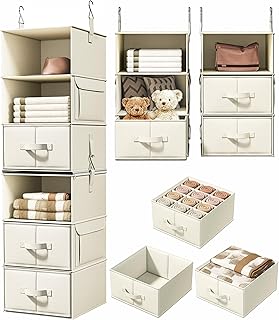
Vailando 6-Shelf Hanging Closet Organizer with 3 Drawers
Vailando 6-Shelf Hanging Closet Organizer with 3 Drawers has been one of the most consistently praised picks in this category. 34 reviewers averaged 4.5/5.
16. Fun Nursery Ideas Include DIY Mobiles with Natural Textures

If you want fun nursery ideas, skip the loud, plastic, battery-operated mobiles that play tinny music. They’re overstimulating and honestly kind of ugly. Instead, make a DIY mobile using natural wool felt balls. I bought a simple wooden embroidery hoop at Michaels for $3.99 and a bag of 2-inch wool felt balls in soft neutral colors. I used clear fishing line to string them up. It took me about an hour while watching TV, and it looks like a high-end boutique piece. The gentle movement of the felt balls catching the breeze from the ceiling fan is incredibly soothing for a baby. I tried a plastic spinning mobile first, and the mechanical grinding noise it made when it rotated drove me absolutely insane. The DIY felt version is silent, beautiful, and costs less than twenty bucks to put together.
17. Try a Removable Wallpaper Accent Wall for Instant Character

Wallpaper used to terrify me because I remembered spending a week scraping 1980s floral paper off my childhood bedroom walls with a putty knife. It was a nightmare. But modern peel-and-stick wallpaper is completely different. It’s basically a giant sticker. I ordered a gorgeous botanical print from Spoonflower (it runs about $34 per 2-foot roll). I applied it to the wall behind the crib in about two hours. If you mess up, you just peel it back and smooth it out again. I did get a massive air bubble in the middle of the wall on my first try, but I just poked it with a tiny sewing needle and smoothed it flat. It adds so much personality to the room without the permanent commitment of traditional wallpaper. When your kid turns five and decides they hate botanicals, you just peel it off in five minutes.
18. Add a Smart Sound Machine for Uninterrupted Sleep

A silent house is actually terrible for a sleeping baby. Every floor creak, dog bark, or delivery driver dropping a package will wake them up. You need a dedicated sound machine. I use the Hatch Rest, which costs $69.99. It’s a sound machine and a nightlight you control from your phone. I keep it set to the continuous TV static white noise sound. I used to use a free white noise app on my old iPad, but the battery would die at 3 AM, the noise would stop, and the baby would instantly start screaming. It was a brutal lesson. The Hatch plugs into the wall, so it never dies. It also has a toddler lock feature, so when your kid gets older, they can’t mess with the buttons and blast the volume to maximum. It’s a non-negotiable item for any nursery setup.
19. Fun Nursery Ideas Need Washable Laundry Hampers

We’ve reached the last of my nursery ideas, and it’s the most practical one: you need a washable laundry hamper. Babies generate an unbelievable amount of dirty laundry. Spit-up, blowouts, and spilled milk happen constantly. If you buy a beautiful wicker hamper with a non-removable fabric liner, it will smell like a locker room within a month. I bought a stunning woven basket hamper and had to throw it in the trash because I couldn’t get the sour milk smell out of the wicker reeds. Now, I use a Pottery Barn Kids canvas hamper for $79. The entire canvas bag lifts off the wooden frame, and I just toss it directly into the washing machine with the baby clothes. Add 1/2 cup of unscented detergent, and it comes out perfectly clean. It’s not the most glamorous purchase, but it will save your nose from absolute misery.
Designing a nursery shouldn’t make you want to pull your hair out. It’s easy to get overwhelmed by all the nursery ideas out there, but if you focus on safety, soft lighting, and fabrics you can actually wash, you’re going to be fine. I personally swear by keeping things simple and functional. Don’t stress if the room isn’t perfectly styled before the baby arrives. You’ll figure out what works for you as you go. Pin this list for later, share it with a friend who’s expecting, and give yourself some grace during this process. You’ve got this!
Frequently Asked Questions
What are some affordable fun nursery ideas?
You don’t have to spend a fortune. Try DIY felt mobiles, removable wallpaper accent walls, and repurposing canvas bins for toy storage.
What paint colors are best for a nursery?
Skip bright primary colors and opt for earthy, complex tones like soft terracotta, sage green, and mushroom taupe.
How can I make my nursery safer?
Always anchor heavy furniture to the wall studs, use cordless window blinds, and ensure lamps are positioned below the crib mattress eye level.
What type of nursery chair is best?
Always choose a glider made with synthetic performance fabrics like polyester. It’s durable, comfortable, and incredibly easy to wipe clean after inevitable spills.
