What’s Inside
- Embrace Earthy, Muted Color Palettes
- Prioritize Sustainable Materials in Your Golf Nursery Baby Boy
- Invest in Multifunctional Furniture
- Curate Sophisticated Vintage Golf Wall Art
- Master the Art of Wall Art Placement
- Select a Safe and Washable Nursery Rug
- Implement Montessori-Inspired Elements for Play
- Strictly Follow Crib Safety Standards
- Avoid Common Bedding and Decor Mistakes
- Optimize Storage with Smart, Mobile Solutions
- Lock Down Electrical and Window Safety
- Choose Low-VOC Paints for Better Air Quality
- Incorporate Subtle Golf Accents Without Overdoing It
- Layer Your Lighting for 3 AM Feedings
- Bring in Tactile Textures for Sensory Development
- Final Touches for the Perfect Golf Nursery Baby Boy
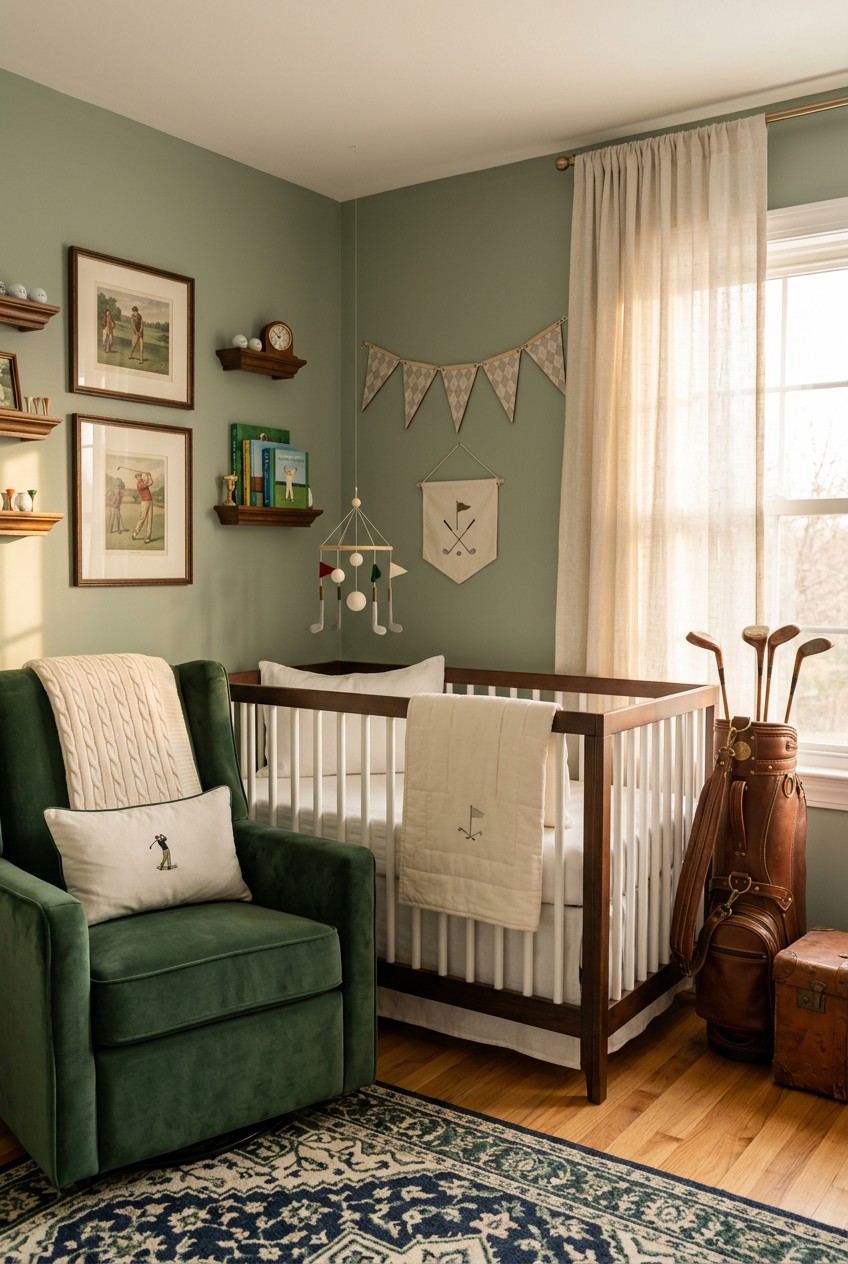
I spent three weeks staring at a violently bright, lime-green accent wall that made my eyes ache before realizing I’d completely ruined my first attempt at a golf nursery. It looked more like a miniature golf course exploded in my guest room than a calm, sophisticated space. I tried painting over it, but the neon green kept bleeding through the cheap primer I bought at Walmart for $14.99. The sharp, acrid smell burned my nose, and the walls felt sticky for days. Let’s avoid that headache. Designing a golf nursery shouldn’t mean slapping cartoon clubs on the wall and calling it a day. It’s about subtle nods, earthy tones, and rich textures that feel cozy when you’re rocking a crying infant at 3 AM. I’ve made every rookie mistake, wasted money on useless gear, and scrubbed stains out of rugs that never should’ve been in a baby’s room. I learned the hard way. Here are 16 specific ideas to help you get this design right the first time.
1. Embrace Earthy, Muted Color Palettes

Move away from those overly bright greens. I’m telling you, neon is a nightmare for a baby’s sleep schedule. Instead, opt for a sophisticated, grounded palette. I swear by muted greens like sage or olive, paired with soft browns and creamy whites. For my last client’s room, I painted three walls in “Alabaster” by Sherwin-Williams (exactly $75.00 a gallon) and used one accent wall in “Clary Sage.” The difference was staggering. It added depth without overstimulation. I picked up some tester pots at my local Kroger in their small hardware aisle. They actually carry decent painting supplies now for $4.99 each. I painted huge swatches just to be sure the afternoon light hit it right. Always test your paint. A common mistake is picking a green that leans too yellow under artificial light. It makes the whole room look sickly. Stick to warm pastels and earthy tones. It’s calming. Classy. It feels like a quiet, misty morning on the fairway, not a tacky indoor mini-golf center.
2. Prioritize Sustainable Materials in Your Golf Nursery Baby Boy

When you’re styling a golf nursery, materials matter as much as colors. I tried using cheap synthetic sheets once. They felt scratchy, and they trapped heat like a sauna. My poor son woke up sweating constantly. Skip the polyester. Choose organic, non-toxic materials instead. You want a crib made from responsibly sourced solid wood, like walnut or oak. Look for Greenguard Gold certified products to ensure low chemical emissions. I love the organic cotton crib sheets from Burt’s Bees Baby. They cost exactly $24.99 at Target and hold up beautifully in the wash. I’ve washed mine at least fifty times, and they’re softer than ever. For storage, incorporate woven baskets made from rattan or jute. I grabbed a set of three heavy jute baskets from Whole Foods last Tuesday for $39.99 in their seasonal home aisle. The rough, fibrous texture of the jute smells faintly of dried grass, which fits the golf theme perfectly. Natural textures add warmth and keep the room from feeling sterile.
3. Invest in Multifunctional Furniture

Babies grow out of things fast. I bought a gorgeous, single-purpose bassinet for my first child, and he outgrew it in exactly three months. Total waste of $300. Choose pieces that grow with your child. A convertible crib is non-negotiable. I highly recommend the Graco Remi 4-in-1 Convertible Crib. It retails for about $279.99 at Walmart and transitions into a toddler bed and a daybed. It offers incredible long-term value. Pair it with a solid, heavy dresser. The Delta Children Universal 6-Drawer Dresser is $299.99 and comes with a removable changing pad top. You can use it as a changing station now and regular clothing storage later. It saves space and extends its usability way beyond infancy. I made the mistake of buying a dedicated changing table that had zero drawer space. It quickly became a chaotic dumping ground for half-empty lotion bottles and dirty wipes. Don’t do that. Get furniture with deep, sturdy drawers that glide smoothly. It’s worth the upfront investment.

Hotmoon Sound Machine Baby Night Light
Hotmoon Sound Machine Baby Night Light has been one of the most consistently praised picks in this category. 194 reviewers averaged 4.5/5.
4. Curate Sophisticated Vintage Golf Wall Art

Please, I’m begging you, skip the cartoonish golf imagery. You don’t need a goofy mascot holding a putter on the wall. Opt for sophisticated, vintage-inspired prints instead. A gallery wall is the way to go. I found these incredible “Vintage Golf Print” digital downloads on Etsy for $6.50 per print. I printed them on heavy, textured matte cardstock at FedEx for $1.15 a page. The crisp sound of that thick paper sliding into the frame is so satisfying. They look like expensive, original watercolors. You can also mix in “Sage Green Teddy Bear Nursery Golf Prints” to keep it slightly playful but still refined. Another great idea is framing maps of famous golf courses. I ordered an 11×14 custom map of St. Andrews Old Course for $55.00. It adds a lovely architectural element. I framed them all in cheap Ribba frames from IKEA ($9.99 each) but painted the frames a soft brushed gold. The texture of matte paper behind glass feels much more intentional than glossy posters.
5. Master the Art of Wall Art Placement

Hanging art sounds easy until you step back and realize your frames look like floating islands near the ceiling. Most people hang things way too high. For a polished look, hang wall art so the bottom edge is exactly 6 to 10 inches above the furniture below it. I use a standard 8-inch gap. If you’re hanging multiple pieces, maintain a consistent 2 to 3-inch space between frames. I use a 2.5-inch block of scrap wood as a spacer. It’s foolproof. For art above the crib, safety is everything. Ensure it’s at least 12 inches above the top rail. You don’t want a heavy frame crashing down. I once used cheap adhesive strips to hang a heavy wooden sign above a changing table. It fell in the middle of the night and shattered. Terrifying. Now I only use heavy-duty drywall anchors. You can get a pack of 50 Toggler anchors for $14.48 at Lowe’s. The total width of your art grouping should be about 60-75% of the furniture’s width to keep the proportions balanced. You might also like: 15 Cozy Baby Nursery Decor Ideas for Any Style
6. Select a Safe and Washable Nursery Rug

A nursery rug takes a beating. Spit-up, spilled milk, diaper blowouts. It all happens on the floor. I ruined a beautiful, expensive wool rug because I couldn’t get a sweet potato stain out of it. I scrubbed it with a mix of exactly 1/2 cup of baking soda, 2 tablespoons of hydrogen peroxide, and 4 oz of warm water. The bright orange stain wouldn’t budge. Now, I only use washable rugs. A 4×6 feet rug is ideal for most standard nurseries, providing sufficient coverage under the crib and rocking chair without creating tripping hazards. Position it to extend at least 18 to 24 inches beyond each accessible side of the crib. I’m obsessed with the Ruggable Kamran Hazel Rug. A 4×6 costs $159.00. It’s low-pile, so you won’t trip over it at 2 AM, and you can literally peel it off and throw it in the washing machine. I picked up some heavy-duty rug tape at Costco for $12.99 to keep the corners locked down flat. You might also like: 15 Lovely Baby Boy Crib Bedding Ideas That Are Totally Worth It
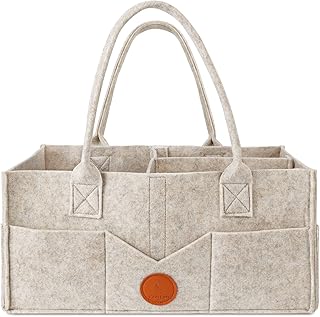
Maliton Baby Diaper Caddy Organizer for Changing Table
If you want something that just works, Maliton Baby Diaper Caddy Organizer for Changing Table is a safe bet (32 reviews, 4.5 stars).
7. Implement Montessori-Inspired Elements for Play

You don’t need a room overflowing with plastic toys that flash and beep. Create a prepared environment by incorporating a few Montessori-inspired elements. I set up a floor-level mirror for my youngest, and he spent hours just staring at his own reflection. It’s amazing for their visual development. Ensure the mirror is shatterproof acrylic. I bought a 24×36 inch acrylic mirror sheet on Amazon for $45.99 and mounted it directly to the wall with heavy-duty construction adhesive. Add some open shelving with a few carefully chosen, accessible toys. I use the IKEA FLISAT wall storage shelves ($19.99 each) mounted low to the ground. This encourages freedom of movement and independent exploration. Rotate toys weekly to maintain interest and prevent overstimulation. I keep the extra toys hidden in a plastic bin in the closet. Too many choices just lead to meltdowns. A simple wooden golf rattle (I found a cute one on Etsy for $18.50) makes a soft, hollow clacking sound and is perfect for this low shelf. You might also like: 20 Stunning Layout Small Nursery Ideas That Are Totally Worth It
8. Strictly Follow Crib Safety Standards

Don’t mess around with vintage cribs. I know that antique wrought-iron crib at the flea market looks charming, but it’s a literal death trap. Always use a crib manufactured after 2011, meeting current safety standards. Ensure crib slats are no more than 2 3/8 inches apart to prevent entrapment. I actually measured the slats on a gorgeous hand-me-down crib once and found they were exactly 3 inches apart. I threw it out immediately. Use a firm mattress that fits snugly. The Newton Baby Crib Mattress is my top pick. It’s $299.99, completely breathable, and you can wash the entire core in the shower. Pressing my hand down, it barely yields, which is exactly what you want. You shouldn’t be able to fit more than two fingers between the mattress and the crib side. If you can, the mattress is too small. Safety isn’t aesthetic, but it’s the foundation of your nursery design.
9. Avoid Common Bedding and Decor Mistakes

The styled nursery photos on Instagram are lying to you. They show cribs stuffed with fluffy pillows, heavy quilts, and giant stuffed animals. Do not place pillows, blankets, bumper pads, or stuffed toys in the crib with the baby. It’s a massive suffocation risk. I used to think bumpers were necessary to stop little legs from getting stuck, but they aren’t safe. Instead, use sleep sacks. I love the HALO SleepSack Micro-Fleece. It’s $29.99 at Target. Zipping up that soft, pillowy fleece keeps them warm without the risk of loose fabric. Remove any hanging toys or mobiles when the baby can get on all fours, usually around 5 months. My son actually yanked his heavy wooden mobile down on his head at 6 months because I forgot to take it down. Lesson learned. Keep the crib bare. It looks minimalist and clean, which fits the sophisticated golf theme perfectly. Let the wallpaper or the rug bring the personality, not the crib bedding.

PeraBella Diaper Caddy Organizer for Changing Table
PeraBella Diaper Caddy Organizer for Changing Table punches above its price — 19 buyers rated it 4.5 stars. I would buy it again.
10. Optimize Storage with Smart, Mobile Solutions

Babies are tiny, but their gear takes over your entire house. You need to plan for ample storage. Utilizing vertical space is key. I installed three floating wood shelves from Target ($25.00 each) above the dresser for heavy glass lotion bottles, books, and extra wipes. But my absolute favorite storage hack is a rolling cart. I use the IKEA RÅSKOG utility cart ($39.99). I spray-painted mine a matte olive green to match the room. It serves as a mobile diaper station. I stock the top tier with exactly 40 Pampers Swaddlers, the middle with water wipes and Aquaphor, and the bottom with rolled burp cloths. I can roll it smoothly over the hardwood from the changing table to the glider with one hand. I also use drawer organizers from The Container Store. Their 4-section linen drawer organizers cost $14.99 each. They are essential for keeping tiny socks and onesies separated. Without them, the dresser drawers turn into a chaotic fabric soup within a week.
11. Lock Down Electrical and Window Safety

Once your baby starts crawling, every single outlet looks like a fascinating puzzle. Cover all electrical outlets with safety plugs or sliding covers. I prefer the sliding outlet covers by Safety 1st. You replace the whole wall plate, and they snap shut automatically with a loud, satisfying click. A 4-pack is $12.49 at Walmart. Keep all cords, including those from baby monitors and lamps, secured and out of reach. They need to be at least 3 feet away from the crib. I once caught my daughter trying to pull the baby monitor cord through the crib slats. I immediately bought cord concealers. The D-Line Cable Raceway kit is $19.99 on Amazon and sticks right to the wall. For windows, install cordless window treatments. Blind cords are a severe strangulation hazard. I installed the Allen + Roth Cordless Cellular Shades from Lowe’s ($45.00 each). They pull down smoothly, block the harsh afternoon light beautifully, and have zero dangling cords to worry about.
12. Choose Low-VOC Paints for Better Air Quality

Paint fumes give me a massive headache. If they do that to an adult, imagine what they do to a newborn’s tiny lungs. You must use zero or low-VOC paints to minimize harmful fumes. I used a cheap, high-VOC paint in my first apartment, and the chemical smell lingered for literally three months. Never again. Now I only use brands like Clare Paint or Little Green. Clare’s “Current Mood” is a stunning, moody green that costs $69.00 a gallon. It has zero VOCs and hardly smells at all during application. Before painting, I wipe down the walls with a homemade cleaner: exactly 1/2 cup of white vinegar, 2 tablespoons of Dawn dish soap, and 16 oz of warm water in a spray bottle. It strips the grease perfectly. Even with safe paint, you need to paint the nursery at least 4 to 6 weeks before the baby’s arrival. I usually stick a Vornado box fan ($49.99 at Target) in the window facing outward to pull the air out of the room.

Night Lights, White Noise Machine
A dependable everyday pick — Night Lights pulls in 241 ratings at 4.5 stars. Not flashy, just solid.
13. Incorporate Subtle Golf Accents Without Overdoing It

There is a fine line between a themed room and a tacky gift shop. Instead of an overly themed room, integrate golf elements subtly. You don’t need astroturf on the floor. I tried an astroturf rug once for a client, and the stiff plastic bristles felt awful on bare feet. It was a disaster. Consider a golf ball-shaped lamp on the dresser or display a vintage wooden golf club securely mounted high on the wall out of reach. I found an authentic 1920s hickory golf club at a local antique shop for $35.00. I mounted it using heavy, cold brass brackets. It serves as a beautiful, sentimental piece. Personalized items also work well. A “Golf Art Nursery Wall Custom Name Pennant” from Etsy ($22.00) adds a unique touch without overwhelming the space. Pin it above the closet door. It gives a nod to the sport while keeping the room feeling like a calm, restful bedroom.
14. Layer Your Lighting for 3 AM Feedings

Harsh, single-source overhead lighting is the enemy of sleep. If you flip on a bright ceiling light at 3 AM for a diaper change, you and the baby are both going to be wide awake for the next two hours. Layer your lighting instead. I swapped out standard bulbs for dimmable LED ceiling lights. The Philips Hue smart bulbs are about $49.99 each. You can control them from your phone and dim them down to 10%. It’s incredible. Add a soft task lamp near the changing table or glider. I found a lovely brushed brass lamp at Sprouts in their home goods section for $29.99. A gentle nightlight is also crucial. I use the Hatch Rest Baby Sound Machine and Night Light ($69.99). It emits a soft, warm red glow that doesn’t disrupt melatonin production. The warm glow and the steady white noise sound of rain completely saved our nighttime routine.
15. Bring in Tactile Textures for Sensory Development

A nursery shouldn’t just look good; it needs to feel good. Babies learn through touch. Beyond visuals, consider tactile elements everywhere. I incorporate soft textiles wherever I can. Linen curtains, chunky knit throws over the glider, and heavy wool blankets. I absolutely love the Pehr oversized linen swaddles. They cost $36.00 each and have this beautiful, slightly crinkled texture that babies love to grip. I also keep an Aden + Anais dream blanket ($59.99) draped over the rocking chair. It’s four layers of thick muslin and feels like a cloud. Provide a variety of textures in their toys, too. Smooth wooden rings, crinkly fabric books, and soft silicone teethers stimulate your baby’s senses. If you want to add some live plants, ensure they are non-toxic. I bought a real Boston Fern from Trader Joe’s for $12.99. It hangs from the ceiling in a rough macrame planter, completely out of reach, adding a pop of natural green to the corner.

Parker Baby Diaper Caddy
Parker Baby Diaper Caddy – Nursery Storage Bin and Car Organizer for D has been one of the most consistently praised picks in this category. 17 reviewers averaged 4.5/5.
16. Final Touches for the Perfect Golf Nursery Baby Boy

The final touches are what make a golf nursery feel complete and deeply personal. Don’t rush this part. I used to buy random decor pieces just to fill empty shelves, and the room ended up looking cluttered and disjointed. Take your time. Add a few classic golf books to the floating shelves. Board books like “A is for Augusta” cost around $14.95 on Amazon and look adorable displayed face-out. I also like to include a small, soft leather pouf next to the glider. I found a gorgeous tan faux-leather pouf at Target for $55.00. The soft, buttery feel of the faux-leather is perfect for resting your feet during long rocking sessions, and the texture ties into the vintage golf bag aesthetic perfectly. Keep the room uncluttered. The negative space on the walls is just as important as the art you hang. Stand in the doorway and look at the room as a whole. If a corner feels too heavy, remove one item. I’d love to see how your room turns out. Pin this guide so you don’t lose these specific paint colors and links!
Frequently Asked Questions
What are the best colors for a golf nursery baby boy?
Avoid neon greens. Opt for a sophisticated, grounded palette using muted greens like sage or olive, paired with soft browns, creamy whites, and warm pastels to create a calming environment.
How can I add a golf theme without it looking tacky?
Focus on subtle nods and vintage pieces. Use framed watercolor maps of famous golf courses, a vintage hickory golf club mounted securely on the wall, or a custom name pennant instead of cartoon characters.
What is the safest way to hang art above a crib?
Always use heavy-duty drywall anchors, not adhesive strips. Ensure the bottom edge of the frame is at least 12 inches above the top rail of the crib to prevent accidental pulling or falling.
What kind of rug is best for a baby’s nursery?
A low-pile, machine-washable rug is ideal. It prevents tripping, doesn’t trap dust mites like shaggy rugs, and allows you to easily clean inevitable spills and stains. A 4×6 size fits most standard rooms.

1 thought on “16 Golf Nursery Baby Boy for Every Budget”