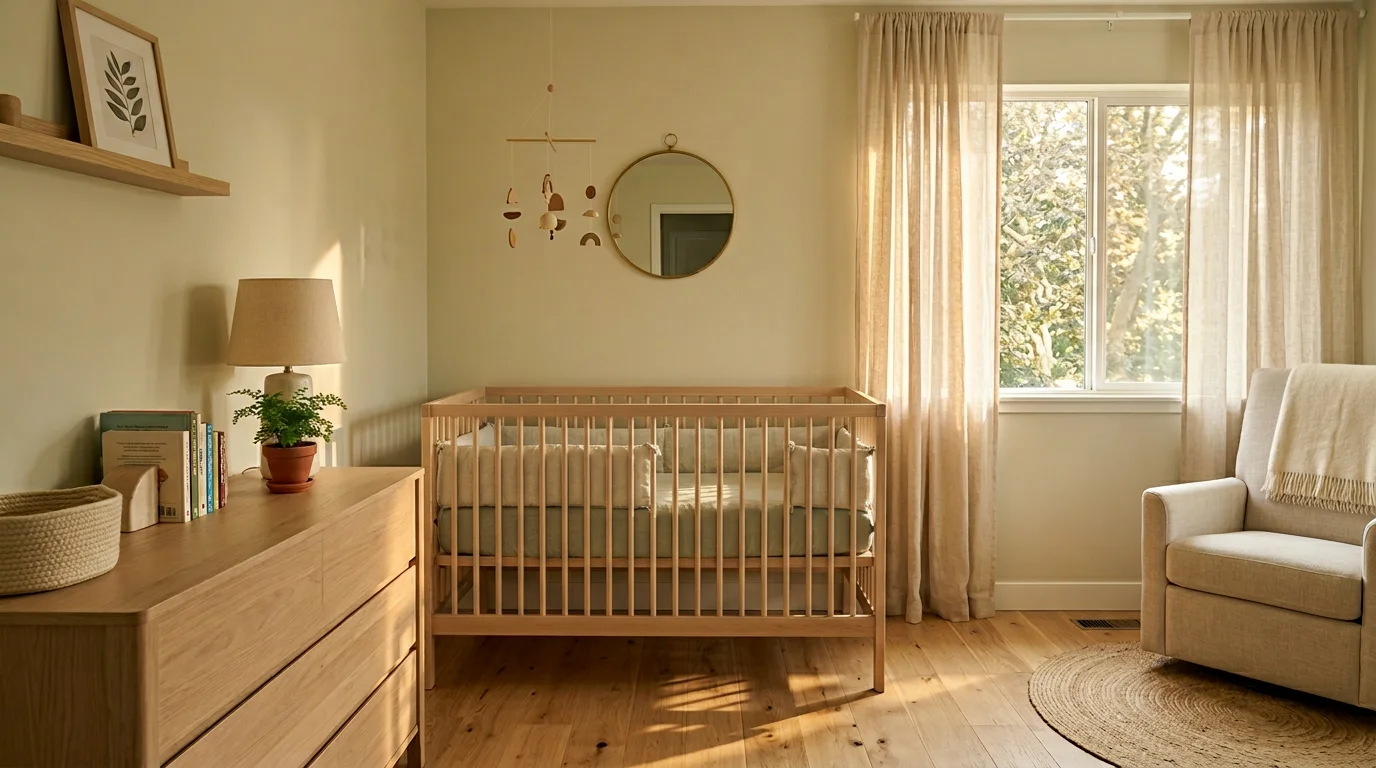
I stood in my daughter’s nursery at 2 AM, crying over a $150 ruffled quilt she couldn’t even use. Finding safe and stylish crib bedding shouldn’t feel like deciphering a medical journal. I spent months buying the wrong things. Like that massive plush bumper set I grabbed on impulse. It looked cute, smelled like factory plastic, and went straight into the trash once I learned the actual safety rules. I’m Lauren, and I’ve designed hundreds of nurseries since that tearful night. Let’s talk about 18 stunning crib bedding ideas to try this weekend. I’m sharing what works, what to skip, and how to make that tiny bed look amazing without compromising safety. Skip the cheap polyester sets. They feel like wet cardboard and make your baby sweat. I learned that the hard way so you don’t have to.
1. Embrace the “Bare is Best” Philosophy
Let’s start with the non-negotiable rule of infant sleep. The American Academy of Pediatrics (AAP) says a crib needs only a firm mattress and a tightly fitted sheet. That’s it. For babies under 12 months, extra items increase the risk of SIDS and suffocation. I learned this the hard way at Target. I watched a first-time mom loading her cart with fluffy pillows and thick blankets. I had to bite my tongue. I used to be that mom. I bought a gorgeous, heavy velvet blanket for my first baby. I put it in the crib and realized she could pull it over her face. It never touched her crib again. You don’t need the $89.99 matching Pottery Barn Kids quilt. Focus on the sheet itself. I’m obsessed with the simple 100% cotton muslin sheets from Little Unicorn for $19.99. They feel soft against a baby’s cheek and look perfectly styled without dangerous clutter. Trust me.
2. Invest in a Firm, Safety-Approved Mattress
You can’t have a great setup without the right foundation. A firm mattress is critical. It prevents your baby from sinking into the surface. I suggest the Newton Baby Washable Crib Mattress for $299.99. It measures 52 inches by 28 inches and is 5.5 inches thick. I’ve tested dozens, and this one is purely breathable polymer. When you press your hand into a mattress, it shouldn’t indent more than 1 inch under weight. Memory foam sounds luxurious, but it’s a massive suffocation hazard. I bought a cheap memory foam pad at Walmart years ago for a travel crib. It smelled like harsh, bitter chemicals. When I pressed my hand into the center, it left a deep print that took a full minute to bounce back. I returned it immediately. Stick to ultra-firm, safety-certified options.
3. Prioritize Snug-Fitting Crib Sheets
Standard sheets are designed for mattresses 52 inches long by 28 inches wide, with a thickness of 4 to 6 inches. Not all sheets are equal. You need a sheet with a 360-degree elastic band. If the elastic only runs along the edges, it won’t stay put. I tried a cheap generic brand, and it was a disaster. I woke up at 3 AM and saw the corner of the sheet had snapped up right next to my baby’s face. It was terrifying. Now I only use sheets with thick, premium elastic. Burt’s Bees Baby offers fitted sheets starting at $20.00. They grip the mattress so tightly you have to wrestle them on. That tight fit is what you want. Oilo Studio also makes high-quality options for $39.00 that won’t budge.

Dream On Me Holly 2-in-1 Mini & Portable Crib Mattress
Honestly, Dream On Me Holly 2-in-1 Mini & Portable Crib Mattress (38”x 24”x 3”) surprised me — sturdier than it looks in the photos, and over 203 buyers gave it 4.5 stars.
4. Stock Up on 3 to 5 Fitted Sheets

Most people only register for two. You need 3 to 5 fitted sheets. Period. I keep one on the mattress, one in the wash, and two in the closet for emergencies. If your baby has severe reflux, you might even need 5 to 7. My second baby spit up constantly. I remember standing in the laundry room at 4 AM, waiting for the dryer because we had blown through our only two clean sheets. The smell of sour milk is something I’ll never forget. Don’t put yourself in that situation. Grab a 2-pack of Honest Company organic cotton fitted sheets for $34.99 to build your stash. I also buy giant tubs of unscented baby detergent at Costco to keep up with the washing. Having backups means you won’t panic when a diaper leaks.
5. Opt for Organic and Non-Toxic Materials

Conventional cotton is treated with pesticides. For 2026, the trend is moving to GOTS or OEKO-TEX certified bedding. These guarantee fabrics are free from harmful chemicals. Babies spend up to 16 hours a day pressing their faces into these sheets. I used to buy standard polyester-blend sheets until I noticed my son getting red rashes on his cheeks. I switched to Naturepedic organic cotton sheets (starting around $29.00), and his skin cleared up in three days. Avocado makes a stunning GOTS-certified organic sheet for $55.00. It’s pricier, but the texture is buttery and thick. Coyuchi is another brand offering premium organic options starting at $48.00. If you’re on a budget, Burt’s Bees Baby organic cotton options start at $20.00 and hold up beautifully.
6. Choose Bamboo Viscose for Superior Comfort

If you haven’t touched bamboo viscose, you’re missing out. It’s my favorite crib bedding trend. Bamboo viscose is hypoallergenic, moisture-wicking, and temperature-regulating. I live in a hot climate, and my babies used to wake up with damp backs. I bought a Kyte Baby bamboo fitted sheet for $33.00, and it stopped the night sweats. The fabric feels cool and drapes beautifully. It’s gentle on sensitive skin, making it perfect if your baby struggles with eczema. I touched a bamboo sheet while browsing at Sprouts and couldn’t believe how silky it felt. It’s softer than the highest thread-count Egyptian cotton. The only downside is that bamboo is delicate. Don’t wash it with heavy towels, or it will pill. The extra care is worth it. You might also like: 20 Inspiring Gold Crib Bedding Ideas You Can Try Today

JOYMISS Breathable Crib & Toddler Mattress: Soft Cribs
A dependable everyday pick — JOYMISS Breathable Crib & Toddler Mattress: Soft Cribs mattresses for pulls in 27 ratings at 4.5 stars. Not flashy, just solid.
7. Utilize Sleep Sacks Instead of Loose Blankets

Since loose blankets are banned, sleep sacks are your best friend. Pediatricians suggest these wearable blankets. They keep your baby warm without risk of suffocation. I used to worry my newborn was freezing, so I layered her in thick fleece pajamas. She overheated, her skin felt clammy, and she screamed for hours. Sleep sacks solve this by offering different TOG ratings. I love the HALO SleepSack 100% Cotton Wearable Blanket for $29.99. It zips from the bottom, making middle-of-the-night diaper changes easier. You won’t have to expose their chest to cold air. Make sure the neck and armholes fit snugly. Always check the sizing guide. A medium sleep sack fits babies 12 to 18 pounds, but ensure there’s plenty of room at the bottom for hip kicking. You might also like: 20 Charming Small Nursery Ideas to Transform Your Space
8. Select a Breathable Waterproof Mattress Protector

While the top of the mattress should be bare, you need a waterproof protector underneath that sheet. Babies leak. A lot. Avoid padded or memory foam protectors. You want a thin, breathable layer. I suggest the Avocado Organic Waterproof Crib Protector Pad for $89.00. It uses a thin polyurethane film instead of toxic vinyl. It doesn’t make that crinkly plastic sound when the baby moves. I bought a cheap vinyl protector from Kroger once. It sounded like a bag of potato chips every time my son rolled over, and it made him sweat. The KeaBabies Protect+ Waterproof Crib Mattress Protector is another great option for $26.96. It’s silent and keeps the mattress pristine without trapping heat. You might also like: 20 Lovely Space Saving Small Nursery Ideas for Every Budget
9. Avoid Crib Bumpers Entirely

I can’t stress this enough. Do not use crib bumpers. The Safe Sleep for Babies Act banned the sale of padded crib bumpers in the U.S. due to suffocation risks. Even trendy mesh or braided knot bumpers aren’t safe. I bought a beautiful $65.00 braided velvet bumper from an Etsy shop before my first baby was born. It looked stunning. But when my daughter started rolling at four months, I found her face wedged directly against the thick velvet. My heart stopped. I ripped it out and threw it in the dumpster. Babies will bump their heads on the slats. It happens. But a small bruise is better than a suffocation hazard. Let the wooden spindles shine instead.
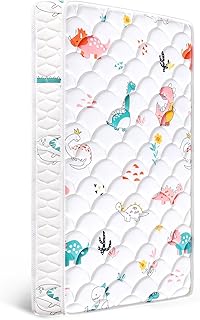
Letmxiu Premium 5" Crib Mattress and Toddler Mattress
A dependable everyday pick — Letmxiu Premium 5″ Crib Mattress and Toddler Mattress pulls in 15 ratings at 4.5 stars. Not flashy, just solid.
10. Steer Clear of Decorative Bedding Sets
Matching 10-piece nursery sets are a waste of money. Most include comforters and pillows that are unsafe. I see parents spending $250.00 on a Lambs & Ivy set, only to realize they can only use the sheet and the crib skirt. Focus your budget on the essentials: a premium firm mattress, high-quality sheets, and a few great sleep sacks. I bought a cheap $49.99 polyester set from Walmart for my nephew. The quilt was stiff, the sheet felt like sandpaper, and the diaper stacker tore after two weeks. Skip the bulky sets. A tailored crib skirt from Pehr for $45.00 and a crisp, organic sheet look more elegant. I saw an organic cotton display at Whole Foods that proved simple fabric beats a busy 10-piece set.
11. Consider the Montessori Floor Bed Approach
If you’re designing for an older infant or toddler (after 12 months), the Montessori floor bed trend is incredible. It promotes independence by placing a firm mattress on the floor or a low frame. The child can crawl in and out. I transitioned my son to a Sprout Kids Floor Bed frame ($295.00) when he was 14 months old. It eliminated the anxiety of him climbing out of a crib. There’s a catch: the entire bedroom becomes the crib. You have to child-proof every inch. Anchor all furniture, cover outlets, and remove choking hazards. I forgot to secure a laundry hamper, and he tipped it over and slept inside it. It was funny, but a good lesson. Use a tightly fitted sheet just like a normal crib.
12. Check for Certifications Beyond Organic
When shopping, look beyond the organic label. Certifications like GREENGUARD Gold and MADE SAFE® are important. These indicate that products have been screened for low chemical emissions. I recently bought a Naturepedic Organic Breathable Crib Mattress ($349.00) because it holds both certifications. New furniture and synthetic fabrics off-gas Volatile Organic Compounds (VOCs). Ever opened a cheap plastic shower curtain and smelled that chemical odor? That’s off-gassing. You don’t want your baby breathing that in. I once bought a discount blackout curtain, and the smell gave me a migraine. I had to leave it outside for a week. Stick to brands that transparently list their certifications. It gives you peace of mind.

Graco Premium Crib & Toddler Mattress
Graco Premium Crib & Toddler Mattress – GREENGUARD Gold Certified has been one of the most consistently praised picks in this category. 514 reviewers averaged 4.5/5.
13. Wash Bedding with Care to Prolong Life
You’ll be doing a lot of laundry, but how you wash those expensive sheets matters. Wash them in cold water on a gentle cycle. Hot water damages natural fibers and causes shrinking. I ruined a $42.00 Spearmint LOVE organic cotton sheet by washing it on hot. It shrank so badly the elastic snapped and the fabric felt crunchy. It was a waste of money. Always wash baby sheets separately. I use 2 tablespoons of Attitude Baby Laundry Detergent ($14.99 for 35 loads). It’s unscented, EWG verified, and gets blowout stains out without degrading the fabric. Tumble dry on low heat or hang them over a chair to keep them soft.
14. Understand Mini Crib Sheet Dimensions
If you live in a smaller apartment or have a nursery nook, you probably have a mini crib. You can’t fold a standard sheet underneath a mini mattress. A mini mattress typically measures 38 inches by 24 inches. Standard sheets will be baggy. You must buy sheets specifically for mini cribs. I love the American Baby Company 100% Cotton Jersey Knit Mini Crib Sheet for $9.99. They fit like a glove. KeaBabies also makes organic mini crib sheets in a 3-pack for $24.96. I tried using a standard sheet on a mini crib once. I thought I could just tuck the extra fabric under the mattress. By morning, my baby had pulled the excess fabric up and was tangled in it. Never improvise with sizing. The exact fit is a safety requirement.
15. Avoid Rubber Sheets Directly Under Baby
Older parenting books recommend putting a rubber sheet under the baby to catch leaks. Please don’t do this. Traditional rubber sheets are terrible. They irritate a baby’s skin and trap body heat. They aren’t breathable. My mother insisted I use a heavy rubber pad. I put it under my daughter’s sheet, and she woke up screaming, drenched in sweat with a heat rash on her back. The rubber baked her. Modern waterproof protectors use microscopic pores in polyurethane to block liquid while letting air flow. Opt for an integrated waterproof protector like the Sealy Baby Waterproof Fitted Crib Mattress Pad for $19.99. It goes beneath the fitted sheet and provides protection without turning the crib into a sauna. Throw those old-school rubber sheets away.

Premium Hypoallergenic Baby Crib Mattress and Toddler
Premium Hypoallergenic Baby Crib Mattress and Toddler Mattress – 52″ x has been one of the most consistently praised picks in this category. 17 reviewers averaged 4.5/5.
16. The Double-Layering Trick for Nighttime Leaks
This is my favorite sanity-saving hack. When you make the crib, layer it like a lasagna. Put down a waterproof protector, then a fitted sheet. Then put down a second waterproof protector and a second fitted sheet on top. When your baby has a massive blowout at 2 AM, you don’t have to strip the bed, wipe the mattress, and struggle to stretch a clean sheet over the corners. You just peel off the top soiled sheet and the top protector. There’s a fresh bed waiting underneath. I started doing this after a stomach bug hit my house. I bought two of the Carter’s Waterproof Fitted Quilted Crib Pads ($21.00 each) for this trick. It takes two extra minutes on laundry day, but saves 20 minutes of crying at night.
17. Embrace Earth Tones and Muted Colors

For 2026, we’re moving away from bright, neon colors. Those are overly stimulating for a baby trying to wind down. The best bedding ideas revolve around calming earth tones. Think warm rust, muted sage green, dusty rose, and oatmeal. I recently styled a nursery using a Mushie Muslin Fitted Crib Sheet in Tradewinds (a muted blue-gray) for $22.99. It made the room feel like a high-end spa. I used to think babies needed bright yellow and red. I painted my first nursery a shocking lime green. The walls vibrated. It gave me a headache, and my baby fought naps. Soft, muted bedding creates a serene environment. Pair a solid rust-colored sheet with a natural wood crib, and it’s a sophisticated space. Solly Baby also makes beautiful, soft-hued sheets for $36.00.
18. Mix Textures for Visual Interest

Since you can’t use pillows, quilts, or bumpers, the crib can look flat. The secret to a stunning crib is mixing textures. Instead of flat cotton, look for sheets with a tactile element. Waffle knit, crinkle muslin, and pointelle fabrics add depth without unsafe bulk. I bought a Waffle Knit Fitted Crib Sheet from Crate & Kids for $39.00. The raised square texture makes the crib look cozy, even though it’s flat and safe. I also love using a textured linen-blend crib skirt to contrast with a smooth bamboo sheet. Touching the crinkly muslin fabrics at Trader Joe’s reminds me how much a simple texture improves a basic item. Keep the sleep surface safe, but let the fabric do the decorating. No exaggeration.
Creating a beautiful nursery doesn’t mean you have to compromise on safety. I’ve learned from my own late-night mistakes that keeping it simple, snug, and breathable is the best thing you can do. I suggest starting with a great organic fitted sheet and a breathable mattress protector. Pin these crib bedding ideas to your mood board so you won’t forget them when you’re ready to start decorating!
1 thought on “18 Crib Bedding Ideas That Actually Work”