What’s Inside
- 1. Install a Board-and-Batten Accent Wall for Instant Farmhouse Character
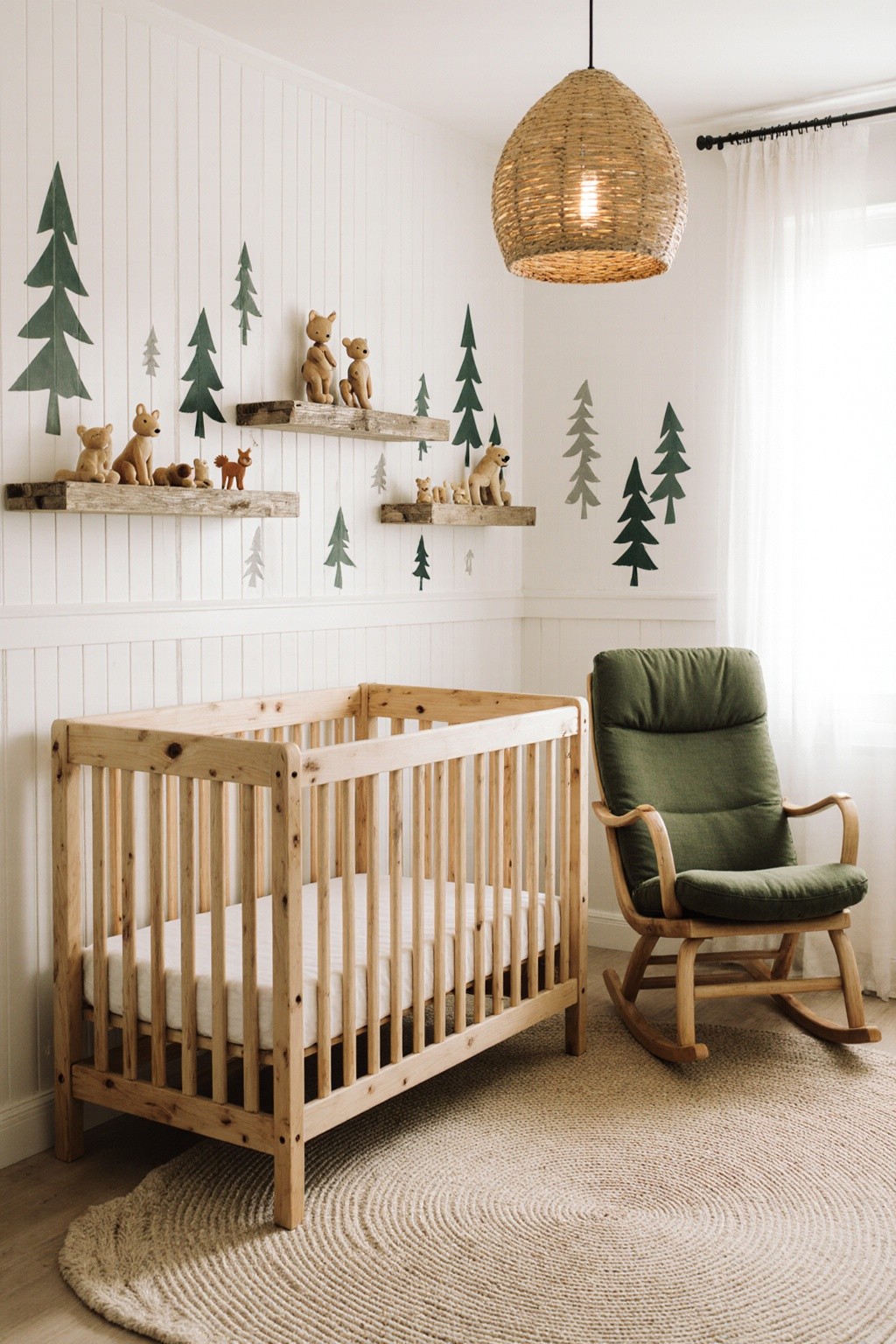
- 2. Pair an Earthy Green Glider with a Natural Pine Crib
- 3. Add Reclaimed Wood Floating Shelves at the Perfect Height
- 4. Layer a Hand-Woven Wool Rug for Tactile Warmth
- 5. Use Deep Earthy Brown Paint with Olive Curtains
- 6. Install Evergreen Tree Wall Decals for Flexible Woodland Themes
- 7. Create a White-Washed Shiplap Accent Wall
- 8. Hang a Rattan Pendant Light for Organic Texture
- 9. Feature Hunting Dog Artwork for Sophisticated Playfulness
- 10. Layer Scalloped-Edge Wicker Baskets for Charming Storage
- 11. Opt for a Two-Tone Plaid Rug with Curved Furniture
- 12. Include Antler-Inspired Light Fixtures with Watercolor Animal Prints
- 13. Use Dusty Rose Wallpaper on One Wall for Girls
- 14. Position a Faux Olive Tree for Biophilic Calm
- 15. Add Vintage Airplane Wall Art Against Rustic Red Clay Walls
When I first started designing nurseries, I thought rustic meant cluttered farmhouse chaos with every surface covered in mason jars and burlap. I was so wrong. The best rustic nursery room ideas actually create calm, grounded spaces that feel like a peaceful cabin retreat without the kitsch overload.
I’ve spent years perfecting these rustic nursery room ideas, and honestly, they’re some of my favorite projects because they age beautifully as your child grows. Let me walk you through 15 specific ways to nail this look without the common mistakes I see everywhere.
1. Install a Board-and-Batten Accent Wall for Instant Farmhouse Character
I personally swear by board-and-batten walls as the foundation for rustic nursery room ideas. Use 1×4 pine boards from your local lumber yard (around $8-$12 per 8-foot board) and space them exactly 12 inches apart on one accent wall. This creates that modern farmhouse texture without making the room feel like a barn.
The mistake most people make? They cover all four walls and the room feels claustrophobic. One accent wall behind the crib is perfect. I painted mine in Benjamin Moore Simply White, and the vertical lines actually make 8-foot ceilings look taller.
Installation takes about 6 hours if you’re handy with a nail gun. Sand everything smooth before painting because babies love to run their hands along walls once they’re mobile. The texture adds dimension that flat walls just can’t match, and it photographs beautifully for those newborn photos you’ll treasure forever.
2. Pair an Earthy Green Glider with a Natural Pine Crib
This combination changed how I approach woodland-themed nurseries. The Nurture& Glider in their sage green fabric (runs $800-$1,200 depending on sales) paired with the Babyletto Hudson crib in natural pine creates this forest-cozy vibe that feels intentional, not accidental.
The Hudson crib measures 39×26 inches, which is standard but the natural pine finish (not that orange-toned honey oak from the 90s) makes all the difference. I’ve used this combo in four nurseries now and parents always tell me it’s their favorite corner of the house.
Pro tip: Don’t match the wood tones exactly. The glider’s wooden base should be slightly darker than the crib for visual interest. And honestly, spending money on a quality glider is worth it because you’ll spend hundreds of hours in that chair during night feedings. Cheap gliders squeak after three months, and that sound will haunt you at 3am.
3. Add Reclaimed Wood Floating Shelves at the Perfect Height
Reclaimed wood shelves are non-negotiable in my rustic designs, but placement matters more than people realize. Mount 36-inch wide shelves (I love the ones from RusticRidgeWoodworks on Etsy for $50-$80) at exactly 48-52 inches high. This puts them at adult eye level for visual impact but out of reach once your baby becomes a climber.
The common mistake? Overcrowding these beautiful shelves with 20 items that just collect dust. I limit myself to 3-5 pieces max: maybe two handmade wooden toys, a small plant, and one framed photo. The wood grain should be the star, not hidden under clutter.
Real reclaimed wood has character marks, nail holes, and color variation. That’s the whole point. I once had a client want me to sand and stain reclaimed wood to look uniform, and I had to gently explain she was erasing exactly what made it special. Embrace the imperfections.

Criusia Drawer Organizer Clothes
Honestly, Criusia Drawer Organizer Clothes surprised me — sturdier than it looks in the photos, and over 1 buyers gave it 4.5 stars.
4. Layer a Hand-Woven Wool Rug for Tactile Warmth
Synthetic rugs feel wrong in rustic spaces. I always spec hand-woven wool rugs, and the 5×7-foot size from Pottery Barn Kids (their Navajo-inspired designs run $300-$500) hits the sweet spot for most nurseries. The texture under your feet when you’re rocking a fussy baby at midnight matters more than you’d think.
Neutral tones work best because they anchor the room without competing with other elements. I’m seeing layered textures everywhere in 2026 trends, and a chunky wool rug delivers that in spades. Plus, wool is naturally flame-resistant and doesn’t off-gas like synthetic fibers.
Vacuum weekly but skip the beater bar that damages natural fibers. Spot clean with cold water and wool-safe soap. I learned the hard way that hot water felts wool, turning a $400 rug into a stiff disaster. These rugs last 10+ years if you treat them right, making them way more economical than replacing cheap rugs every two years.

5. Use Deep Earthy Brown Paint with Olive Curtains
Sherwin-Williams Cocoa Whip is my secret weapon for rustic nurseries that feel cozy, not cold. This deep earthy brown works on all four walls in rooms with great natural light, or just one accent wall in darker spaces. Pair it with olive pinch-pleat curtains (West Elm’s 48-inch drop runs $150-$250) for that collected, lived-in vibe.
Most people chicken out and go beige. I get it, brown walls sound scary. But this specific shade has warm undertones that glow in morning light instead of looking muddy. I used it in Rylie’s nursery last year and the mom texts me photos constantly because she loves it so much.
The olive curtains add a second layer of warmth without introducing competing colors. This is the Warm Earthbound Neutrals trend dominating 2026 design, and honestly it’s about time we moved past gray everything. Make sure your curtains are room-darkening because babies don’t care that it’s 6am on Saturday.
6. Install Evergreen Tree Wall Decals for Flexible Woodland Themes
Wall decals get a bad rap, but the right ones transform a space without the commitment of wallpaper. I use WallPops evergreen tree decals (12×18-inch sets on Amazon for $20-$30) because they’re matte finish, not that shiny vinyl that screams temporary.
Pair these with a deep brown crib like the DaVinci Kalani (54×30 inches with non-toxic finish, around $300-$400) to create a mini forest without painting murals you’ll regret in three years. The Kalani converts to a toddler bed, so you’re not replacing furniture constantly.
Application tip: Use a credit card to smooth out bubbles, working from center to edges. I’ve removed these decals from five nurseries now and they come off cleanly without damaging paint if you heat them slightly with a hairdryer first. That flexibility matters when your toddler decides they hate trees and want dinosaurs instead.

Criusia Over the Door Organizer
Criusia Over the Door Organizer punches above its price — 202 buyers rated it 4.5 stars. I would buy it again.
7. Create a White-Washed Shiplap Accent Wall
Shiplap feels overdone until you see it done right. I use 8-inch wide pine planks from Home Depot ($2-$3 per square foot) and white-wash them instead of painting solid white. This technique lets the wood grain show through while brightening the space.
Install horizontally for traditional farmhouse vibes or vertically to make ceilings feel taller. I paired mine with black iron hardware on a vintage dresser, and that contrast makes the whole room pop. The biggest mistake? Mixing metal finishes. If you go black iron, commit. Don’t throw in brass drawer pulls or silver picture frames.
White-washing is easier than it sounds: thin down white paint with water (60% paint, 40% water), brush it on, then immediately wipe with a rag to control opacity. Practice on scrap wood first because you can’t undo it once it dries. The whole wall takes maybe 8 hours including installation and finishing.

8. Hang a Rattan Pendant Light for Organic Texture
Lighting makes or breaks rustic spaces, and I’m obsessed with rattan pendant lights right now. The Serena & Lily 20-inch diameter fixture ($400-$600, I know it’s pricey) over a natural wood crib creates this soft, filtered light that feels like dappled sunshine through trees.
This is pure Soft Organic Minimalism, the 2026 trend blending rustic warmth with modern refinement. The woven texture adds visual interest to your ceiling, which people forget is the fifth wall. Most nurseries have boring builder-grade flush mounts that do nothing for the design.
Install on a dimmer switch because you’ll want bright light for diaper changes and soft light for bedtime routines. The rattan casts beautiful shadows on walls at night. If $500 for a light fixture makes you hyperventilate, Target has decent rattan options for $80-$120 that work almost as well. The weave won’t be as tight, but in a nursery that matters less.
9. Feature Hunting Dog Artwork for Sophisticated Playfulness
This is a microtrend I’m seeing everywhere in 2026, and designer Naomi Coe of Little Crowns Interiors nailed why it works: hunting dog prints bring preppy traditional vibes without feeling stuffy. I use framed Labrador or Springer Spaniel prints from Society6 (16×20 inches for $40-$70) in rustic nurseries that need a touch of sophistication.
These work especially well in boy nurseries where parents want something beyond generic woodland animals. The key is quality framing. Cheap plastic frames ruin the look, so I spring for simple wood frames in walnut or oak that complement the rustic aesthetic.
Hang them at 57 inches on center (that’s gallery standard) in a group of three for impact. I did this in a nursery last month and the dad, who was skeptical about “dog paintings,” now brags about them to everyone. Sometimes the unexpected details make a room memorable instead of just another Pinterest copy.

Beautiful Wooden Baby Closet Dividers Set of 7
Beautiful Wooden Baby Closet Dividers Set of 7 – Double-Sided Organize has been one of the most consistently praised picks in this category. 11 reviewers averaged 4.5/5.
10. Layer Scalloped-Edge Wicker Baskets for Charming Storage
Wicker baskets are rustic storage gold, but the scalloped-edge detail elevates them from basic to special. Target’s Threshold line has 12-inch diameter baskets for $15-$25 each that I use constantly. Stack three under a textured sherpa glider for toys, diapers, and random baby stuff that multiplies overnight.
This setup, inspired by Leo Nursery designs, adds childhood charm without visual clutter. The scalloped edge is a rising 2026 trend according to designer Stephanie DeBrincat, and I’m here for it. It’s that perfect mix of sweet and sophisticated.
Pro tip: Line baskets with washable fabric because they will get gross. Baby spit-up, diaper cream, crushed crackers… it all ends up in these baskets eventually. I use simple muslin liners that I can toss in the wash weekly. Wicker itself is hard to clean thoroughly, so the liner system is essential for actual functionality, not just looks.

11. Opt for a Two-Tone Plaid Rug with Curved Furniture
Plaid rugs anchor rustic spaces instantly, but pattern scale matters in small nurseries. I use 8×10-foot two-tone plaids from Ruggable ($500-$700, washable is crucial with babies) in soft browns and creams. Pair with a curved walnut dresser like Article’s 42-inch wide options for that Forest Heritage style dominating 2026.
The curves soften the geometric plaid pattern, creating balance. This is emotional serenity design, where every element works together instead of competing. Most people over-layer patterns in small 120-150 square foot nurseries and it gets visually exhausting.
Washable rugs are non-negotiable in nurseries despite what design purists say. I’ve cleaned up too many diaper blowouts and spilled bottles to ever spec a rug that needs professional cleaning. Ruggable’s system lets you throw the top layer in your washing machine, and that peace of mind is worth the investment. The rug pad stays put, so you’re not constantly repositioning everything.
12. Include Antler-Inspired Light Fixtures with Watercolor Animal Prints
Antler chandeliers walk a fine line between rustic charm and hunting lodge kitsch. I use faux antler fixtures from Wayfair (24-inch drop, $150-$300) because real antlers feel wrong in baby spaces. Pair with watercolor farm animal prints from Minted (12×16 inches, custom options start at $50) to tie animal themes together without going overboard.
This is a lesser-known tip that creates cohesion. If you have antler lighting, echo that with subtle animal artwork instead of piling on more antlers and taxidermy. The watercolor style keeps it soft and nursery-appropriate instead of masculine and heavy.
I hang the chandelier centered in the room, not over the crib (safety first), at least 7 feet high so tall visitors don’t clock themselves. The fixture becomes a focal point that draws eyes up, making the room feel larger. Just make sure your antlers are dust-free because babies stare at ceilings constantly and you’ll notice every speck.

SNSLXH 5 Pack Stackable Closet Storage Basket
A dependable everyday pick — SNSLXH 5 Pack Stackable Closet Storage Basket pulls in 38 ratings at 4.5 stars. Not flashy, just solid.
13. Use Dusty Rose Wallpaper on One Wall for Girls
Rustic girl nurseries stumble when people add vibrant hot pink that clashes with natural wood tones. Dusty rose is the solution. I use Rifle Paper Co. floral wallpaper ($150 per roll covering about 60 square feet) on one accent wall with neutral furniture like an oak rocking chair.
The muted rose tone has enough gray in it to play nicely with rustic browns and greens without overwhelming the space. This counters the common error of thinking rustic means zero color. You can have feminine touches that don’t destroy the earthy vibe.
Wallpaper one wall only, preferably the one behind the crib or changing table. Four walls of pattern in a nursery makes me claustrophobic, and I’m not even the one sleeping there. The other three walls should be soft neutral paint that lets the wallpaper shine. I use Benjamin Moore White Dove on the remaining walls for a barely-there warmth.

14. Position a Faux Olive Tree for Biophilic Calm
Real plants in nurseries stress me out because of allergy risks and the maintenance burden on exhausted new parents. But a 6-foot faux olive tree from Nearly Natural ($100-$150) in a corner with alabaster-washed walls creates airy minimalism without the worry.
This is a surprising 2026 hack from Reva’s Nursery that boosts biophilic calm, that connection to nature our brains crave. The olive tree shape is less expected than a fiddle leaf fig, so it feels more intentional and less “I copied Instagram.”
Place it in the corner opposite the crib where it fills vertical space without crowding the room. Dust the leaves monthly with a microfiber cloth because fake plants look obviously fake when they’re covered in dust. I nestle mine in a textured basket instead of a glossy ceramic pot to maintain the rustic aesthetic. The height draws eyes up and makes 8-foot ceilings feel more spacious.
15. Add Vintage Airplane Wall Art Against Rustic Red Clay Walls
Heritage storytelling is huge in 2026 mood-based nursery design, and vintage airplane art delivers that nostalgia perfectly. I use 1900s-style metal prints (24×36 inches from Etsy, $60-$100) against rustic red clay walls painted in Benjamin Moore Caliente Affair for dramatic impact.
This combo works especially well in boy nurseries where parents want adventure themes without cartoon characters. The muted red clay color is earthy enough to stay rustic while adding unexpected warmth. Most rustic nurseries stick to browns and greens, so this feels fresh.
Frame matters here. Skip glossy modern frames that dilute authenticity. I use distressed wood frames or leave metal prints unframed for industrial-rustic crossover. Hang in a grid of three or a single large statement piece above the dresser. The aviation theme grows with your child, transitioning easily from nursery to big kid room without a complete redesign.
After designing dozens of rustic nurseries, I can tell you the secret isn’t buying every farmhouse item you see. It’s choosing a few quality pieces with real texture and letting them breathe. Start with one accent wall treatment, add natural wood furniture, layer in textiles with actual substance, and stop before it feels cluttered.
The rustic nursery room ideas that work best are the ones that feel collected over time, not bought in one Target run. Save this for when you’re ready to start shopping, and pin your favorites so you can build a cohesive plan instead of impulse buying. Your baby won’t care about design trends, but you’ll spend countless hours in this room, so make it a space you actually love being in.

DIMJ Drawer Organizer Clothes, 12 Pack Dresser Organizer
A dependable everyday pick — DIMJ Drawer Organizer Clothes pulls in 13 ratings at 4.5 stars. Not flashy, just solid.
Frequently Asked Questions
What colors work best for rustic nursery room ideas?
Earthy neutrals like Sherwin-Williams Cocoa Whip, soft whites, olive greens, and warm browns create authentic rustic vibes. I always pair deep browns with lighter neutrals to avoid making small nurseries feel dark. Dusty rose works beautifully for girls when balanced with natural wood tones.
How much does a rustic nursery cost to design?
You can create a beautiful rustic nursery for $1,500-$3,000 including furniture. Budget-friendly wins include reclaimed wood shelves from Etsy ($50-$80), wall decals ($20-$30), and Target baskets ($15-$25). Splurge on quality pieces like a solid wood crib and comfortable glider that last years.
What’s the biggest mistake in rustic nursery design?
Overcrowding shelves with too many decorative items that collect dust. I’ve seen countless nurseries where reclaimed wood shelves hold 15+ knickknacks. Stick to 3-5 meaningful pieces per shelf. Also, mixing metal finishes (like brass with black iron) destroys the cohesive rustic look.
Can I do rustic nursery room ideas in a small space?
Absolutely! I actually prefer rustic in smaller 120-150 sq ft nurseries. Use one shiplap or board-and-batten accent wall instead of all four, choose white-washed finishes to reflect light, and skip busy patterns on rugs. A single faux olive tree adds life without eating floor space.
💾 Found this helpful? Save it to Pinterest!
Share with friends who need kitchen organization help!